From Chapada to Reconcavo: When Clean Energy Hurts
By Marcelo Silva & Rafael Freire
From Chapada to Reconcavo: When Clean Energy Hurts

By Marcelo Silva & Rafael Freire
A Field Report on Green Energy Expansion in Bahia
In March 2025, Marcelo from CeLatam joined a week-long expedition through Chapada Diamantina and Reconcavo Baiano, northeast of Brazil. The invitation came from Rafael Freire, current Coordinator of GAMBA (Grupo Ambientalista da Bahia, one of the oldest organizations fighting climate change in Bahia — Brazil) and founder of Liga Colaborativa dos Povos, who led the expedition.
Together with Rafael, there was a crew of journalists from Folha de S. Paulo, Brazil’s second-largest newspaper.
The goals of the expedition were distinct for each participating group:
- The *Folha de S. Paulo* team conducted journalistic coverage of the energy transition, from fossil to renewable sources, and its impacts on rural communities.
First article — Announcement of the series of articles. Second article — Death of a child on the construction site of the renewable energy project, and houses damaged by the construction of roads. Third article — Local community denounces the destruction of the local bioregion. Fourth article — Smallholder farmers in Recôncavo demonstrate resilience by reviving traditional practices to confront the climate crisis.
- GAMBA focused on ensuring that local voices — especially those of quilombola and traditional communities — were heard and documented.
- CeLatam joined as an observer to gain a firsthand understanding of the outcomes of impact capital allocation in large-scale renewable energy projects.
This report combines field observations with contextual data, aiming to provide insight into the alignment — or misalignment — between global sustainable investment narratives and their consequences in the Brazilian interior.
This is the first of a three-part series about the expedition. In this first report, we will provide a general overview of the situation that caught our attention. In contrast, in the second, we will report on the impact of the capital allocation there. Finally, in the third, we will showcase the people, organizations, and tooling supporting the grassroots communities.
Chapada, Reconcavo, and Brazil’s Green Energy Expansion
Chapada Diamantina and Reconcavo Baiano are two regions of high environmental, cultural, and economic importance in Bahia. Together, they include dozens of municipalities and hundreds of thousands of residents.

The Chapada, situated at the confluence of the Atlantic Forest, Cerrado, and Caatinga, boasts dramatic topography, waterfalls, and river basins that are critical to the region’s biodiversity. The Reconcavo, surrounding the Bay of All Saints, is historically significant for Brazil’s sugar economy and is home to a dense population with strong Afro-Brazilian roots. It is worth noting that Brazil was the last country to abolish slavery, and Recôncavo was the site of numerous significant revolts.
Before the colonial occupation, which brought enslaved African people to the region to work the land and mining operations, the area was part of the territory of the Payayá people.
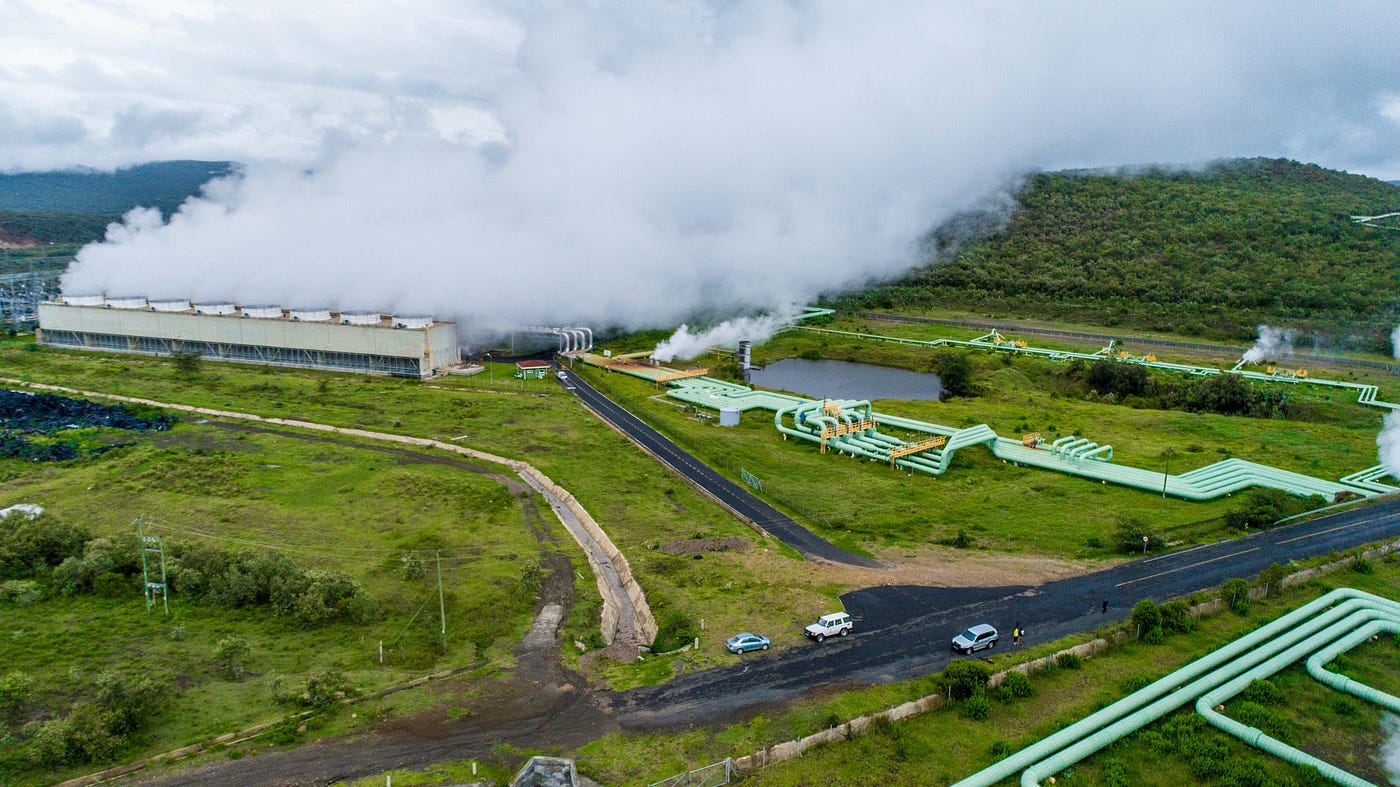
These regions are deeply affected by the national and global expansion of renewable energy, considering their whole supply chain of rare minerals mining, land grabbing, and green hydrogen. Brazil has become a major player in green energy, the third country with the largest portion of its energy coming from renewable sources (in 2023, 93,1% of the energy produced in Brazil came from renewable sources).

Globally, green energy financing surpassed US$1.7 trillion in 2023. According to the Brazilian government, Brazil generates 87% of its electricity from renewable sources — compared to a global average of 27% — making it a reference in clean energy. However, the label of clean energy doesn’t take into consideration the damage it causes to the local environment and populations. To some of the players involved in the debate, it is as clean as fossil fuels are to people living far away from where it is extracted.

However, for the local population, those projects don’t come at a low cost. This discussion is not new, and the reader can find huge documentation about how sometimes renewable energy replicate extractivist logic, or destroys sacred places and archaelogical sites.
In Bahia, specifically, a 2022 investigation revealed that wind companies in Bahia have used “contracts signed under pressure,” often without legal clarity, to access community lands. The vast majority of those lands are nature-based service providers and weather regulators, so sometimes, a 1km² of forest destroyed for the sake of the implementation of a renewable energy project, can represent damage to a 100km² surrounding area, generating extra costs for the local population who will struggle to replace that source, the local business environment that will see its costs raise, and the State which will need to include more people in social security programs.
Region Overview
Chapada Diamantina spans 25 municipalities with a population of around 376,000, half of which is rural. The region supports family agriculture, eco-tourism, and cultural traditions rooted in resistance. It’s home to quilombos established since the colonial period, eco-villas, the last remnants of centuries-old indigenous communities (such as the Payayás) that endured genocide in the European colonization of Brazil, and a rich history of mixed cultures. It is also home to essential river headwaters and protected conservation units.
Reconcavo Baiano is home to remnants of the Atlantic Forest and a strong quilombola presence. Historically linked to the sugar trade and Afro-Brazilian culture, the region’s economy today is characterized by a mix of small-scale agriculture, oil production, and increasing pressure from agribusiness and infrastructure development.
Chapada and Reconcavo are perfect manifestations of what, in Brazil, is called Brasil Profundo (Deep Brazil), regions typically located in the country’s interior, where the very cultural heritage and substance (often diluted in the metropolis) that represent Brazil abroad are preserved. Places that defy the picture of Brazil that most people from the coast or abroad have.
According to a report from Maíra Gouveia (researcher and comms specialist at Questtono)
“Deep Brazil reaches people in a truncated, stereotyped and misinterpreted way. Living and working in São Paulo or other major capitals makes our knowledge and impression about our country biased — often out of sheer ignorance. It is said that those who live in São Paulo do not live in Brazil […]”
Apart from its historical and cultural relevance, Chapada Diamantina is the place with the largest source of biodiversity and water in the semiárido (region characterized by dry weather and a lack of sources of water). So the damage to Chapada is damage to an entire region (one of the five regions of Brazil).
Field Accounts: Impacts from the Ground
Disclaimer: Names have been withheld to preserve the safety of community members. All testimonies come from local leadership and residents.
Morro do Chapéu: Quilombo Ouricuri II
For CeLatam, the expedition began in the municipality of Morro do Chapéu, where we visited the Association of Farmers of Reminiscences of the Quilombo of Ouricuri II. The renewable energy project in the region claims to offset almost 1 million tons of carbon (per year) that would come from traditional pollutants. With the “success” (license from the State to sell the energy produced there in the free market) of the project, expansion is on its way, and the Quilombolas know it.

The main idea of the visit was to understand their perception of the impact that a new renewable energy project would have on the local community, comparing their situation with that of a nearby community that has signed an agreement accepting the implementation of a similar project within their territory.
The conversation revolved around their concerns, hopes, and also provided a fantastic opportunity to learn about their shared cultural identity and heritage.
Uibaí: The Cry of the Boqueirões
Uibaí is a small town surrounded by the Caatinga biome. The expedition began here, where local groups organized the “Grito dos Boqueirões” — a community mobilization against ongoing deforestation caused by wind power development. Over 90% of the Caatinga around the city has already been cleared, and the community is concerned about the impact that the expansion of the local project is already having on the community resources.
Some of the concerns included restrictions (by security forces) on access to community areas, unfulfilled promises (less than 5% of the 400+ workers employed in wind projects come from the municipality), and the influx of transient labor that has strained infrastructure and contributed to increasing social challenges.
Community leaders submitted a local impact report to the State Attorney’s Office in 2024. They continue to face intimidation tactics, including threats of lawsuits and public defamation.

Olhos D’Água (Serra Grande): The Starcraft Disillusion
Nestled in a mountainous region, Olhos D’Água is home to a historic quilombo and a solid community of smallholder producers. The community was approached by a “clean” energy company with promises of infrastructure: a bakery, flour mill, and well. Nothing materialized beyond a single small machine and tractor.
Since the implementation of the “clean” energy project, turbine noise in the region disrupts daily life, not just for people, but also for the native wildlife. Predatory animals can no longer detect their prey, altering local ecological balances and forcing species to flee the area. Livestock health has also declined, and agricultural output is falling.

Serra da Bocaina (Piatã): The Mirage of “Green Gold”
Located in the central-southern Chapada, Serra da Bocaína hosts a quilombola population that relies on agriculture and forest-based livelihoods. A “clean energy” company from England received both public and private funding to develop research on so-called green mining. However, evidence of aquifer contamination, deforestation, and illegal mineral extraction has surfaced, violating not only local community rights but also international laws.
In Lagoa dos Bastos, in the same municipality, a tragic case of a child buried in tailings highlights the dangers. Community life is increasingly fractured. Fake news campaigns — spread via WhatsApp and local radio — target quilombola leaders, undermining social cohesion and mobilization.

Campo Grande (Serra da Jiboia): Agribusiness and Water Theft
Campo Grande is a quilombo in the semi-arid Serra da Jiboia region. Historically rich in water and fruit trees, the area now experiences declining rainfall and soil degradation. Local leaders report grilagem (illegal land grabbing) and fencing of previously shared lands.
Although certified as a quilombo in 2007, the community continues to await full recognition and enforcement of its land rights. The use of agrochemicals and land speculation further threatens their ability to sustain traditional farming practices.

Patterns of Harm: When Impact Capital Turns Extractive
From what we heard and witnessed, one of the possible conclusions is that while the initial goal of the projects seems to be establishing a presence in the region, within agreements with the locals and native population., the reality is that there is little to no coordination between the multinationals, local authorities (which are often fragile in negotiations), and the local population.
Although efforts are evident, particularly from the local population who demand very little compensation, it seems that they’re not considered in the equation made by big players in the clean energy industry.
What emerges is a systemic contradiction. Dirty energy from fossil fuels creates the need for carbon offsets. These offsets generate a demand for “clean” energy projects — many of which are built in remote, fragile, or historically marginalized territories.
But instead of supporting sustainable development, these projects shift the environmental and social costs to rural populations.
Some projects in Bahia used “ESG labels” to secure financing while causing “irreversible environmental degradation”, others push for even bolder claims, such as “universal access” to energy via top-down mechanisms, ignoring local rights and traditions, and others just adhere to very traditional ways of stealing land from local population: grilagem.
An important thing to note is that denunciations are not acknowledged only by local populations, according to an investigative piece by *Mercado Livre de Energia.* “Many promises made by renewable projects go unfulfilled; employment is temporary, and infrastructure rarely materializes.”
So, when we conclude that this topic needs further international attention, mainly to check the price that local population is paying for those projects, we’re not betting alone, we’re just acknowledging an ongoing debate.
This pattern is not unique to Brazil. Across the Global South, renewable energy mega-projects have repeatedly generated harm:
- Ethiopia — Gilgel Gibe III Dam: Disrupted the Omo River ecosystem, affecting 200,000+ Indigenous people reliant on seasonal floods.
- India — Charanka & Pavagada Solar Parks: Displaced farmers, exacerbated caste inequality, and reduced food security.
- India — Western Ghats Wind Project: Met opposition for damaging sacred lands and ecological corridors.
- Vietnam — [Small Hydro Projects:](https://en.wikipedia.org/wiki/Renewable_energy_in_Vietnam) Caused displacement, deforestation, and flooding before rollback of over 500 projects.
- Chile — HidroAysén Mega-Dams: Would have flooded wilderness and Mapuche lands before public opposition halted them.
- Colombia — [La Guajira Wind Farms: ](https://www.theguardian.com/global-development/2025/may/08/latin-america-community-energy-indigenous-lighting-electricity-solar-pollution-diesel-just-transition)Wayúu communities opposed energy expansion on sacred territory.
- Peru — [Alto Mishagua Solar vs. State Projects:](https://www.theguardian.com/global-development/2025/may/08/latin-america-community-energy-indigenous-lighting-electricity-solar-pollution-diesel-just-transition) Community-led energy brought benefits; top-down initiatives caused tension.
These cases highlight a dangerous paradox: “good” energy, justified exclusively through market logic, often deepens injustice. The world’s most vulnerable end up paying the ecological and cultural price for emissions they did not cause, and that without any compensation.
Ultimately, in the current state of the green energy market, the compensation intended to fund the transition to a more sustainable economy is being used to increase demand for such funds, a favorable outcome from the perspective of corporations receiving impact capital allocations, and a cruel reality for those living the reality of green-renewable energy production.
Tech-oriented solutions for coordination
The reality described above is harsh, complex, and challenging to navigate, but it doesn’t mean that solutions aren’t already in place.
In 2024, Rafael Freire and his team concluded the project Resiliências Climáticas (Climate Resiliency, supported by the European Union and executed in partnership with Brazilian universities) to map, in coordination with the local population, the main fragility spots of local communities in the region of Chapada and Recôncavo regarding how they may struggle to navigate climate change while their main economy is tied to the nature surrounding the cities.

Beyond mapping the risks, the project also presented solutions that are already available for the populations and local authorities to use.
However, one of the most appealing outcomes of the project was the creation of Liga Colaborativa dos Povos (Collaborative League of the People). Initially supported by Fundo Casa, this project connects hundreds of communities from the northeast region of Brazil to report, address, and coordinate on their shared challenges.
But how do they do it?
- Shared talent and community capacity: Users connect, complete their profiles, and access a dashboard of tasks created by local leaders. These tasks enable talents such as engineering, law, finance, and programming to be shared across communities. The fulfillment is arranged between solution providers and local leadership, and users earn points for completing requests.
- Access to critical maps: Liga provides communities with essential maps (e.g., mining operations, energy projects) that are often hidden behind paywalls or bureaucracy. It also includes an interactive map where leaders can log conflicts or events tied to agribusiness, renewable energy, and local populations, helping strengthen collective decision-making.
- AI agent meeting people where they are: An AI assistant speaks local languages and communicates via WhatsApp — the region’s most widely used platform — to receive requests and provide information, ensuring accessibility and relevance for all users.
- Leadership protection and secure communication: The platform safeguards the identities of local leaders, providing them with a safe space to communicate their challenges and coordinate actions within and between communities.
For companies building and implementing renewable energy projects, it’s becoming a tempting alternative to coordinate with the local population on both project implementation and compensation negotiation. Instead of good intentions and appealing narratives, Liga is providing the infrastructure for human coordination on regional development, nature preservation, and respect for local traditions.
However, Liga is not the only project offering such a solution; within the Regenerative Finance ecosystem, there are numerous projects with the same goal.
What makes Liga excel is that it was born out of a collective necessity and the diversity of its stakeholders.
With initiatives like Liga, the future of renewable energy is not as dark as the present.
Conclusion
This report highlights a critical failure in the allocation of impact capital during the global green transition. While billions flow easily into large corporations — often foreign-owned — to finance wind, solar, and hydroelectric mega-projects, grassroots communities struggle to access even modest resources to preserve and regenerate their territories.
It is paradoxical that the very populations whose traditional practices nourish biodiversity and contribute to carbon sequestration must fight legal and political battles to maintain their way of life, while the European and US-based corporations that displace them are rewarded with ESG ratings and public-private subsidies.
Across Chapada Diamantina and Reconcavo Baiano, communities producing some of the world’s healthiest food face chronic underfunding. Their agroecological practices, water stewardship, and cultural preservation receive a fraction of the attention and support given to ventures that, under the banner of sustainability, are actively dismantling the social and ecological fabric of rural Brazil.
The disparity in access to capital reveals a market logic that rewards extraction over regeneration, and scale over depth. Without mechanisms for local accountability, redistributive justice, and community governance, impact finance will continue to function as a smokescreen — hiding harm behind the language of solutions.
It is time to invert this logic: impact capital allocation should aim for its destination, not the middlemen. Instead of having huge compliance departments and mega projects costing billions of dollars, ensure that a diverse team from the local population, paid fairly, is involved in the project design. While macrodata is a necessity, microdata, available within the local population, can reduce failures by offering a closer look.
메타데이터
- post_id
- 4cbbd67889f3
- slug
- from-chapada-to-reconcavo-when-clean-energy-hurts-4cbbd67889f3
- url
- https://medium.com/@celatamorg/from-chapada-to-reconcavo-when-clean-energy-hurts-4cbbd67889f3
- canonical_url
- https://medium.com/@celatamorg/from-chapada-to-reconcavo-when-clean-energy-hurts-4cbbd67889f3
- author_url
- https://medium.com/@celatamorg
- status
- ok
- fetched_at
- 2026-07-22 19:22:42