What Cracks First on a Leather Chair
Leather looks fine, then cracks. The surprise of a leather chair ageing is where it goes wrong: not across the broad, flat panels that…
What Cracks First on a Leather Chair
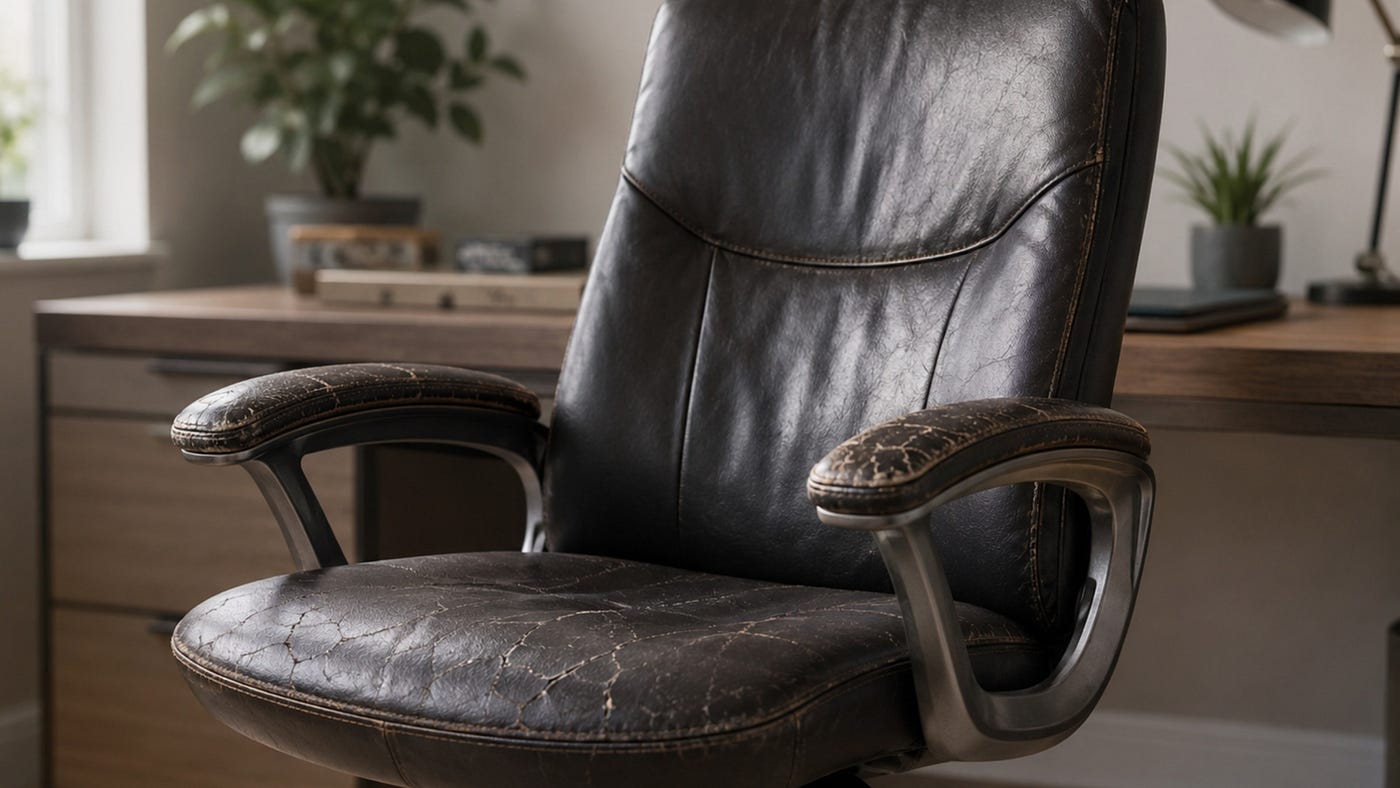
Leather looks fine, then cracks. The surprise of a leather chair ageing is where it goes wrong: not across the broad, flat panels that still look new, but at the flex points, the front edge of the seat, the creases where the seat meets the back, the tops of the arms. These are the places the leather bends every time you sit, lean, or rise, and bending is what ages leather, so the chair fails at its hinges while its faces still shine.
The reason is mechanical. Flat leather sitting under static load ages slowly, but leather that flexes repeatedly fatigues at the fold, and the fold is where the cracking or peeling begins. This is why the grade of the leather matters so much, because the two grades respond to that flexing in opposite ways: genuine leather flexes and recovers for years, while bonded leather, made of glued scraps, breaks down at the flex points within a few. A premium ergonomic office chair using genuine leather ages at its flex points slowly and gracefully; one using bonded leather fails there fast. Understanding what cracks first, and why, explains how to read a leather chair’s real condition and how to choose one that ages well.
Why the Flex Points Fail First
A chair’s leather is not loaded evenly, and the unevenness decides where it fails. The flat areas, the centre of the seat, the face of the backrest, sit under steady pressure but do not bend much, so they age slowly. The flex points, the front lip of the seat, the bolster creases, the arm tops, fold and unfold with every movement, and that repeated bending is what fatigues leather. Each sit creases the front edge, each lean folds the seat-to-back junction, and over thousands of cycles the leather at those folds is worked far harder than the leather a few centimetres away on a flat panel.
This is why a leather chair often looks fine and is not. The broad panels the eye goes to are the slow-ageing parts, while the failure is starting at the creases the eye skips over. A chair can present beautifully across its faces while the front edge is beginning to crack and the arm tops are wearing through, because the damage is concentrated at the hinges. Reading a leather chair’s real condition means looking at the flex points, not the flat ones, which is the same lesson as not trusting a leather surface to report what is happening beneath it, the point of what leather upholstery hides about the foam.
Why Bonded Leather Fails at the Folds Fast
Bonded leather concentrates its failure at the flex points because of how it is made. It is shredded leather scraps bonded to a backing with adhesive and finished with a surface coating, and that coating is what you see and touch. At a flex point, the repeated bending cracks the surface coating and breaks the adhesive bond beneath, so the coating lifts and peels away, exposing the backing. Because bonded leather has no continuous hide to flex with, it cannot recover from the bending the way genuine leather does, so it peels at the folds within three to five years. The flat panels may hold longer, but the flex points give the bonded leather away first.
Where a Leather Chair Ages, Point by Point
Mapping the flex points shows where to look and what each one tells you. The table below lists the parts of a leather chair that age first, the movement that ages them, and the early sign of failure.

Read down the table and the pattern is clear: the parts that move fail first, and the flat parts that the eye judges fail last. The practical lesson is to inspect a used leather chair, or your own, at the flex points to read its real condition, and to expect those points to be where any leather chair eventually goes. The same logic of where wear concentrates, and when it tips a chair past saving, is part of judging replacement timing in how often you should really replace an office chair.
Why Genuine Leather Ages Gracefully Instead
Genuine leather flexes at the same points but ages differently, because it is a continuous hide rather than a glued coating. When full-grain or top-grain leather bends, the hide flexes and recovers, and rather than cracking it softens and develops a patina at the high-use areas, the front edge and arm tops darkening and smoothing with use. With occasional conditioning, every six to twelve months to keep the hide from drying in air-conditioned rooms, genuine leather can flex at its points for eight to twelve years or more without cracking. The flex points still age first, but on genuine leather ageing first means developing character, not failing, which is the opposite outcome from bonded leather at the same folds.
When the Flex Points Can Be Maintained
In honesty, the flex points are also where care does the most good, so their ageing is partly within the owner’s control. On genuine leather, conditioning the high-flex areas, the front edge, the arm tops, the seat crease, keeps the hide supple where it bends most, slowing the drying that would otherwise lead to cracking. A chair conditioned at its flex points ages far better than one left dry, which means the most vulnerable parts are also the most maintainable. This does not apply to bonded leather, whose peeling is a structural failure of the adhesive that conditioning cannot reach, which is itself a reason to choose genuine leather where the chair will see daily flexing.
The way a chair’s surface choice interacts with comfort and climate over time is explored in why a mesh chair feels cold in winter and what that tells you about your back, since the same flexing and climate that crack leather also shape how every cover ages.
The support a well-kept chair should still give is the standard described around a premium office chair, the benchmark a leather chair’s flex points should still meet before you trust the patina over a crack.
That judgement is worth weighing across office chairs in Australia on leather grade rather than appearance, because by 2026 the gap between a genuine-leather chair that lasts a decade and a bonded one that peels in three is the same as it ever was, and just as easy to miss on the label.
Common Mistakes
The first mistake is judging a leather chair by its flat panels. The flat areas sit under static load and age slowly, so they look fine longest, while the failure starts at the flex points the eye skips. A chair can present beautifully while its front edge is cracking.
The second is treating all leather as equally durable at the folds. Genuine leather flexes and recovers, ageing to a patina, while bonded leather cracks and peels at the folds within a few years. The grade decides whether ageing at the flex points means character or failure.
The third is not inspecting the flex points. A leather chair’s real condition is read at the front edge, the seat crease, and the arm tops, not the flat faces. Skipping the flex points means missing the damage exactly where it starts.
The fourth is neglecting conditioning on genuine leather. The flex points dry and crack fastest in air-conditioned rooms, and conditioning the high-flex areas every six to twelve months keeps the hide supple where it bends most. The most vulnerable parts are also the most maintainable.
Conclusion
A leather chair cracks first at its flex points, not its flat panels, because bending is what ages leather and the flex points are where it bends. The front seat edge, the seat-to-back crease, and the arm tops fold and unfold with every movement, fatiguing the leather at the folds while the flat faces sit under static load and age slowly. This is why a leather chair can look fine and not be, with the eye drawn to the panels that last longest while the damage starts at the creases it skips.
The grade decides the outcome at those folds. Bonded leather, a glued coating over scraps, cracks and peels at the flex points within three to five years, while genuine leather flexes and recovers, ageing to a patina over eight to twelve years or more, especially if the high-flex areas are conditioned. Inspect a leather chair at its flex points to read its real condition, choose genuine leather where the chair will flex daily, and condition the parts that bend most. The leather looks fine until it cracks, and it cracks where it bends.
Frequently Asked Questions
Where does a leather office chair crack first?
At the flex points, not the flat panels. The front edge of the seat, the crease where the seat meets the back, and the tops of the arms bend with every sit, lean, and rest, and that repeated bending fatigues the leather. The flat areas sit under static load and age slowly, so they look fine longest while the cracking starts at the folds.
Why does bonded leather peel?
Because it is shredded leather scraps glued to a backing and finished with a surface coating, and at the flex points the repeated bending cracks the coating and breaks the adhesive beneath, so the coating lifts and peels. Bonded leather has no continuous hide to flex with, so it cannot recover from the bending, and it peels at the folds within three to five years.
Does genuine leather crack like bonded leather?
No. Genuine full-grain or top-grain leather is a continuous hide that flexes and recovers, so rather than cracking at the flex points it softens and develops a patina there. With conditioning every six to twelve months to keep it from drying, genuine leather can flex at its high-use points for eight to twelve years or more. The flex points age first, but ageing means character, not failure.
How do I check the real condition of a leather chair?
Inspect the flex points, not the flat panels. Look at the front seat edge and the seat-to-back crease for fine cracks or lifting surface, and the arm tops for wear-through. These are where any leather chair ages first, so they reveal the real condition while the broad faces, which age slowly, still look new. Judging by the flat panels misses the damage at its source.
How can I make a leather chair last longer?
Condition the flex points. On genuine leather, applying conditioner to the high-flex areas, the front edge, the arm tops, and the seat crease, every six to twelve months keeps the hide supple where it bends most and slows the drying that leads to cracking, especially in air-conditioned rooms. This does not help bonded leather, whose peeling is a structural failure of the adhesive that conditioning cannot reach.
Is a leather chair worth it if the flex points fail first?
Genuine leather is, because its flex points age to a patina rather than failing, lasting a decade or more with care. Bonded leather is the false economy, since its flex points peel within a few years regardless of care. So a leather chair is worth it when the leather is genuine and will be conditioned, and a poor choice when it is bonded and will flex daily. The grade, not the material, decides.
메타데이터
- post_id
- 4cd599bc14a5
- slug
- what-cracks-first-on-a-leather-chair-4cd599bc14a5
- url
- https://medium.com/@olivermcbbotblogs/what-cracks-first-on-a-leather-chair-4cd599bc14a5
- canonical_url
- https://medium.com/@olivermcbbotblogs/what-cracks-first-on-a-leather-chair-4cd599bc14a5
- author_url
- https://medium.com/@olivermcbbotblogs
- status
- ok
- fetched_at
- 2026-07-17 17:08:30