Function components, props as input, keeping components pure
🔹 What is a Functional Component?
Wiki topics:
🌐 · Web Development
Function components, props as input, keeping components pure
🔹 What is a Functional Component?
A Functional Component is just a plain JavaScript function that returns JSX (UI).
function Welcome() {
  return <h1>Hello World</h1>;
}
Or using arrow function:
const Welcome = () => {
  return <h1>Hello World</h1>;
};
🔹 Key Characteristics
1. Simple & Clean
No this, no complex syntax — just functions.
2. Uses Hooks
With Hooks like useState, useEffect, you can manage:
- State
- Side effects
- Lifecycle behavior
Example:
import { useState } from "react";
const Counter = () => {
  const [count, setCount] = useState(0);
  return (
    <div>
      <p>Count: {count}</p>
      <button onClick={() => setCount(count + 1)}>Increment</button>
    </div>
  );
};
3. Reusable
You can reuse components anywhere like custom HTML tags.
const Greeting = (props) => {
  return <h2>Hello, {props.name}</h2>;
};
Usage:
<Greeting name="Gautam" />4. Declarative UI
You describe what UI should look like, not how to update it.
🔹 Real Example (Mini Component)
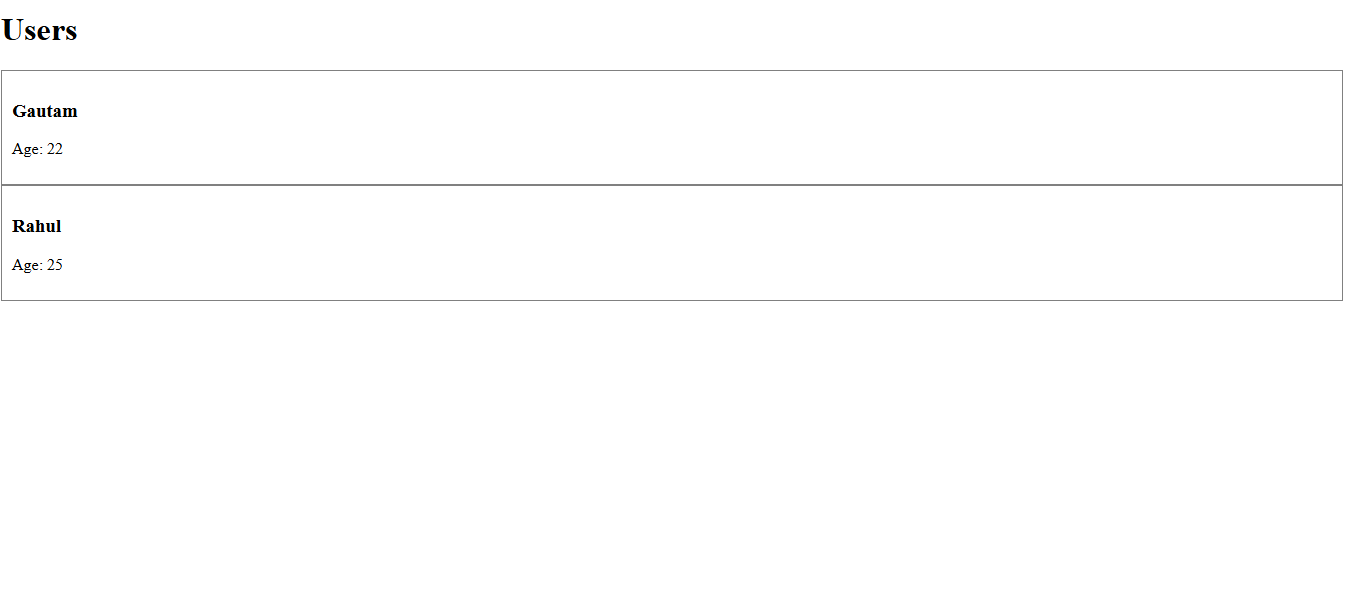
const UserCard = ({ name, age }) => {
  return (
    <div style={{ border: "1px solid gray", padding: "10px" }}>
      <h3>{name}</h3>
      <p>Age: {age}</p>
    </div>
  );
};
✅ Functional Components — Key Points
- Plain JavaScript functions that return JSX
- Simpler syntax, easier to read and maintain
- No
thiskeyword (avoids binding issues) - Use Hooks (
useState,useEffect,useContext, etc.) - Better for modern development (recommended by React team)
- Less boilerplate code
- Easier to test and debug
- Encourages separation of concerns
- Supports custom hooks for reusable logic
- Better performance optimization with hooks like
useMemo,useCallback
❌ Class Components — Key Points
- ES6 classes that extend
React.Component - Require
render()method - Use
this.stateandthis.setState() - Need to bind
thisin event handlers - Lifecycle methods are more complex (
componentDidMount, etc.) - More boilerplate and harder to read
- Difficult to reuse logic (before Hooks, needed HOC or render props)
- Being phased out in modern React (legacy approach)
🔹 Best Practices
- Use arrow functions for cleaner syntax
- Keep components small and focused
- Use destructuring (
{ name, age }) - Use Hooks properly (don’t call inside loops/conditions)
🔹 When to Use Functional Components?
👉 Always (unless you have a very specific legacy requirement)
Demo :- Refactor UI into reusable functional components.
메타데이터
- post_id
- 4cf2cf27943a
- slug
- function-components-props-as-input-keeping-components-pure-4cf2cf27943a
- url
- https://medium.com/@gm962460/function-components-props-as-input-keeping-components-pure-4cf2cf27943a
- canonical_url
- https://medium.com/@gm962460/function-components-props-as-input-keeping-components-pure-4cf2cf27943a
- author_url
- https://medium.com/@gm962460
- status
- ok
- fetched_at
- 2026-06-20 20:29:01





