The Psychological Friction of Admissions: Why Parents Intellectually Agree but Emotionally Hesitate
Why twelve years of traditional schooling creates a ‘Display Heuristic’ that explanation alone cannot fix — and how to rewire what ‘counts’…
The Psychological Friction of Admissions: Why Parents Intellectually Agree but Emotionally Hesitate
Why twelve years of traditional schooling creates a ‘Display Heuristic’ that explanation alone cannot fix — and how to rewire what ‘counts’ as learning
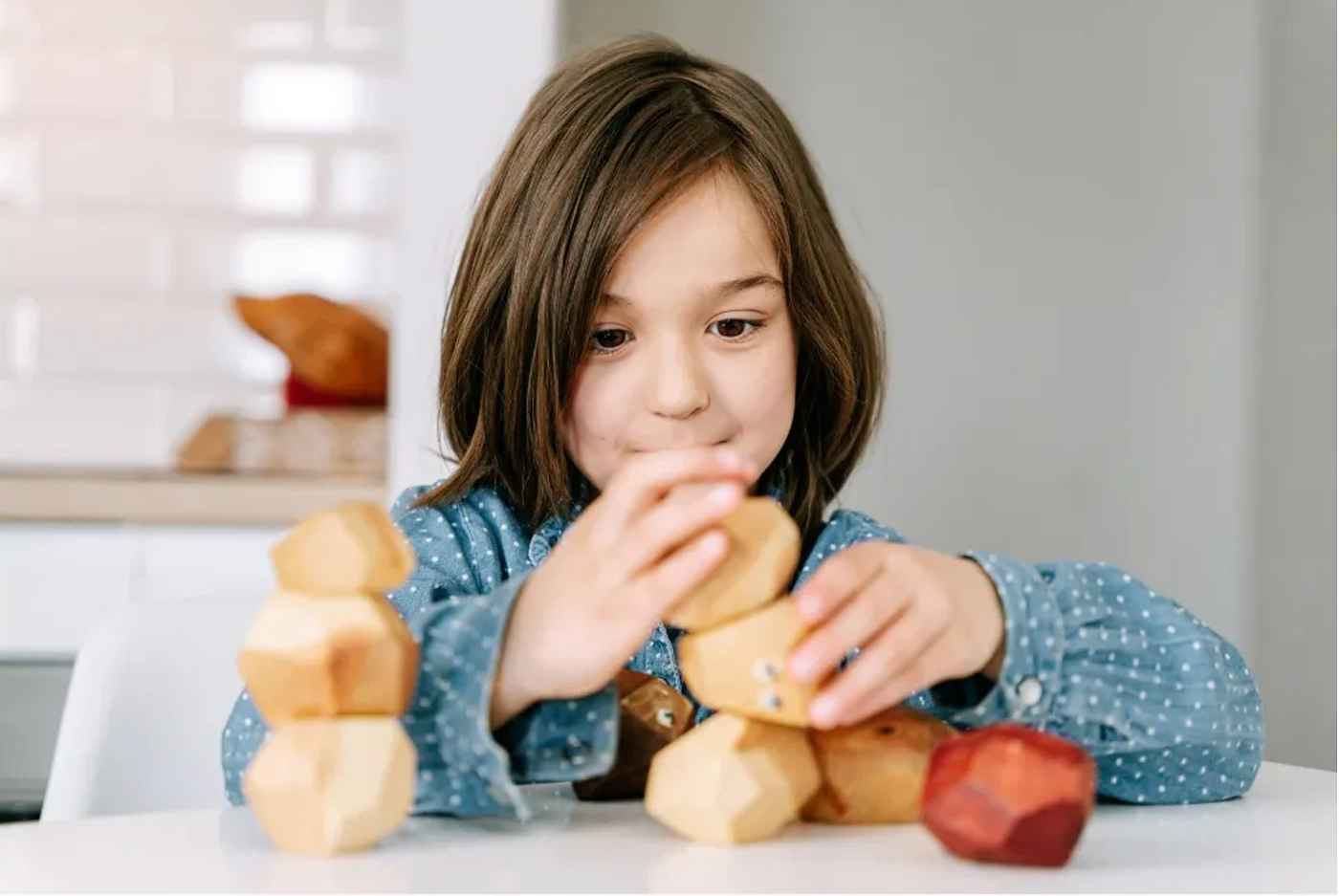
Montessori style learning blocks. Photo credit Canva
Most parents who choose a progressive or Montessori school do so because something about traditional schooling didn’t sit right.
Too much testing. Too much pressure. Too much compliance. Too little depth.
They want something different.
And yet…
When they tour a classroom and don’t see worksheets, grades, or visible assignments, uncertainty creeps in.
That reaction is not hypocrisy.
It’s encoding.
Schooling Installs a Learning Model
Most adults spent twelve to sixteen years inside one dominant system.
In that system, learning meant correct answers, finished pages, facts recalled quickly, procedures executed efficiently, grades returned as proof.
Effort was measured by output. If nothing visible came home in a backpack, nothing “happened.”
Over time, that repetition installs a model. Not just beliefs — expectations.
Learning looks like this. Rigor feels like this. Progress shows up like this.
Those patterns become automatic.
Heuristics Don’t Disappear
Humans rely on mental shortcuts.
Psychologists call them heuristics. Heuristics reduce cognitive load. They help us make fast judgments under uncertainty.
When a parent tours a school, they are in uncertainty. They are evaluating risk.
Is my child learning enough?
Is this rigorous?
Will this prepare them?
Under uncertainty, the brain searches for familiar signals.
If it finds graded spelling tests, structured assignments, visible correction marks — it relaxes. Those fit the existing category of “measurable learning.”
If it finds calm repetition, independent work, long stretches of focus — but no familiar display — it hesitates. The category is less clear.
The parent isn’t rejecting your philosophy. They are defaulting to a familiar mental model.
The ‘Display Model’ Is Deeply Trained
The display model trains people to equate learning with visible results.
Speed signals mastery.
Correctness signals intelligence.
Output signals effort.
Grades signal accountability.
These associations are practiced for over a decade. They don’t dissolve after one school tour.
Progressive schools often underestimate how deeply schooling trains what counts as “real” learning.
And that underestimation creates friction.
Why Explanation Isn’t Enough
When tension appears, schools often respond with explanation.
“We build executive function.”
“We emphasize intrinsic motivation.”
“We focus on process.”
Those statements may be true.
But they ask parents to override a deeply trained pattern in real time.
That’s difficult.
Heuristics are efficient. They don’t disappear because someone offers a philosophical argument.
They shift when new patterns become observable and reliable.
What the Brain Is Actually Doing
When a parent watches a child pour water repeatedly, the display model asks:
Where is the advancement?
Where is the measurable outcome?
Where is the proof this is harder than yesterday?
If the answer isn’t visible, the brain flags ambiguity.
Ambiguity feels like risk. Risk increases anxiety. Anxiety produces questions about homework.
This is not a character flaw. It is predictable outcome of misaligned perception.
The Paradox at the Heart of Progressive Education
Parents choose progressive schools because they want to move beyond the display model.
But the display model is the only model they have practiced. So they oscillate.
They intellectually support independence. Emotionally, they scan for output.
That oscillation can feel like inconsistency.
It’s not. It’s conditioning.
Why This Matters for Founders
If you underestimate the power of that conditioning, you misdiagnose the friction.
You think parents “don’t understand.”
You think they need better communication.
You think they need reassurance.
Sometimes they need translation.
Often, they need visible patterns that rewire what learning looks like.
This is where design intersects with psychology.
You are not just building curriculum.
You are gradually replacing a mental model.
If you design your school assuming parents will automatically see what you see, you will always experience friction.
Replacing a Model Takes Evidence
Models shift when repeated evidence contradicts them.
If a parent sees:
- A child sustaining focus longer over months
- A child correcting errors independently
- A child initiating harder work voluntarily
- A child taking responsibility earlier than peers elsewhere
The display heuristic begins to loosen.
The brain updates.
Perhaps rigor doesn’t have to look loud. Perhaps progress doesn’t require grades. Perhaps independence is measurable.
But that update happens slowly — and only when change is visible.
The Shift
You are not fighting resistance.
You are working against deeply trained pattern recognition.
If you design with the encoding in mind, you reduce friction before it appears. Progressive education asks children to build new capacities. It also asks adults to expand their definition of learning.
That expansion requires more than explanation.
It requires repeated, visible evidence of growth.
If you’re thinking about how to design that transition intentionally rather than reactively, that’s a structural conversation. And it’s one worth having.
This is the core of my work as a cultural translator. Schools try to argue parents out of a feeling. I help you build the automated ‘evidence trails’ that speak to the brain’s need for patterns, long before the tour begins.
The more schools I speak with, the more I’m convinced that many enrollment challenges are really interpretation challenges.
I write about those patterns regularly at Progressive Ed Learning Lab:
메타데이터
- post_id
- 4d16a3601f7d
- slug
- the-psychological-friction-of-admissions-why-parents-intellectually-agree-but-emotionally-hesitate-4d16a3601f7d
- url
- https://medium.com/progressive-ed-learning-lab/the-psychological-friction-of-admissions-why-parents-intellectually-agree-but-emotionally-hesitate-4d16a3601f7d
- canonical_url
- https://medium.com/progressive-ed-learning-lab/the-psychological-friction-of-admissions-why-parents-intellectually-agree-but-emotionally-hesitate-4d16a3601f7d
- author_url
- https://medium.com/@shariatquestschooling
- status
- ok
- fetched_at
- 2026-06-15 20:49:13