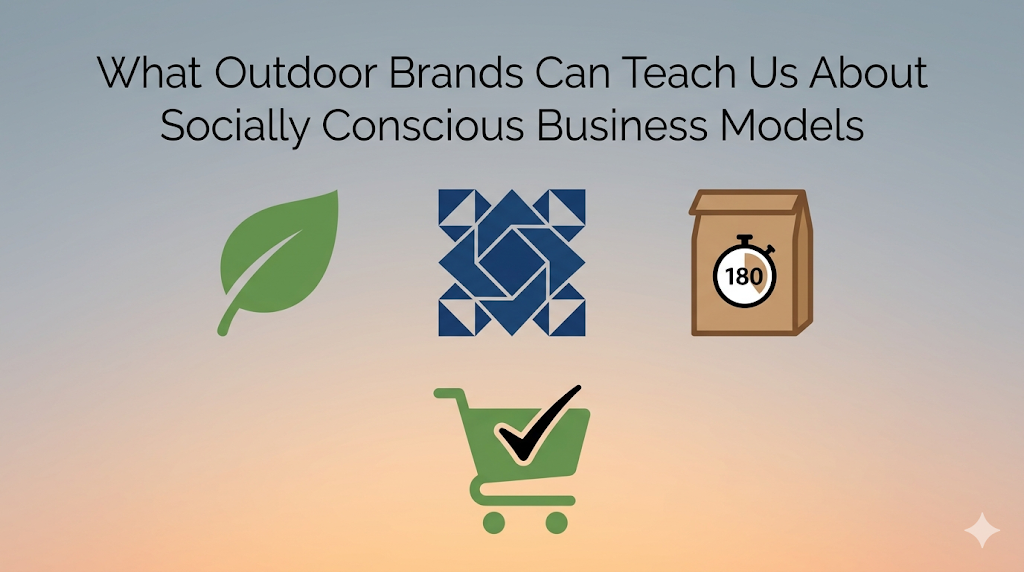
What Outdoor Brands Can Teach Us About Socially Conscious Business Models
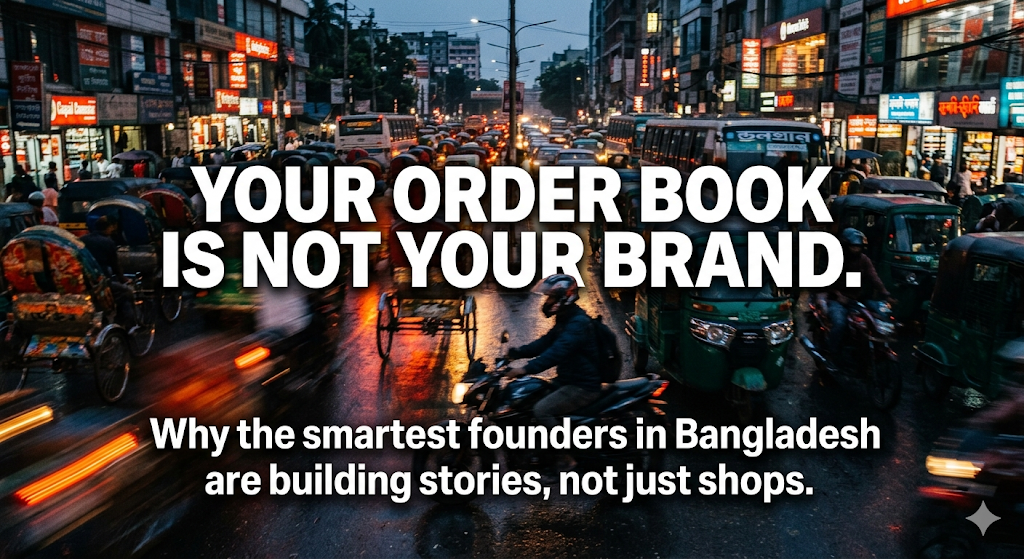
Welcome to May 2026. The heatwave in Dhaka is currently set to “medium rare,” the monsoon is about to turn our streets into Venice without…
What Outdoor Brands Can Teach Us About Socially Conscious Business Models
Welcome to May 2026. The heatwave in Dhaka is currently set to “medium rare,” the monsoon is about to turn our streets into Venice without the gondolas, and here we are, still scrolling through online shops looking for something that claims to be “breathable.”
We have this habit of waiting for the government to fix everything. But let’s be honest. By the time a new policy gets passed, half the delta might already be underwater. Meanwhile, retail brands are spreading faster than a rickshaw puller’s patience in a traffic jam. Our middle class is growing, we have more money to spend, and somewhere inside us, there’s a desperate need for a conscience.
If we want to know how to build a business that doesn’t just suck the life out of the planet, we should look at outdoor brands. Because when your entire business model depends on there being an “outdoors” left to hike in, you kind of take climate change personally.
Phase 1: The OG of Consistency (The Aranya Story)

Long before Yvon Chouinard was “walking the walk” at Patagonia, Bangladesh had its own pioneer who was tired of the status quo. Back in the early 90s, while the world was falling in love with cheap, toxic synthetic dyes, Ruby Ghuznavi was busy looking at trees.
She founded **Aranya**, an underdog brand that decided to revive natural dyes when everyone else thought “sustainable” was just a word used by people who didn’t want to make money.
Here’s the lesson. Consistency isn’t a marketing campaign. It’s a grudge.
Ruby spent decades standardizing 30 colourfast dyes from vegetable waste. Peels, petals, leaves. She didn’t just sell sarees. She sold the idea that we shouldn’t poison our rivers just to look good at a dawat.
And here’s the dark truth. In a world of fast fashion, being consistent is basically a death wish. Unless you’re an underdog who simply refuses to die. Aranya proved that if you stay the course for thirty years, eventually the “trend” of saving the planet will catch up with you.
Phase 2: Radical Transparency (The Living Blue Chronicles)

We love a good organic label, don’t we? It makes us feel like we’re basically Gandhi while we’re buying a 500 Taka t-shirt. But outdoor brands teach us that vague nods to social good will eventually land you in legal hot water.
Enter **Living Blue. A social enterprise from the northern tip of Bangladesh, from Rangpur and Nilphamari. They don’t just “source” indigo. They are owned by the people who grow it.**
Here’s the lesson. Transparency means having nothing to hide. Not even the dirt under your fingernails.
Living Blue is a community owned brand. When you buy one of their True Bengal indigo quilts, you aren’t just buying a product. You’re engaging with 3000 farmers and artisans who actually have a seat on the board. They don’t need a fancy PR firm to claim they are “fair trade”. Their governance structure is their proof.
And here’s the dark humour. Most brands treat their supply chain like a family secret they’re ashamed of. Living Blue treats theirs like a family photo album. If a brand isn’t willing to show you their paralegal approved factory consent forms or tell you exactly whose hands made your clothes, they aren’t transparent. They’re just good at Photoshop.
Phase 3: The Creativity of Survival (The EcoVia Innovation)

Innovation usually sounds like “we made a shoe out of ocean plastic.” In Bangladesh, innovation sounds like “we have 700,000 metric tonnes of garment waste, so let’s make sure it doesn’t bury us.”
While brands like REI are giving profits back to members, our local underdogs are literally turning trash into gold. Take **EcoVia**. A startup founded by three young Bangladeshis who realised that if we’re going to be the world’s garment factory, we might as well be the world’s solution.
Here’s the lesson. Creativity is what happens when you run out of excuses.
EcoVia produces compostable bioplastic packaging made from cotton fabric waste. It biodegrades in 150 days. Instead of waiting for a global giant like Adidas to save us with one recycled line, these guys are fixing the mess from the inside out.
And here’s the reality check. It’s easy to be creative when you have a billion dollar R&D budget. It’s much harder when you’re an underdog in Dhaka trying to convince people that cotton waste is the future of packaging.
The Final Vote: Your Wallet is Your Ballot

We aren’t going to stop shopping. Let’s be real. Dhaka’s social life is 40 percent traffic and 60 percent going to malls just to enjoy the air conditioning. But as the climate shifts and the water rises, we have to start shopping smarter.
Supporting brands like Aranya, Living Blue, and EcoVia isn’t just charity. It’s a vote for a version of Bangladesh that still exists in 2050. Every time you choose an underdog brand that values consistency, transparency, and creativity, you’re telling the giants that the old way of doing business is as dead as a 1990s dial up connection.
Here’s the bottom line. If we’re going to consume ourselves into oblivion, we might as well do it in clothes that didn’t kill the planet before we did.
So tell me. What’s one Bangladeshi brand you’ve seen lately that actually seems to care about more than just their profit margin?
Reference and Key Insights
- Aranya revived 30 colourfast natural dyes from vegetable waste and trained hundreds of craftspeople, proving consistency outlasts trends. Ruby Ghuznavi ran Aranya as a fair trade organisation from 1990, working with over 2,000 artisans across Bangladesh. Source: **Read more about Aranya**
- Living Blue is a community owned brand where 3,000 indigo farmers and 200 artisans hold decision making power, with surplus profits controlled by their communities — governance as proof, not PR. The enterprise started as a CARE Bangladesh governance project in the northern region. Sources: **[1] and [2]**
- EcoVia produces compostable bioplastic packaging from cotton fabric waste that biodegrades in 180 days, directly addressing Bangladesh’s 700,000 metric tonnes of annual garment waste. Founded by three young Bangladeshis in 2018. Source: [1]
- Patagonia’s radical ownership model (2022 onward) transfers all non reinvested profits to planet focused causes, proving outdoor brands built on nature protect it as a business necessity. Source: [Read the 2025 Impact Report](http://Read the 2025 Impact Report)
- REI’s co op model returned $1.1 billion to members over a decade, demonstrating that giving profits back creates long term loyalty and sustainable growth. Source: **[1]**
- Multiple industry analyses across 2025 and 2026 confirm that measuring environmental and social impact isn’t optional. Your wallet is now your ballot, and consumers increasingly vote for brands with verifiable supply chain transparency. Sources: **[1] and [[2]](https://www.theatlantic.com/)**
메타데이터
- post_id
- 4d1a705e4098
- slug
- what-outdoor-brands-can-teach-us-about-socially-conscious-business-models-4d1a705e4098
- url
- https://medium.com/the-fimatech-apprentice/what-outdoor-brands-can-teach-us-about-socially-conscious-business-models-4d1a705e4098
- canonical_url
- https://medium.com/the-fimatech-apprentice/what-outdoor-brands-can-teach-us-about-socially-conscious-business-models-4d1a705e4098
- author_url
- https://medium.com/@miftahul
- status
- ok
- fetched_at
- 2026-06-15 20:49:13