How AI became my design sparring partner
“AI won’t replace designers. But designers who know how to use AI? They’ll definitely replace those who don’t.”
How AI became my design sparring partner
“AI won’t replace designers. But designers who know how to use AI? They’ll definitely replace those who don’t.”
That quote stuck with me — not because it sounds smart, but because I felt it.
A few years ago, I started using AI tools like Uizard and Midjourney. Initially, it was just for reference — to peek at component patterns and layouts I hadn’t thought of. But slowly, AI seeped deeper into my workflow, not as a crutch, but as a mirror. A challenger. A sparring partner.
AI tools have made me more detail-oriented — not just about what I want visually, but what I need to communicate and achieve with each design decision. They’ve made me more meticulous, intentional, and focused. This article isn’t a tutorial or trend watch. It’s a personal lens on how AI fits into the design process — and how it’s shifted the way I think, explore, and execute.
🎯 Exploration Without the Fear of Wasting Time
Let’s start with ideation. The blank canvas used to intimidate me more than it should. Especially when you’re working under a time crunch or sprint cycle, the urge to get it right in one go is real. AI changed that.
With tools like Midjourney and Uizard, I started seeing explorations as lightweight, disposable drafts rather than precious concepts. You throw 10 prompts into Midjourney? You get 10 different styles back. Most of them you’ll reject — and that’s the point. Because even the wrong outputs make you think harder about what feels right.
— Much like flipping a coin when you’re stuck — not to decide, but to realize what you hoped it would land on. That’s what AI feels like in early exploration: provocation, not prescription.
Before we dive further — it’s important to understand two crucial factors that influence how AI fits into design:
- Intention: Are you improving UI, introducing features, experimenting with visuals?
- Workflow Nature: Are you at a startup, SME, or MNC? Do you own the design or contribute in a lane?
Knowing your intention and workflow makes a massive difference in how you use AI and why you use it. At a startup, you might generate crazy concepts. At an enterprise, you’re polishing and scaling. So AI might not be very helpful unless you have specialized AI tools for your company, which would end up coming from your design system library.
Remember, AI adapts based on the lens you’re using it through.
✍️ Better Content = Better Context
Let’s talk UI content. One of the unsung heroes of design is good, relevant copy — error messages, tooltips, microcopy, feature names. But crafting content that feels human and functional takes time. That’s where AI steps in as a real accelerator.
I’ve used AI to:
- Generate onboarding text options and compare tones
- Populate e-commerce cards with plausible product data
- Test error states with diverse, real-sounding messages
By pre-filling content that feels semi-real, I could prototype richer experiences earlier. Stakeholders didn’t just see “lorem ipsum” — they saw the story.
And the best part? I still edited 90% of it. But without having to start at zero, I could focus more on how it reads, rather than what to write.
Pro point — If your company’s content follows a particular structure in framing sentences — like using active or passive voice, or maintaining a humble or jovial tone — you can guide the content-generating AI with examples, like “start the sentence with please.”
🎛️ AI Makes You a Design Director, Not Just a Designer
This is the part that changed me the most: AI made me zoom out. Instead of just executing tasks, I found myself reviewing, curating, and refining. Not intensively for the UI but for the research and content. Imagining it for UI would be deadly.
I wasn’t starting with nothing anymore. I was reviewing options. That shift made me more of a design director — asking:
- “What message aligns with the brand tone?”
- “Do I simplify or elevate this layout?”
— AI offers you a rough cut, but the polish — that’s still yours.
In agile workflows, we build MVPs, ship, iterate. With AI, it’s similar: generate, assess, refine. But here’s the twist:
- Agile means you start small and build over sprints.
- AI-first workflows flip that — you start big (with AI output), then trim, adjust, and make it right. You don’t need to start from zero every time. You prune instead of plant. You tune instead of rebuild. That mindset makes you think systematically. You look for why something works, not just what works. And over time, this elevates your design judgment. You become the quality filter.
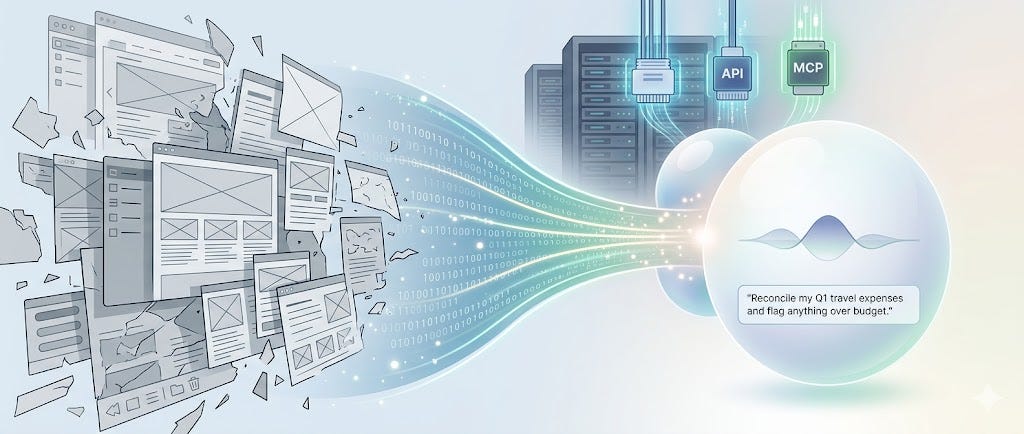
This illustration does an amazing job of showing how AI fits into our workflow.
⚡️ AI Made Me Faster, But It Didn’t Think For Me
Let’s be real: AI doesn’t solve design. It doesn’t understand emotional nuance. It doesn’t know your audience. It doesn’t ask “what does this button mean in the user’s context?” That’s you.
But what AI does is clear the underbrush.
- It gives you 10 directions so you can kill 9 quickly.
- It helps write decent placeholder copy so you can test tone (From empty state to all the other scenarios).
- It suggests structures, so your energy goes into flow, not formatting.
Remember the flipping coin analogy from earlier? I feel it’s highly relevant here. AI helps you find that moment of clarity faster — just like the coin helps you realize what you hoped it would land on.
I don’t use AI to replace decisions. I use it to make decisions faster.
🧩 Looking Ahead — Workflow-aware AI
One idea I’m obsessed with: workflow-aware AI.
Imagine: A bot that checks your prototypes against your design system, flags inconsistencies, and suggests reuse.
- A content assistant that pulls in marketing copy, adapts it into banners, and populates hero sections based on your tone of voice.
- An internal tool that suggests new components based on how often you’ve duplicated similar patterns.
These aren’t pipe dreams. They’re possible if AI tools become more contextual — understanding your project structure, team goals, and workflow bottlenecks.
And that’s where I think we’re heading — from AI that generates to AI that collaborates.
💬 In Conclusion: You’re Still the Designer. AI’s Just Your Co-pilot.
The goal of design is not speed. It’s clarity. Alignment. Relevance.
AI won’t design for you. But it will:
- Shorten your feedback loops
- Spark unexpected directions
- Free up your time for deeper thinking
It’s not about giving up control — it’s about leveling up how you use your judgment.
In the end, AI isn’t your rival. It’s your sparring partner.
Thanks for reading — these were my thoughts on AI tools after using them for a while now. I’m curious: have you found any interesting edge cases with the tools you use? Drop a comment with your most surprising or creative use case — let’s swap ideas and push what’s possible together!
Be sure to check out the article that inspired me to share my thoughts: State of AI in Design.
메타데이터
- post_id
- 4d3a4be5e2bf
- slug
- how-ai-became-my-design-sparring-partner-4d3a4be5e2bf
- url
- https://medium.com/design-bootcamp/how-ai-became-my-design-sparring-partner-4d3a4be5e2bf
- canonical_url
- https://medium.com/design-bootcamp/how-ai-became-my-design-sparring-partner-4d3a4be5e2bf
- author_url
- https://medium.com/@bhargav.kattunga
- status
- ok
- fetched_at
- 2026-07-06 21:57:15