How Should an EMT Assess an Elderly Patient Complaining of Difficulty Breathing?
You show up on scene to find an 82-year-old male sitting on the couch and complaining that he is having difficulty breathing. You quickly…
How Should an EMT Assess an Elderly Patient Complaining of Difficulty Breathing? Let’s Break Down This NREMT Question and Explanations
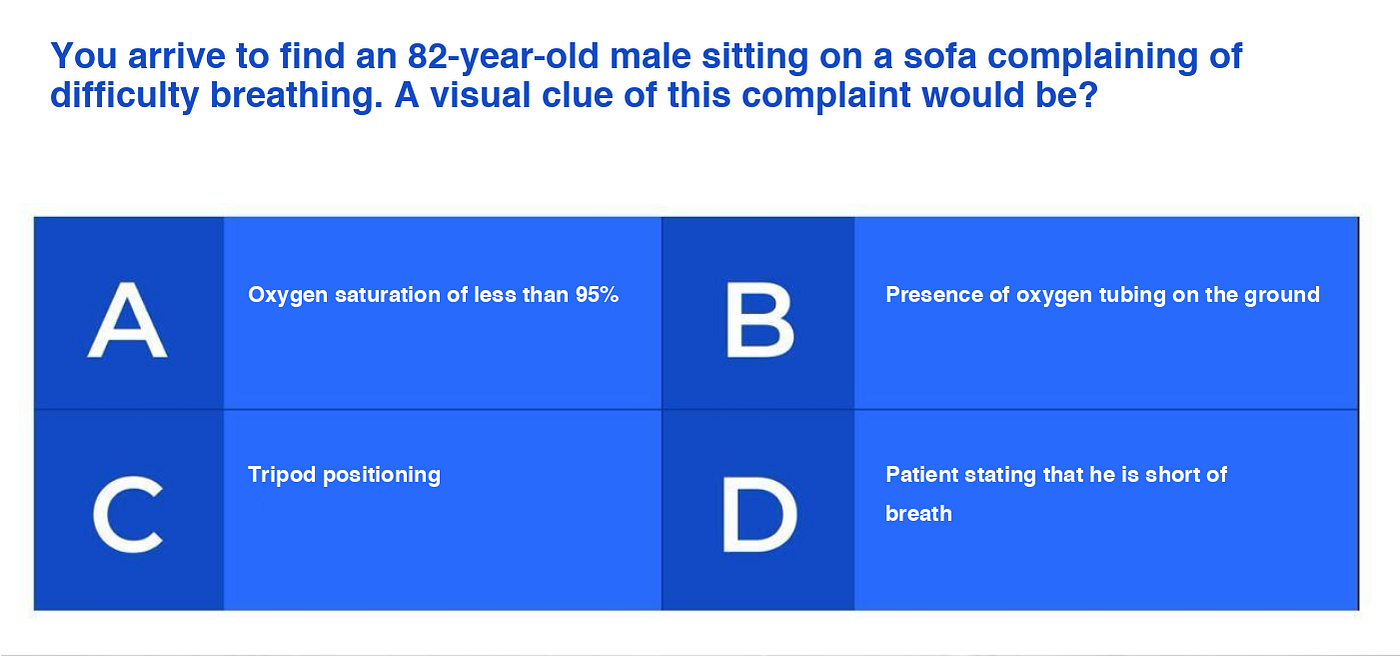
You show up on scene to find an 82-year-old male sitting on the couch and complaining that he is having difficulty breathing. You quickly survey the scene to gather visual clues that may help reveal the severity of his condition. Which of the following signs would indicate distress:
- Oxygen saturation of less than 95%
- Noticing an oxygen tank or tubing laying around
- Observing the patient sitting in a tripod position
- Hearing the patient state “I’m short of breath”
Rule Out the Incorrect Choices to Identify the Visual Red Flag
As an EMT student preparing for the NREMT exam, being able to analyze each choice in a multiple choice question is critical. Let’s walk through why options 1–3 here contain subtle reasons for why they don’t indicate a visual sign of breathing difficulty:
Oxygen Saturation of Less than 95%
While an oxygen saturation of less than 95% would indicate potential respiratory distress or hypoxemia, this would be measured actively by placing a pulse oximeter device on the patient. For this question, we are asked to identify the visual sign the EMT would notice upon arriving on scene. You would not visibly be able to detect the patient’s oxygen saturation level without taking a measurement first.
Presence of Oxygen Tubing on the Ground
Noticing oxygen tubing near the patient could indicate that they normally use supplemental oxygen at home. However, just seeing tubing on its own does not definitively signal that the patient is currently experiencing difficulty breathing or using the oxygen. Perhaps they had disconnected from their oxygen cannula earlier in the day while moving around the home.
Showcasing the Correct Choice
By methodically ruling out choices 1 and 2, we uncover the correct choice — observing the patient sitting in the tripod position.
Recognizing Tripod Positioning as an Indication of Breathing Distress
The tripod position refers to a patient sitting hunched forward, bracing themselves with arms on knees or on another surface in an effort to facilitate easier breathing. This posture helps alleviate pressure on the diaphragm and opens up the lungs for more air intake.
Some background on why the tripod position indicates compromised breathing:
- Expands lung capacity — The leaning forward shifts organs like the diaphragm downwards, preventing splinting against the lungs. This allows the lungs to inflate with more air.
- Optimizes airway — The head tilts down naturally while tripod sitting. This opens the airway by aligning the mouth and throat for maximum oxygen flow.
- Recruits accessory muscles — The shoulder, pectoral, and back muscles activate while bracing in tripod stance. This pulls on the ribcage to support breathing.
The tripod set is a classic and easily identifiable pose of respiratory distress. It represents a reflexive response for a patient experiencing pronounced shortness of breath or sensations of air hunger.
Why “Patient States ‘I’m Short of Breath’” Is Not Definitive
While choice #4 in the NREMT question — the patient complaining of shortness of breath verbally — provides subjective evidence, it is not the visual clue we are seeking. As emergency responders, being able to identify visual indicators allows faster recognition and response time, without necessarily having to interview the patient initially.
Relying purely on the patient voicing difficulty breathing also assumes they are fully oriented, responsive, and capable of self-reporting in an accurate manner. The elderly gentleman may be exhibiting mental fogginess, memory issues, delirium, etc, making it less reliable to depend only on his perception of breathing issues.
Key Takeaways from this Question:
- Seek out visual clues immediately to assess trouble breathing
- Tripod positioning is distinct sign of respiratory distress
- Measure vital signs like oxygenation to supplement visual findings
- Patient statements add helpful context but should not stand alone
Getting exposure to various types of EMT practice questions is instrumental preparation for passing the NREMT exam on your first attempt. Analyzing each multiple choice option systematically will train your mind to rule out subtly misleading choices and help cement your knowledge of key emergency protocols. Revisit challenging questions like these to refine both your testing and clinical decision-making abilities.
메타데이터
- post_id
- 4d3cd0ea792f
- slug
- how-should-an-emt-assess-an-elderly-patient-complaining-of-difficulty-breathing-4d3cd0ea792f
- url
- https://medium.com/@nremt_knowledge_kingdom/how-should-an-emt-assess-an-elderly-patient-complaining-of-difficulty-breathing-4d3cd0ea792f
- canonical_url
- https://medium.com/@nremt_knowledge_kingdom/how-should-an-emt-assess-an-elderly-patient-complaining-of-difficulty-breathing-4d3cd0ea792f
- author_url
- https://medium.com/@nremt_knowledge_kingdom
- status
- ok
- fetched_at
- 2026-06-28 04:42:08