Vets Warn: This Strange Chameleon Behavior Could Be FATAL
Something unusual and potentially dangerous with chameleons is when they spend the day stuck at the bottom of their cage, hanging upside…
Vets Warn: This Strange Chameleon Behavior Could Be FATAL
Something unusual and potentially dangerous with chameleons is when they spend the day stuck at the bottom of their cage, hanging upside down, or keeping their eyes shut.
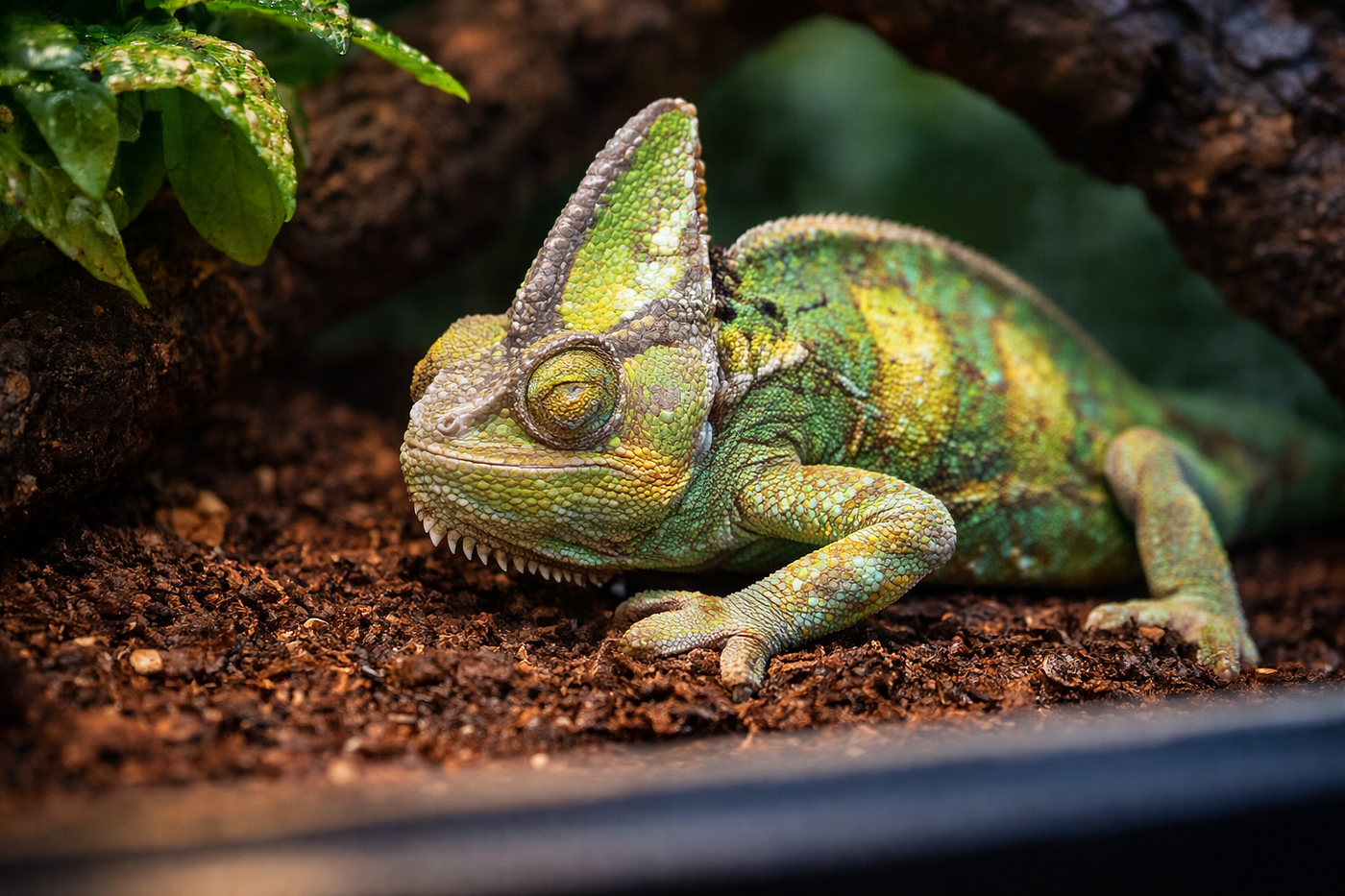
These behaviors usually signal major problems, like dehydration, metabolic bone disease, or stress, and need to be addressed right away.
Why This Matters More Than You Think
Many people who keep chameleons might notice subtle differences and think everything is okay. Perhaps their chameleon isn’t moving around as much as usual, or maybe it’s perched lower in its habitat than normal. These changes can seem minor at first glance.
But actually, these small shifts are often early hints that something more serious might be wrong. Chameleons are masters at hiding when they’re unwell. In their natural habitat, showing any sign of weakness can put them in danger. Because of this, by the time you spot something odd, the problem might already be quite advanced.
This is why vets keep emphasizing one straightforward rule: any strange behavior shouldn’t be dismissed.
The Strange Behavior You Should Never Ignore
Let’s go through the most common warning signs that could become fatal if left untreated.
1. Staying at the Bottom of the Cage
Chameleons are naturally built for climbing and feel most secure when they’re up high in the branches. If you notice your chameleon spending a lot of time down near the bottom of its cage, that’s usually a sign that something isn’t right.
This kind of behavior is often connected to things like:
- Being weak
- Feeling sick
- Experiencing severe stress
- Having serious health problems
A lot of times, owners might think the chameleon is just exploring its surroundings. But then, after a few days, you might see it stop eating or become really weak.
2. Hanging Upside Down
This behavior might seem a bit strange, or even kind of interesting to watch, but it’s definitely not normal if it keeps happening. If it does happen often, it could be a sign of a few different issues, like:
- Losing strength in their grip
- Developing muscle weakness
- Having some sort of neurological problem
- Suffering from a metabolic bone disease
You see, healthy chameleons really depend on having strong legs and tails to hold onto branches securely. So, when that ability starts to fade or weaken, their behavior often changes as a result.
3. Eyes Closed During the Day
This is definitely one of the most clear warning signs to watch for. Since chameleons are active during daylight hours, if you notice their eyes closed while the lights are on, it usually points to something being seriously wrong.
Possible reasons for this could include:
- They might be dehydrated.
- They could be lacking certain vitamins.
- They might have an infection.
- The lighting conditions might not be suitable.
If you see your chameleon doing this, it’s important to treat it as urgent.
4. Not Eating for Several Days
Skipping one meal is not unusual. But if your chameleon refuses food for multiple days, it is a problem.
Loss of appetite can be caused by:
- Stress
- Incorrect temperatures
- Parasites
- Internal illness
A chameleon that stops eating will weaken quickly, especially if the issue is not addressed.
5. Weak Grip or Falling
A strong grip is essential for chameleons. If your pet starts slipping, falling, or struggling to hold onto branches, it is a serious warning.
This is commonly linked to:
- Calcium deficiency
- Metabolic bone disease
- Muscle weakness
In advanced cases, falls can lead to injury, making the situation even worse.
What Is Really Causing These Behaviors
These warning signs are not random. In most cases, they come from a few common care mistakes.
1. Poor UVB Lighting
This is one of the main reasons chameleons get sick. Chameleons absolutely need UVB lighting to process calcium correctly. Without it, their bones gradually weaken over time.
This problem can lead to a few serious issues:
- Losing their strength
- Having a poor grip (like not being able to hold onto things well)
- Developing bone deformities
- A severe decline in their overall health
A common mistake many owners make is using low-quality UVB bulbs or forgetting to replace them regularly. It’s important to remember that even if the light bulb still turns on, it might no longer be giving off enough UVB for the chameleon’s needs.
2. Dehydration
Chameleons do not usually drink from water bowls. They rely on water droplets from misting or drip systems.
Without proper hydration:
- Their eyes may sink
- Energy levels drop
- Organ function is affected
Dehydration can quickly become life-threatening if ignored.
3. Nutrient Deficiencies
Feeding insects alone is not enough. Chameleons need proper supplementation.
A lack of calcium and vitamins can cause:
- Weak bones
- Poor muscle function
- Long-term health issues
Using calcium powder and providing well-fed insects is essential.
4. Incorrect Temperature
Temperature plays a big role in digestion and overall health.
If it is too cold:
- The chameleon cannot digest food properly
If it is too hot:
- Stress and dehydration increase
A proper temperature gradient allows the chameleon to regulate its body.
5. Stress
Stress is often overlooked but very important.
Common stress factors include:
- Too much handling
- Small enclosures
- Lack of hiding spots
- Constant disturbances
Stress weakens the immune system and makes chameleons more vulnerable to illness.
Why Many Owners Miss the Warning Signs
The hardest part is that these signs don’t pop up all at once; they creep in slowly. At first, you might just notice things like:
- Your chameleon isn’t moving around quite as much as usual.
- They’re not climbing as much.
- They seem to be eating less.
It’s really easy to overlook these little changes. But remember, chameleons usually don’t show any big, obvious signs that something’s wrong until they’re already quite sick. By the time you clearly see that something is off, the problem might have already gotten worse. That’s exactly why paying attention early on is so important.
Honestly, this is the point where a lot of new chameleon owners find things get tricky.
When I first dove into learning about chameleons, I genuinely believed I had everything figured out. I had the right cage, the necessary lighting, and had planned for regular feeding. But then, I realized I was overlooking those tiny details that actually make all the difference in the world.
That’s precisely why I suggest checking out the **FREE Viral Report called: Top 6 mistakes pet chameleon owners make.**

It’s more than just another guide. It really gets into the most frequent errors that can directly cause the kinds of risky behaviors we were just discussing — things like weakness, refusing to eat, or spending all their time at the bottom of the cage.
For instance, one of the mistakes talks about incorrect UVB setups, which is a huge hidden factor behind serious health problems like metabolic bone disease. Another one highlights hydration mistakes that many beginners aren’t even aware they’re making.
If you’re just starting out with chameleon ownership, this guide can really help you tackle the core issues before they develop into major health concerns.
It’s straightforward, practical, and really easy to understand. It’s definitely worth a quick look if yo
What You Should Do Immediately
If you notice any unusual behavior, take action right away.
Check Your UVB Lighting
Make sure you are using a high-quality UVB bulb and that it is not too old. Most bulbs need replacing every six months.
Improve Hydration
Mist the enclosure regularly and provide a drip system. Watch your chameleon to confirm it is drinking.
Fix the Diet
Use calcium supplements and provide properly fed insects. This ensures your chameleon gets the nutrients it needs.
Adjust Temperature
Check the basking area and overall enclosure temperature. Make sure there is a proper gradient.
Reduce Stress
Limit handling and create a calm environment. Add plants and hiding areas to make your chameleon feel secure.
Visit a Reptile Vet
If symptoms continue for more than one or two days, seek professional help.
A qualified reptile veterinarian can identify the exact cause and provide treatment before it is too late.
Simple Setup Checklist
To prevent these problems, make sure your chameleon has:
- Proper UVB lighting
- Regular hydration through misting or drip systems
- Calcium and vitamin supplements
- Correct temperature levels
- A spacious enclosure with plants
- A low-stress environment
Final Thoughts
Taking good care of your chameleon and addressing any issues early on can help prevent most serious health problems. Don’t just brush off strange behavior — it’s often the first clue that something isn’t right.
By catching these warning signs early and making the necessary adjustments, you can keep your chameleon safe and help it live a healthy life. Keep an eye out for even small changes, and don’t hesitate to act if something seems off. That quick response could truly make all the difference.
Affiliate Disclaimer:
This article contains affiliate links. If you purchase through these links, I may earn a small commission at no extra cost to you. I only recommend products or programs that can add value.
메타데이터
- post_id
- 4d3f93b2c888
- slug
- vets-warn-this-strange-chameleon-behavior-could-be-fatal-4d3f93b2c888
- url
- https://medium.com/@petchameleoncare/vets-warn-this-strange-chameleon-behavior-could-be-fatal-4d3f93b2c888
- canonical_url
- https://medium.com/@petchameleoncare/vets-warn-this-strange-chameleon-behavior-could-be-fatal-4d3f93b2c888
- author_url
- https://medium.com/@petchameleoncare
- status
- ok
- fetched_at
- 2026-06-09 15:37:30