Chains of Memory: The Cruelest Realities of the Transatlantic Slave Trade.
A History That Must Never be Softened, Or Forgotten.
Chains of Memory: The Cruelest Realities of the Transatlantic Slave Trade.
A History That Must Never be Softened, Or Forgotten.
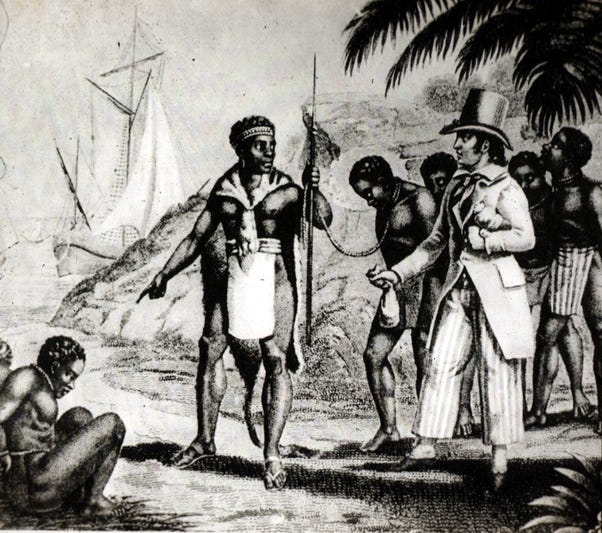
For over 400 years, the transatlantic slave trade forcibly transported an estimated 12.5 million Africans across the Atlantic Ocean. Nearly two million died during the voyage alone. What follows is not a distant historical footnote — it is a documented record of systemic cruelty inflicted on human beings for profit. Understanding these realities in detail is essential to honoring the millions who suffered and to reckoning honestly with this history.
Part One: Horrors of the Middle Passage
1. Forced “Dancing” on Deck
Enslaved men, women, and children were periodically dragged from the ship’s hold and forced — under threat of the whip — to jump and move on deck. Crews cynically called this “dancing the slaves.” It was framed as exercise for health, but its true purpose was commercial: a physically “fit” captive fetched a higher price at auction. Those too sick, injured, or exhausted to comply were flogged.
2. Tight Packing for Maximum Profit
Some captains deliberately crammed as many people as possible into the ship’s hold — a strategy called “tight packing.” Captives lay on their sides, spooned together, often chained to the person beside them, with barely inches of headroom for the entire voyage.
3. Branding With Hot Iron
Before boarding, many enslaved Africans were branded directly onto their skin with a hot iron to mark ownership by a trading company — a practice that reduced human beings to inventory before the ship even left the coast.
4. Disease in the Hold — “The Flux”
Dysentery, known as “the flux,” spread rapidly through the unsanitary holds where people were forced to lie for hours in their own waste. Smallpox and measles also devastated ships. Average mortality across the Middle Passage was around 15%, with some voyages losing far more.
5. Force-Feeding With the Speculum Oris
Captives who refused food — sometimes as a final act of resistance — were force-fed using the speculum oris, a metal device pried into the jaw to hold it open, originally designed for unrelated medical use.
6. The Zong Massacre — Murder for Insurance
In 1781, the crew of the slave ship Zong threw more than 130 living captives overboard, later claiming it was necessary due to a water shortage. The truth, exposed by abolitionists, was a cold financial calculation: insurance paid out for “lost cargo,” but not for people who died of illness.
7. Sexual Violence
Enslaved women and girls were routinely subjected to sexual assault by crew members during the crossing — a horror that did not end at the shore but continued systematically under slavery in the Americas.
8. Deliberate Separation of Communities
Traders intentionally mixed captives from different regions and language groups to prevent communication and organized resistance, tearing apart people who may have shared a home, a language, or even a family.
9. Suicide and Hunger Strikes as Resistance
Faced with unbearable conditions, some captives chose to leap overboard rather than continue the voyage; others staged hunger strikes. Crews installed netting along ship rails specifically to stop these acts — a grim testament to how frequently they occurred.
10. Chains as a Constant Condition
Enslaved people were routinely shackled in pairs at wrists and ankles for much of the voyage, making it nearly impossible to move, relieve themselves, or shift position — often resulting in open, infected wounds from the metal itself.
11. Punishment Devices of Control
Instruments such as the cat o’ nine tails (a multi-tailed whip), thumbscrews, and iron muzzles were used to punish any sign of resistance or rebellion — instruments that would later reappear on plantations across the Americas.
Part Two: Daily Life Under Slavery
12. The Whip as Everyday Law
Whipping was the most common punishment on plantations, inflicted for infractions as minor as working “too slowly.” It was often carried out publicly, in front of other enslaved people, as a deliberate act of terror and control. Salt or pepper was sometimes rubbed into open wounds afterward.
13. Stocks and “Sweat Boxes”
Wooden stocks locked hands, feet, or the neck in place for hours or days. Some plantations used “sweat boxes” — small, airless enclosures where a person was confined under extreme heat as punishment.
14. Iron Collars With Bells
Spiked iron collars, sometimes fitted with bells, were locked onto people who had attempted to escape — marking them as flight risks and making it difficult for them to move quietly, hide, or even sleep.
15. Mutilation as a Permanent Warning
Severe punishments for escape or rebellion sometimes included branding or ear cropping — inflicted both to punish the individual and to serve as a visible warning to everyone else.
16. Rations of Corn and Salted Pork
The standard weekly diet was cornmeal and salted pork or fatback, occasionally supplemented with molasses. It was calorie-dense enough to sustain hard labor but nutritionally poor, with portions deliberately kept minimal.
17. Survival Through Small Gardens
Many enslaved people were permitted tiny garden plots or a few hours on Sundays to grow vegetables, fish, trap small game, or raise chickens — a practice born of necessity that became a rare source of dignity and, occasionally, small income.
18. Cramped, Dirt-Floor Cabins
Families typically lived in one-room cabins with dirt floors, minimal furniture, and little protection from heat or cold. Extended families often shared a single small space with no privacy.
19. Sunup-to-Sundown Labor
The workday during planting and harvest seasons ran from before dawn until after dusk, six days a week. Tasks like cotton picking carried strict daily quotas; falling short — regardless of illness or exhaustion — could mean punishment.
20. Families Torn Apart by Sale
There was no legal protection against family separation. Spouses, parents, and children were routinely sold to different buyers with no consideration for keeping families together — a trauma inflicted again and again across generations.
21. No Legal Personhood
Enslaved people could not testify in court against a white person, could not legally marry, could not own property, and had no protection under the law from abuse — they were classified as property, not people.
22. Outlawed Literacy
In most Southern U.S. states, teaching an enslaved person to read or write was illegal — a law designed specifically to cut off access to information, communication, and abolitionist ideas.
23. Passes, Patrols, and Constant Surveillance
Enslaved people typically needed a written pass to travel even short distances. Armed “slave patrols” roamed the roads checking for passes, with authority to whip or detain anyone without one — a system historians consider a direct precursor to later policing structures in the American South.
What Rarely Makes the Headlines
- Paid for survival, not care. Ship surgeons were sometimes given bonuses tied to how many captives survived the voyage — turning even medical oversight into a cold commercial calculation.
- Resistance was constant. Historians have documented dozens of shipboard uprisings across the centuries of the trade — some of which succeeded in overpowering the crew entirely.
- Evidence became the weapon of abolition. Activist Thomas Clarkson personally collected branding irons, restraint devices, and ship diagrams — including the infamous Brookes ship schematic — using physical proof to turn British public opinion against the trade.
- Quiet defiance shaped daily survival. Deliberately slow work (“soldiering”), feigned illness, and small acts of sabotage were constant, low-visibility forms of resistance under slavery.
- Culture as survival. Enslaved cooks blended West African, Indigenous, and European traditions — turning discarded cuts of meat and modest vegetables into what is now celebrated as Southern and soul food cuisine.
- Songs with hidden meaning. Spirituals and work songs are believed by many historians to have carried coded directions for escape via the Underground Railroad, serving as both emotional survival and covert communication.
Why This History Matters
These are not abstractions. Each entry above represents something inflicted on a real, specific human being — a person with a name, a family, a home, and a future that was stolen. Remembering these details honestly, without softening them, is part of how we honor the estimated 12.5 million people forced into this system and the generations who survived, resisted, and endured beyond it.
메타데이터
- post_id
- 4d4d7be1f794
- slug
- chains-of-memory-a-history-that-must-never-be-boftened-forgotten-or-reduced-to-statistics-4d4d7be1f794
- url
- https://medium.com/@imran.haidree/chains-of-memory-a-history-that-must-never-be-boftened-forgotten-or-reduced-to-statistics-4d4d7be1f794
- canonical_url
- https://medium.com/@imran.haidree/chains-of-memory-a-history-that-must-never-be-boftened-forgotten-or-reduced-to-statistics-4d4d7be1f794
- author_url
- https://medium.com/@imran.haidree
- status
- ok
- fetched_at
- 2026-07-14 05:24:17