Ten Things (Almost) Nobody Knows about the Italian Submarines
Ten surprising facts about Italy's Cold War submarine: silent propulsion, wire-guided torpedoes, sonar, batteries and life beneath the sea.
HISTORY OF TECHNOLOGY
Ten Things (Almost) Nobody Knows about the Italian Submarines
Most submarines end their lives in a scrapyard. Only about 135 have been preserved as museums worldwide. Three are in Italy: Enrico Toti in Milano, Dandolo in Venezia, and Nazario Sauro in Genoa — the only one still afloat, allowing visitors to experience a Cold War submarine in its natural environment.
[embed]The Nazario Sauro Moored in Genova.
Today this submarine lies quietly alongside Genova’s Porto Vecchio (the Old Harbour) opposite the Galata Museo del Mare of which it forms an integral part. During the Cold War, however, she spent years silently hunting Soviet warships beneath the Mediterranean. For years, it played a game of hide-and-seek with its potential enemies, relying on its strongest assets: its stealth and its ability to vanish from sight. How did it manage to compete successfully against units that were, in theory, far superior?
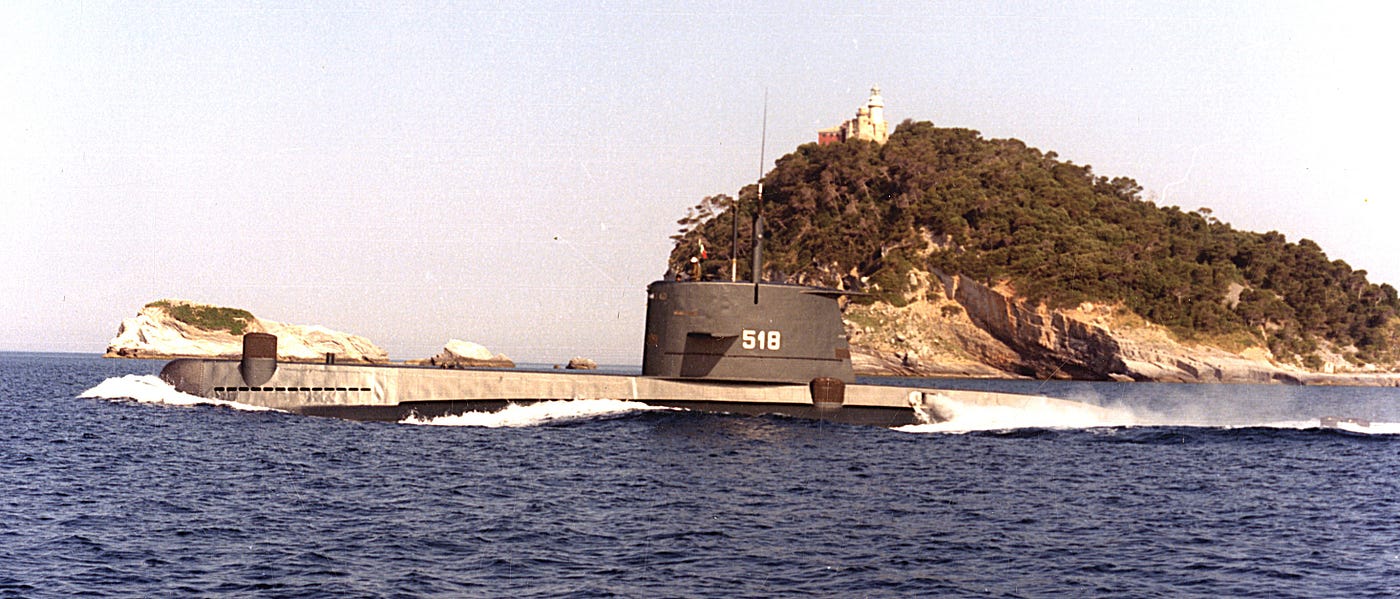
The Sauro underway. Source: Marina Militare Italiana
The Sauro was the lead vessel of the class of the same name. Launched on 9 October 1976, the vessel measures 63.85 metres in length, 6.83 metres in width, and possesses a displacement of 1,456 tonnes when on the surface, increasing to 1,641 tonnes when submerged. Following its decommissioning, the vessel underwent a conversion into a museum in 2009.
[embed]Does the Sauro really float? It certainly does — see for yourself in this video! Source: The BoatShow, Youtube.
1 The Diesel Engines Never Drove the Propeller…
It sounds impossible, but the explanation is surprisingly simple. On the Sauro, its three powerful diesel engines were never mechanically connected to the propeller shaft because their only job was to generate electricity. In other words, they acted as giant generators, supplying power both to the submarine’s single electric motor and to its batteries, which were recharged whenever the diesel engines were running. The propulsion system was accommodated within a compartment situated at the stern, which is currently inaccessible to visitors due to ongoing museum refurbishment work.

The Nazario Sauro Surfacing.. Source: Wikipedia
The engines were really powerful: each engine had sixteen V-arranged cylinders with a bore (i.e. internal diameter) of 210 mm and a stroke of 230 mm. The total displacement was approximately 27 litres, equivalent to the combined displacement of about twenty small cars. Each engine, fitted with a turbocharger, produced approximately 3,670 hp, equivalent to 2.7 MW.

The diesel engine of the Sauro. Photograph by the author.
All of this simply to generate electricity.
Part of that electrical power was used to drive the submarine’s single electric motor — a 2,686 kW Magneti Marelli electric motor, the only motor mechanically connected to the propeller shaft — while the rest was used to recharge the batteries.
This arrangement, known as diesel-electric propulsion, has become the standard for virtually every conventional submarine in service today. But why use a system that seems so complicated? Wouldn’t it be simpler to follow the layout of the German U-boats of the Second World War, where both the diesel engines and the electric motors could drive the propeller directly?
In fact, the diesel-electric layout offers several important advantages. First, it makes the submarine much quieter. Once submerged, the diesel engines could be shut down completely, leaving only the electric motor running and drastically reducing the vessel’s acoustic signature.
It also allowed the Sauro to dive more quickly — a matter of survival for any submarine. As soon as the diesel engines were stopped, the boat could disappear beneath the surface and slip silently into the depths, beyond the sight of enemy ships or aircraft.
The diesel engines had only one job: generating electricity. This meant they could run continuously at their most efficient speed, reducing fuel consumption and extending the submarine’s range.
Finally, an electric motor is far more responsive than a diesel engine. Its speed can be controlled with exceptional precision, it delivers maximum torque almost instantly — even from a standstill — and its direction of rotation can be reversed in a matter of seconds, giving the submarine outstanding manoeuvrability.
There’s one obvious question: what happened to the exhaust gases? After all, they certainly couldn’t remain inside the submarine. In fact, the exhaust from the three diesel engines was collected by three large manifolds, which merged into a single duct running through the aft section of the fin (i.e. the submarine’s sail) before being discharged overboard.

This diagram shows the Nazario Sauro’s visitor route after its conversion into a museum. Grey indicates areas that are not accessible to visitors (including the extreme bow and stern, most of the sail, and the battery compartments). Green marks the electrical equipment spaces, purple the diesel engine rooms (only the upper sections of the engines are visible), light blue the control room, and yellow the torpedo room. White indicates compartments that can be seen but not entered, such as the captain’s cabin, the crew’s mess, and the access trunk leading to the sail. Source: Costa Edutainment.
2 … But the Electric Motor did That!
The Magneti Marelli electric motor operated on direct current. The design in question permitted the speed to be regulated with extreme precision, enabled very high torque to be achieved even at very low revolutions per minute (RPM), and permitted the direction of rotation to be reversed instantaneously.

The Nazario Sauro’s electrical control panel. From here, the submarine’s main electric propulsion motor was monitored and controlled. Photograph by the author.
Moreover, the incorporation of reduction gearbox, which are integral to the propulsion systems of seafaring vessels, was rendered superfluous. Consequently, the overall design of the ship was rendered more straightforward.

The Sauro’s seven-bladed propeller, photographed in La Spezia while the submarine was being converted into a museum. Source: Marina Militare Italiana.
The Sauro was equipped with a single seven-bladed propeller, featuring a ‘sabre-shaped’ design that was intended to achieve an optimal balance between thrust and quiet operation.
Contrary to what one might expect, a submarine’s propeller is not designed to spin at high speed. Quite the opposite: it rotates surprisingly slowly.
While official figures have never been published, it can be estimated that, at low speed (3 knots), the propeller of the Sauro rotated at approximately 30–40 rpm (less than one revolution per second). The rotational speed increased progressively as the vessel’s speed rose, reaching 200–240 rpm at maximum speed (although these figures remain unconfirmed, they are probable and are supported by the available evidence).
But why is that?
The answer lies in the propeller’s size. Measuring more than three metres in diameter, the Sauro’s propeller was enormous. At just 200 rpm, the tips of its blades were already slicing through the water at more than 100 km/h, triggering the dreaded phenomenon known as cavitation.
This phenomenon occurs when a propeller spins at such a rapid rate that the pressure on the inner side of the blade diminishes significantly. This results in the formation of numerous air bubbles, which are rapidly filled by the surrounding water. This process, in addition to reducing the propeller’s efficiency, generates a significant amount of noise, thereby increasing the submarine’s detectability. The only method of avoiding this situation is to reduce the propeller’s rotational speed.
3 The heart of the submarine? Its batteries
Most people assume that the heart of a submarine is its engine room — or perhaps its torpedo compartment. In reality, it is neither. Without its batteries, nothing would work, and the Sauro would simply become a 1,600-tonne steel cylinder resting on the seabed. Quite literally, they were Sauro’s beating heart.
When people hear the word “battery”, they usually picture something like the one under the bonnet of a family car. Nothing could be further from the truth
The Sauro was equipped not with domestic batteries, but with 296 lead-acid cells, the mass of each was recorded as 640 kilograms: the equivalent of eight washing machines stacked together.
The dimensions of each cell were as follows: 620 mm in length, 380 mm in width, and 1040 mm in height: a small built-in refrigerator.
The total weight of the batteries was approximately 190 tonnes (the equivalent of 130 medium-sized cars or two locomotives), which accounted for 10 per cent of the submarine’s displacement. The cells were housed in two separate compartments beneath the main deck, which are not open to visitors.
4. Electricity Doesn’t Appear by Magic — It’s Created by Chemistry
We are so accustomed to the batteries inside our cars that we rarely stop to wonder how they perform what seems almost like magic: how can a box filled with metal plates and liquid produce the electricity that powers our everyday lives?
The answer is that a battery does not create energy out of nothing. Instead, it converts chemical energy into electrical energy. The same principle worked on Sauro.
Each cell of its batteries was a lead-acid electrochemical cell capable of generating approximately 2 volts. The implementation of a series connection resulted in a total voltage of approximately 590 volts being attained.
Each battery cell contained a series of positive lead dioxide (PbO₂) plates and a series of negative plates composed of metallic lead (Pb). The plates were immersed in the **electrolyte**, i.e. diluted sulphuric acid, which is a prerequisite for the chemical processes that generate current. The plates were separated by insulators.
When the electric motor draws power, a chemical reaction occurs between the plates, gradually converting the metallic lead and lead dioxide into lead sulphate.
Concurrently, the sulphuric acid undergoes a process of dilution, leading to a decline in its density. The less dense acid ascends towards the battery’s upper portion, thereby diminishing its efficiency. For this reason, small air bubbles were blown into each cell; these bubbles ascended, carrying the acid with them as they did so, thereby facilitating its mixing.
Batteries, when fully charged, delivered 6,500 A (the symbol for the ampere, the unit of measurement for current). A mobile telephone, for instance, operates at 2 A, whilst an electric oven runs at 15 A.
On the Sauro, this output naturally decreased during use, falling to just 138 A after 120 hours — equivalent to five days of diving.

The Nazario Sauro during the celebrations marking its inauguration in Genova in 2009. Photograph by the author.
Recharging took place when the submarine surfaced or raised its snorkel. The diesel engines drove powerful generators that forced the chemical reactions inside the batteries to run in reverse, restoring the energy they had previously delivered. This process required great care. During the final stage of charging, the electrolyte began releasing hydrogen gas, which is highly flammable. Three hundred cubic centimetres (equivalent to slightly less than a standard can of Coca-Cola) could be produced per hour, and for this reason, the battery compartments were equipped with powerful ventilation systems. Monitoring hydrogen levels was one of the crew’s most critical safety procedures.
5 How Long Could it Remain Submerged?
Conventional submarines, that is to say, diesel-electric submarines, are unable to remain submerged for extended periods of time in the manner of their larger nuclear-powered counterparts. For a vessel of the Sauro class, the most significant factor in this regard was speed, which directly affected the battery discharge time.
Provided the submarine was travelling at 3 or 4 knots (equivalent to between 5 and 7 kilometres per hour), energy consumption remained relatively low. This meant that the Sauro could remain submerged for several days. The primary constraint pertained to the necessity of modifying the internal atmosphere of the vessel. This speed was selected for patrol, sonar listening or infiltration missions.
In the event of a transfer being undertaken by the submarine, the speed would increase to 7–8 knots, resulting in a rapid escalation in fuel consumption. This, in turn, would limit the endurance of the vessel to approximately one day.
In conclusion, in the event of the initial acceleration to maximum speed (approximately 20 knots) being required, the batteries would undergo rapid discharge.
It is evident that the Italian Navy’s operational manuals do not disclose an official figure, as this information is considered one of the most valuable pieces of tactical data for the opposing forces.
However, technical estimates derived from the consumption curves of contemporary conventional submarines suggest that maximum speed could be maintained for a few hours — typically between two and four hours — before the submarine had to drastically reduce its speed or resurface on snorkel to recharge.
In instances where the commander elected or was compelled to recharge the batteries, the submarine would be elevated to periscope depth, and the snorkel — the tube employed for the purpose of drawing in ambient air while maintaining submersion — would be raised. At this juncture, the diesel engines were initiated, and the alternators commenced the recharging of the batteries. A full recharge could take several hours, during which the vessel was particularly noisy and therefore easily detectable by the enemy.
6. The Sauro Saw… with Its Ears!
Despite the periscope being the iconic symbol of a submarine, it played only a minor role during most underwater operations. While submerged, a submarine was effectively blind: it could not rely on sight but instead depended almost entirely on sound. Its primary source of information was therefore the sonar, a sophisticated acoustic system capable of detecting, classifying and tracking distant vessels simply by listening to the noises they produced beneath the sea.
The Sauro was equipped with an entirely Italian sonar system developed by USEA, a company based in Pugliola di Lerici, near La Spezia, one of Italy’s historic centres of underwater acoustics.
Like most naval sonar systems of the Cold War, it consisted of two main sections. The wet end, installed in the bow beneath the hull, contained the acoustic sensors that transmitted and received sound waves. Inside the pressure hull, a second section housed the amplifiers, signal processors and operator consoles that transformed those faint underwater sounds into usable tactical information.

The black sonar dome protects the active sonar array. The two retractable vertical fins (which is why they are absent from many official photographs) house the medium-frequency hydrophones. The numbered scale indicates the submarine’s draft in decimetres. The opening through which the mooring cable passes is the hawse pipe, while the anchor itself was released from a well that opened beneath the hull. Photograph by the author.
The external system combined three different sensor arrays, each designed for a specific task. The main passive sonar consisted of 46 low-frequency piezoelectric hydrophones arranged in a curtain-like array near the bow, providing long-range passive detection. A second array, operating at higher frequencies, served as the submarine’s active sonar. This sonar was mounted inside the bow’s acoustically transparent sonar dome — the distinctive black “nose” visible on the submarine. The dome itself merely protected the sonar while allowing sound waves to pass through with minimal attenuation. A third system, consisting of six rectangular arrays of medium-frequency piezoelectric hydrophones mounted along the upper sides of the hull, was used for passive rangefinding and target localisation.

This diagram shows the location of the Sauro’s sonar arrays. The active sonar was housed inside the bow, immediately behind the black sonar dome. Beneath the bow was the low-frequency passive hydrophone array, while the six vertical fins (only four are visible in this drawing) contained the medium-frequency hydrophones used for passive rangefinding. The illustration is a Nano Banana-enhanced rendering based on an original diagram from a presentation by C. Del Turco, available at www.sonar-info.info.
The sonar did not produce photographic images of enemy ships. Instead, it converted minute pressure fluctuations in the water into electrical signals. These were amplified, equalised to compensate for frequency-dependent variations, electronically analysed, and finally displayed on the two large cathode-ray tube (CRT) consoles in the control room. There, trained sonar operators interpreted the patterns on the screens — while continuously listening through headphones — to determine a contact’s bearing and distinguish merchant ships, warships or submarines by their unique acoustic signatures.

The sonar control console aboard the Sauro. Photograph by the author.
Under favourable conditions, the passive sonar could detect remarkably distant targets. Contemporary engineering calculations based on the standard passive sonar equation, using realistic values for source level, sea noise, array directivity and receiver characteristics, yielded a theoretical detection range of approximately 56 kilometres against a sufficiently noisy target.

A schematic representation of how a sonar contact appeared on the Nazario Sauro’s display. In this example, the target is detected at a bearing of approximately 330°. Author: Funioni di correlazione, via Wikimedia .
This figure should not be interpreted as an operational range. It assumes ideal acoustic propagation and excludes factors such as thermoclines, shadow zones, sea state, biological noise, shipping traffic and the target’s own radiated noise, all of which could dramatically increase or reduce the actual detection distance. Rather than representing a guaranteed capability, the 56-kilometre figure illustrates the extraordinary sensitivity that Cold War passive sonar systems could achieve under favourable conditions.

The Control Room. Photograph by the author.
7 No, the Torpedoes Weren’t “Fired and Forgotten”
The Sauro was equipped with six 533 mm torpedo tubes at the bow, for which 12 heavy **Whitehead A184 Mod.0** torpedoes were available (six in the tubes and six in reserve on the designated racks). Alternatively, the vessel could be equipped with 24 naval mines in lieu of torpedoes.

The six 533 mm bow torpedo tubes could launch either heavy torpedoes or naval mines. Photograph by the author.
The weapon was developed in Livorno by Whitehead (subsequently WASS), and was one of the most advanced torpedoes of its era. The classification of the subject in question was as ASW and ASuW , i.e. as a weapon for anti-submarine warfare (ASW) and anti-surface warfare (ASuW), respectively.

The interior of an open torpedo tube. Photograph by the author.
The following main characteristics were identified:
The diameter of the projectile is 533 mm, its length is 6 metres, and its weight is approximately 1,265 kg. The warhead contains 250 kg of HBX explosive, and the projectile is powered by electric propulsion using silver-zinc batteries. The performance of the weapon in question is consistent with the performance of underwater weapons that utilise a similar power source. The speed of the weapon is approximately 36 knots for a range of approximately 17 km, or 24 knots for a range of 20–25 km.
The torpedo was powered by a remarkably advanced electric motor for its time. Its brushless design eliminated the carbon brushes found in conventional motors, reducing wear, maintenance and electrical sparking while making the propulsion system quieter. Power was delivered to two counter-rotating propellers, whose opposite rotation cancelled the twisting forces produced by a single propeller. The result was a torpedo that ran more smoothly, more quietly and with greater accuracy.

Comparative table of the main Western torpedoes. One error should be noted: the A184 torpedo is approximately 6 metres (20 ft) long, not 3 metres (10 ft) as incorrectly indicated in the original. Source: Si Vis Pacem Para Bellum.
Unlike the “fire-and-forget” weapons of today, the A184 remained physically connected to the submarine after launch. A remarkably thin guidance wire — probably more than 20 kilometres long, although the exact figure remains classified — unwound simultaneously from reels inside both the torpedo and the submarine. As the torpedo raced through the water, the wire remained intact, allowing the commander to steer the weapon using information gathered by the submarine’s far more powerful sonar system. Only during the final attack phase was the wire deliberately cut, leaving the torpedo to complete its run autonomously under its own active sonar guidance.
The detonation of the explosive device may occur in two distinct scenarios: firstly, if the torpedo makes contact with the hull of the enemy vessel or submarine; and secondly, if it is in close proximity to the target.

The effects of an A184 torpedo can be seen in this photograph, which shows the decommissioned Italian destroyer Impetuoso hit by an A184 torpedo during a naval exercise in 1989. Source: website SI VIS PACEM PARA BELLUM
8 It could dive to depths of over 300 metres: or more?
The maximum diving depth of military submarines remains one of the most closely guarded secrets of every navy. Official sources state that the Nazario Sauro had an operating depth of 300 metres (980 ft). Whether the submarine could safely dive significantly deeper has never been officially disclosed. Naval historians generally believe that its true maximum depth was considerably greater, but estimates of 400–500 metres remain speculative and have never been confirmed by the Italian Navy.
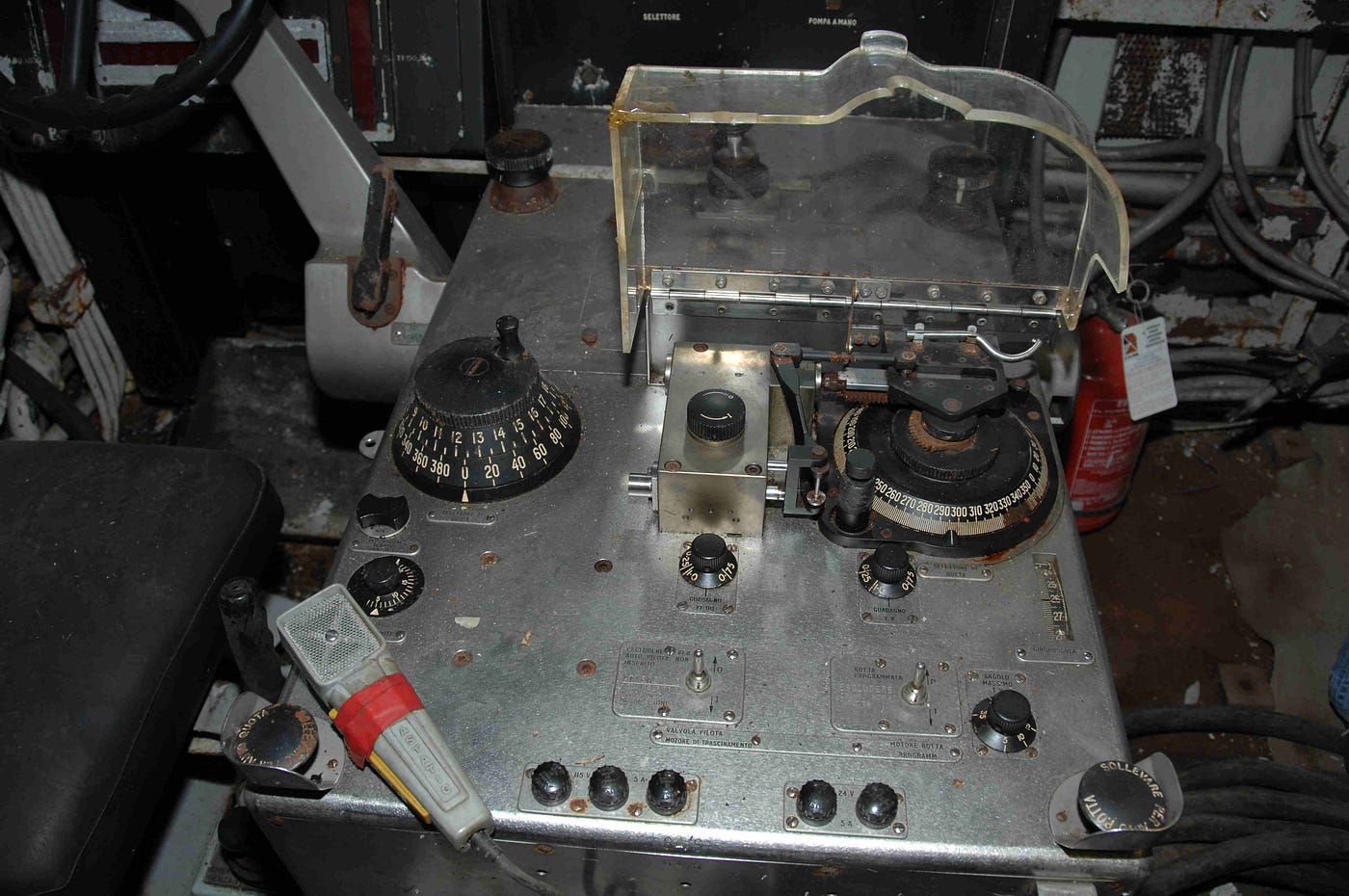
timoneria
However, even at a depth of 300 metres, total darkness prevails. The water temperature is approximately 4 °C, and the pressure reaches 30 bar, which is approximately 30 times the air pressure at sea level. The 30 mm of steel in the hull was all that separated the crew from a horrific death. During dives to such depths, with a column of water measuring approximately 300 metres above the submersible, the crew frequently perceived faint creaking and metallic clangs. These were caused by the elastic deformation of the hull as it adjusted to the increasing pressure. For those on board, these noises were entirely familiar, yet they served as a constant reminder that the entire vessel was separated from the water by only a few centimetres of high-strength steel.
9 The Sail: A Surprisingly Empty Structure
The submarine’s sail is one of its most recognisable features, yet it is also one of the least understood. Popular imagination associates it with the dramatic exploits of German U-boats during the Second World War, when commanders stood on the bridge while attacking Allied convoys on the surface. On modern submarines, however, the sail plays a far more modest role.

The Sauro’s fin, viewed through the forward hatch, where visitors currently conclude their tour of the submarine. The large white star painted on the fin is the Stella d’Italia (“Star of Italy”), the so-called Stellone, the traditional emblem of the Italian Armed Forces since 1871. It should not be confused with the five-pointed red star adopted by the Soviet Armed Forces during the Cold War. Photograph by the author.
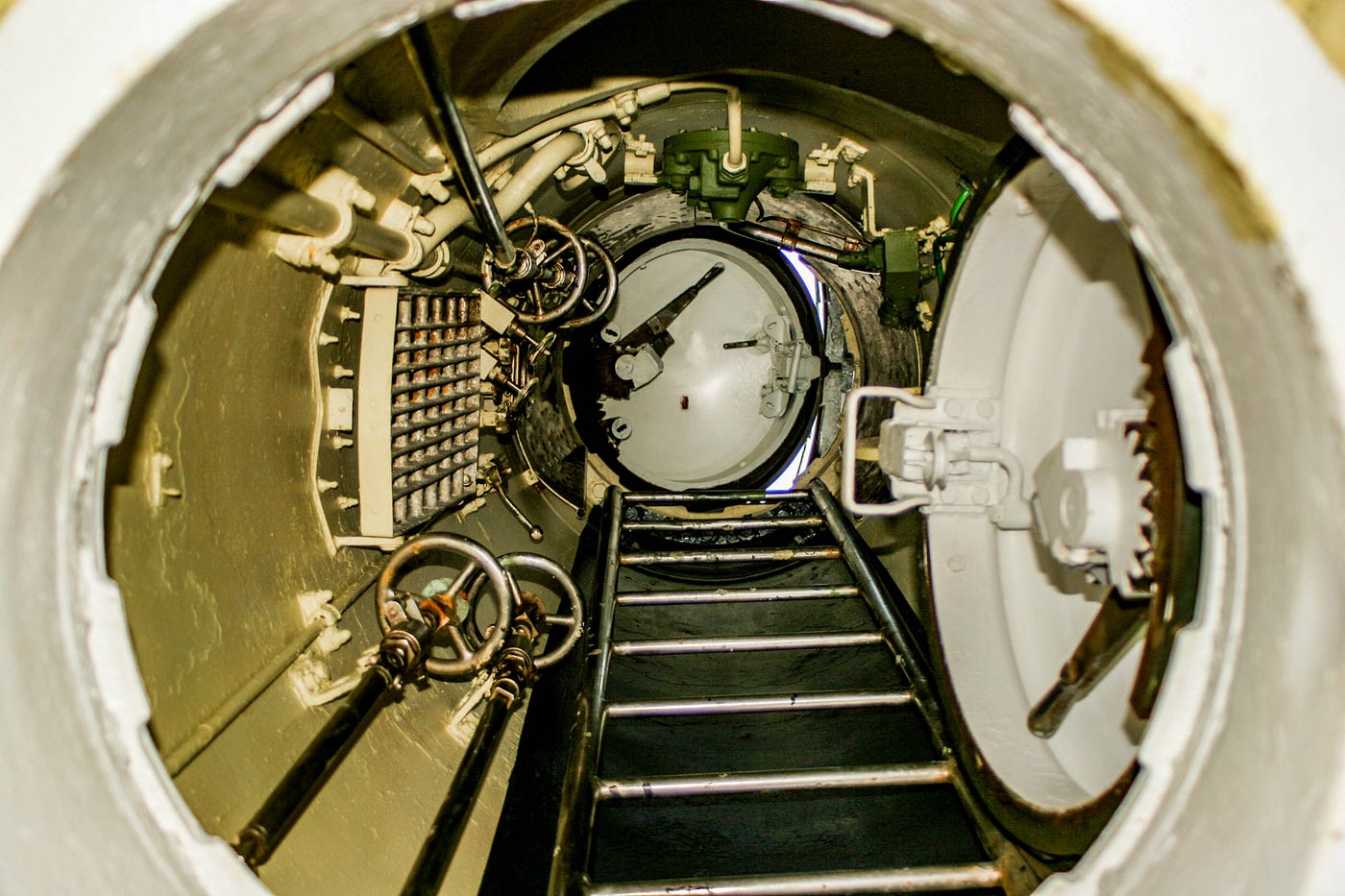
The conning tower of the Sauro from below. Photograph by the author.
Unlike the heavily armoured conning towers of earlier submarines, the Sauro’s sail was not an operational compartment. It was essentially a streamlined external structure built around a narrow vertical trunk connecting the control room with the bridge above. The bridge itself was remarkably small, with room for only two crew members during surface navigation.
Most of the sail’s interior was occupied not by crew spaces but by equipment. It housed the emergency surfacing tank, whose compressed air could rapidly increase the submarine’s buoyancy, together with the wells for the periscopes, antennas and snorkel mast, as well as various cables, hydraulic systems and pipework. Far from being the submarine’s “command tower”, the sail was primarily a protective fairing for these essential systems.

The Nazario Sauro at its berth. Photograph by the author.
10 A Private Cabin? Only the Captain Had One.
On conventional submarines, the space available to the crew is extremely limited. The sole individual permitted to occupy a personal cabin (which, it should be noted, was of a notably diminutive size) was the commander.
The sole room of any significant size was the control room, which functioned as the submarine’s operations centre. It was customary for officers to be allotted a ‘quadrato’, that is to say, a small private room.
The forward compartment was utilised for two functions: as a torpedo launch chamber and as accommodation for the crew. This conventional arrangement was necessitated by the requirement to optimise the utilisation of the available space, despite the consequence of the sailors being obliged to reside both on top of and in close proximity to the torpedoes.
In an effort to economise on space, the number of bunks was reduced to half the size of the crew. The crew was divided into two watches that took turns at the helm, resulting in half the men having a bed available at any given time. These men would hand over their bed to their comrade at the change of watch. This system is known as the “branda calda” (“hot bunk”) system.
Despite its seemingly austere nature, this configuration represented a substantial advancement compared to the submarines of the preceding generation, such as the Toti. The Sauro, for instance, was equipped with three separate toilet facilities, accommodating the 51-person crew. In any case, even on the Sauro, the washbasins were not equipped with drains. Instead, they were filled only with the strictly necessary amount of water and then emptied only at the end to prevent wastage.
[embed]A complete tour of the Nazario Sauro. Source: *Youtube*
Where to visit submarines all around the world
Bibliography
Sonar per sottomarini classe Sauro (a page from Wikiversity; only Italian version is available)
Soc. USEA, Monografia Apparato IPD70, Archivio Off. Ea. Arsenale. M.M.I La Spezia, 1972.
C. Del Turco, Sonar Principi Tecnologie Applicazioni , edizione Accademia Navale — 3º Gruppo Insegnamento Armi Subacquee — Abilitazione Smg-Agg, .Prof. EA/ST, Livorno, 1992.
메타데이터
- post_id
- 4d4e6aefa9e5
- slug
- ten-things-almost-nobody-knows-about-the-italian-submarines-4d4e6aefa9e5
- url
- https://medium.com/teatime-history/ten-things-almost-nobody-knows-about-the-italian-submarines-4d4e6aefa9e5
- canonical_url
- https://medium.com/teatime-history/ten-things-almost-nobody-knows-about-the-italian-submarines-4d4e6aefa9e5
- author_url
- https://medium.com/@martinosacchi60
- status
- ok
- fetched_at
- 2026-07-09 08:02:55