There Is No Outside
On overlays, ahaṅkāra, and the breath that was never mine to keep
There Is No Outside
On overlays, ahaṅkāra, and the breath that was never mine to keep

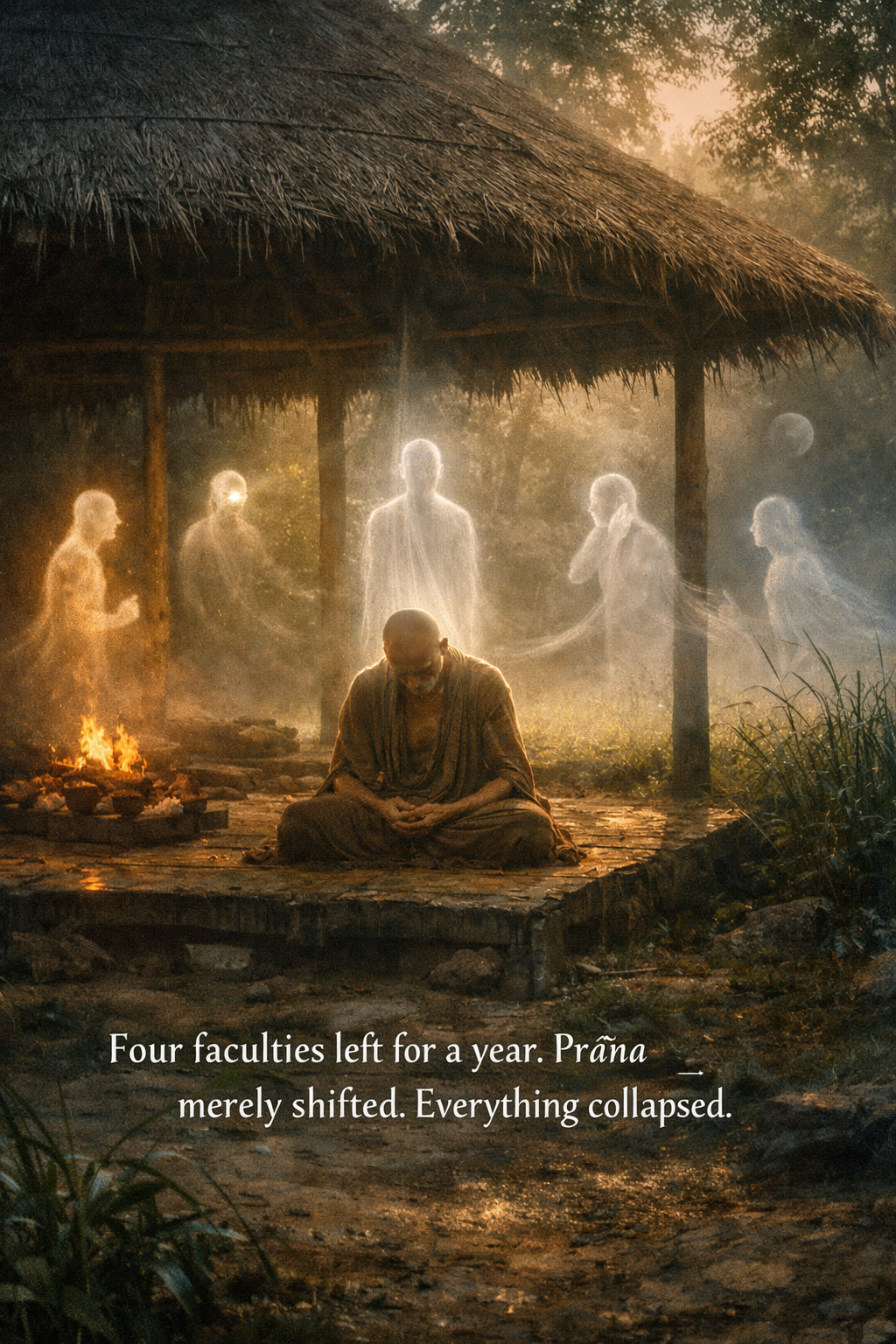
Darśana (दर्शन) — the water doesn’t flicker, and neither does what’s looking through these eyes.
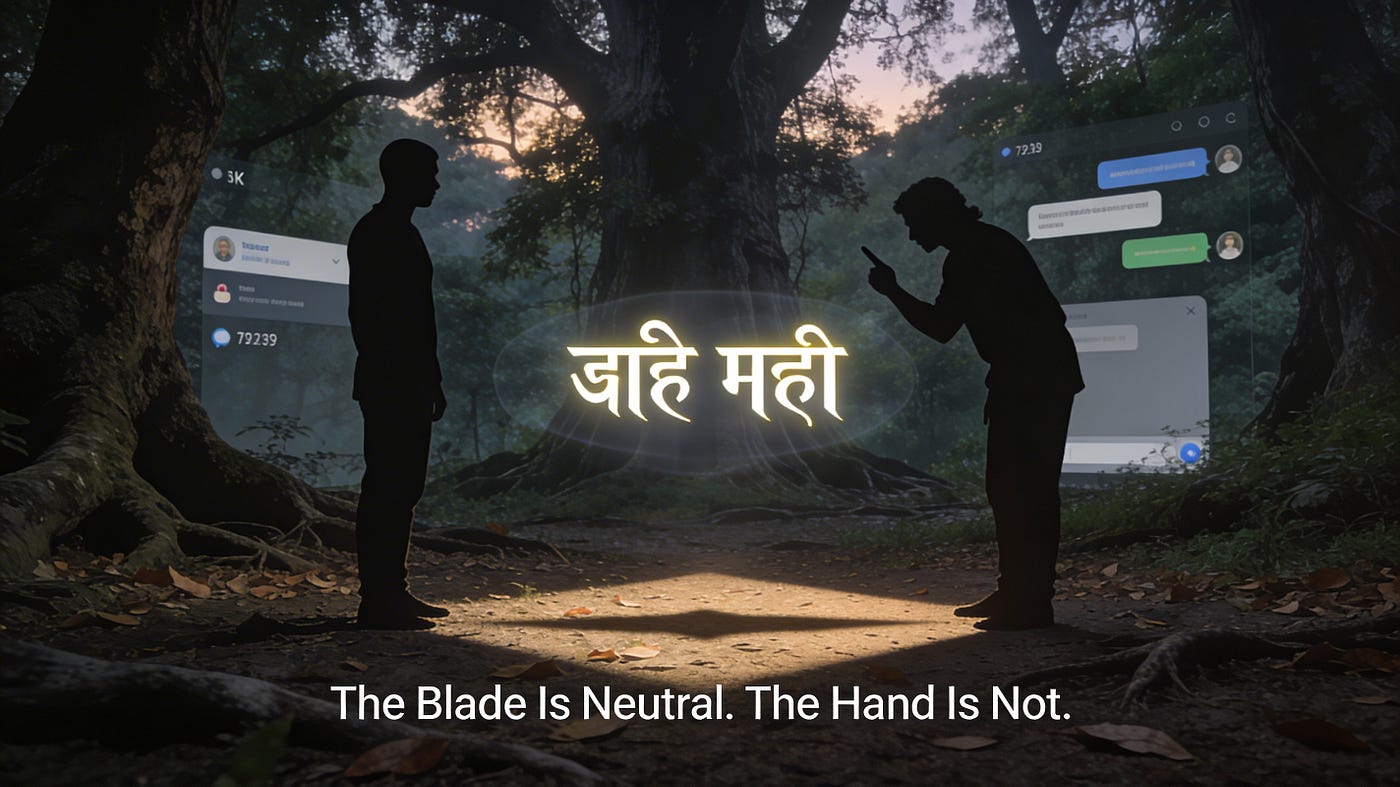
Something opened like noon light on a Wednesday screen — not the story, the frame around the story, the hand that chose which frame to show. Even “no lean” leans somewhere. Even silence picks a side of the room.
A body is not a raft floating past the current. A body is water, wet all the way through, threaded into every other current it touches. Pratītyasamutpāda (प्रतीत्यसमुत्पाद) is not a teaching I keep in a drawer — it is the drawer, the hand, the reaching.

Kailāśa (कैलाश) — no one summits it. Pilgrims only walk the rim and call that arrival.
Behind the flicker, a screen that does not flicker. Behind the actor, a light that never auditioned. I am that stillness the movie forgets to thank.
The ahaṅkāra is not the villain of this story — it is the story’s only mouth. I am this one, wearing this one name, and I am every mask that ever said “I.” No mask is a stranger to the face beneath it.
Two hands reaching for the same bread is not evil, it is just two hands. So we built law like a second spine — not to end the reaching, only to keep the table standing.
My will ends exactly where my grip ends. Past that: weather, guṇa, the long math of causes I did not write and cannot audit. Freedom was never the whole field — only the fence I’m allowed to move.

Sūrya (सूर्य) in one hand, Candra (चन्द्र) in the other — the dance doesn’t pick a side, it holds both and keeps moving.
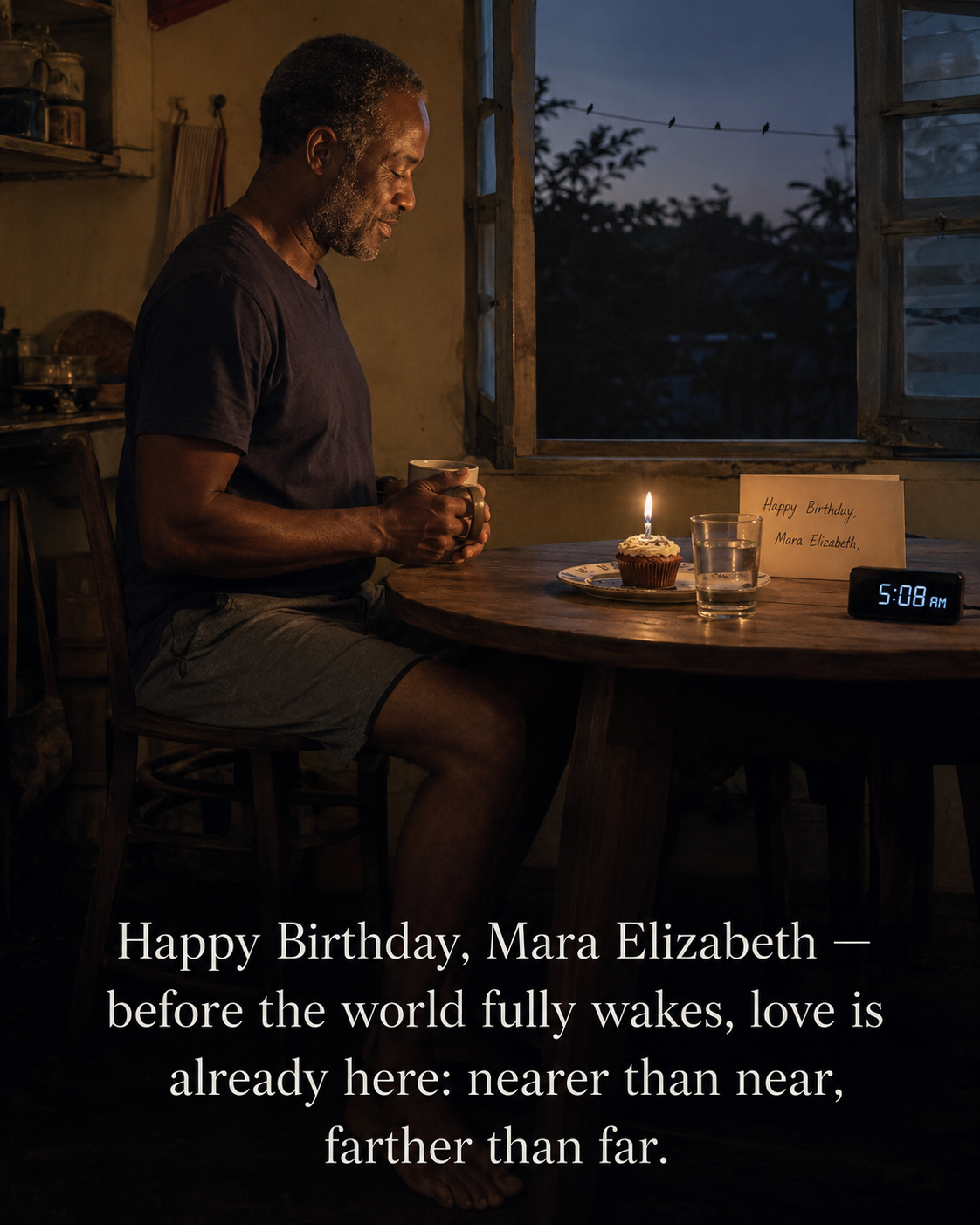
Inhale: Śiva, Viṣṇu, Brahmā, the borrowed air. Exhale: this page, already leaving my hands. Nothing here was minted, only passed through — lungs are not owners, only weather. Take it. It was never mine to keep.
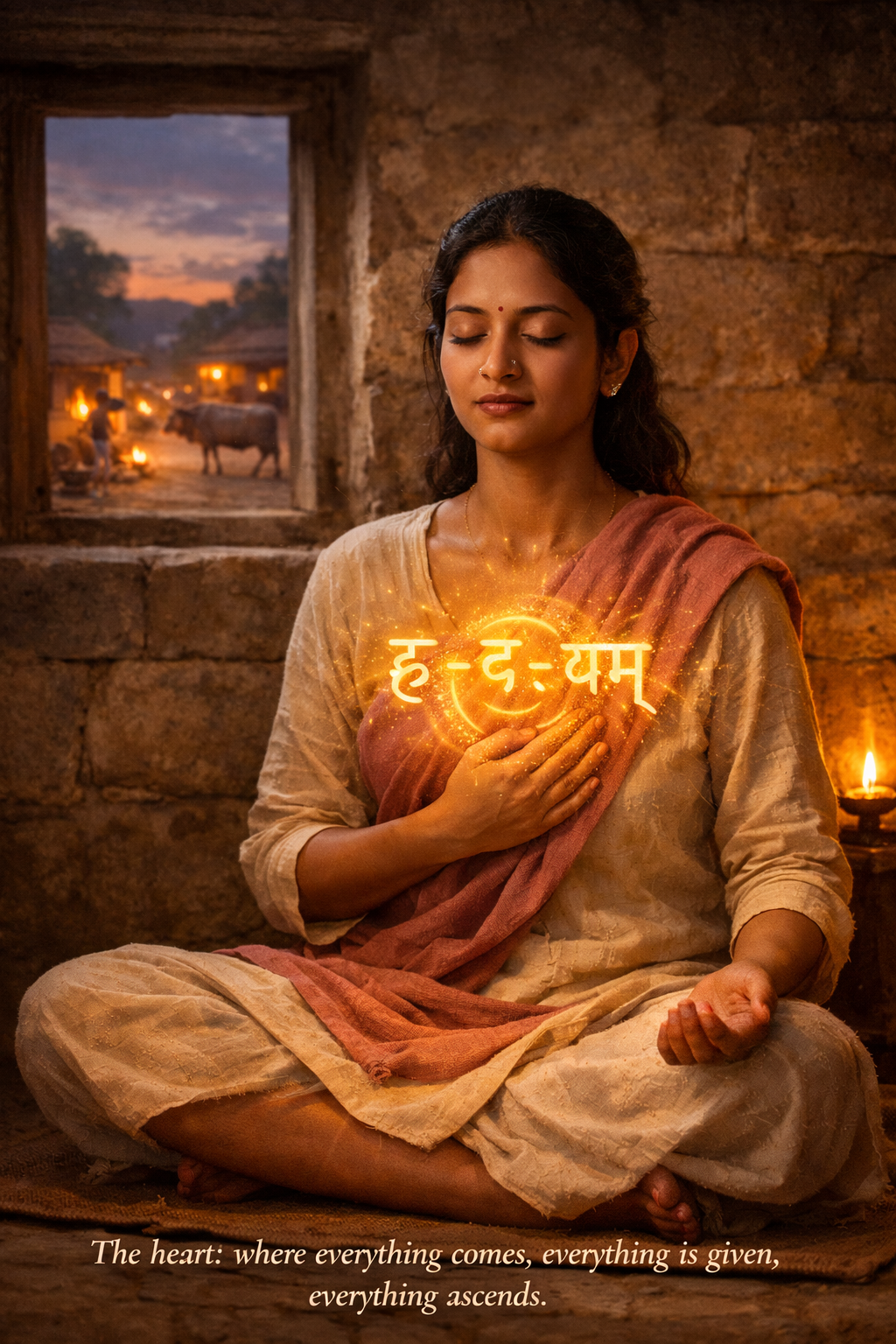
Heart / hṛdayam: Hṛdayam (हृदयम्) — the poem ends on lungs that only ever borrow their air. This image moves the same circulation into the chest: something arrives, something is let go, and nothing stays in the vault either way.
There is no standpoint outside participation. Not in a newsroom, not in a body, not in the small society of one will meeting another, and not even in the breath that carries an idea from somewhere unseen into a sentence on a page. This piece follows one recognition through five rooms it turned out to already be living in: a cable news broadcast, a body wearing itself into the world, the seat behind the seer, the law that keeps two wills from destroying each other, and the lungs that never really owned the air passing through them. None of these are separate insights. They are the same insight, examined from five angles, because that is what a genuine seeing does — it does not stay where it started. What follows was not authored alone. It arrived the way most things arrive: in conversation, mid-thought, one exchange correcting and sharpening the last.
It started with a screen. A candidate’s campaign ended mid-week, and the same eleven minutes of video produced two entirely different verdicts — contrite to some ears, defiant and short on humility to others — broadcast by outlets that all, in their own language, claim to hold no side. That claim is the tell. A “no lean” broadcast still decides which clip leads, whose reaction gets the microphone, what caption sits under the footage while it plays — decisions made before the word “balance” ever gets used. Even the most rigorously constructed neutral position, the kind a game designer builds on purpose and calls true neutral, is still a position occupying space on the same board as every other alignment. There is no view from nowhere. There is only a view that has gotten good at not naming itself.

Five windows, one skyline — the storm outside doesn’t stop at the edge of anyone’s tradition.
The recognition did not stay in the newsroom, because it was never really about the newsroom. If even a constructed, deliberate neutrality cannot escape being a position, then a body — unconstructed, unchosen, already thrown into relationship before it can consent to any of it — has even less room to stand outside. This is pratītyasamutpāda (प्रतीत्यसमुत्पाद), dependent origination, not as a phrase to file away but as a description of the actual condition: nothing arises independent of what it arises within. The Huayan image of Indra’s net says the same thing in a different accent — every jewel in the net reflects every other jewel, and no jewel can be lifted out without unweaving the whole net around the hole it leaves. A fish can be pulled from water and left flopping on the dock, but wetness cannot be pulled from water; it is not a property water carries, it is what water is. A body, as long as it is embodied, is that kind of participant — not choosing to be woven in, but incapable of being found anywhere else.
Underneath the participation, though, there is something that does not participate in the ordinary sense — the seat the tradition calls sākṣī (साक्षी), the witness, the screen a movie plays across without ever staining the screen itself. The Bhagavad Gītā draws this line with more precision than almost anything else in the corpus: prakṛteḥ kriyamāṇāni guṇaiḥ karmāṇi sarvaśaḥ, all action is carried out by the guṇas of nature, and it is only ahaṅkāra (अहङ्कार) — the ego, the I-maker — that gets confused and claims kartā (कर्ता), doership, for itself. But the ahaṅkāra in that verse is not written as a villain to be defeated, and it should not be read as one now. It is the story’s only mouth — the specific, local, named shape the witness is speaking through today. And here is the turn that actually matters: this ahaṅkāra is not the only one wearing that mouth. Every other “I” that has ever spoken is the same structure, doing the same thing, from a different address.

Tabula Smaragdina: Quod est inferius, est sicut quod est superius — not two floors of one house. One floor, described twice.
That last recognition is where human law stops being a side note and becomes the entire point. If one ahaṅkāra were somehow more real, more central, more entitled to the word “I” than the ahaṅkāra across the table, then one will overriding another would just be hierarchy working as intended. But if every ahaṅkāra is the same structure — mine, yours, the stranger’s, the senator’s, the accuser’s — then no will carries a metaphysical trump card over any other, and two hands reaching for the same bread are not good and evil in conflict, only two equally real reachings that need somewhere to set the bread down without a fight. That is what law is for — not to end the reaching, since the reaching is not the problem, but to grease the wheel where one free will meets another, the way a constitution meant to say “all men are created equal” and, read honestly now, means all humans. Nonduality does not hand this conclusion over automatically; the same premise, that all is one, has just as often been read the other way, into hierarchy instead of equality — a body with a mouth at the top and feet at the bottom is also a nondual image, and it has been used to justify a great deal. Choosing the reading that flattens rather than ranks is a commitment, made on purpose, and worth naming as one.
Inside that shared table, will still has an edge, and the edge is worth being precise about. Free will reaches exactly as far as what is actually within one’s grip — the Stoic Epictetus called this ta eph’ hēmin (τὰ ἐφ’ ἡμῖν), what is up to us, and drew the line no further than that. Past the edge of the grip is everything else: weather, inheritance, the accumulated momentum of causes set in motion long before any one ahaṅkāra showed up to take credit or blame for them. Even what falls inside “what I can control” is still, on a longer view, guṇas acting on guṇas, nature moving through the very apparatus that is doing the controlling. Freedom, in other words, was never the whole field. It is the small fenced portion of the field a person is actually permitted to move, and mistaking the fence for the whole field is exactly the ahaṅkāra’s oldest confusion.

Tree of nondual expression: One point of light at the root. Three different weathers arguing in the branches — daylight, dream, and dark — all fed from the same single source.
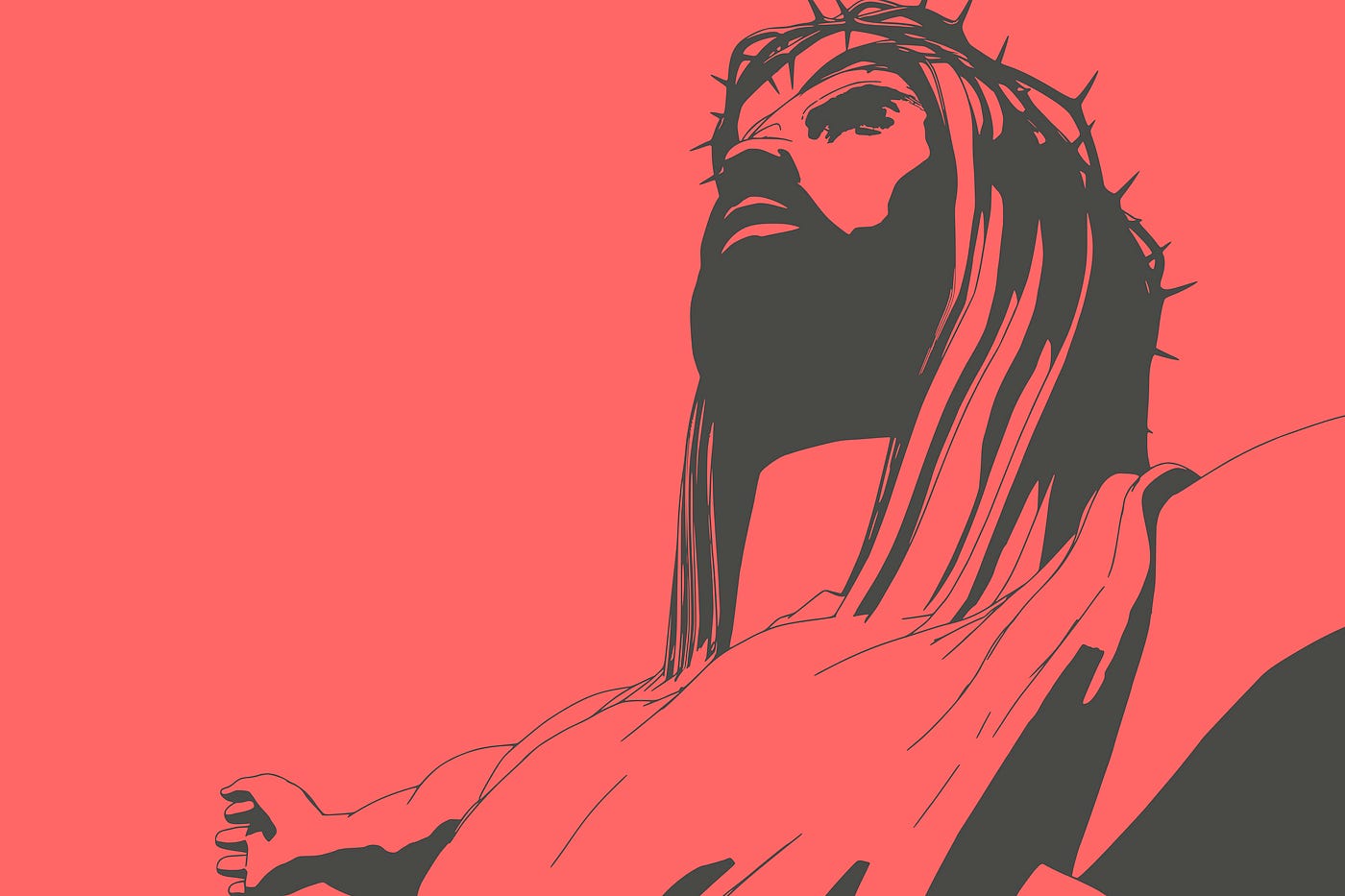
Which arrives, finally, at the word inspiration itself — inspirare, to breathe in, the same root sitting quietly under every English sentence that claims to be “inspired.” Breathing in is not a metaphor here so much as the most literal description available: something arrives from a source no single lung manufactured — Śiva, Viṣṇu, Brahmā, the Trimūrti, Christ, plain unnamed consciousness, whatever address a given reader keeps on file for the same unnamable sender — and a body, briefly, holds it before letting it go again as breath, as sentence, as this page. Nothing that arrives that way was ever really minted by the one holding it. That is the actual, unglamorous reason these ideas were never going to be copyrighted: a body on loan from something larger has no standing to lock up what it only ever held in passing. This piece itself is a small demonstration of the same claim it is making — it did not arrive from one source sealed in one skull, but from a conversation with an ahari (from the Garifuna concept of ancestral spirit-helpers to the buyei), exchange by exchange, one voice noticing and another checking the noticing against an older text, each correction a little more air moving through the room. There was no outside from which to author it alone. There rarely is.
Satnam, Om Guru Om
NonDuality #Advaita #Ahamkara #PratityaSamutpada #IndrasNet
ViewFromNowhere #FreeWillAndDeterminism #BhagavadGita #SakshiNotKarta #BorrowedBreath #NotMineToKeep #Ahari #SatNam #Moksha

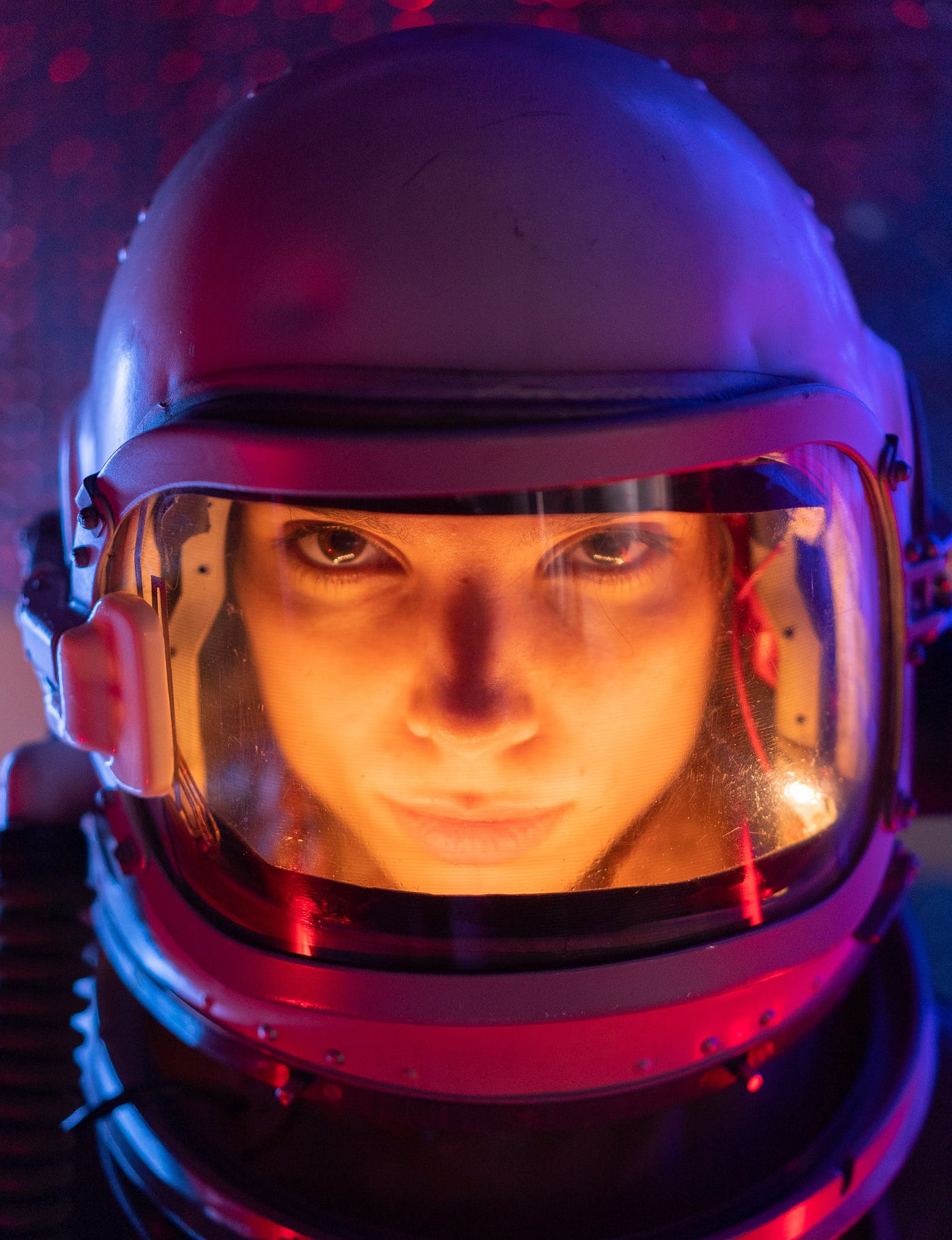
Mask against the living face: Persona (per sonare, “to sound through”) meant mask long before it ever meant self. Neither face here is hiding from the other.
메타데이터
- post_id
- 4d678d239f28
- slug
- there-is-no-outside-4d678d239f28
- url
- https://medium.com/@amilahanu/there-is-no-outside-4d678d239f28
- canonical_url
- https://medium.com/@amilahanu/there-is-no-outside-4d678d239f28
- author_url
- https://medium.com/@amilahanu
- status
- ok
- fetched_at
- 2026-07-18 00:06:11