Why the Same Sweetener May Affect You Differently Than Someone Else
One artificial sweetener can affect two people differently, partly due to differences in their gut microbiome.
Why the Same Sweetener May Affect You Differently Than Someone Else
One artificial sweetener can affect two people differently, partly due to differences in their gut microbiome.
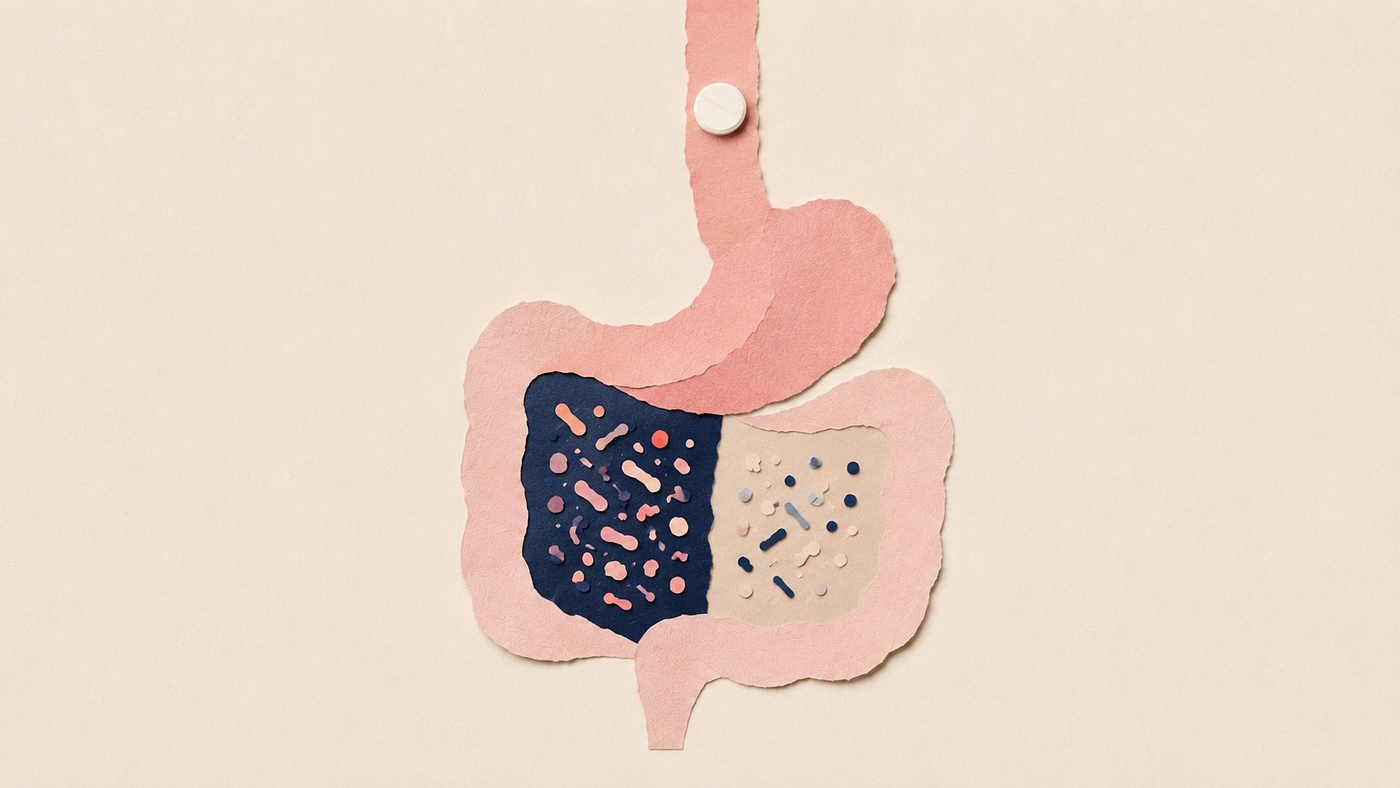
cover image generated using Microsoft Copilot
One Dice, Several Outcomes
Artificial Sweeteners (abbreviated here as ArS) once had a clear purpose: to enjoy sweetness without any calories. Yet research now shows a less straightforward observation. Different people experience different results by consuming the same sweetener. Some show measurable changes in blood glucose levels, others seem unaffected.
This prompted researchers to delve into the biological environments where such sweeteners travel. One such arena is our gut microbiome, a vast community of microbes inhabiting the human intestine.
This piece explores why such sugar substitutes have now become a subject of microbial research.
How ArS Became a Microbiome Question?
ArS are often categorized into a single group, although they vary significantly in their chemical structures as well as exposure to host metabolism. Because only tiny amounts are used, they don’t raise blood glucose and so were deemed “metabolically inert”.
Not all of them move through our gut in the same way. For instance, aspartame gets broken down to simpler forms before reaching our intestine, whereas saccharin and sucralose pass through our GI tract without many changes. A 2023 review by Posta et. al. describes how each of these uniquely interacts with our gut receptors.
Therefore, early studies emphasized their safety and toxicity more than other points.
But growing research on microbes changed this view. Microbes proved crucial in human physiology, such as glucose metabolism and immunity. This raised a question- do sweeteners affect these microbes or get metabolized themselves? This became relevant for sweeteners that reach the intestine, where dense microbial flora reside. As evidence linking sweeteners with metabolic disorders grew, the gut microbiome emerged as a missing puzzle piece.
How Sweeteners Affect Gut Microbes
Much of the evidence comes from studies performed on mouse models. Commonly used ArS, such as acesulfame potassium (Ace-K), sucralose, saccharin, and aspartame, have been found to alter the gut microbial ecology in mice and rats.
Several animal studies noted a shift in relative abundances of the two dominant bacterial phyla in the gut– Firmicutes and Bacteroidetes. This is monitored as the F/B ratio and imbalance to this is indicative of altered metabolic states (other factors like diet, type of sweetener, etc., also play equal roles).
Other patterns observed in various studies include changes in bacterial motility, antibiotic susceptibility, decline in microbial diversity, and disruptions in overall microbial balance (Gut Dysbiosis). However, specific insights vary based on factors like the type of experiment methods, sample sizes, etc.
On a functional level, sweeteners were reported to affect pathways like carbohydrate cycle, short-chain fatty acid (SCFA) production, bile acid metabolism, and glucose regulation–
- Exposure to **Ace-K **has been shown to cause gut dysbiosis and intestinal injury in animal studies.
- **Sucralose was found to increase the permeability of the intestine and promote the entry of opportunistic pathogens like **E. coli.
- A 2019 study on pregnant rodents revealed that their usage may directly affect metabolism in offspring(s).
- Published reviews point to multiple consequences, such as glucose intolerance, increased fasting glucose, reduced insulin sensitivity, intestinal inflammation, and changes in oral and fecal microbiota.
These microbial dynamics are noteworthy because they may directly influence host physiology.
But while findings in animal studies are consistent, it’s not the same for humans. ***Suez and team* found saccharin responsible for altered microbiota and impaired glucose tolerance in a subset of participants. Four of the seven test individuals confirmed this response, despite receiving the same dosage.**
Whereas ***Frankenfeld et. al*. observed only slight changes in microbial diversity due to Ace-K and found little evidence of drastic metabolic effects upon its consumption.
It’s striking how inconsistent these effects appear from person to person. Even under the same conditions, some show signs of altered metabolism and/or microbiome, while others show no change at all.
Why Responses Differ Between Individuals
One plausible explanation is that human microbiomes aren’t uniform. It varies among people based on factors like diet, metabolism, and environmental conditions. It still matters because it acts as an active metabolic interface between us and our food. Thus, each person may feel distinct effects even with the same sweetener.
ArS also adds to this variation. As discussed before, even if grouped together, they differ in their chemical structures and how they pass through our GI tract.
Suez et. al., in 2022, studied these variable responses. It was a randomized controlled trial involving 120 healthy adults. They applied a clever strategy- create baseline microbial signatures of all participants, before any treatment. Post treatment, different ArS created different alterations in gut microbiome and metabolome of participants. Particularly, saccharin and sucralose changed glycemic responses only in a subset of participants (grouped as responders).
This indicated that baseline microbiome composition clearly affected individual responses. Furthermore, microbial samples from human responders and non-responders were transferred to germ-free mice. Recipient mice developed glycemic responses similar to their responding donors. These results supported the growing hypothesis: health effects of ArS depend on both the microbiome receiving them and their own chemical structures.
Remaining Questions
Correlation or Causation?
Is it a cause or effect? Researchers have proven that ArS impacts host microbiomes and metabolism, but the relationship between the two remains blurry. Whether these microbial changes are driving physiological outcomes (e.g., glucose intolerance) or accompanying them is still an open question.
Which Microbes Actually Matter?
Another concern is the variability of microbes. Their reactivity to sweeteners varies across studies. Multiple studies identified certain microbial groups, while others were found only in specific biological settings. So, do ArS trigger a single response or many distinct ones?
Can Responses Be Predicted?
What if one’s microbial profile could predict his/her response to such substances before their consumption? Ongoing research already shows a link between gut microbes and their sensitivities to sweeteners. Thus, finding such unique microbial signatures may provide clues on why reactions differ between people.
The Future May Be Personal, Not Universal
Gut microbes have already been a topic of investigation in many domains of biological sciences. The case of how these sweet agents behave with them is still a mystery.
As computational techniques like AI and multi-omics are being integrated into microbiome research, we may get better and quicker insights into how different microbial communities respond to a particular sweetener. It may also be possible to identify which sweeteners are better tolerated by certain individuals than others.
Until then, avoiding overconsumption of such substances and maintaining a healthy lifestyle remain sensible choices. Microbes residing in our gut may be more involved in these dietary conversations than our expectations.
메타데이터
- post_id
- 4d85ff2e52cf
- slug
- why-the-same-sweetener-may-affect-you-differently-than-someone-else-4d85ff2e52cf
- url
- https://medium.com/microbial-instincts/why-the-same-sweetener-may-affect-you-differently-than-someone-else-4d85ff2e52cf
- canonical_url
- https://medium.com/microbial-instincts/why-the-same-sweetener-may-affect-you-differently-than-someone-else-4d85ff2e52cf
- author_url
- https://medium.com/@writeupbymegha
- status
- ok
- fetched_at
- 2026-07-09 20:10:33