I Didn’t “Leave” Academia — I Took Women’s Health With Me.
This piece explores how identity, discernment, and lived experience shaped my career pivot, and why success in STEM doesn’t have to follow…
I Didn’t “Leave” Academia — I Took Women’s Health with Me
This piece explores how identity, discernment, and lived experience shaped my career pivot, and why success in STEM doesn’t have to follow a single script to be meaningful.

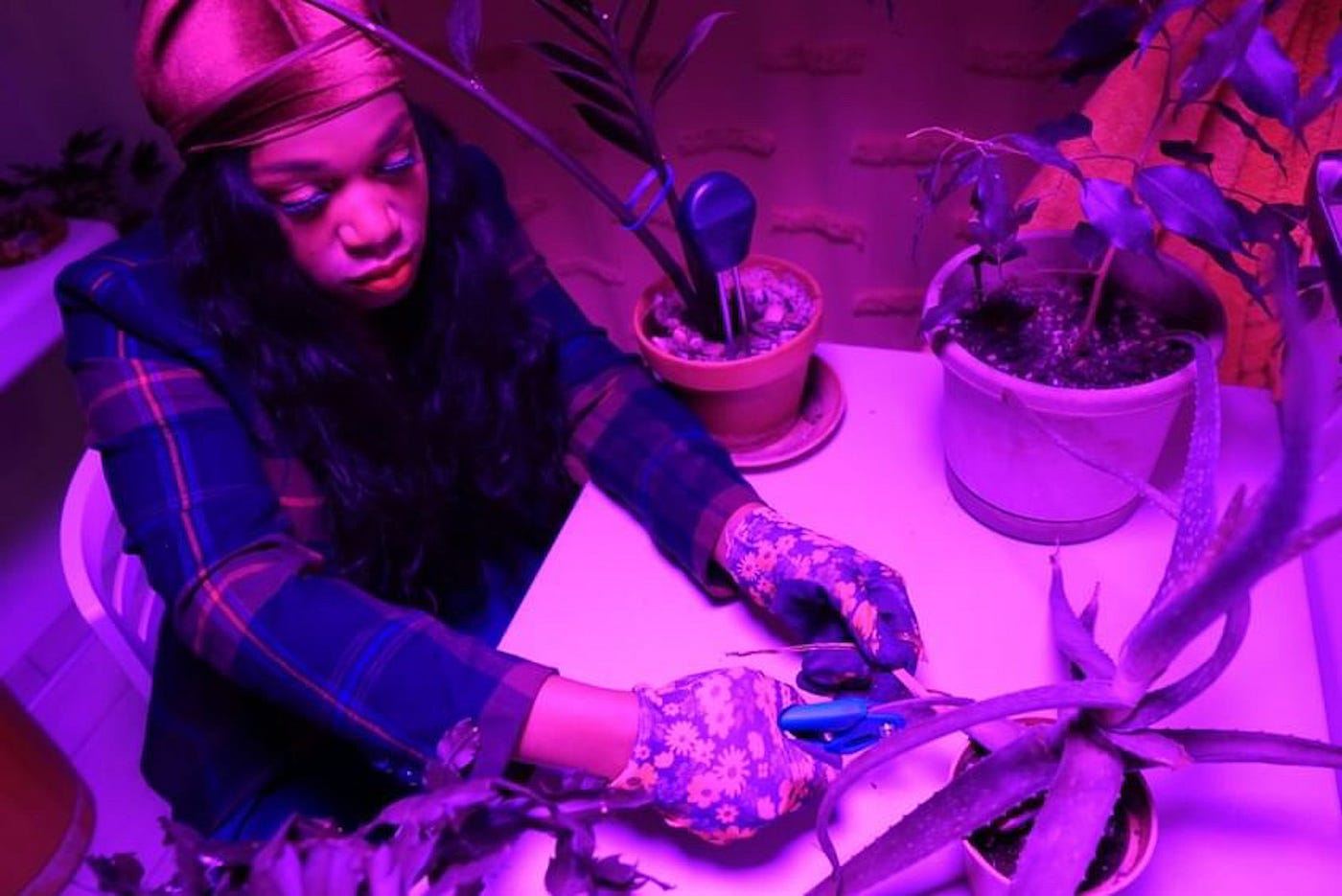
Photo by Gustavo Fring on Pexels
Who Writes the Script in STEM?
I was trained to believe that success in STEM followed a straight line: earn a PhD, publish, secure a faculty role. As a woman of color in academia, I internalized that path even though my passion for women’s health extended beyond the lab. My training gave me rigorous scientific expertise, but it also exposed a gap: critical women’s health research often fails to reach the people it’s meant to serve. I watched discoveries about hormonal disorders and gynecologic disease stall in journals while misinformation spread freely online. Discovery alone was not enough. If research never reaches the people living with the disease, its impact remains incomplete. Reconciling that tension came to head one night in the lab.
“…critical women’s health research often fails to reach the people it’s meant to serve.”
At 11 pm on a Wednesday, I was sitting on the cold lab floor, trying not to hyperventilate as I stared at the flasks that held my ruined experiment. Every cell contaminated, every deadline suddenly impossible. What was I doing? I had fought my way to a postdoctoral fellowship at Harvard Medical School, yet at that moment my biggest fear was that I’d come all this way only to walk away. I kept repeating the same mantra I’d absorbed from the culture around me: If I want to be successful in STEM, I have to stay the course. The unspoken script was very clear: PhD → Postdoc → Faculty → Tenure. And my peers were following it with conviction and competitive spirit. This postdoc was supposed to be the ideal next step in my path to studying endometriosis and inflammation. I had kicked down the academic door in grad school, but one year in, something in me knew the fit wasn’t right. That realization made me reflect on how I got there in the first place.
When Passion Outgrew the Bench
I discovered my passion for women’s health research early in my graduate training — almost by accident. I landed in a lab with an unexpected project, but instead of feeling out of place, I felt myself expand into a true women’s health investigator. Nothing felt too small to matter or too complex to take on. Every experiment, every late‑night troubleshooting session, every confusing dataset was a part of unraveling how inflammation shapes endometriosis, and I was determined to understand it from every angle.
Things intensified during my postdoctoral training, when I started enrolling patients undergoing laparoscopic surgery for endometriosis. That was the moment the science stopped being abstract and became deeply human. So many women not only thanked me for the work we were doing, but shared their long histories of chronic pain and the relief they felt simply knowing someone was listening. The emotional weight of their stories, and the responsibility of studying a condition that affects their daily lives so profoundly, quickly grew.
“I began to wonder whether discovery without translation was enough.”
I couldn’t understand how so few studies were funded to improve the quality of life for these patients. Reading existing data or even drafting manuscripts never compared to meeting women face‑to‑face, joining them in the operating room, and working with samples that might one day change their care. At the same time, I felt the frustrations that define this field: constant funding battles, diagnostic delays that refused to budge, and the spread of misinformation that left patients desperate enough to try anything, from unproven supplements to questionable treatments. All of this made it clear that my work needed to extend far beyond the bench. I began to wonder whether discovery without translation was enough. But that question didn’t exist in isolation — it was deeply tied to how I saw myself within STEM.
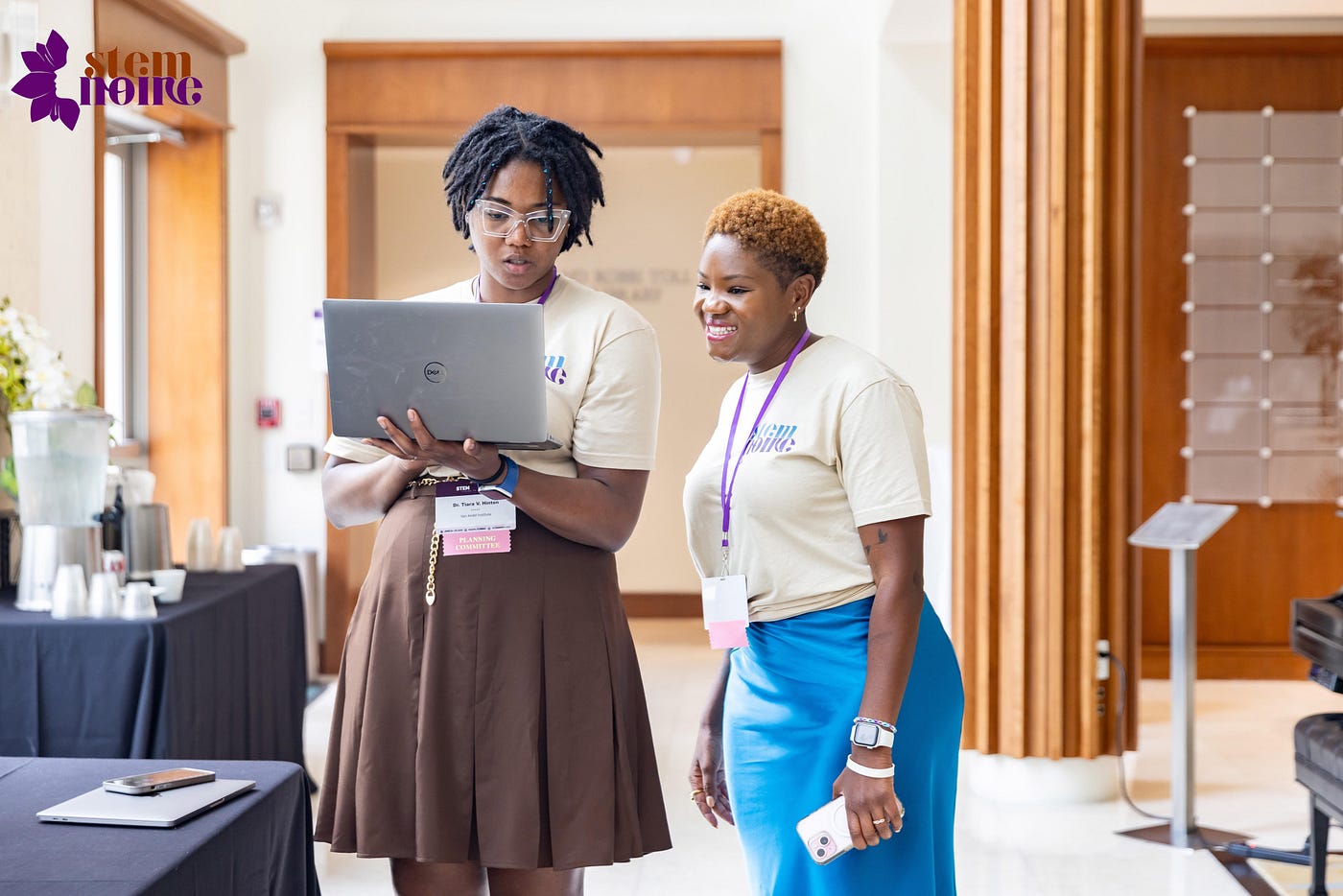
Picture of Kristeena (right) co-chairing at the 2025 STEMNoire conference. Photo credit to STEMNoire.
The Fear of “Leaving”
I carried a constant, complicated tension around my identity throughout my Ph.D. and postdoc. As the only Black woman in my programs, I felt the weight of representation at every turn. I was asked to be in photos, to stand in for diversity, to be the face of progress. It was exhausting in a way that never showed up on my CV.
Imposter syndrome wasn’t new to me by then, but it still found ways to creep in, whispering doubts about whether I truly belonged in these spaces. There’s a particular fear many women of color know well: the belief that deviating from the expected path is dangerous or can be read as failure. I never wanted to be seen as the one who “couldn’t cut it,” the dropout, the cautionary tale. That pressure sat with me every day, shaping how I moved through rooms where I was both hypervisible and yet still invisible. Still, that fear didn’t stop the quiet realization taking shape.
“ It was exhausting in a way that never showed up on my CV.”
Discernment, not Departure
Choosing a nonlinear path into medical communications felt risky, raising fears of “leaving” STEM or wasting my training. Instead, I found roles that amplified my impact by translating evidence-based science into accessible, accurate narratives across women’s health and other therapeutic areas. However, my pivot didn’t happen overnight. It began with small intentional shifts:
- I realized I was most energized when explaining complex findings to people, so I became an Application Scientist with a marketing team in medical devices.
- I gravitated toward impact and comprehensive science, which led me to transition into a Process Science role.
- I felt a growing sense of urgency to improve women’s health information accessibility and clarity, so I took a risk and moved into Medical Communications, while continuing to grow my personal interest and footprint.
These transitions eventually led me to Medical Communications, a field that requires scientific rigor, but applies it differently. It’s about examining, evaluating and translating complex data and information into material for anyone and everyone. For me, it was not a departure from my “scientist” title, but an expansion of what it means to be a scientist, to be a woman in STEM, and more specifically to be a Black woman in STEM. And if I can successfully convey a medical or scientific story to a healthcare provider, a friend, a neighbor, a patient, and the general public in a way that gains trust, I’m happy.
“Navigating this transition made me reevaluate how impact can be measured.”
So how do we define impact? In academia, a few metrics come to mind: impact factor, citation count, number of talks and speaking engagements, funding. Navigating this transition made me reevaluate how impact can be measured. In communications, we work with measures of accessibility, credibility, and reach. The mechanisms of translation and delivery must be optimized for the audience and topic. How well are the messages being understood?
I’m building a career that integrates science and storytelling to bridge the gap between research and reality across women’s health and other therapeutic areas. I found a sweet spot where my job reflects my passions and the work that I do when the workday is over, translating research into digestible content.
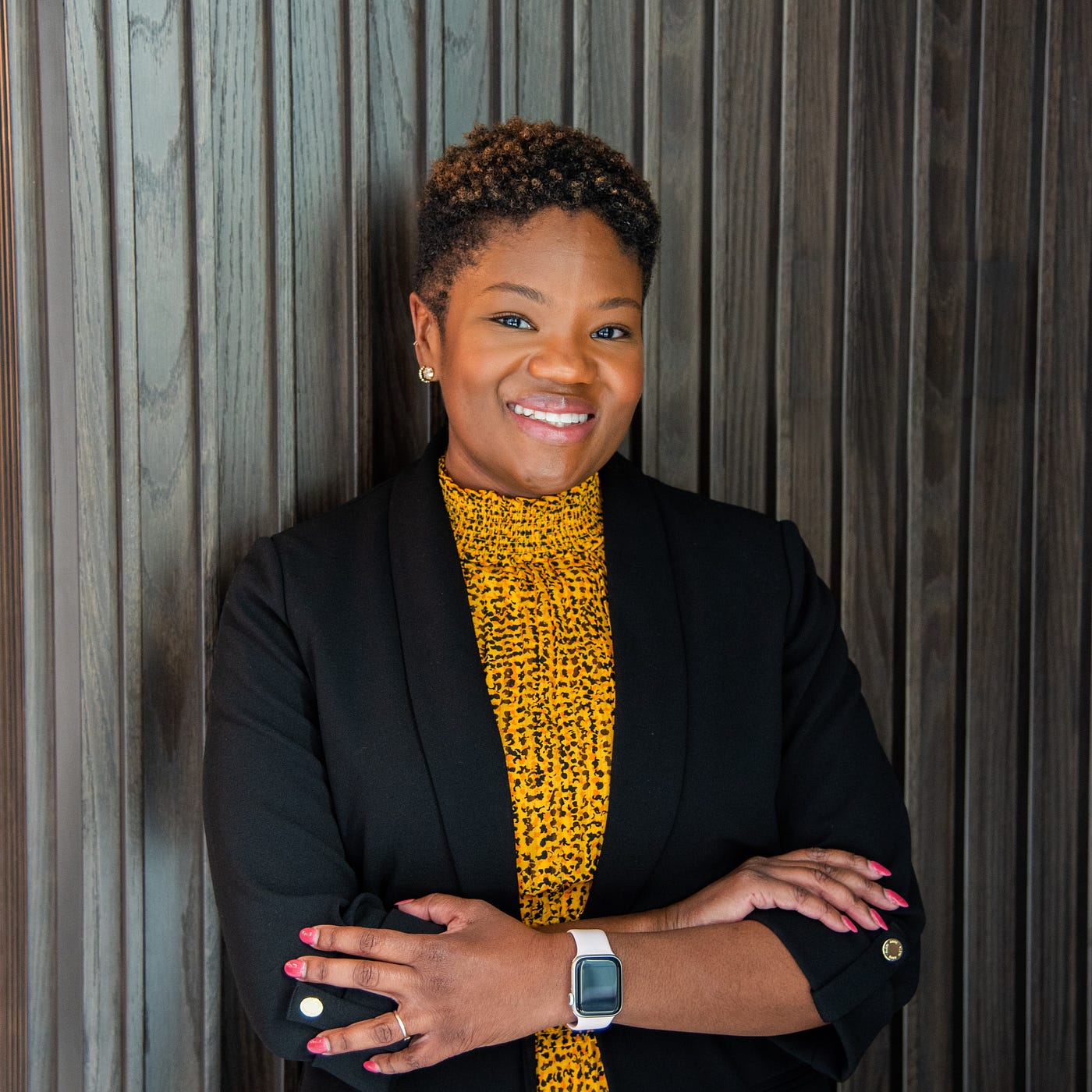
Photo of Kristeena Wright.
What to take away
Looking back, when I reached my career crossroads, I didn’t leave academia nor did I leave STEM. Instead, I expanded my relationship with both. Reaching this point required me to heavily weigh the difference between deviation and failure. That was my experience and I could no longer escape the necessity to re-evaluate my definition of success. This required unlearning the ways I had measured contribution and impact for so long.
Bridging medical research with accessible communication became the only way to close the gap between discovery and real‑world impact. It requires breaking down jargon, dismantling paywalls, and working alongside clinicians to ensure evidence doesn’t stay confined to academic circles. After all, scientific discovery is only as powerful as it is understood. In this way, I didn’t walk away from the work; I made sure it could finally reach the people it was always meant for.
This article was originally published on June 12, 2026 on VanguardSTEM.com as part of our regular content.
If you enjoy our original content, consider donating to our parent not-for-profit, Mo-saIQ, to help support this work.
메타데이터
- post_id
- 4db2dae3deb4
- slug
- i-didnt-leave-academia-i-took-women-s-health-with-me-4db2dae3deb4
- url
- https://medium.com/vanguardstem-conversations/i-didnt-leave-academia-i-took-women-s-health-with-me-4db2dae3deb4
- canonical_url
- https://medium.com/vanguardstem-conversations/i-didnt-leave-academia-i-took-women-s-health-with-me-4db2dae3deb4
- author_url
- https://medium.com/@teena.wright
- status
- ok
- fetched_at
- 2026-06-21 22:26:41