VAULT ECHOES#18 — PRIVATE DANCER BY TINA TURNER.
The Year is 1984 and Apple launches the Macintosh computer, this chunky little machine that promises to change how everyday people connect…
VAULT ECHOES#18 — PRIVATE DANCER BY TINA TURNER.
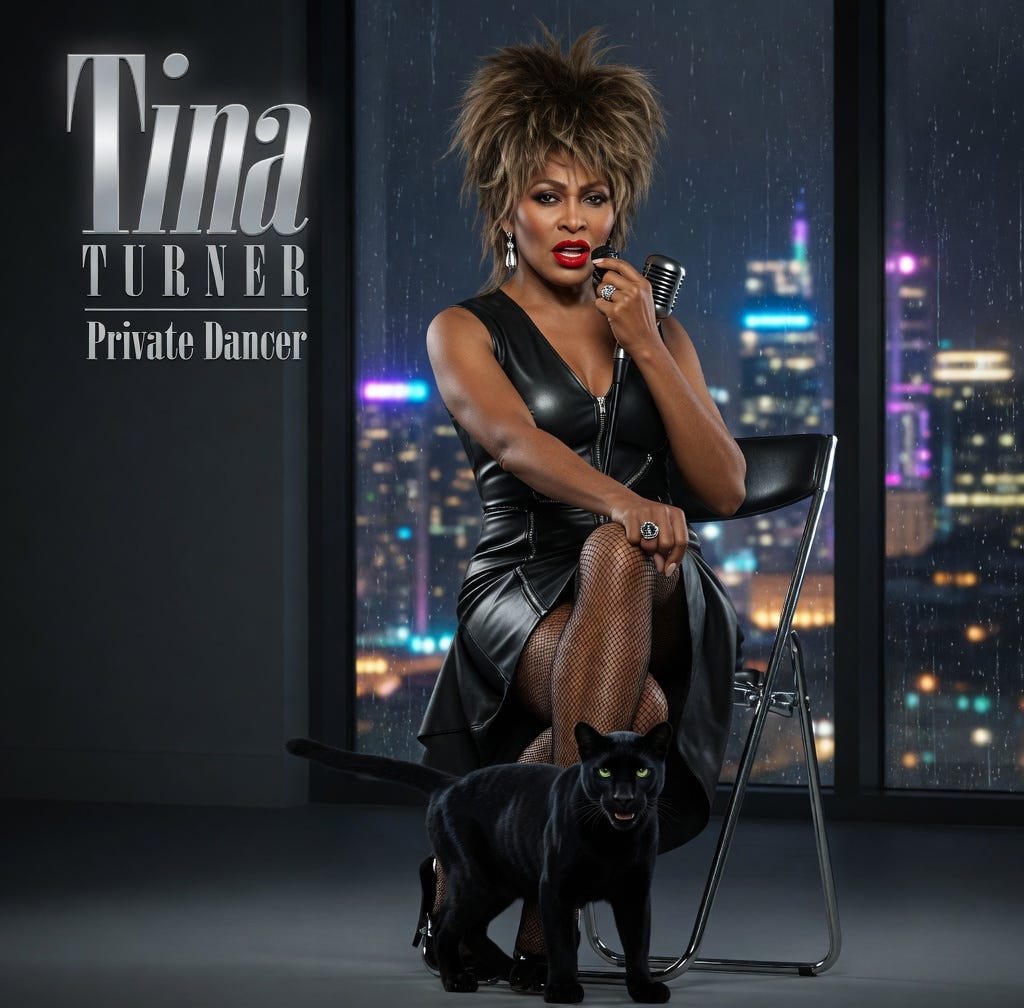
The Year is 1984 and Apple launches the Macintosh computer, this chunky little machine that promises to change how everyday people connect and create. Tucked away in London recording studios, something even more powerful is happening. A woman who had been knocked down harder than most could imagine is standing back up. At 45 years old, with scars from years of pain and a career that many had written off, Tina Turner walks into the studio. She is not chasing fame anymore — she is claiming it. This is the year she releases Private Dancer, the album that turns her from a survivor into a legend. It is not just music; it is her roar after years of silence.
Artist
Tina Turner was born Anna Mae Bullock in a tiny town called Nutbush, Tennessee, on November 26, 1939. She grew up poor but her voice was always big and full of fire. By the late 1950s, she had joined Ike Turner’s band, and the world got to know her as the wild, unstoppable half of Ike & Tina Turner. With legs that moved like lightning and a voice that could shake the rafters, Tina became a force. After she left that toxic marriage in 1978, broke and starting over, she fought her way back. By the 1980s, she stood alone — tall, fierce, and free. Tina was not just a singer. She was the Queen of Rock ’n’ Roll. Her stage shows were pure energy: short skirts, high heels, that famous strut. She sold over 100 million records in her life. But more than sales, Tina gave people hope. She showed that you could come from nothing, survive hell, and still shine brighter than anyone.
What’s love got to do, got to do with it? What’s love but a second-hand emotion?
Influence
Tina’s path was shaped by the music and people around her from the start. As a teenager in St. Louis, she fell in love with the blues. Watching B.B. King perform one night changed her forever — she said his guitar and voice pulled her into a trance. That raw soul sound became her foundation. Then came Ike Turner. He spotted her talent in 1956 when she grabbed the mic during a break and sang a B.B. King song. Ike taught her how to control her voice, how to own the stage, and how to turn pain into performance. He renamed her Tina and built the Ike & Tina Turner Revue around her explosive energy. For years, he was both mentor and tormentor, pushing her to greatness while breaking her down. After she escaped that marriage, Tina found new influences in the British music scene. She drew strength from strong women before her, like the way Janis Joplin studied her growl and energy. Her heroes were survivors: people who turned struggle into art. Ike gave her the start, but her own grit and these later collaborators gave her the freedom to become the icon we love. Tina never forgot her roots, but she refused to stay trapped by them.
Album
Private Dancer debut was on May 29, 1984, and it was Tina’s big comeback statement.
The album has ten tracks that mix rock, soul, pop, and even a touch of new wave. It is not one sound — it is Tina’s whole heart poured out. The opener, “I Might Have Been Queen,” is about her life story: surviving abuse, becoming a “sole survivor.” It sets the tone of strength and reflection. Then comes the monster hit “What’s Love Got to Do with It.” Tina sings it with a cool, almost tired edge. The song says love is just physical sometimes, not some fairy tale. It became her anthem of independence. “Show Some Respect” is a rock stomper demanding dignity after all she had been through. The title track, “Private Dancer,” is haunting. Written by Mark Knopfler of Dire Straits, it tells the story of a stripper who dances for money but dreams of a real life by the sea with a family. Tina’s voice makes it feel lonely and hopeful at the same time. She covers classics too: “Let’s Stay Together”, “I Can’t Stand the Rain”, and even The Beatles’ “Help!” which she turns into a powerful cry. “Better Be Good to Me” brings that raw rock edge again, warning a lover to treat her right.
Every song feels personal. The album is about breaking free, owning your body and your story, and dancing on your own terms. Private Dancer is not just an album. It is Tina saying goodbye to the past and hello to her future.
Chart
Private Dancer was a monster success right away. It hit number 3 on the Billboard 200 in the US and stayed in the top ten for 39 weeks. In the UK, it peaked at number 2 and hung around the charts for over two years. Worldwide. Seven tracks became singles — “What’s Love Got to Do with It” spent three weeks at number 1 on the Hot 100, making Tina the oldest female solo artist to top the chart at that time. “Better Be Good to Me” and “Private Dancer” both cracked the top ten too.
At the 1985 Grammy Awards, the record won big: Record of the Year and Best Female Pop Vocal for “What’s Love Got to Do with It,” Best Female Rock Vocal for “Better Be Good to Me,” and more nominations. It was nominated for Album of the Year too. Tina walked away with four Grammys that night. The success opened doors for tours, movies like Mad Max Beyond Thunderdome, and a whole new chapter. The charts and awards showed the world what fans already knew: Tina Turner was unstoppable.
Trivia
-
Tina recorded every single one of her lead vocals in just two weeks while she was already out on tour in the UK — talk about pressure and power.
-
The title track “Private Dancer” started as a demo by Dire Straits’ Mark Knopfler. He played it for her and said straight up, “This is a girl’s song,” so his band (minus Mark) went back in the studio to re-record the backing track just for Tina.
-
“What’s Love Got to Do with It” had been turned down by other artists, including Cliff Richard, before Terry Britten brought it to her.
4.The whole album was made with four different production teams across London studios like Abbey Road and Mayfair — no single sound or person in charge, which is why it feels so alive and varied.
Afterthought
Listening to Private Dancer today still gives me goosebumps. Tina’s voice cracks with hurt and hope, and you feel every scar she turned into strength. She took the pain of an abusive marriage, the struggle of starting over broke at 40, and turned it into an album that empowered women everywhere. This record is my favourite because it feels like a hug and a battle cry at the same time. It reminds me that age does not matter and no one can keep you down forever if you keep moving.
Tina became more than a singer — she became a symbol for every person who has ever had to rebuild. Her strut, her growl, her unapologetic joy after so much darkness… that is what makes her legendary. She left the world in 2023, but her voice still roars. Thank you, Tina, for teaching us that the private dancer inside every one of us can become a global superstar. You are forever our American queen.
메타데이터
- post_id
- 4db5517e9fc3
- slug
- vault-echoes-18-private-dancer-by-tina-turner-4db5517e9fc3
- url
- https://medium.com/@phil.kleyn/vault-echoes-18-private-dancer-by-tina-turner-4db5517e9fc3
- canonical_url
- https://medium.com/@phil.kleyn/vault-echoes-18-private-dancer-by-tina-turner-4db5517e9fc3
- author_url
- https://medium.com/@phil.kleyn
- status
- ok
- fetched_at
- 2026-06-22 12:55:45