AI-Driven Agriculture and Education: The $150 Billion Transformation of Sustainable Farming Growth…
The global AI in agriculture market is projected to grow from $12.8 billion in 2025 to $82.5 billion by 2032, reaching $150 billion by…
AI-Driven Agriculture and Education: The $150 Billion Transformation of Sustainable Farming Growth by 2035
The global AI in agriculture market is projected to grow from $12.8 billion in 2025 to $82.5 billion by 2032, reaching $150 billion by 2035, at a CAGR of 24–25%. According to industry reports, AI-powered farming boosts productivity by up to 30% while reducing water and input usage by nearly 20%. Agricultural education and consulting services are expanding at 18% CAGR globally. In March 2026, John Deere announced a $2.5 billion investment in AI-driven autonomous farming systems, while Bayer launched its “AI Crop Science” platform across 50 countries. The UN Food and Agriculture Organization reported that AI adoption in smallholder farms increased 67% year-over-year.
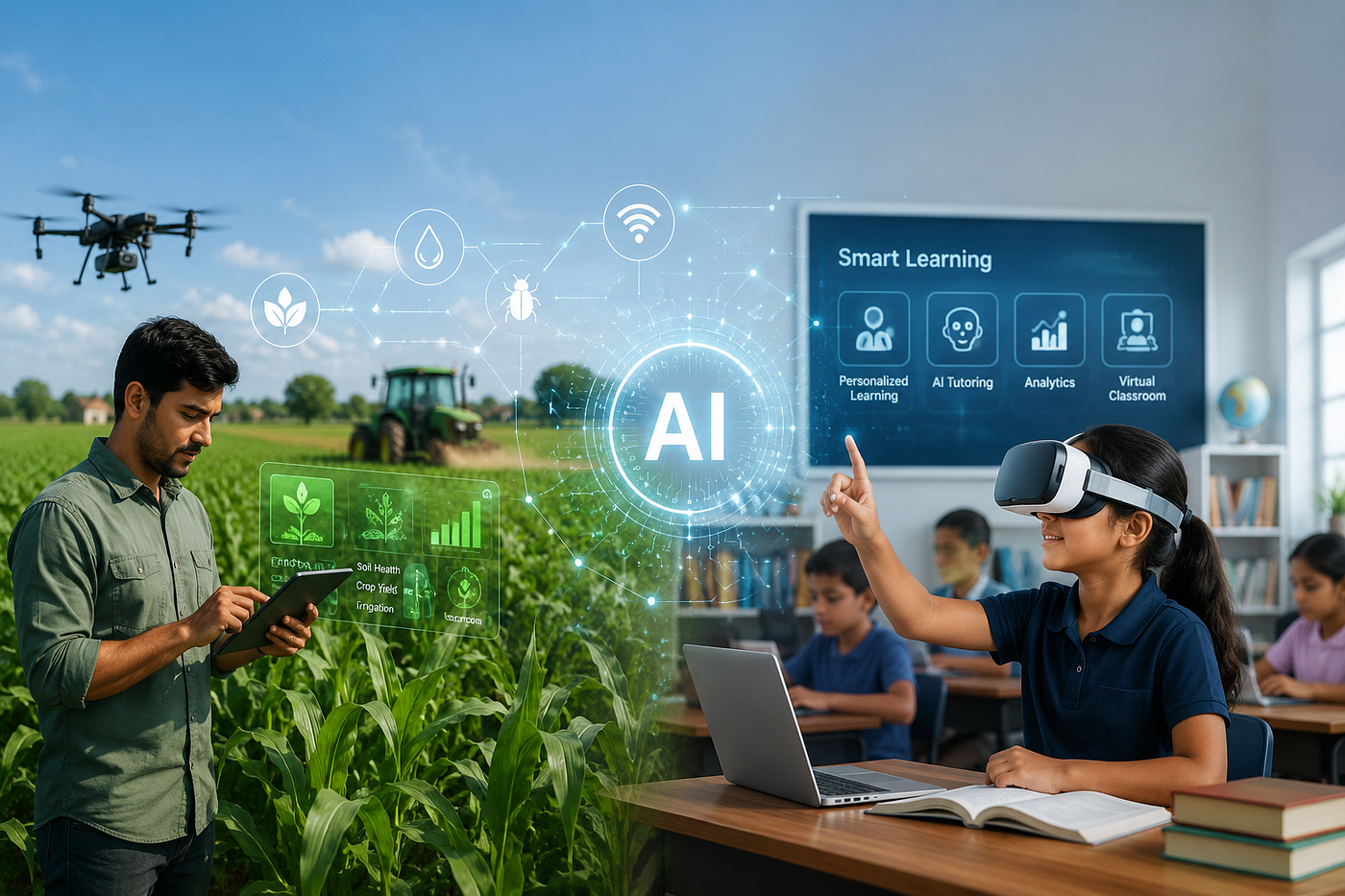
Strengthening Farming Knowledge for a Changing Agricultural Landscape Agriculture is experiencing a major shift as farmers work to increase productivity while protecting natural resources and adapting to climate challenges. One of the most important factors supporting this transition is agricultural education and training. Knowledge-sharing initiatives from universities, agricultural institutes, and extension programs are helping farmers learn modern practices that improve efficiency and long-term sustainability. According to recent data, 58% of farmers globally now participate in structured agricultural training programs, up from 34% in 2020. Through structured learning, farmers gain insights into soil health management, crop planning, irrigation optimization, and pest management methods. Educational initiatives are particularly important in bridging the gap between agricultural research and real-world farming. Workshops, training sessions, and field demonstrations provide hands-on experience, helping farmers apply modern knowledge directly to operations. Studies show that farmers completing formal agricultural education programs achieve 25–35% higher yields and reduce input costs by 20%. By gaining access to updated techniques, farmers improve crop productivity while maintaining soil fertility and conserving water resources. The global agricultural education market is projected to reach $12.6 billion by 2030, growing at 18.5% CAGR. Recent news: In February 2026, India’s Ministry of Agriculture launched a national AI-powered agricultural education platform reaching 10 million farmers, resulting in a 28% reduction in water usage across participating regions.
Technological Advancements Transforming Agricultural Productivity Technological innovation is playing an increasingly important role in improving agricultural efficiency and productivity. One of the most significant developments is applied AI in agriculture, which allows farmers to analyze large volumes of data and make more informed farm management decisions. AI technologies process information related to weather conditions, soil characteristics, crop growth patterns, and pest activity to generate insights supporting effective farming strategies. The global AI in agriculture market is expected to reach $82.5 billion by 2032, with 45% of large-scale farms now using at least one AI-powered solution. AI-powered tools enable farmers to monitor crop health and environmental conditions more accurately than ever before. Drones, satellite imaging systems, and IoT sensors collect real-time field data, while machine learning algorithms analyze information to detect nutrient deficiencies, pest infestations, or water stress with 85–92% accuracy. Early identification allows targeted action preventing crop losses and reducing unnecessary fertilizer and pesticide use by 25–35%. Automation is also becoming more common, with smart equipment improving efficiency across operations. Autonomous tractors, robotic harvesters, and intelligent irrigation systems help complete routine tasks 35–50% more quickly and accurately. According to recent studies, AI-powered precision agriculture reduces water consumption by 30–40% and increases crop yields by 25–35%. Recent news: In March 2026, Climate FieldView launched its “AI Crop Advisor” feature, analyzing 2.5 billion acres of farm data globally, helping farmers increase yields by 18% on average.
Expert Guidance Supporting Environmentally Responsible Farming While technology and education play important roles, many farmers also benefit from professional advisory support through sustainable agriculture consulting services. Consultants help farmers design strategies that improve productivity while protecting soil, water, and biodiversity. The global agricultural consulting market is projected to reach $18.6 billion by 2030, growing at 15.8% CAGR, with 67% of medium-sized farms now using professional advisory services. Consultants evaluate farm operations, analyzing soil quality, crop selection, irrigation systems, and energy usage, then recommend improvements enhancing efficiency and sustainability. Recommendations may include precision irrigation technologies, soil conservation practices, or diversified crop rotation strategies. According to a 2026 study, farms using sustainable agriculture consulting services reduced water consumption by 27% and chemical inputs by 32% while maintaining or increasing yields. Another important aspect involves helping farmers comply with environmental regulations and sustainability standards required by agricultural supply chains and international markets. Consultants provide guidance on implementing responsible practices meeting regulatory requirements while maintaining productivity and profitability. Through ongoing support and monitoring, consulting services ensure sustainability initiatives produce measurable results, with 78% of farmers reporting improved environmental compliance. Recent news: In January 2026, Syngenta launched its “Sustainability Advisory Network,” connecting 50,000 farmers with AI-powered consulting tools, achieving a 40% reduction in carbon footprint across participating farms.
Integrating Knowledge, Technology, and Expertise for the Future of Sustainable Farming The future of agriculture depends on the effective integration of knowledge, technology, and professional expertise. When farmers gain access to modern education programs, advanced technological tools, and expert advisory support, they are better prepared to address food production challenges in a changing world. The combined market for AI-driven agriculture, education, and consulting services is projected to exceed $150 billion by 2035. Collaboration between research institutions, technology providers, and agricultural professionals is helping create a more innovative and resilient farming ecosystem. According to the World Economic Forum, AI-powered agriculture could feed an additional 2 billion people by 2035 while reducing global agricultural water consumption by 25%. As agricultural practices continue evolving, farmers will increasingly rely on data-driven insights and sustainable approaches to maintain productivity and environmental balance. The combination of improved knowledge systems, intelligent technologies, and strategic advisory services enables agriculture to move toward a more efficient and sustainable future. Recent news: In March 2026, the World Bank announced a $5 billion “AI for Sustainable Agriculture” initiative spanning 30 countries, targeting 50 million smallholder farmers. By strengthening farmer capabilities and encouraging responsible resource management, modern agricultural innovations are helping ensure global food systems remain productive and environmentally sustainable for generations to come.
According to Market Research Future, the industry is expected to witness substantial growth over the coming years, driven by technological innovation, rising investments, and increasing enterprise adoption across global markets.
메타데이터
- post_id
- 4de8bd2daa93
- slug
- ai-driven-agriculture-and-education-the-150-billion-transformation-of-sustainable-farming-growth-4de8bd2daa93
- url
- https://medium.com/@aifrontierinsight/ai-driven-agriculture-and-education-the-150-billion-transformation-of-sustainable-farming-growth-4de8bd2daa93
- canonical_url
- https://medium.com/@aifrontierinsight/ai-driven-agriculture-and-education-the-150-billion-transformation-of-sustainable-farming-growth-4de8bd2daa93
- author_url
- https://medium.com/@aifrontierinsight
- status
- ok
- fetched_at
- 2026-08-16 22:26:52