The Complete 2026 Guide to Legally Running a Home-Based Food Business from Your Home
Some of the best food and drinks in Singapore never came from a shop. They came out of a regular HDB kitchen — the weekend bakes, the…
The Complete 2026 Guide to Legally Running a Home-Based Food Business from Your Home
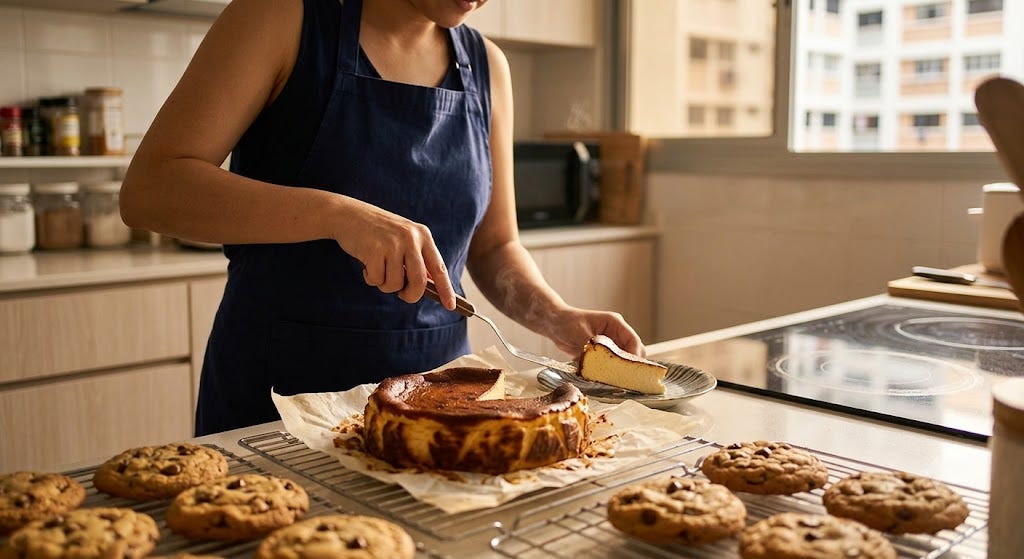
Some of the best food and drinks in Singapore never came from a shop. They came out of a regular HDB kitchen — the weekend bakes, the chilli sauce everyone keeps asking for, the cold brew in recycled bottles, the curry someone’s auntie perfected over twenty years. Sold through a Telegram order group, paid for with a PayNow screenshot, collected at the lift lobby on a Saturday afternoon. You probably know one. You might be one — or close to becoming one.
And if you are, there’s a good chance you’ve had that 3am thought: wait, am I even allowed to do this?
It’s a fair question. Selling brownies or bottled sambal to your colleagues feels harmless. But once the orders start stacking up and money starts moving, the quiet worry creeps in — ACRA, SFA, HDB, some rule you didn’t know existed. So let’s clear it up properly. This is a plain walk-through of the rules for running a home-based food business in Singapore in 2026, whether you bake, cook, or bottle drinks: when you need to register with ACRA, what the HDB home-based business scheme actually allows, and what SFA food safety requirements really apply to a home food seller. No jargon, no scare tactics. Just what you need to know before your next batch.
Do I need to register with ACRA?
Here’s the myth that trips up almost everyone: that selling from home is automatically license-free and registration-free.
It’s only true in one specific case. If you sell using your exact full name as it appears on your NRIC — say, “Tan Mei Ling” — and nothing else, you generally don’t need to register a business. The moment you do either of these two things, registration becomes a legal requirement:
- You use a brand name. “Mei’s Bakes”, “Heartland Hot Sauce”, “Block 12 Coffee” — anything that isn’t literally your NRIC name.
- You sell on a regular, ongoing basis rather than a one-off favour for friends.
For most people reading this, both of those apply. You’ve got a name for your business, and you’re doing it every week. So you register — and honestly, this is the cheap and easy part.
The usual starting structure is a sole proprietorship, registered through ACRA’s BizFile portal. The cost breaks down like this:
- $15 for the name application
- $100 for the registration
- $115 total
In most straightforward cases the registration is approved within about 15 minutes. That’s it. You now have a registered business, a Business Registration Number, and one less thing to lie awake about.
A sole proprietorship keeps things simple and low-cost, which is exactly what you want when you’re testing whether this is a real business or a fun side thing. You can always restructure later if it grows.
Can I actually run this from my HDB flat? The Home-Based Business Scheme
Yes. And you don’t need to ask anyone’s permission first.
This is where the HDB Home-Based Business Scheme (HBBS) comes in. It lets you run a small-scale business — including making and selling food and drinks — straight out of your flat, with no prior approval and no fee, as long as you stick to the rules. The rules are mostly common sense, the kind of thing that keeps you on good terms with your neighbours:
- Your flat must stay primarily a home. It’s a kitchen that also produces for sale, not a factory with a bed in the corner.
- No non-resident employees working at the flat. You and the people who live there, that’s it.
- No external signage or advertising on the building. No banner at your window, no sticker in the lift.
- No nuisance to neighbours — no excessive smoke, smell, noise, litter, or heavy foot and vehicle traffic. If your corridor smells amazing, lovely. If twenty people are queuing outside your gate at once, that’s a problem.
- No heavy or non-domestic equipment. A good home oven or a decent espresso setup is fine. An industrial deck oven or a commercial bottling line is not.
Follow those, and you’re operating legally without filling in a single form.
One thing worth clearing up, because a lot of online advice muddles it: the HBBS is not the same as the Home Office Scheme. The Home Office Scheme is a separate thing for administrative or office work run from home — think a freelance accountant or a consultant. That one carries a $20 fee, doesn’t allow customers to visit the flat, and does require basic fire safety equipment like a fire extinguisher and a smoke detector.
If you’ve read somewhere that you “need a fire extinguisher to sell food from home,” that advice was about the Home Office Scheme, not yours. As a home food seller under the HBBS, that specific requirement doesn’t apply to you. (Smoke detectors are a good idea in any home, of course — just not a baking rule.)
What does SFA actually require?
Take a breath, because this is gentler than most people expect.
Home-based food businesses currently do not need an SFA license to operate. This covers food and drinks alike — your bakes, your cooked dishes, your bottled sauces, your cold brew. SFA’s reasoning is that home kitchens are small-scale and lower-risk than a restaurant or hawker stall, so they’re not put through the same licensing regime. No application, no inspection queue, no license fee.
But — and this is the honest part — no license doesn’t mean no responsibility. You are still fully accountable for the safety of what you sell. If something goes wrong, SFA can order you to stop operating or recall what you’ve sold. So the goal isn’t to clear a legal hurdle; it’s to genuinely not make anyone sick.
The smartest, cheapest move here is the WSQ Food Safety Course (FSC) Level 1. It’s worth being precise: for a home food business, this course is recommended, not legally required. (It only becomes mandatory for licensed establishments like hawker stalls and restaurants.) Think of it as low-cost insurance — a day of learning proper food handling that protects your customers and your reputation. SFA lists it as one of the best ways for home businesses to get started, alongside following their food hygiene guidelines.
Where SFA does draw hard lines is on what you’re allowed to sell and who you’re allowed to sell to. These are real rules, not suggestions:
- No food catering. That means no buffet lines and no packed meals — larger-scale operations that carry higher food safety risk. Only SFA-licensed businesses can cater.
- No selling to SFA-licensed retailers. You can’t supply cafes, restaurants, hawker stalls, coffee shops, or canteens. No business-to-business supply. Your products go to individual customers, not to other food outlets.
- No selling at or to temporary fairs. Even if you hold a stall license at a fair, you can’t prepare food at home to sell there, and you can’t supply other stallholders.
- No ready-to-eat raw seafood. Sashimi, raw oysters, raw marinated seafood — banned, because home kitchens lack the cold-chain and segregation facilities to handle them safely.
- All ingredients must be legally sourced. Use ingredients from licensed suppliers and importers. Don’t buy from other home businesses (they’re not licensed either), and don’t use that gorgeous vanilla or spice blend you brought back from holiday — souvenir food is strictly for your own table.
For most food and drinks businesses, these will rarely cramp your style. They mostly rule out things you weren’t planning to do anyway. But knowing them means you’ll never get blindsided.
A quick note if you’re selling drinks
Most beverages — coffee, tea, juices, cold brew, bottled non-alcoholic drinks — sit under the same SFA food safety rules as everything else, so no special license is needed to sell them from home.
The one big exception is alcohol. If you plan to sell actual alcoholic drinks from your residence (including online supply), you must register your business and apply for a liquor license — this one is handled by the Singapore Police Force, not SFA. There’s a useful distinction here, though: using alcohol as an ingredient cooked or baked into your product — think rum in a cake or wine in a sauce — does not require a liquor license. It’s only the supply of alcoholic drinks that triggers it.
A quick, friendly disclaimer
Rules change. Fees get updated, schemes get tweaked, new guidance appears. Everything here is accurate as of 2026, but before you commit money or make a big decision, check the source of truth yourself — it takes five minutes and the official sites are clear:
- ACRA: https://www.acra.gov.sg/register/business/registering-different-business-structures/sole-proprietorship-or-partnership/
- HDB: https://www.hdb.gov.sg/managing-my-home/home-ownership/home-business/homebased-business-scheme
- SFA: https://www.sfa.gov.sg/food-retail/businesses-that-currently-do-not-need-licence-permit/home-based-food-businesses/requirements-for-home-based-food-businesses
Bookmark them. They’re your friends.
So you’re compliant. Now comes the actual grind.
Here’s the part nobody warns you about. Once the legal stuff is sorted, the real daily friction begins — and it has nothing to do with regulations.
It’s the DMs. The orders scattered across Instagram, WhatsApp, and Telegram. Chasing PayNow screenshots to confirm who actually paid. Re-typing your menu for the hundredth time because someone asked “what do you have this week?” It’s having no real storefront — just a feed that new buyers have to scroll through and piece together. And it’s the quiet ceiling on growth: the only people who find you are the people who already follow you.
That’s the problem we built Hive to solve.
Hive is a marketplace made specifically for Singapore’s home-based sellers. Instead of a scattered Instagram feed, you get a proper storefront for your products — your bakes, your dishes, your drinks, your prices, your story, all in one place. Buyers come to Hive to discover local home businesses, which means people who’ve never heard of you can actually find you. Chat is built in, so conversations and orders live in one spot instead of three apps. And you arrange collection or meetup the same way you already do — Hive keeps the personal handover that makes buying from a home seller feel special.
What Hive gives you is discovery, a real shopfront, and a lot less admin, without you ever having to build a website. Listing is free at launch.
Start. Seriously.
If you’ve read this far, you’re already more prepared than most people who eventually go on to build something real. The rules aren’t there to stop you — they’re just the lines on the road. Stay inside them and you can drive as far as you want.
Singapore’s home-based food scene is full of people who started with one nervous batch and a single order. Yours is waiting.
Come find your spot on Hive.
- Website: www.hivesg.com
- Instagram: @hive.app.sg
메타데이터
- post_id
- 4e004a87cd76
- slug
- the-complete-2026-guide-to-legally-running-a-home-based-food-business-from-your-home-4e004a87cd76
- url
- https://medium.com/@hivesg/the-complete-2026-guide-to-legally-running-a-home-based-food-business-from-your-home-4e004a87cd76
- canonical_url
- https://medium.com/@hivesg/the-complete-2026-guide-to-legally-running-a-home-based-food-business-from-your-home-4e004a87cd76
- author_url
- https://medium.com/@hivesg
- status
- ok
- fetched_at
- 2026-06-25 16:53:31