The Art of Watching: Voyeurism and the Lonely Eye of the Camera
“Do you ever feel like you’re only ever watching? I ask Declan. Never really participating. Never really doing. Just always watching.” —…
The Art of Watching: Voyeurism and the Lonely Eye of the Camera
“Do you ever feel like you’re only ever watching? I ask Declan. Never really participating. Never really doing. Just always watching.” — Kacen Callender, “Felix Ever After”
There is a distinct, almost uncomfortable shift that happens when we realize we aren’t just watching a film, we are trespassing.
Cinema is built on a quiet contract of voyeurism. We sit in a pitch-black room, completely invisible, looking into the private lives of characters who have no idea we are there. Most commercial films try to make the camera invisible to keep the illusion smooth, treating the lens as an open window. But there is a much more fascinating style of filmmaking that does the exact opposite. It forces us to feel the weight of the lens, turning the camera into a hidden, lonely eye.
When a movie embraces this, it stops being a neutral recorder of a script. It becomes a deep psychological study of human isolation, boundaries, and our desperate search for connection.

“Lost in Translation” (2003) by Sofia Coppola
The Geometry of Hiding: Architecture of the Frame
True cinematic voyeurism is rarely explicit, it is geometric. It relies entirely on the physical architecture of the frame to tell our brains that we are looking at something we shouldn’t be.
Directors who master this do not place the camera comfortably in the center of the action. Instead, they use internal framing, creating a frame within the frame. The camera peers from behind a heavy velvet curtain, watches through a half-open doorway, or looks across a bleak courtyard through a dirty windowpane.
By placing physical barriers between the lens and the character, the filmmaker forces us to experience the space claustrophobically. We are no longer safely observing, we are hiding. The edge of a door frame blocking half the screen, or the reflection of light on glass, acts as a constant visual reminder of our own distance. We are stuck on the outside looking in, blocked by the structures of the world.

“Rear Window” (1954) by Alfred Hitchcock
The Unmasked Subject: Catching the Micro-Moment
Why is this specific perspective so addictive to watch? Because the voyeuristic camera catches human beings at the exact moment they drop their social masks.
In public, we performance-art our way through the day. We fix our posture when someone walks into the room, we practice our expressions, we hide how tired we are. But the voyeuristic lens catches a character in the vacuum of their own solitude, where there is no audience to perform for.
It watches a woman sitting on the edge of an unmade bed, staring at a blank wall for just a beat too long. It catches the heavy, sudden slump of someone’s shoulders the second they think they are totally alone, or the rhythmic, obsessive way they smooth down the fabric of a coat in a quiet hallway. Because there is no dialogue to tell us what they feel, the film forces us to look at the texture of their reality. The clothes they wear, the clutter on their table, and their silent physical habits become the real script.
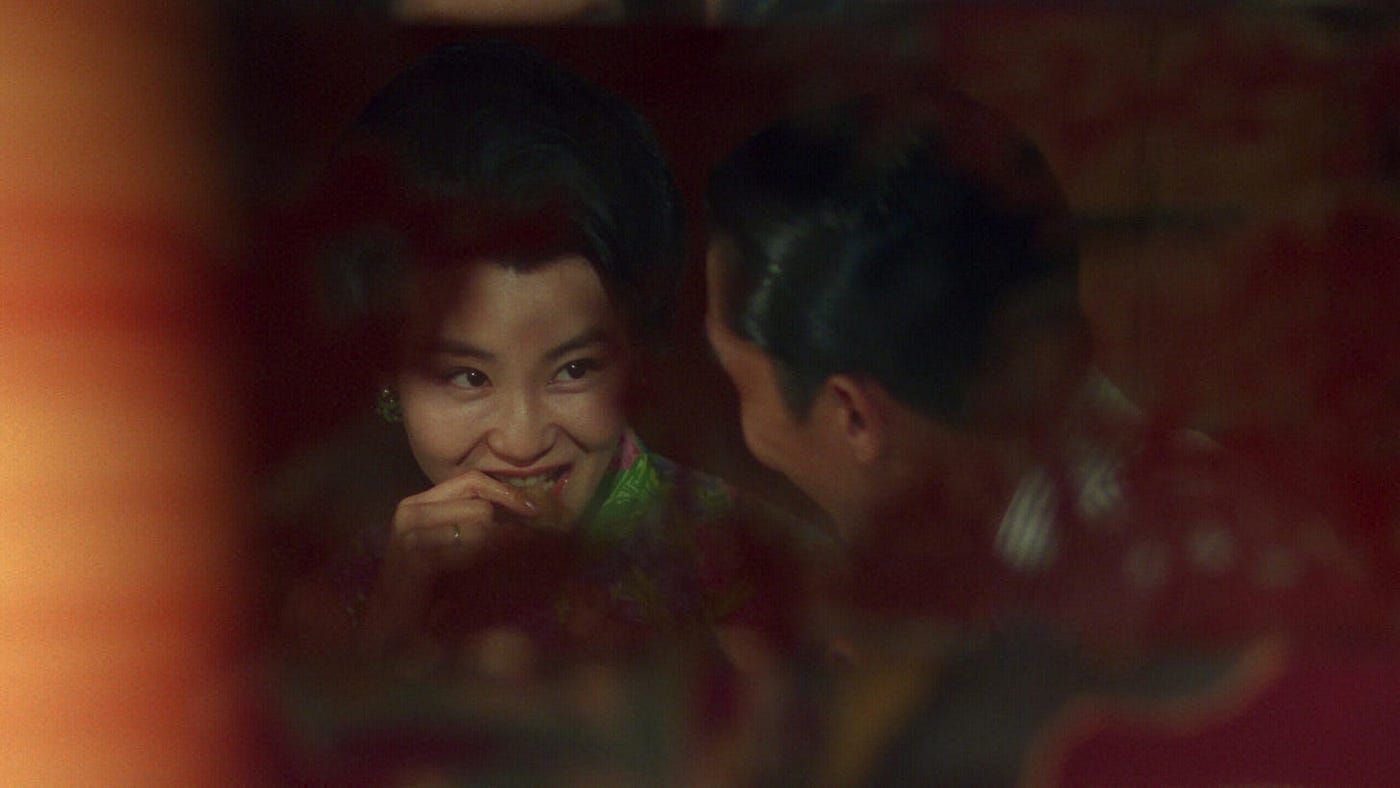
“In the Mood for Love” (2000) by Wong Kar-Wai
Case Studies in the Cinematic Gaze
We see this weaponized beautifully in Alfred Hitchcock’s Rear Window, where the entire narrative is about the sickness and obsession of looking. Hitchcock uses telephoto lenses to mimic the protagonist’s binoculars, compressing the distance between apartments. We don’t just see what L.B. Jefferies sees, we feel his exact sense of detached curiosity, turning the audience into active accomplices in spying on neighbors.
In a completely different emotional spectrum, Sofia Coppola uses voyeurism to capture modern melancholy. In Lost in Translation, the camera often observes Charlotte from a distance, framed by the massive, cold glass windows of a Tokyo high-rise. She is just looking out at the city, her knees pulled to her chest. There is no dialogue, no plot movement. But because the camera looks at her with the emotional detachment of a ghost, we feel her isolation far more deeply. The texture of the glass and the oversized sweater she shrinks into do all the narrative work.
Similarly, Michelangelo Antonioni’s films like Blow-Up or L’Avventura use the camera to stalk characters through empty landscapes or modern architecture. The camera often lingers on a space after a character has walked out of frame, or watches them from so far away that they become tiny dots against massive, indifferent concrete walls. The lens itself feels lonely, searching for meaning in empty spaces.
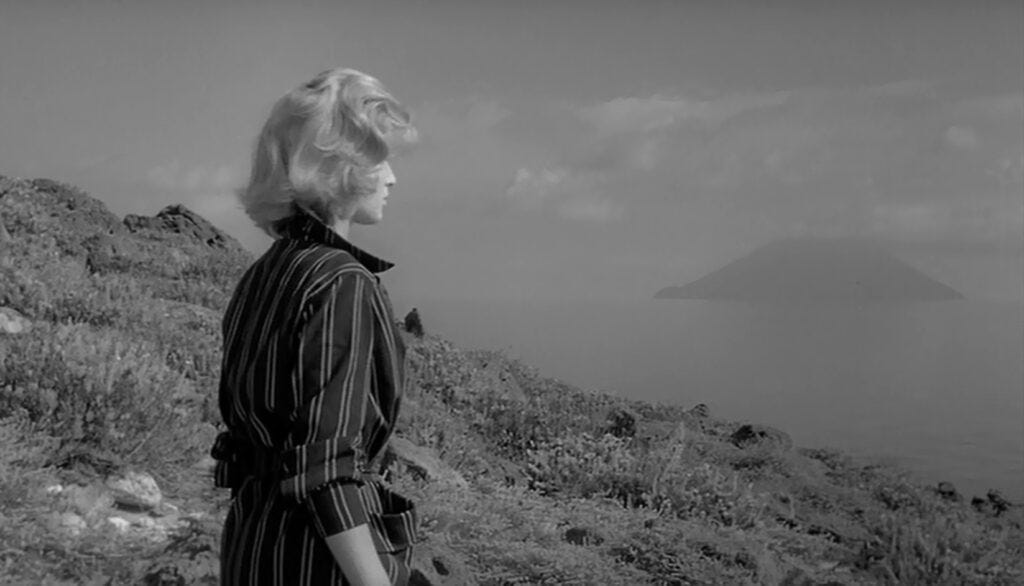
“L’Avventura” (1960) by Michelangelo Antonioni
The Mirror of Our Own Isolation
Ultimately, this style of filmmaking reveals a strange, haunting paradox. Looking at someone this intensely doesn’t actually bring us closer to them. It just magnifies our own distance.
When a director uses a long lens to spy on a character from afar, or lingers on a silent reaction of someone who thinks they are unobserved, they are highlighting a profound human disconnect. The camera becomes a perfect metaphor for the modern viewer: someone who is desperately searching for intimacy, but completely terrified of actual vulnerability. We want to see the raw, unedited truth of another person, but we want to do it from the absolute safety of the dark.
메타데이터
- post_id
- 4e051e4ff89a
- slug
- the-art-of-watching-voyeurism-and-the-lonely-eye-of-the-camera-4e051e4ff89a
- url
- https://medium.com/@katyagabova432/the-art-of-watching-voyeurism-and-the-lonely-eye-of-the-camera-4e051e4ff89a
- canonical_url
- https://medium.com/@katyagabova432/the-art-of-watching-voyeurism-and-the-lonely-eye-of-the-camera-4e051e4ff89a
- author_url
- https://medium.com/@katyagabova432
- status
- ok
- fetched_at
- 2026-06-09 14:34:10