Demystifying CDSCO Medical Device Classification in India: A Complete Regulatory Guide
The Indian medical device industry is regulated through a structured risk-based classification system designed to ensure product safety…
Demystifying CDSCO Medical Device Classification in India: A Complete Regulatory Guide
The Indian medical device industry is regulated through a structured risk-based classification system designed to ensure product safety, performance, and regulatory compliance. The Central Drugs Standard Control Organization (CDSCO), operating under the Drugs Controller General of India (DCGI), is the authority that oversees the classification, registration, manufacturing, import, and sale of medical devices in India.
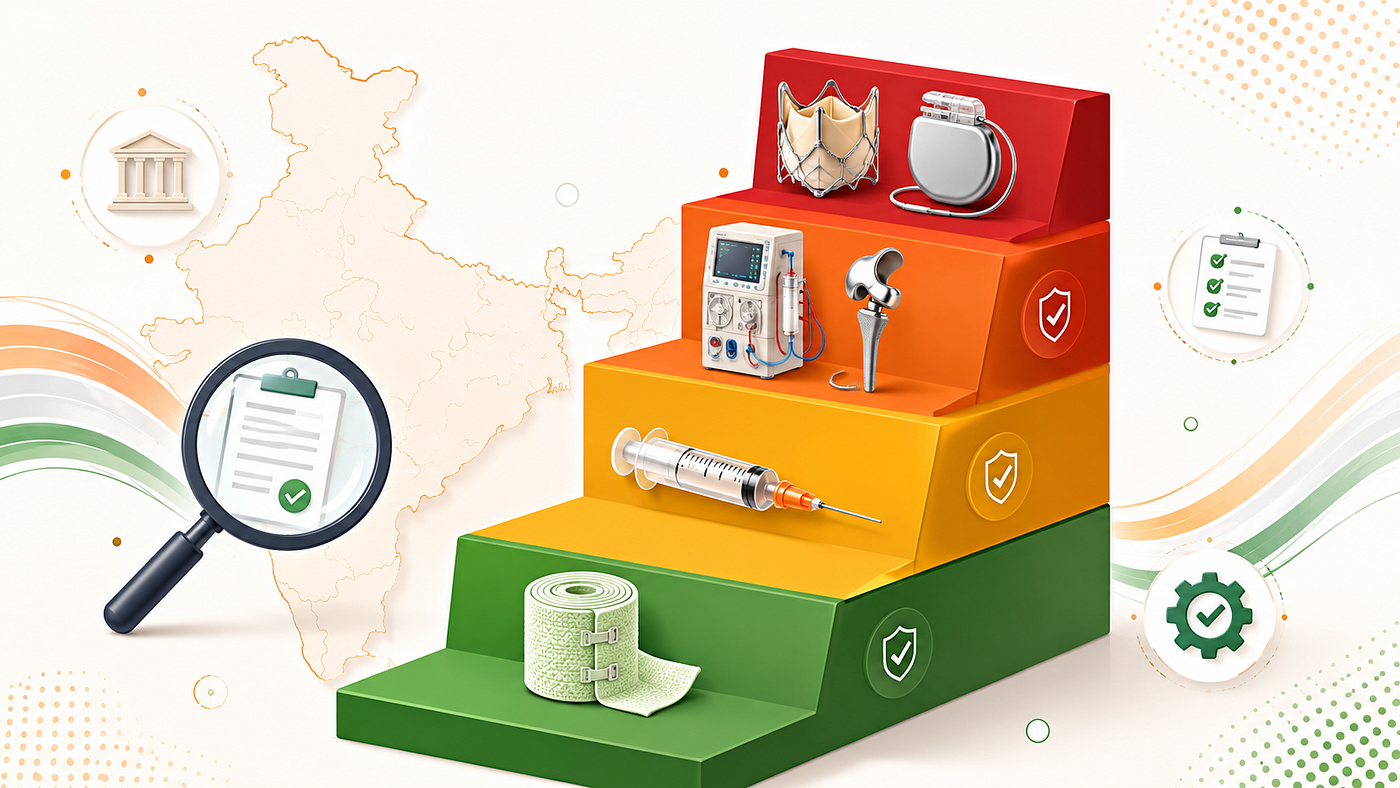
Under the Medical Device Rules (MDR), 2017, medical devices and in-vitro diagnostic devices (IVDs) are categorized based on their intended use, invasiveness, duration of use, and potential risk to patients. Whether you are a manufacturer, importer, or regulatory professional, understanding this classification is essential because it directly dictates your regulatory approval pathways, documentation requirements, and licensing procedures.
Here is a comprehensive breakdown of the CDSCO classification system and how to successfully navigate it.
The Four Risk Classes of CDSCO
The CDSCO classification is a risk-based framework that categorizes medical devices into four distinct classes:
- Class A (Low Risk): These devices present minimal risk to patients and users. Examples include elastic bandages, surgical dressings, and examination gloves. An elastic bandage used for wound protection without penetrating the dermis generally falls here.
- Class B (Low to Moderate Risk): These are devices with moderate levels of risk that require more regulatory controls. Examples include hypodermic needles, suction equipment, and contact lens solutions.
- Class C (Moderate to High Risk): These devices support or sustain life, or involve higher patient risk. Examples include blood bags, orthopedic implants, and dialysis equipment. Blood bags are placed here due to their critical role in collecting and storing blood components safely.
- Class D (High Risk): These are critical devices that may directly impact life-supporting functions or vital organs. Examples include heart valves, implantable defibrillators, and neurosurgical devices. Devices intended for direct contact with the heart or central nervous system fall into this category.
Why Accurate Classification is Your Most Critical Step
Correct classification is arguably the most important step in the medical device registration process. Getting it right provides several major benefits:
- Defines the Regulatory Pathway: It determines whether your product needs a specific manufacturing license, import license, or clinical investigation.
- Reduces Compliance Delays: Incorrect classification often triggers regulatory queries, rejections, delayed approvals, and additional testing requirements.
- Supports Faster Market Entry: Accurate classification streamlines your registration and licensing procedures.
- Aligns with International Standards: The CDSCO framework is aligned with globally accepted systems like the European MDR, US FDA classification, and IMDRF guidelines.
How Are Devices Classified?
The CDSCO evaluates multiple regulatory parameters to assign a risk class, where regulatory controls increase alongside product risk. The key evaluation criteria include:
- Intended Use: The primary medical purpose of the device (what it is designed to diagnose, monitor, treat, or prevent).
- Level of Invasiveness: Whether the device penetrates the skin, body cavities, or organs, and to what extent.
- Duration of Use: Whether the contact is transient, short-term, or long-term.
- Active or Non-Active Nature: Whether the device depends on electrical or mechanical energy to function.
- Impact on Critical Body Systems: Devices that affect the central nervous system, cardiovascular system, or vital organs automatically receive higher risk classifications.
Who Actually Requires CDSCO Registration?
CDSCO registration is a mandatory requirement for manufacturing, importing, distributing, or selling notified medical devices in India. This applies to:
- Medical Device Manufacturers: Indian manufacturers must obtain manufacturing licenses based strictly on device classification.
- Importers: Foreign manufacturers are required to appoint an Indian Authorized Agent to handle import licensing.
- IVD Manufacturers: In-Vitro Diagnostic products are similarly regulated under these risk-based classification rules.
- Distributors and Wholesalers: Supply chain entities handling these devices may also require compliance with CDSCO regulations.
Common Classification Pitfalls to Avoid
Many manufacturers face severe regulatory delays simply because of poor classification decisions. Be on the lookout for these common errors:
- Misunderstanding Intended Use: Incorrectly interpreting product claims can easily lead to assigning the wrong classification.
- Misalignment with Global Regulators: Assuming a device’s classification under the FDA or EU MDR will directly match the CDSCO classification is a frequent mistake.
- Incomplete Documentation: Missing technical details will routinely trigger regulatory objections.
- Ignoring Updated Notifications: The CDSCO regularly updates device classifications via official gazette notifications; relying on outdated lists can result in non-compliance, market restrictions, or recalls.
- Lack of Regulatory Expertise: Moving forward without a proper classification strategy can significantly delay your market approvals.
Streamlining Your Path to Market
Medical device classification directly impacts your approval costs, testing requirements, clinical evidence obligations, and post-market surveillance. An incorrect classification only increases your regulatory burden.
Partnering with experienced regulatory consultants ensures faster approvals and improved documentation quality. Operon Strategist specializes in medical device compliance and global regulatory approvals, offering support with accurate risk-based device classification, intended use evaluations, and regulatory strategy planning. Furthermore, Operon Strategist provides end-to-end CDSCO registration support for manufacturing and import licenses, technical documentation assistance (like Device Master Files and gap analysis), regulatory liaison support with the CDSCO, and ISO 13485 implementation for audit readiness.
By carefully evaluating device risk classification and seeking expert guidance, companies can streamline their regulatory journey and safely accelerate their medical device approvals in the booming Indian market.
Click Below for Medical Device Regulatory Consultation Services 👇
메타데이터
- post_id
- 4e0bea3f75bb
- slug
- demystifying-cdsco-medical-device-classification-in-india-a-complete-regulatory-guide-4e0bea3f75bb
- url
- https://medium.com/@Abhiyantika/demystifying-cdsco-medical-device-classification-in-india-a-complete-regulatory-guide-4e0bea3f75bb
- canonical_url
- https://medium.com/@Abhiyantika/demystifying-cdsco-medical-device-classification-in-india-a-complete-regulatory-guide-4e0bea3f75bb
- author_url
- https://medium.com/@Abhiyantika
- status
- ok
- fetched_at
- 2026-06-21 07:44:09