Guide to Starting an Import/Export Business in Dubai: Key Rules and 2026 Opportunities
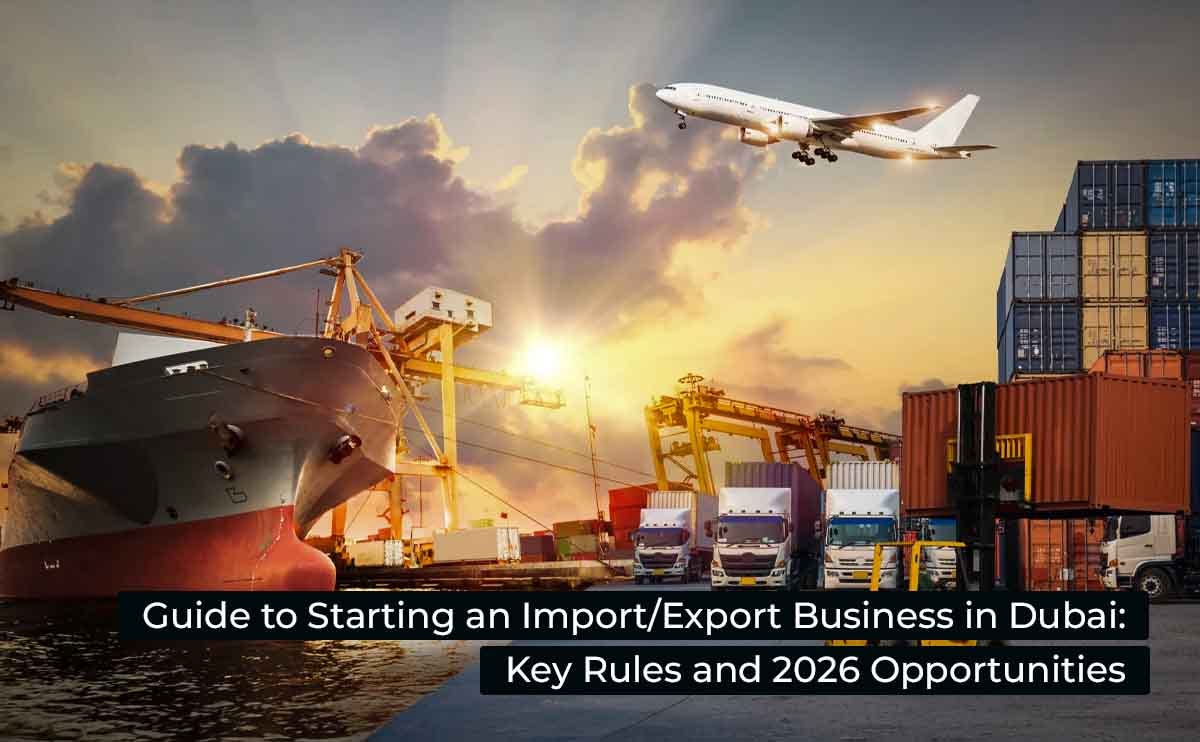
Dubai continues to hold its position as one of the most preferred trade hubs for businesses involved in the cross-border movement of goods.
Guide to Starting an Import/Export Business in Dubai: Key Rules and 2026 Opportunities
Dubai continues to hold its position as one of the most preferred trade hubs for businesses involved in the cross-border movement of goods.
In 2026, the city builds further on this advantage with clearer regulations, deeper digital integration, and steady trade demand across multiple regions.
For entrepreneurs planning to enter the import and export market, Dubai offers scale, connectivity, and operational ease if the setup is done correctly. This guide explains the process, rules, and business opportunities that will shape the import/export sector in 2026.
Why Dubai Remains a Strong Base for Global Trade
Dubai sits between major markets in Asia, Europe, and Africa, making it a natural transit point for goods.
Its ports, airports, and logistics zones support high-volume trade with predictable timelines. Businesses benefit from structured regulations, multiple licensing options, and trade-focused Free Zones.
For companies focused on re-exports, wholesale trading, or regional distribution, Dubai offers reach without excessive operational barriers.
Step-by-Step Process to Start an Import/Export Business
Step 1: Choose the Right Jurisdiction
Your setup location shapes how you trade.
Free Zone Registration
- Full foreign ownership
- Suited for international trade and re-exports
- Lower setup and office costs
- Limited direct sales within the UAE market
Mainland Registration
- Direct access to UAE customers
- Higher compliance and office requirements
- Broader local trading flexibility
The choice depends on your target markets and sales structure.
Step 2: Apply for an Import/Export or Trading License
A commercial trade license is mandatory. The license activity must clearly match the goods you plan to trade. Authorities review this closely, especially for regulated products.
Selecting the right activity at this stage prevents future amendments and delays.
Step 3: Register With Dubai Customs
Customs registration provides an importer and exporter code. This allows goods to be cleared through UAE ports and enables access to the Dubai Trade platform for shipment declarations, duty processing, and documentation.
Without this step, trading operations cannot begin.
Step 4: Secure Office or Warehouse Space
A registered business address is required. Early-stage traders often use flexi desks or shared offices available in Free Zones. Warehousing can be added later based on trade volume and inventory needs.
Several zones offer built-in logistics support, which suits growing trading operations.
Step 5: Open a Corporate Bank Account
A UAE corporate bank account is required for supplier payments, customer receipts, and international transfers. In 2026, account approvals remain compliance-focused. Clear ownership structure, defined trade activity, and proper documentation help reduce approval timelines.
Key Rules and Compliance Requirements in 2026
Corporate Tax Structure
The UAE corporate tax framework continues in 2026. Businesses are subject to a standard tax rate, with certain Free Zone entities qualifying for tax relief if specific conditions are met. Maintaining proper substance and limiting mainland activity plays a role in eligibility.
VAT on Imported Goods
Most imports attract VAT. Registered businesses can reclaim VAT through accurate filings. Errors in customs declarations or invoices often cause recovery delays, making documentation discipline essential.
Product Approvals and Registrations
Certain goods require prior approval before import, including:
- Food and beverages
- Cosmetics and personal care items
- Electronics
- Medical and healthcare products
Missing registrations frequently lead to customs holds or penalties.
Digital Compliance and Documentation
Trade documentation is increasingly handled through online portals. Customs filings, invoices, and shipment records must align digitally. Businesses maintaining consistent records face fewer inspections and delays.
Common Products Traded Through Dubai
Dubai supports a broad trade ecosystem. Popular import/export categories include:
- Consumer electronics
- Apparel and fashion accessories
- Automotive parts and machinery
- Industrial equipment
- Food commodities
- Construction materials
Re-exports to Africa, South Asia, and Eastern Europe remain a strong revenue channel.
Import/Export Opportunities to Watch in 2026
Re-Export and Regional Distribution
Free Zones allow duty-free imports followed by exports to international markets. This structure supports margin control and improved cash flow.
E-commerce Linked Trade Models
Many trading licenses support online sales. Businesses combine import/export with digital storefronts to reach international buyers directly.
Value-Added Trade Services
Labelling, repackaging, private labelling, and light assembly allow businesses to increase value without manufacturing investments.
Niche and High-Demand Categories
Sustainable products, speciality food items, and technology accessories continue to see demand growth across regional markets.
Challenges New Traders Often Face
- Banking delays due to unclear trade models
- Shipment holds due to missing product approvals
- Cash flow pressure from duties and VAT
- Supplier risks without strong contracts
Planning and professional guidance reduce these risks significantly.
How Quickplus Business Consultants Support Your Setup
Quickplus Business Consultants assists import/export businesses with:
- Jurisdiction and license selection
- Customs registration and approvals
- Banking coordination
- Trade compliance guidance
- Ongoing operational support
A structured setup allows businesses to focus on sourcing, selling, and scaling.
Conclusion
Starting an import/export business in Dubai in 2026 offers strong commercial potential for traders aiming to serve global markets.
With clear licensing pathways, advanced logistics infrastructure, and steady regional demand, Dubai continues to support trade-driven growth.
Success depends on correct setup, accurate compliance, and informed planning from day one.
With guidance from **Quickplus Business Consultants**, businesses can enter the market with clarity and build a stable, scalable trading operation.
메타데이터
- post_id
- 4e16c02fc36e
- slug
- guide-to-starting-an-import-export-business-in-dubai-key-rules-and-2026-opportunities-4e16c02fc36e
- url
- https://medium.com/@quickplus/guide-to-starting-an-import-export-business-in-dubai-key-rules-and-2026-opportunities-4e16c02fc36e
- canonical_url
- https://medium.com/@quickplus/guide-to-starting-an-import-export-business-in-dubai-key-rules-and-2026-opportunities-4e16c02fc36e
- author_url
- https://medium.com/@quickplus
- status
- ok
- fetched_at
- 2026-07-16 07:23:00