Explosion Proof CCTV Camera vs Standard Industrial Cameras: What UAE Procurement Teams Need to Know
One of the most expensive mistakes in industrial surveillance is assuming that an industrial-grade camera and an explosion-proof camera are…
Explosion Proof CCTV Camera vs Standard Industrial Cameras: What UAE Procurement Teams Need to Know
One of the most expensive mistakes in industrial surveillance is assuming that an industrial-grade camera and an explosion-proof camera are essentially the same product. They are not. Across the UAE’s oil and gas facilities, chemical plants, maritime terminals, manufacturing sites, and hazardous warehouses, procurement teams are increasingly discovering that choosing the wrong surveillance equipment can create safety risks, compliance challenges, and unnecessary operational costs.
As industrial activity expands throughout Jebel Ali, KIZAD, Ruwais, Mussafah, and Hamriyah Free Zone, surveillance infrastructure is becoming a critical component of risk management. Understanding the difference between standard industrial cameras and hazardous-area-certified systems is essential if you want to make informed procurement decisions that support both safety and operational performance.
Understanding Hazardous Areas and Common Procurement Misconceptions
A common misconception is that rugged industrial cameras automatically qualify for use in hazardous environments. While many industrial cameras are designed to withstand dust, moisture, vibration, and temperature fluctuations, that does not mean they are safe to operate where explosive atmospheres may exist.
Hazardous areas are typically classified according to the likelihood of flammable gases, vapours, or combustible dust being present. These classifications often follow principles associated with the ATEX Directive, DSEAR requirements, HSE workplace safety standards, and PUWER guidance regarding equipment suitability.
In facilities handling fuels, solvents, chemicals, hydrocarbons, or combustible powders, surveillance equipment may be installed within classified zones where ignition risks must be carefully controlled.
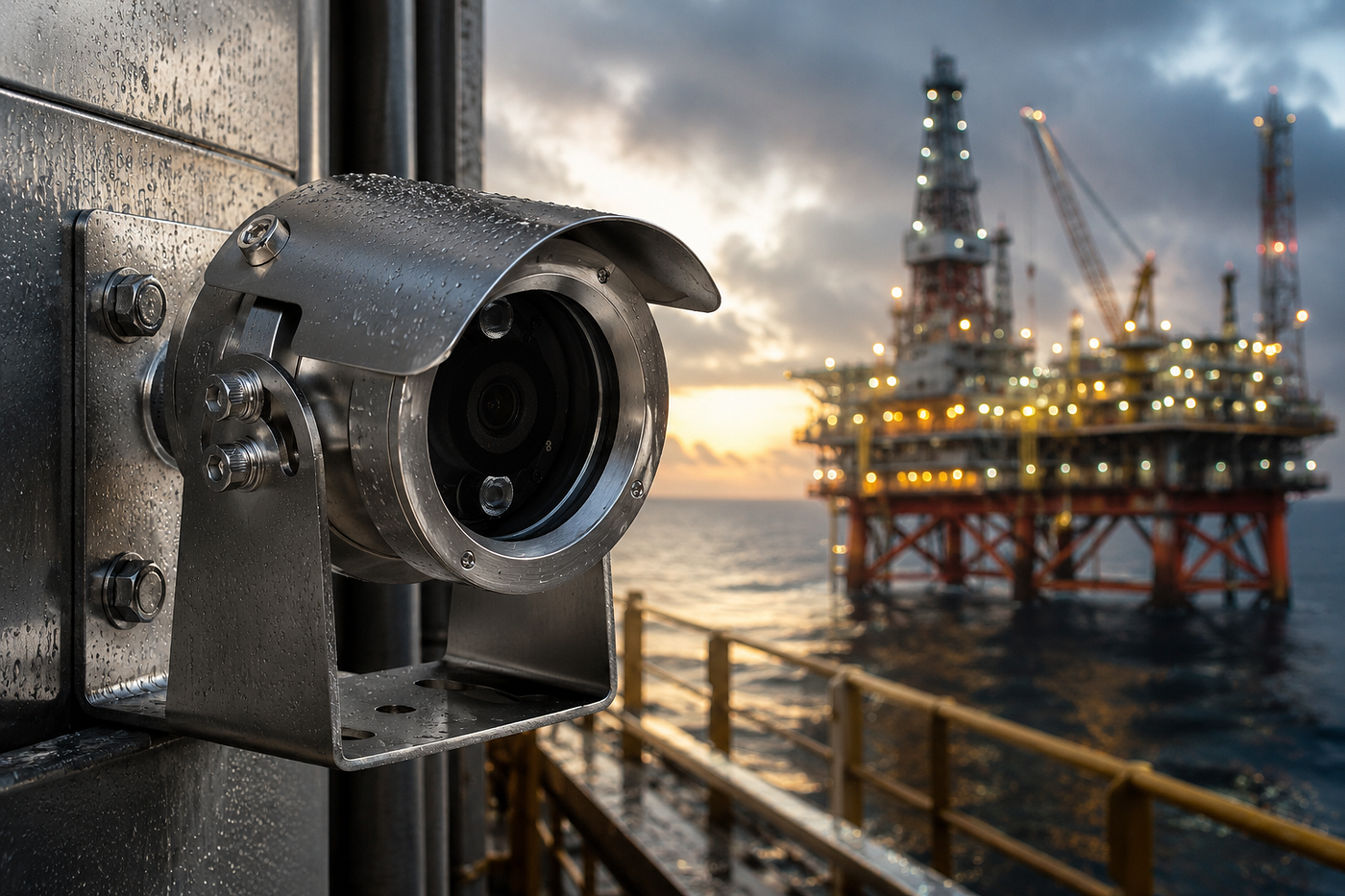
A properly specified **Explosion Proof CCTV Camera** is engineered specifically for these environments. Standard industrial cameras are not.
For procurement and HSE teams, understanding this distinction is the foundation of responsible equipment selection.
Engineering Differences Between Standard and Explosion-Proof Cameras
The differences between these camera categories extend far beyond external appearance. Standard industrial cameras focus primarily on durability and performance, whereas hazardous-area cameras are engineered to prevent internal faults from igniting surrounding explosive atmospheres.
Key differences include:
- Hazardous-area certification requirements
- Explosion-resistant enclosure construction
- Specialised cable entry systems
- Thermal management design
- Ignition containment capability
- Zone-specific compliance ratings
An ex proof cctv camera incorporates protective engineering features designed to contain sparks, arcs, or heat generated within the equipment housing. These safeguards help prevent potentially catastrophic incidents in hazardous locations.
By contrast, even a high-quality industrial camera may not provide protection against ignition risks if deployed within a classified area.
This distinction becomes particularly important in sectors such as oil and gas, petrochemicals, industrial manufacturing, maritime operations, and hazardous warehousing.
Why Certification Matters for Risk Management
Certification is often the most important factor separating compliant hazardous-area surveillance from unsuitable alternatives.
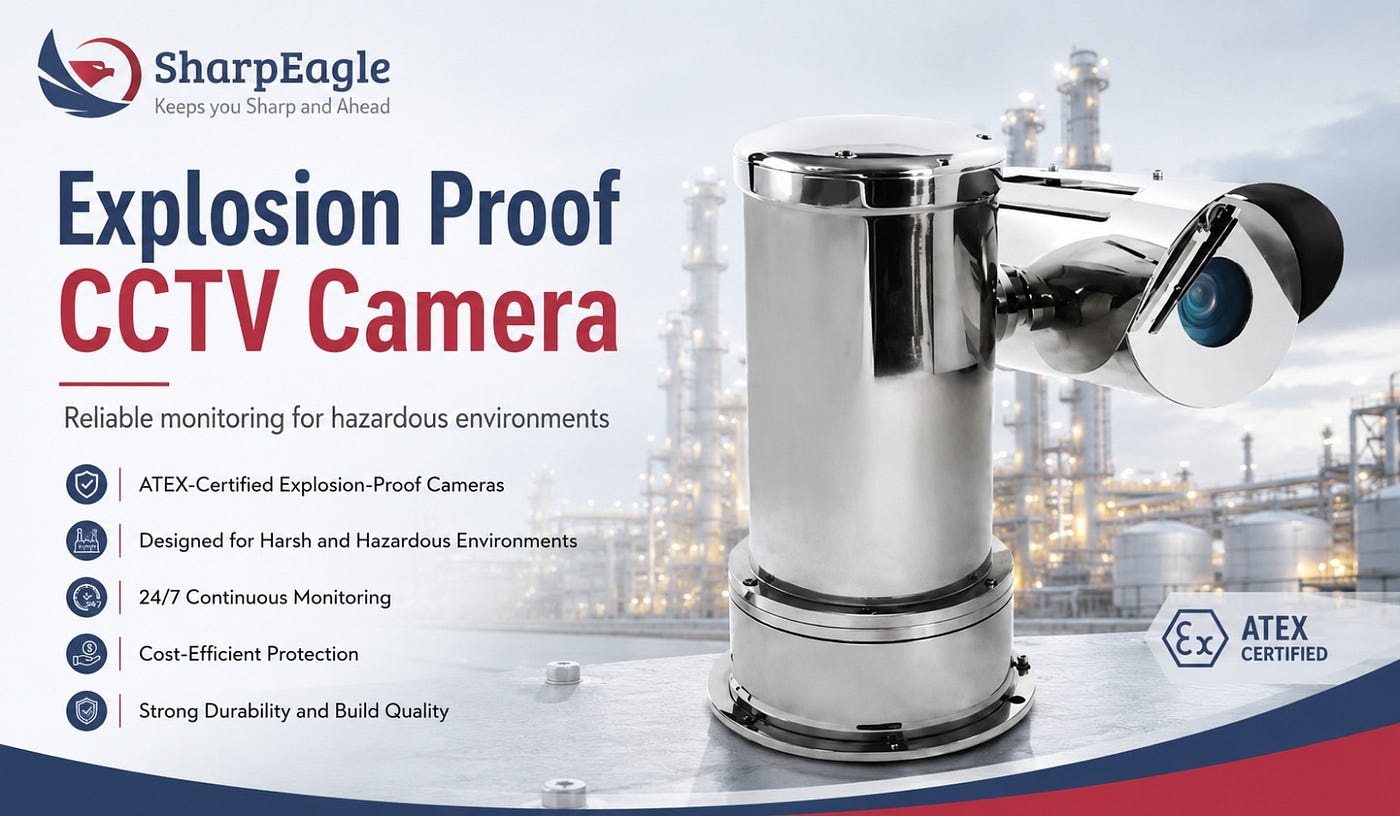
The deployment of **ATEX Certified Explosion Proof Cameras** provides assurance that equipment has been independently tested and verified for operation within designated hazardous environments. This verification plays a significant role in both safety management and regulatory compliance.
Using non-certified equipment in a classified area can expose your facility to several risks:
- Increased likelihood of ignition incidents
- Regulatory non-compliance
- Insurance complications
- Operational shutdowns
- Increased legal and financial exposure
Many organisations evaluating ATEX certified explosion proof camera UAE projects prioritise certification before considering image resolution, analytics capabilities, or networking features. Without appropriate certification, technical performance becomes largely irrelevant from a compliance perspective.
For procurement teams, certification should always be validated before purchase approval.
Lifecycle Costs, Maintenance, and Long-Term Value
At first glance, standard industrial cameras often appear more cost-effective. Their acquisition costs are typically lower, which can make them attractive during budget reviews.
However, procurement decisions should consider total lifecycle value rather than purchase price alone.
An Industrial explosion proof camera UAE deployment may involve higher initial expenditure, but that investment often delivers long-term benefits through reduced risk exposure, extended operational reliability, and improved compliance outcomes.
Factors affecting total cost of ownership include:
- Equipment lifespan
- Maintenance frequency
- Downtime risk
- Regulatory compliance costs
- Replacement cycles
- Inspection requirements
Facilities pursuing Industrial CCTV for hazardous areas UAE programmes frequently discover that certified equipment reduces operational uncertainty and supports more predictable asset management strategies.
When viewed through a risk-adjusted lens, the financial case often becomes much clearer.

SharpEagle Technology Solutions for Hazardous-Area Surveillance
SharpEagle Technology provides specialised surveillance systems developed specifically for demanding industrial environments where compliance and operational reliability are critical.
Its portfolio includes ATEX Certified Explosion proof CCTV camera UAE solutions designed for oil and gas facilities, petrochemical plants, maritime operations, manufacturing sites, logistics hubs, and hazardous storage locations. These systems combine certified hazardous-area protection with high-definition imaging, robust environmental resistance, and dependable long-term performance.
The company also supports Industrial Safety Cameras for Hazardous Locations UAE applications where continuous monitoring contributes directly to worker protection and operational oversight.
SharpEagle’s surveillance solutions are engineered to perform in harsh conditions involving dust, humidity, corrosive atmospheres, heat, and vibration. This makes them particularly suitable for organisations seeking compliant surveillance infrastructure that can scale alongside operational growth.
When an Explosion-Proof System Is Essential and When It May Not Be
Not every facility requires hazardous-area surveillance. The key is matching equipment specifications to actual operational risks.
An **explosion proof CCTV system** is generally essential when monitoring:
- Refinery processing areas
- Fuel storage facilities
- Chemical manufacturing zones
- Offshore platforms
- Gas handling infrastructure
- Hazardous material warehouses
Conversely, standard industrial cameras may be suitable for administrative buildings, non-classified production spaces, parking areas, and general perimeter security locations where explosive atmospheres are not present.
When evaluating explosion proof camera solutions, procurement teams should adopt a structured decision-making framework that considers hazard classifications, compliance obligations, environmental conditions, integration requirements, maintenance considerations, and long-term operational objectives.
The most effective surveillance strategy is rarely determined by technology alone. It is determined by risk.
Conclusion
As UAE industries continue to modernise, surveillance procurement decisions are becoming increasingly linked to safety, compliance, and operational resilience. Understanding the differences between standard industrial cameras and hazardous-area-certified alternatives enables organisations to make informed investments that protect personnel, assets, and production continuity. Facilities operating within classified environments should prioritise certified solutions that align with regulatory expectations and long-term risk management goals. For further guidance on hazardous-area surveillance selection, explore the Recommended read: *Ultimate Guide to Explosion Proof CCTV Cameras* and contact SharpEagle Technology.
메타데이터
- post_id
- 4e21206def19
- slug
- explosion-proof-cctv-camera-vs-standard-industrial-cameras-what-uae-procurement-teams-need-to-know-4e21206def19
- url
- https://medium.com/@seo.marketing98765/explosion-proof-cctv-camera-vs-standard-industrial-cameras-what-uae-procurement-teams-need-to-know-4e21206def19
- canonical_url
- https://medium.com/@seo.marketing98765/explosion-proof-cctv-camera-vs-standard-industrial-cameras-what-uae-procurement-teams-need-to-know-4e21206def19
- author_url
- https://medium.com/@seo.marketing98765
- status
- ok
- fetched_at
- 2026-06-17 18:46:00