Sri Lanka Burns Millions in Seized Drugs Every Year.
Every kilogram of cannabis incinerated could be medicine. The infrastructure to make that happen already exists — it’s just broken.
Sri Lanka Burns Millions in Seized Drugs Every Year. There’s a Better Option Nobody Is Talking About.
Every kilogram of cannabis incinerated could be medicine. The infrastructure to make that happen already exists — it’s just broken.
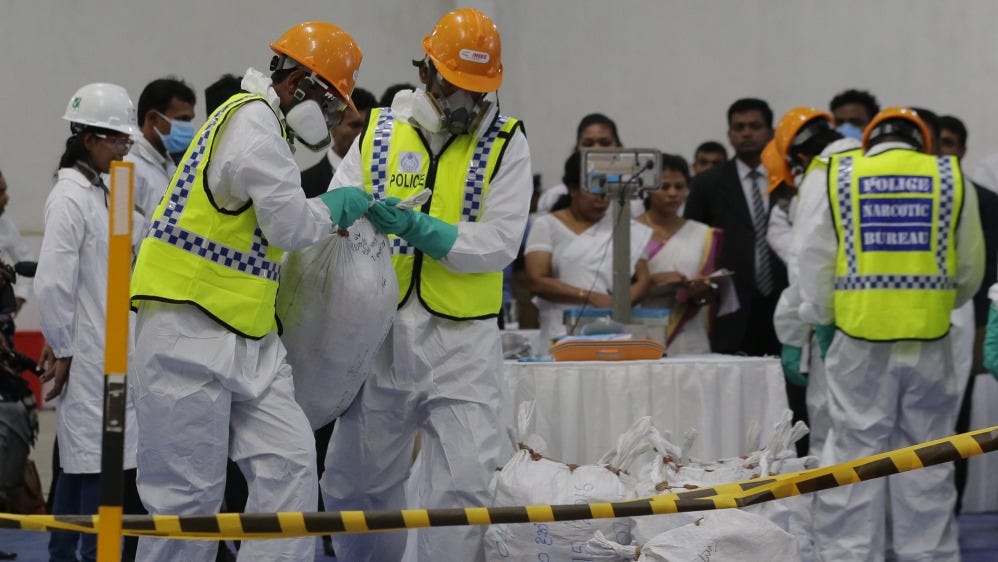
Every few days, Sri Lanka makes the news for another drug bust. A fishing vessel intercepted off Trincomalee. A container at Colombo Port. A network dismantled in Kandy. The numbers are staggering — by mid-2025, police had seized over three tonnes of heroin and crystal methamphetamine alone, with a combined street value of $76 million. The Navy added another $96 million the year before.
Then what happens?
The drugs sit in evidence storage, sometimes for years while court cases crawl forward. Eventually, with a Supreme Court order, they get incinerated.
$76 million. Gone. Literally up in smoke.
I want to ask a question the policy conversation keeps avoiding: does it have to be this way?
Not whether Sri Lanka should start selling heroin. I’m asking something more specific — whether any portion of these seized substances can move from the furnace into something useful. Medicine. Research. Industry. And if so, what would that actually take?
The answer is more complicated, and more promising, than anyone in Colombo seems willing to admit.
The system nobody talks about
Here’s what surprised me most in researching this piece.
Sri Lanka already has a framework for repurposing seized drugs. It’s called the Sri Lanka Ayurvedic Drugs Corporation (SLADC), it operates under the Ministry of Health, and for decades it has been the only legal source of cannabis on the island for the country’s estimated 16,000 registered Ayurvedic practitioners.
Where does the SLADC get its cannabis? From police seizures. From court cases.
This isn’t a hypothetical. It’s a functioning, badly broken supply chain. Ayurvedic practitioners use cannabis in traditional formulations like madana modaka, a preparation documented in Sri Lankan pharmacopeias since at least 341 CE, when King Buddhadasa wrote about its analgesic and therapeutic properties. The plant has seventeen names in classical Sinhala and Sanskrit literature. Ananda (bliss). Harshini (the rejoicer). Triloka kamaya (desired in three worlds). This is not some exotic Western import — it’s woven into the island’s healing traditions.
The problem is that the current system is broken in a very specific way. By the time cannabis moves from a police lockup through the courts to the SLADC, it’s often months or years old, stored improperly, degraded in potency and quality. The UNODC noted in 2005 that the existing arrangement “does not conform to traditional methods.” Ayurvedic practitioners are receiving a shadow of what the plant should be.
So before we even get to the harder questions about methamphetamine or cocaine, there’s a much simpler one sitting right in front of us: why isn’t the existing cannabis-to-Ayurveda pipeline being fixed and scaled?
8,359 kilograms. That’s what was seized in 2024 alone.
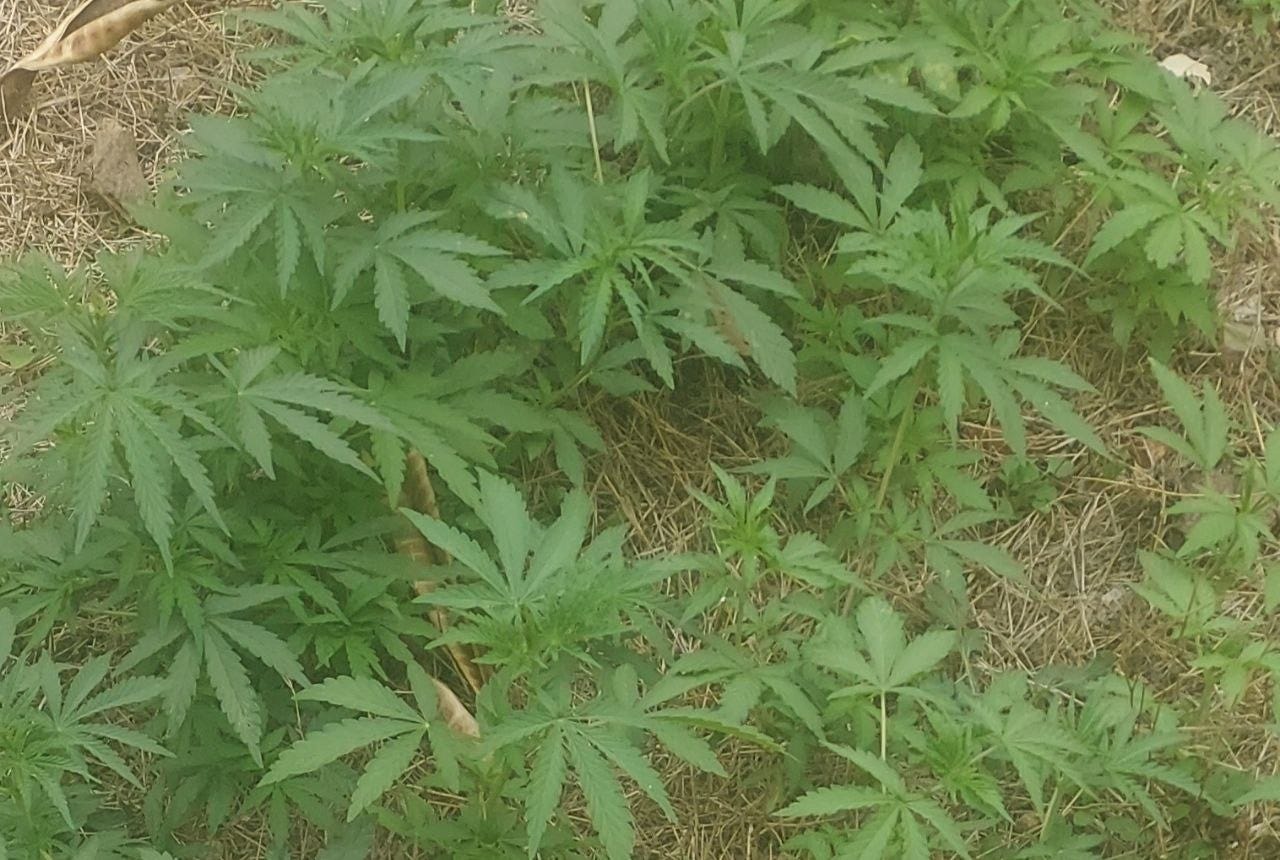
Cannabis was by far the largest category in Sri Lanka’s 2024 drug seizures — 8,359 kg of it, mostly Kerala cannabis, with hashish adding another 291 kg. At wholesale prices, that’s material. At CBD extraction value, it’s a different conversation entirely.
The global cannabidiol (CBD) market was worth $7.1 billion in 2023 and is growing at over 13% annually. Portugal — a country that decriminalised all drugs in 2001 and built a regulated medical cannabis framework in 2018 — has become one of Europe’s leading cannabis exporters, leveraging its climate and low production costs. Colombia and Uruguay are following the same path.
Sri Lanka has a comparable climate. It has a 1,700-year documented history of cannabis in traditional medicine. It has a state institution, the SLADC, already authorised to handle the substance. And it is currently seizing over eight tonnes of it per year, running it through a degraded supply chain, and calling that a public health win.
The chief of the Ayurvedic Drugs Corporation said as much to the Sunday Times in 2022: “Laws should be revised if cannabis is to be cultivated.” He went further, noting that to extract maximum value — particularly for CBD oil — Sri Lanka would need either to revise the law to allow controlled cultivation or to establish a private-public processing partnership.
That conversation appears to have died in a committee somewhere.
What about the harder drugs?
Cannabis is the easy case. The chemistry is benign, the medical applications are well-documented globally, and Sri Lanka already has an institutional structure for handling it. The harder question is what to do with methamphetamine, cocaine, and heroin, and there the answer is far more constrained.
Methamphetamine (ICE)
This is the most common drug in Sri Lanka’s seizures by volume after cannabis — 1,364 kg in 2024 from police alone, more than a tonne from Navy operations. It is also, frankly, the hardest to repurpose.
Methamphetamine does have one FDA-approved pharmaceutical form, sold under the brand name Desoxyn, used in very limited ADHD treatment. But it’s rarely prescribed because safer, better-studied alternatives exist. More importantly, illicitly manufactured methamphetamine is a chemical mess. Sri Lankan ICE primarily comes from Myanmar’s Shan State — part of the same supply chain flooding Southeast Asia — and is synthesised in clandestine labs using precursor chemicals and synthesis routes that leave unknown impurity profiles. You cannot take contraband ICE from a police lockup and put it in a blister pack. The purification and quality control infrastructure required to get from “seized narcotics” to “pharmaceutical-grade compound” would cost more than the product is worth.
For methamphetamine, destruction is the right answer. But the precursor chemicals — if intercepted separately — are a different matter. Pseudoephedrine, ephedrine, and other precursors captured in trafficking operations have documented legitimate industrial and pharmaceutical uses. Those deserve their own handling protocol rather than being lumped in with the finished product at the incinerator.
Cocaine
Sri Lanka seizes comparatively small quantities — 23 kg in 2024 — but it’s worth understanding the chemistry. Cocaine hydrochloride has a narrow but real medical application as a topical local anaesthetic in ENT surgery. It is the only agent that combines anaesthetic and vasoconstrictive properties in a single compound, which makes it genuinely useful for nasal procedures and epistaxis management. Most countries have moved to lidocaine-plus-epinephrine combinations, but cocaine still appears in ENT surgical protocols in several developed countries.
Here’s the practical problem: pharmaceutical-grade cocaine requires certified purity, documented origin, and a sterile pharmaceutical manufacturing process. Seized cocaine is tested forensically for identification, not for pharmaceutical safety. It regularly contains levamisole (a cattle deworming agent added to bulk out product), benzocaine, phenacetin, and other adulterants at unknown concentrations. Without a licensed pharmaceutical processor to purify and reformulate it — which Sri Lanka does not currently have — seized cocaine cannot go anywhere near an operating theatre.
The theoretical pathway exists. The infrastructure does not.
Heroin
Heroin — or diamorphine, as the pharmaceutical form is known — is used in palliative care in the United Kingdom and Canada for subcutaneous infusion in end-of-life pain management. It is, by pharmacological measure, a highly effective analgesic with a better solubility profile than morphine.
But its medical use is illegal in almost every country outside the UK and Canada. Sri Lanka seizing heroin and then trying to establish a palliative care pathway for diamorphine would require treaty renegotiation, new legislation, and a pharmaceutical processing facility. It is, to put it plainly, not a near-term option. Destroy it. Focus elsewhere.
So where does the real opportunity sit?
The repurposing case is almost entirely about cannabis and hashish. Those two together accounted for 8,650 kg seized in 2024. They have documented medical applications spanning millennia in Sri Lanka’s own tradition. They have an existing state institution authorised to process them. They have a $7 billion global market that is growing. And the UNODC’s own 1961 Convention on Narcotic Drugs — while strict — permits use of cannabis and cannabis derivatives for medical and scientific purposes under licensed control.
The question is not whether this is theoretically possible. It already happens, badly. The question is whether Sri Lanka can upgrade “seized cannabis handed to the SLADC in degraded form after three years of court proceedings” to “seized cannabis fast-tracked to a quality-controlled pharmaceutical extraction process within 90 days of seizure.”
That is a logistics and legal reform problem, not a chemistry problem.
Three changes would move this from broken to functional.
Amend the evidentiary handling protocol so that seized cannabis designated for pharmaceutical processing is fast-tracked out of evidence storage, with representative samples retained, rather than warehoused for the full duration of court proceedings. Capitalise the SLADC’s extraction capacity, or bring in a licensed private-sector partner with the technical capability to produce CBD isolates, cannabis resin, and Ayurvedic-grade material to international quality standards. Then use the Proceeds of Crime Act 2025 — which already provides for seizure, management, and disposal of criminal assets — to establish a ring-fenced fund from drug-related forfeitures that finances the above.
None of this requires Sri Lanka to become a cannabis exporting nation overnight. It requires fixing a pipeline that already exists but is currently wasting most of what flows through it.
The real barrier isn’t chemistry. It’s institutions.
Here’s the part that drug policy reformers tend to skip past.
Sri Lanka’s anti-drug apparatus has documented integrity problems. Human Rights Watch flagged arbitrary detentions in the 2024 anti-drug operation. The East Asia Forum has written extensively about narco-politics penetrating the police hierarchy. The President himself, in May 2026, publicly warned that actual drug inflows may far exceed what is being seized — which implies significant leakage somewhere in the chain.
In that environment, any scheme that assigns economic value to seized drugs before they are destroyed creates a perverse incentive. If cannabis is worth money as pharmaceutical input, then cannabis that disappears from evidence storage before processing becomes valuable to the people doing the disappearing.
That’s not a reason to abandon the idea. It’s a reason to design the system so that value is only captured after the substance is logged, tested, processed, and traceable. Think of it less as “repurposing drugs” and more as extending the chain of custody into a state-controlled pharmaceutical supply chain rather than ending it at a furnace.
The Proceeds of Crime Management Authority, established under the 2025 Act, is where this oversight should live, with independent auditing, UNODC or WHO technical assistance, and throughput data published quarterly so there is nowhere to hide a discrepancy.
To be clear about what this is
This isn’t an argument for legalisation. Sri Lanka is not the Netherlands, and that argument isn’t even necessary here.
It’s not an argument for selling heroin or methamphetamine. The chemistry makes those non-starters, and I’ve tried to be straight about that.
The SLADC model already exists. It already receives seized cannabis. It already converts it, however badly, into Ayurvedic medicines sold to practitioners across the country. The proposal is to do that same thing better, faster, and at a scale that actually matches what Sri Lanka is seizing.
The question that needs an answer in Colombo
Sri Lanka seized 8,650 kilograms of cannabis and hashish in 2024 and destroyed most of it.
It has 16,000 registered Ayurvedic practitioners who are legally entitled to prescribe cannabis-based medicines but struggle to obtain quality supply.
It has a state pharmaceutical institution — the SLADC — whose core mandate is producing exactly this type of medicine and which already, in principle, has access to seized material.
And it has a global CBD market worth billions that favours low-cost, tropical-climate producers.
The distance between “burning it all” and “running a competent pharmaceutical supply chain” is not as far as the inaction suggests. It’s a legal amendment, an infrastructure investment, and a willingness to treat a broken system as broken rather than adequate.
Sri Lanka is already burning the answer to a problem it claims it cannot afford to solve.
This article draws on official statistics from the Sri Lanka Police, the Sri Lanka Navy, the National Dangerous Drugs Control Board, the Sri Lanka Parliament, and research from Sensi Seeds, Wikipedia’s cannabis history documentation, the Sunday Times Sri Lanka, and market data from major pharmaceutical industry research reports.
Tags: Sri Lanka | Drug Policy | Public Health | Ayurvedic Medicine | Pharmaceutical Industry | Cannabis | Policy Reform | Asia
메타데이터
- post_id
- 4e34cd47b65b
- slug
- sri-lanka-burns-millions-in-seized-drugs-every-year-4e34cd47b65b
- url
- https://medium.com/@anjulaweeranayake/sri-lanka-burns-millions-in-seized-drugs-every-year-4e34cd47b65b
- canonical_url
- https://medium.com/@anjulaweeranayake/sri-lanka-burns-millions-in-seized-drugs-every-year-4e34cd47b65b
- author_url
- https://medium.com/@anjulaweeranayake
- status
- ok
- fetched_at
- 2026-07-19 15:18:05