VRF Systems Explained: From Cooling-Only to Simultaneous Heating and Cooling
Introduction
VRF Systems Explained: From Cooling-Only to Simultaneous Heating and Cooling

Introduction
Variable Refrigerant Flow (VRF) technology has become one of the most efficient HVAC solutions for commercial buildings, hotels, hospitals, educational institutions, offices, and premium residential projects. Unlike conventional air conditioning systems that operate at fixed capacity, a VRF system continuously adjusts the flow of refrigerant according to the cooling or heating demand of each indoor unit.
This intelligent operation helps reduce energy consumption, improve occupant comfort, and provide precise temperature control across multiple zones. Thanks to inverter-driven compressors, electronic expansion valves (EEVs), and advanced control systems, VRF systems deliver high efficiency while occupying less installation space than traditional chilled water systems.
Whether you are an HVAC consultant, contractor, engineer, facility manager, or building owner, understanding how **VRF systems** work can help you select the right solution for modern buildings.
What Is a VRF System?
A Variable Refrigerant Flow (VRF) system is a multi-zone air conditioning solution that uses refrigerant as the primary cooling and heating medium. Instead of supplying the same amount of refrigerant to every indoor unit, the outdoor unit continuously adjusts refrigerant flow based on the demand of each zone.
Each indoor unit operates independently, allowing different rooms or areas to maintain different temperatures without affecting other spaces.
A typical VRF system consists of:
- Outdoor condensing unit
- Multiple indoor units
- Refrigerant copper piping network
- VRF branch pipes or **Y-joints**
- Electronic Expansion Valves (EEVs)
- Inverter compressor
- Intelligent controllers and sensors
This combination enables accurate temperature control, higher efficiency, and flexible installation.
How Does a VRF System Work?
The working principle of a VRF system is simple but highly intelligent.
The outdoor unit monitors the cooling or heating requirements of every connected indoor unit. Instead of running at full capacity all the time, the inverter compressor changes its speed according to the total load.
At the same time, Electronic Expansion Valves (EEVs) installed inside the indoor units regulate the refrigerant entering each evaporator coil.
When one room requires more cooling while another needs less, the system automatically adjusts refrigerant flow to each indoor unit. This ensures:
- Consistent indoor comfort
- Reduced electricity consumption
- Better temperature accuracy
- Lower compressor wear
- Improved seasonal efficiency
Because the compressor rarely operates at full speed continuously, VRF systems consume significantly less energy than conventional **HVAC systems**.
Main Components of a VRF System
Outdoor Unit
The outdoor unit contains the inverter compressor, condenser coil, fan, and control system. It is responsible for compressing and circulating refrigerant throughout the entire network.
Modern VRF outdoor units can connect dozens of indoor units while maintaining stable system performance.
Indoor Units
Indoor units transfer cooling or heating to the occupied space. Depending on the project requirements, different styles can be selected, including:
- Ceiling cassette units
- Concealed duct units
- Wall-mounted units
- Floor-standing units
- Ceiling suspended units
Each indoor unit can be individually controlled.
Refrigerant Copper Piping
Copper piping carries **refrigerant** between the outdoor and indoor units.
Unlike chilled water systems, VRF installations require smaller pipe sizes, making installation easier in renovation and retrofit projects.
Proper refrigerant piping design is essential for system efficiency and long-term reliability.
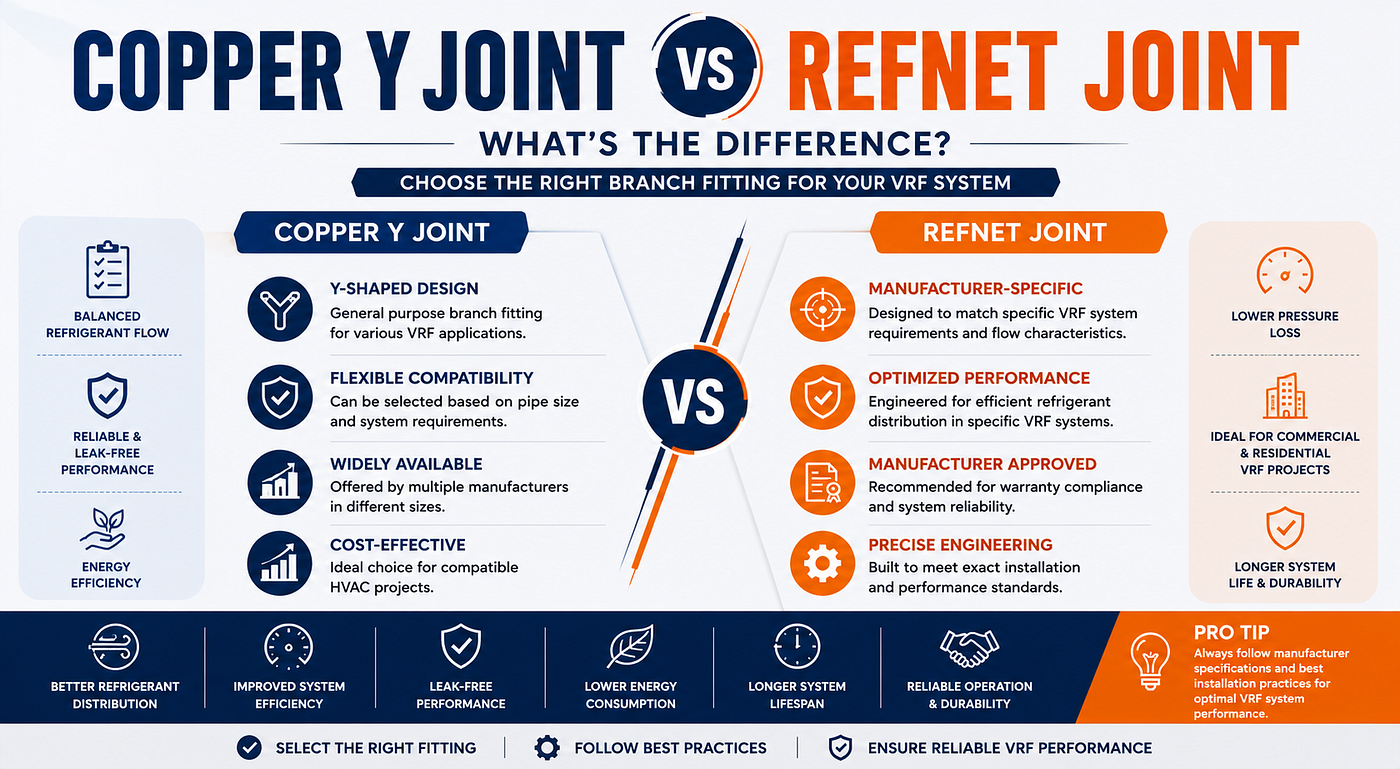
VRF Branch Pipes and Refnet Joints
A VRF piping network uses specially designed branch pipes, Y-joints, and refrigerant distribution fittings to divide refrigerant evenly among multiple indoor units.
Correct sizing and installation of these fittings help maintain refrigerant pressure, balanced flow, and efficient system performance while minimizing pressure losses.
Poor-quality branch piping can reduce efficiency and increase maintenance issues, making component selection an important part of every VRF installation.
Electronic Expansion Valve (EEV)
Every indoor unit contains an Electronic Expansion Valve that precisely controls refrigerant flow according to room temperature and load conditions.
This intelligent valve allows the system to respond quickly to changing indoor conditions.
Why VRF Systems Are Popular
VRF technology has become a preferred HVAC solution because it offers several advantages over conventional systems.
Excellent Energy Efficiency
The inverter compressor adjusts capacity instead of repeatedly starting and stopping, reducing electricity consumption.
Individual Zone Control
Every indoor unit can maintain its own temperature, improving occupant comfort throughout the building.
Flexible Installation
Smaller refrigerant piping and modular outdoor units make VRF systems suitable for both new construction and retrofit projects.
Quiet Operation
Indoor and outdoor units are designed to operate with low noise levels, making them suitable for offices, hotels, hospitals, and educational buildings.
Space Saving
VRF systems require less mechanical room space compared to large chilled water plants.
Lower Operating Cost
Improved efficiency and intelligent load management help reduce long-term operating expenses.
Types of VRF Systems
Different buildings require different HVAC solutions. **VRF technology** is available in three major configurations.
1. Cooling-Only VRF System
Cooling-only VRF systems are designed exclusively for air conditioning applications.
These systems are commonly used in regions where heating is rarely required or where separate heating equipment already exists.
Applications include:
- Data centers
- Commercial offices
- Retail stores
- Industrial facilities
- Tropical climates
Cooling-only systems are generally simpler and less expensive than heat pump systems.
2. Heat Pump VRF System
A heat pump VRF system provides either cooling or heating using the same refrigerant circuit.
The system changes operating mode through a reversing valve.
During summer, it removes heat from indoor spaces.
During winter, it extracts heat from outdoor air and transfers it indoors.
Although every indoor unit can be individually controlled, the entire system operates in either cooling mode or heating mode at one time.
Heat pump VRF systems are ideal for buildings where all zones typically require the same operating mode.
Common applications include:
- Schools
- Hotels
- Apartment buildings
- Office buildings
3. Simultaneous Heating and Cooling VRF System
Heat recovery VRF systems offer the highest level of flexibility.
Unlike heat pump systems, they can provide cooling in one area while supplying heating to another at the same time.
For example:
- A conference room with high occupancy may require cooling.
- North-facing offices may require heating.
- Server rooms may need year-round cooling.
- Interior spaces may require cooling while perimeter rooms require heating.
Instead of rejecting heat outdoors, the system transfers recovered heat to areas requiring heating.
This process improves overall energy efficiency and reduces operating costs.
These systems are commonly used in:
- Hospitals
- Airports
- Shopping malls
- Luxury hotels
- Large commercial buildings
- Mixed-use developments
Importance of Proper VRF Piping Design
The performance of a VRF system depends heavily on proper refrigerant piping.
A well-designed piping network ensures:
- Balanced refrigerant distribution
- Stable operating pressure
- Reduced refrigerant losses
- Efficient oil return
- Reliable compressor performance
- Improved energy efficiency
Professional installation should always follow recommended pipe sizing, branch pipe selection, piping length limitations, and elevation guidelines.
Using high-quality VRF branch pipes, copper fittings, and refrigerant distribution components also contributes to long-term system reliability.
Common Challenges of VRF Systems
Although VRF systems offer excellent performance, they also require careful planning.
Some common challenges include:
- Complex refrigerant piping layouts
- Accurate refrigerant charging
- Proper oil return management
- Skilled installation requirements
- Advanced commissioning procedures
- Regular maintenance of sensors and controls
- Refrigerant leak detection requirements in occupied spaces
These factors make proper design and installation critical for achieving maximum system performance.
Applications of VRF Systems
Today, VRF technology is widely used across different industries because of its flexibility and energy efficiency.
Popular applications include:
- Corporate offices
- Hotels and resorts
- Hospitals
- Educational institutions
- Shopping malls
- Residential apartments
- Villas
- Restaurants
- Healthcare facilities
- Government buildings
- Commercial complexes
Its ability to serve multiple indoor units while maintaining independent temperature control makes VRF one of the most versatile HVAC technologies available.
Choosing the Right VRF System
Selecting the appropriate VRF system depends on several project requirements.
Consider the following factors before choosing a system:
- Building size
- Number of indoor units
- Cooling and heating demand
- Climate conditions
- Energy efficiency goals
- Installation space
- Future expansion requirements
- Maintenance accessibility
- Budget
Working with experienced HVAC engineers ensures proper system design and long-term performance.
Conclusion
Variable Refrigerant Flow (VRF) systems have transformed modern commercial air conditioning by delivering high energy efficiency, flexible installation, and precise temperature control. Whether you choose a cooling-only system, a heat pump VRF system, or a simultaneous heating and cooling configuration, the technology offers significant advantages over conventional HVAC solutions.
The success of any VRF installation depends not only on selecting the right outdoor and indoor units but also on proper refrigerant piping, correctly sized **VRF branch pipes**, quality copper fittings, accurate commissioning, and regular maintenance.
As commercial buildings continue to prioritize energy efficiency, occupant comfort, and sustainability, VRF systems will remain one of the leading HVAC technologies for modern construction and retrofit projects.
FAQs
What is a VRF system?
A Variable Refrigerant Flow (VRF) system is an advanced HVAC solution that uses refrigerant to provide efficient heating and cooling to multiple indoor units. It adjusts the refrigerant flow based on the temperature requirements of each zone, improving energy efficiency and comfort.
How does a VRF system work?
A VRF system uses an inverter-driven compressor and Electronic Expansion Valves (EEVs) to control the amount of refrigerant supplied to each indoor unit. This allows the system to deliver precise cooling or heating while reducing energy consumption.
What are the main types of VRF systems?
The three main types of VRF systems are:
- Cooling-Only VRF Systems
- Heat Pump VRF Systems
- Heat Recovery (Simultaneous Heating and Cooling) VRF Systems
Each type is designed to meet different building and operational requirements.
What is the difference between a heat pump VRF system and a heat recovery VRF system?
A heat pump VRF system can provide either heating or cooling for the entire system at one time. A heat recovery VRF system can simultaneously provide heating in one area while cooling another, making it ideal for buildings with varying temperature demands.
Why are VRF branch pipes important in a VRF system?
VRF branch pipes distribute refrigerant evenly from the main refrigerant line to multiple indoor units. Properly designed branch piping helps maintain balanced refrigerant flow, improves system efficiency, and supports reliable long-term performance.
What are the advantages of installing a VRF HVAC system?
VRF HVAC systems offer several benefits, including high energy efficiency, individual zone temperature control, quiet operation, flexible installation, lower operating costs, and improved comfort for commercial and residential buildings.
Where are VRF systems commonly used?
VRF systems are widely installed in offices, hotels, hospitals, shopping malls, schools, apartment buildings, healthcare facilities, restaurants, and other commercial spaces that require efficient multi-zone climate control.
Can a VRF system provide heating and cooling at the same time?
Yes. Heat recovery VRF systems are specifically designed to provide simultaneous heating and cooling by transferring heat between different zones, improving overall energy efficiency.
What factors should be considered when selecting a VRF system?
When choosing a VRF system, consider the building size, number of indoor units, cooling and heating requirements, climate conditions, energy efficiency goals, installation space, maintenance needs, and future expansion plans.
Why is proper VRF installation important?
Proper VRF installation ensures correct refrigerant piping, accurate refrigerant charging, efficient oil return, balanced refrigerant distribution, and reliable system performance. Professional installation also helps maximize energy efficiency and extend the lifespan of the HVAC system.
메타데이터
- post_id
- 4e367098ef48
- slug
- vrf-systems-explained-from-cooling-only-to-simultaneous-heating-and-cooling-4e367098ef48
- url
- https://medium.com/@acharyabhairavi77/vrf-systems-explained-from-cooling-only-to-simultaneous-heating-and-cooling-4e367098ef48
- canonical_url
- https://medium.com/@acharyabhairavi77/vrf-systems-explained-from-cooling-only-to-simultaneous-heating-and-cooling-4e367098ef48
- author_url
- https://medium.com/@acharyabhairavi77
- status
- ok
- fetched_at
- 2026-08-28 10:47:03