You Can’t Bargain With an Algorithm. But You Can Organise the Workers It Tries to Control
You Can’t Bargain With an Algorithm. But You Can Organise the Workers It Tries to Control
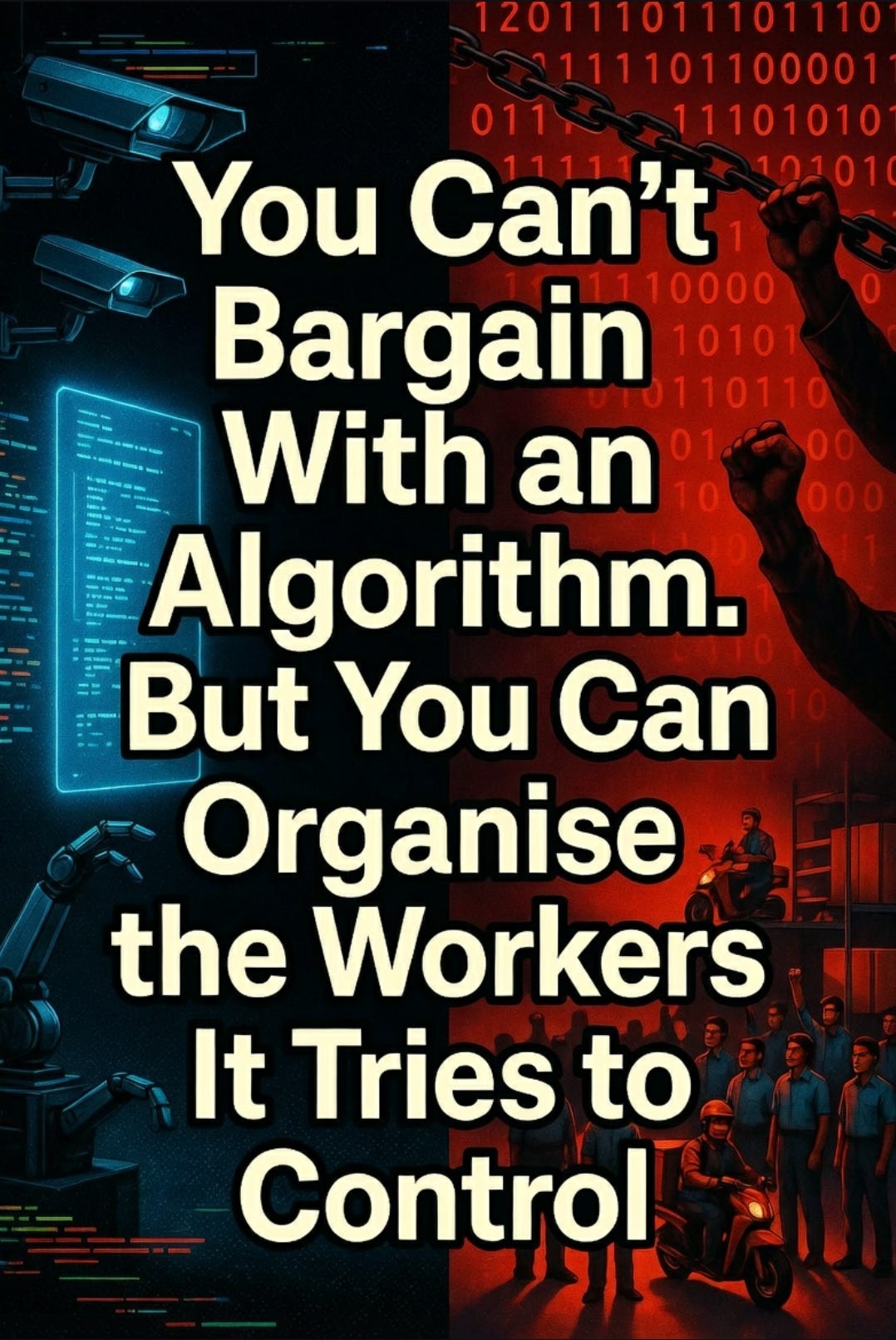
You Can’t Bargain With an Algorithm. But You Can Organise the Workers It Tries to Control
In the gig economy, your boss isn’t a person. It’s code. An algorithm decides whether you get the next ride, how much you earn for it, whether you’re “deactivated” for the week, and even how your face is scanned for identity checks. There’s no supervisor to plead with, no HR department to email, and no union rep at the other end of a hotline. You can’t bargain with an algorithm. But workers around the world are discovering something more powerful: they can organise the people the algorithm tries to control.
The Invisible Manager
Algorithmic management has become the defining feature of platform work. Ride-hailing apps like Uber and Bolt, delivery services like Glovo, DoorDash or Jumia in parts of Africa, and even emerging AI-driven logistics firms use data to assign tasks, set pay rates in real time, monitor performance through ratings and GPS, and mete out punishments like account suspension.
The system is ruthless in its efficiency. A single low rating from a customer you’ve never met can tank your acceptance rate. An unexplained “pattern” in your data can get you locked out with no explanation. Pay can change mid-shift through surge pricing or “dynamic” adjustments that the worker never sees coming. Deactivation—the digital equivalent of being fired—often happens without warning, appeal, or human review. One Human Rights Watch report from 2025 documented how U.S. platform workers live in constant fear of these invisible decisions, with many unable to understand or contest them.
This isn’t just a tech glitch. It’s by design. Platforms classify drivers and riders as “independent contractors” to avoid labour laws, yet they exert more minute-by-minute control than any traditional employer ever did. As one organiser put it years ago: “Unions cannot collectively bargain with an algorithm, they can’t appeal to a platform, and they can’t negotiate with an equation.”
Why Individual Resistance Isn’t Enough
A single driver switching apps or refusing low-paying orders can be replaced in minutes. The algorithm simply routes the job to the next available worker. Attempts at individual negotiation bounce off a wall of automated systems. Even when workers pool their data to reverse-engineer the algorithm as Uber drivers in London did through Worker Info Exchange they still face an opponent that updates faster than any individual can respond.
The result is a new kind of precarity: income volatility, constant surveillance, and the psychological toll of knowing your livelihood depends on opaque code that may be biased, outdated, or simply broken. In 2025–2026 research, gig workers described “algorithmic stigma”—the feeling that the system has already judged them unworthy and reported lower well-being, higher exhaustion, and eroded job autonomy.
The Organising Turn
Yet something is shifting. Workers are refusing to fight the algorithm alone.
Wildcat strikes and coordinated slowdowns: Delivery riders in Europe, Asia, and Latin America have used group chats and encrypted apps to stage flash strikes that grind operations to a halt. In Australia, Uber Eats and DoorDash drivers reached deals with the Transport Workers Union after sustained pressure. Worker data cooperatives: Instead of letting platforms monopolise their data, drivers in the UK and elsewhere are building shared datasets to expose unfair patterns in pay, deactivation, and racial bias in facial recognition systems. New unions and digital labour groups: Rideshare Drivers United in California, Amazonians United, and emerging “digital unions” in Indonesia and elsewhere are using the same tools platforms rely on WhatsApp, Telegram, apps to coordinate faster than traditional unions ever could. Legal and policy pushback: The EU’s 2024 Platform Work Directive and follow-up recommendations in 2025 now require transparency around algorithmic decisions, human oversight for firings, and rights to contest automated penalties. Similar debates are happening globally, including calls for a presumption of employment status that would give gig workers collective bargaining rights.
Even in traditional workplaces, the fight is spreading. Amazon has reportedly used AI to monitor union activity and schedule shifts in ways that disrupt organising. Yet warehouse workers have still formed unions by mapping the algorithm’s weak points—finding moments when human managers must intervene and using those cracks to build solidarity.
What Organising Looks Like in Practice
Successful campaigns share a few traits:
Collective intelligence: Workers share screenshots of pay rates, deactivation notices, and app glitches to build a shared picture of how the algorithm actually works. Strategic disruption: Coordinated refusals of low-pay orders or simultaneous log-offs that create artificial shortages. Hybrid power: Combining street protests, legal challenges, media exposés, and policy advocacy. One-off strikes rarely win; sustained, multi-pronged pressure does. International learning: Tactics that worked for Deliveroo riders in France travel quickly to Nigerian or Kenyan drivers via social media.
The goal isn’t to destroy the platforms—it’s to force them to treat workers as humans rather than variables in an optimisation problem.
The Road Ahead
Algorithms aren’t going away. AI-driven management is spreading from gig work into call centres, warehouses, retail, and even white-collar jobs. The question is whether we let it entrench unchecked corporate power or whether workers can build counter-power.
The evidence is clear: you cannot bargain with an algorithm. But you can organise the workers it tries to isolate, surveil, and control. When they stand together sharing data, timing actions, demanding transparency, and refusing to let the machine divide them they change the equation.
The next time your app pings you with another lowball order, remember this: the algorithm doesn’t have your back. But the driver next to you at the pickup point just might. And together, you’re stronger than any line of code.
메타데이터
- post_id
- 4e380025e2ca
- slug
- you-cant-bargain-with-an-algorithm-but-you-can-organise-the-workers-it-tries-to-control-4e380025e2ca
- url
- https://medium.com/@maiwega/you-cant-bargain-with-an-algorithm-but-you-can-organise-the-workers-it-tries-to-control-4e380025e2ca
- canonical_url
- https://medium.com/@maiwega/you-cant-bargain-with-an-algorithm-but-you-can-organise-the-workers-it-tries-to-control-4e380025e2ca
- author_url
- https://medium.com/@maiwega
- status
- ok
- fetched_at
- 2026-06-15 20:49:13