New Orleans Current 2025 Observations
Current is Confluent’s annual flagship technology conference, focusing on the Data Streaming field, similar to Apple’s WWDC or Google’s I/O…
New Orleans Current 2025 Observations
Current is Confluent’s annual flagship technology conference, focusing on the Data Streaming field, similar to Apple’s WWDC or Google’s I/O conference, but dedicated to real-time data processing and streaming technology.
On October 29–30, Current 2025 moved to New Orleans, Louisiana. This is Timeplus’s fourth time attending Current in the United States. At the conference, we saw many old and new players in the real-time streaming data field. Here I’ll record and share my observations.
Keynote
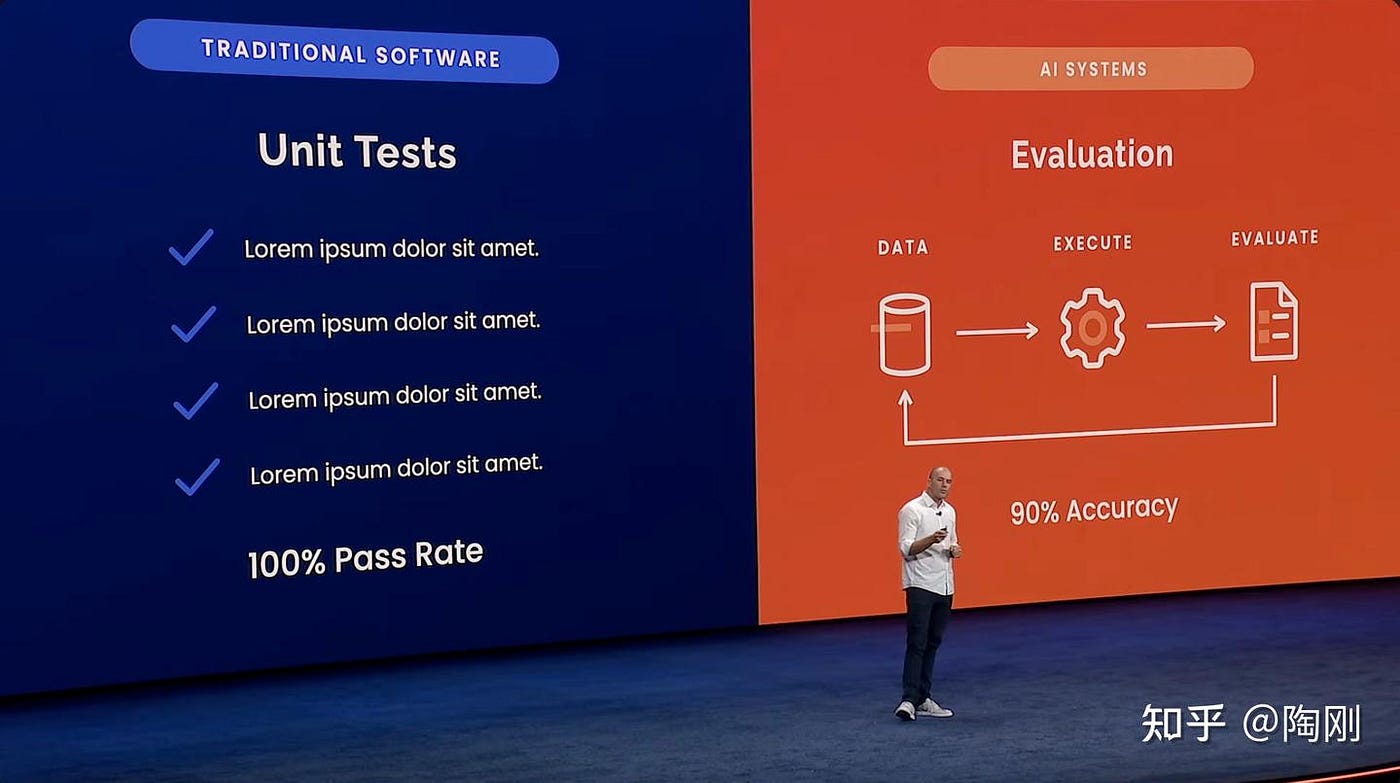
Launch of Confluent Intelligence
Product launches are the highlight of such conferences. At this event, Confluent introduced Confluent Intelligence, which includes three core components: the Real-Time Context Engine, Streaming Agents, and built-in machine learning capabilities. CEO Jay Kreps stated that this combination positions Confluent as the “context layer for enterprise AI.”
Real-Time Context Engine This engine provides an abstraction interface that any AI Agent can access through the Model Context Protocol (MCP). It maintains a fast cache that can provide access to materialized data with millisecond-level latency, rather than the seconds previously required.
Streaming Agents Confluent announced the latest developments in streaming agents, introducing a new Agent Definition feature that allows teams to create production-ready agents with just a few lines of code, complete with observability and debugging capabilities. These agents are event-driven systems that can monitor business events and respond autonomously without waiting for user prompts. The agent logic runs in Flink code to process incoming event streams.
Key Strategic Themes
From Insights to Action Kreps emphasized a fundamental shift: “We’re moving out of a world where complex data is limited to business intelligence, reporting, and analysis, into an era where complex data is for taking action.”
The Context Challenge Kreps pointed out that although AI models are very powerful, if they cannot continuously access fresh and trusted data, they cannot make reliable decisions in enterprises, making “context” a critical bottleneck for enterprise AI.
Real-Time Data as Competitive Advantage Kreps made an analogy: “If you want to cross a dangerous business street, and the only information you have is a photo of yesterday’s street view, you will naturally hesitate whether to step off the sidewalk.”
Technical Innovation
Unifying Batch and Streaming The conference emphasized that the traditional mindset of “batch for state, streaming for events” is being replaced by more pragmatic approaches.
Confluent’s Tableflow integrates these two processing modes by converting Kafka topics into Apache Iceberg or Delta Lake tables.
RAG for Streaming Retrieval Augmented Generation (RAG) for streaming vector data has become a mainstream pattern in discussions.
Market Context
Flink Growth Kreps revealed that Flink’s annual recurring revenue (ARR) grew over 70% quarter-over-quarter in Q3, with over 1,000 customers now using the capability.
Enterprise AI Challenge In a fireside chat with Rachel Lo, Head of Applied AI at Anthropic, both parties noted that the industry has moved beyond the “chatbot era,” with AI gradually being embedded into enterprise workflows in functional, productized ways, aiming to achieve multi-layer agentic architectures.
My View on the Keynote
Through the keynote, we can see that Confluent is positioning itself as core infrastructure for production-grade AI systems. The company argues that AI’s true value lies not in the models themselves, but in continuously providing real-time business context to these models, enabling AI to make reliable decisions and autonomously execute actions. Confluent is placing itself at the heart of the next wave of enterprise transformation: shifting from “human decision-making based on periodic reports” to “AI autonomous action based on real-time context.”
For me, none of this is particularly new. Embracing AI and providing context to large models is very natural and doesn’t represent innovation. Flink’s high growth is also due to a relatively low starting point, and for a company like Confluent, achieving high growth with new business is easy. This indirectly reflects weak growth in the core business in the current economic environment.
Alright, now for the main event — let me show you the exhibitors at this conference.
Exhibitors
There were nearly 50 exhibitors of various sizes at Current. Let’s look at them one by one. (We’ll skip some major companies that aren’t Data Streaming-focused, like Infosys, IBM, Oracle)

Databricks
Databricks is a unified analytics platform created by the Apache Spark founding team, providing a Data Intelligence Platform that integrates data engineering, data science, machine learning, and business analytics capabilities. Databricks has launched the Databricks Lakehouse Platform built on Apache Spark and Delta Lake.
Although Spark and Flink have some competitive relationship, at this conference, as one of the main sponsors, Databricks engaged in strategic cooperation with Confluent on open data lake formats. Through native Tableflow integration, Databricks can automatically and efficiently materialize Kafka streaming data into Delta Lake tables, achieving seamless integration of streaming data with the lakehouse system. Additionally, through the acquisition of Tabular, a company created by the Apache Iceberg founding team, Databricks demonstrated its long-term commitment and support for open standards.

Conductor

Conduktor is a collaborative data streaming platform that provides centralized management, security, governance, and monitoring capabilities for the Apache Kafka ecosystem. The company achieved 4x customer growth in the 12 months ending in 2024, with users ranging from individual developers to large enterprises, especially including multiple regulated financial services institutions.
Conduktor’s core business focuses on Apache Kafka management and governance. According to Conduktor’s 2023–24 “State of Streaming Data Report,” 72% of respondents indicated that AI/ML is a primary use case for streaming data. This makes Conduktor key infrastructure for AI-driven streaming data workloads.

VERVERICA
Ververica was founded by the original team of Apache Flink (including core development members), providing a unified streaming data platform based on Apache Flink for real-time streaming processing and analysis. Product lines include: VERA Engine (cloud-native stream processing engine), Ververica Cloud (fully managed cloud service), and Ververica Platform (self-managed enterprise version).
Besides recently launching version 3.0, in addition to AI support, Ververica is pushing two things:
One is **Apache Fluss**

Another is VERA-X: the first natively vectorized Apache Flink engine

In fact, whether it’s unified storage or vectorized computing, these are things that Timeplus has been doing for four years.

Firebolt
Firebolt was founded in 2019, headquartered in Tel Aviv and Palo Alto, and is a cloud data warehouse company focused on low-latency analytical databases for real-time application scenarios. The company reached a $1.4 billion valuation after Series C funding, with total financing of $264 million. Firebolt provides Postgres-compatible SQL interfaces, supports Apache Iceberg, and achieves sub-second query performance optimization on TB-scale datasets through vectorized query processing.
Similar to Timeplus, Firebolt also has ClickHouse embedded as its query engine, but when I chatted with them, they still wouldn’t acknowledge it. Could they have taken all of ClickHouse? That’s impossible.
Last year, Firebolt launched an officially verified Kafka connector, enabling seamless streaming data transfer from Kafka topics to Firebolt, with full Schema Registry support.
In 2025, Firebolt further strengthened its AI-native analytics capabilities, launching several key enhancements:
- Enhanced Vector Search to support AI and semantic search scenarios
- MCP (Model Context Protocol) server support for seamless integration with enterprise-grade AI systems
- Improved Semi-Structured Data Analytics, enhancing query and performance for complex data formats like JSON and Avro
These enhancements make Firebolt a high-performance real-time database core component connecting streaming data, analytics, and AI.

Buf
Founded in 2020, Buf is a company centered on schema-driven development, committed to completely revolutionizing how organizations use Protobuf and gRPC. The company launched the Buf Schema Registry (BSR), providing a complete Protobuf schema registry and package management functionality. Recently, Buf released Bufstream — a Kafka-compatible streaming platform that can enforce data quality control at the Broker level while significantly reducing operational costs.

Buf addresses core data quality and cost issues in the Kafka ecosystem. Last year, Buf released Bufstream, a Kafka-compatible streaming platform that achieved significant advantages in cost control:
- Compared to traditional Kafka, it can reduce costs by about 8x (example: Kafka $84,796/month → Bufstream $11,147/month)
- With Iceberg integration, costs can be further reduced by about 11x ($7,649/month)
Bufstream not only provides Kafka compatibility but also enforces data quality at the Broker level, delivering an efficient, low-cost solution for enterprise-grade streaming data processing.

StreamNative
StreamNative was created by the original founding team of Apache Pulsar, providing the most cost-effective data streaming platform with 100% Kafka API compatibility, easy to operate and scale.
StreamNative’s Ursa engine solves two major pain points of cloud Kafka while maintaining 100% Kafka API compatibility: cost and network.
- Ursa can write streams directly to lakehouse storage (Iceberg/Delta tables), eliminating Broker disk usage, duplicate replicas, and cross-availability zone (AZ) replication
- While maintaining full Kafka API compatibility, allowing organizations to achieve 95% reduction in total cost of ownership (TCO) while continuing to use Kafka ecosystem tools
- Won VLDB 2025 Best Industry Paper
- Native support for lakehouse storage architecture
- Leaderless Engine: eliminates single point bottlenecks, improving reliability and scalability
- Direct write to object storage: supports Iceberg/Delta tables, eliminating Broker disks and redundant replicas while optimizing storage efficiency and performance

Aiven
Aiven is a managed open-source cloud data platform provider, offering fully managed services including Apache Kafka, PostgreSQL, OpenSearch, and ClickHouse, supporting cloud environments like AWS, Google Cloud, and Azure.
The company has made pioneering contributions to Kafka’s development, especially innovation in Diskless architecture, completely changing how streaming data is stored in cloud environments.

Aiven’s Inkless is a production-ready KIP-1150 implementation with the following advantages:
- Total cost of ownership (TCO) reduction up to 80%, achieved through leaderless architecture
- Eliminates cross-availability zone (AZ) traffic costs, significantly reducing cloud operational expenses
- Supports instant autoscaling with latency below 100 milliseconds, ensuring high-performance stream processing
Diskless 2.0
- Unifies Apache Kafka Tiered Storage (KIP-405) and Diskless Topics (KIP-1150) into a single zero-copy migration path
- Provides end-to-end seamless migration and optimization solutions, enabling enterprises to achieve more efficient, low-cost cloud-native streaming data storage while maintaining Kafka API and ecosystem

Lenses
Lenses.io provides an AI-assisted Apache Kafka data streaming management platform. Headquartered in New York and London. The platform provides a multi-Kafka developer experience, helping engineers seamlessly integrate streaming data into modern applications and AI systems.
Lenses.io’s core platform simplifies Kafka operations, governance, and development, supporting operations across multiple Kafka clusters and environments. Main features provided by the platform include:
- Lenses 6.0 “Panoptes”: supports multiple Kafka clusters, allowing simultaneous exploration of data from all clusters through a unified SQL Studio
- Global Data Catalog: search and discover topics across the entire streaming data environment
- SQL Studio & Processors: execute SQL on Kubernetes to transform, aggregate, filter, and join streaming data
- Kafka connector management: self-service deployment with UI monitoring, error handling, and alerting
- Lenses K2K: universal Kafka-to-Kafka replicator for platform-neutral data replication
- MCP Server: supports Model Context Protocol integration, allowing AI agents to access real-time Kafka data

Lenses.io turns the Kafka ecosystem into a unified, efficient, AI-ready streaming data management platform through these features.

Antithesis
Antithesis is an autonomous testing platform that discovers hidden bugs in distributed systems through Deterministic Simulation and Hypervisor-based technology. The company focuses on providing continuous reliability testing for complex software systems, especially for distributed databases, message queues, and stream processing platforms requiring high reliability guarantees.

The platform provides:
- Deterministic Simulation: replays exact execution sequences of distributed streaming systems to reproduce bugs
- Hypervisor-based Testing: tests entire distributed systems, including network partitions, timeouts, and failure scenarios
- Continuous Reliability Testing: automatically discovers bugs 24/7 on customer systems
- Kafka testing: specialized testing tools for Kafka protocol implementations and distributed streaming platforms
Antithesis provides reliability validation for enterprise stream processing systems, ensuring critical business runs stably in complex distributed environments.

DataPancake
DataPancake is a real-time data platform that simplifies the ingestion, transformation, and activation processes of streaming data. The company is committed to allowing business users and data teams to easily access and utilize real-time data without deep expertise in stream processing technology.

DataPancake can generate data processing pipelines, transforming complex semi-structured JSON data into structured data.

meshIQ
meshIQ is a data streaming and integration platform focused on connecting distributed systems, IoT devices, and enterprise applications in real-time. The company emphasizes Edge Computing and distributed architecture, supporting low-latency data transmission and processing.
- Edge-to-Cloud Streaming: optimizes data transmission for IoT and edge computing scenarios
- Kafka Connectivity: integrates with Apache Kafka for centralized stream processing
- Low-latency data transmission: efficient protocols support distributed data collection
- Real-time Integration: connects different systems in streaming architecture for unified data flow

MeshIQ’s main features brought this time are a unified management platform for messaging and streaming data:
- Effortless Kafka Management: simplifies Kafka cluster operations, monitoring, and governance, reducing management complexity
- Unparalleled Cost Savings: optimizes resource usage, reducing infrastructure expenditure
- Enable BYOC Deployments: flexible deployment in public cloud, private cloud, or hybrid environments to meet diverse enterprise needs
Onehouse

Onehouse is a managed lakehouse platform built on Apache Hudi, created by Uber’s Apache Hudi founding team. The company provides a universal data lakehouse that enables organizations to build streaming data lakes with ACID transactions, incremental processing, and efficient upserts/deletes.
- Apache Hudi: supports streaming writes, incremental processing, ACID transactions, upserts/deletes, and time travel
- Kafka Ingestion: native support for writing Kafka topics to Hudi tables
- Incremental Processing: processes only changed data, not full datasets
- Streaming ETL: performs real-time transformations as data flows from Kafka into the lakehouse
- Universal Lakehouse: supports multiple query engines (Spark, Flink, Presto, Trino)
Onehouse brought its Quanton engine this time.

Factor House

FactorHouse is a real-time data platform built for engineers, dedicated to making it easier for organizations to build, manage, and monitor streaming data systems. Their product portfolio covers two key open-source technology stacks: Apache Kafka and Apache Flink:
- Kpow for Apache Kafka: provides Web UI and API for Kafka cluster, schema management, connector, and streaming data visualization
- Flex for Apache Flink: provides unified UI, API, enterprise-grade security support for Flink jobs, simplifying stream processing deployment
- Factor Platform: a unified platform for managing all Kafka and Flink clusters within an organization from a single interface, with open REST API and barrier-free compatibility
The company emphasizes the positioning of “built for engineers, trusted by enterprises” and supports work in multiple deployment environments (cloud, Kubernetes, Docker, on-premises data centers).
Datahub
DataHub is an open-source metadata platform for modern data stacks, providing Data Discovery, Data Observability, and Federated Governance capabilities. Originally developed and open-sourced by LinkedIn, it helps organizations catalog, discover, and govern data assets, including Kafka streaming data.

DataHub’s integration with the Kafka ecosystem is crucial: it provides metadata management, lineage tracking, and data governance for Kafka topics, schemas, and streaming data pipelines.
Datahub provides:
- Kafka metadata integration: automatically discovers and catalogs Kafka topics, schemas, and consumer groups
- Stream Lineage: tracks data flow from source to destination
- Schema Registry Integration: connects Confluent Schema Registry and other registries
- Real-time Metadata: continuously discovers and updates streaming data metadata
- Data governance: applies policies, tags, and ownership management to streaming data assets
Datahub now fully embraces AI, committed to providing AI context for the entire data ecosystem.

ScyllaDB
ScyllaDB is a high-performance, low-latency NoSQL database compatible with Apache Cassandra and DynamoDB APIs. Written in C++, optimized for modern hardware; provides ultra-low latency (single-digit milliseconds) and high throughput, very suitable for real-time streaming data application scenarios.
ScyllaDB’s data streaming technology includes:
- Kafka integration: seamlessly transfers streaming data from Kafka topics to ScyllaDB via Kafka Connect
- CDC (Change Data Capture): streams ScyllaDB changes to Kafka for event-driven architecture
- Materialized Views: automatically maintains denormalized views of streaming data
ScyllaDB provides reliable, fast, scalable database support for Kafka streaming data applications, ensuring real-time application performance and responsiveness.

AutoMQ
AutoMQ is a cloud-native, Kafka-compatible data streaming platform from China, headquartered in Hangzhou.
- Through compute-storage separation architecture innovation, storing data on object storage (S3) rather than local disks, achieving “Diskless Kafka”
- Provides 10x cost reduction while maintaining complete API compatibility

AutoMQ represents the next-generation Kafka architecture for cloud environments:
- Maintains 100% Kafka API compatibility while solving cloud operational and cost challenges
- Provides cost optimization (10x reduction) and real-time analytics support
- Its Table Topic feature seamlessly bridges streaming data to lakehouse, achieving zero-ETL integration
AutoMQ’s data streaming technology highlights include:
- Shared Storage Architecture: uses EBS and S3/object storage to decouple compute and storage
- S3Stream: proprietary streaming storage library supporting WAL and object storage modules
- Stateless Brokers: achieves second-level scaling, dramatically faster than traditional Kafka’s hours/days scaling
- Auto Balancer: built-in automatic traffic and partition balancing
- Rack-aware Router: eliminates AWS/GCP cross-availability zone (AZ) traffic costs
- Table Topic: unique feature that automatically converts Kafka topics to Apache Iceberg tables, achieving zero-ETL lakehouse integration
AutoMQ provides a cloud-native, high-performance, low-cost, real-time analytics Kafka alternative for enterprises, especially suitable for large-scale streaming data scenarios.

E6Data

e6data is a cloud-native query engine providing ultra-fast analytics for data lakes.
- Provides high-performance SQL engine optimized for object storage (S3, GCS, Azure Blob) data queries
- Focuses on real-time analytics and streaming data scenarios, helping enterprises quickly gain insights
- Real-time analytics: data can be queried immediately upon entering the lake, supporting immediate decision-making
- Iceberg/Delta/Hudi support: native support for common open-source table formats for Kafka streaming data
- High performance: interactive analytics on streaming datasets significantly faster than alternatives
- Cost-effective: reduces compute costs for analytics queries on streaming datasets
e6data provides fast, low-cost, scalable query capabilities for Kafka streaming data lakehouse analytics after landing, suitable for real-time business insights and data-driven decision-making.

MongoDB
MongoDB is familiar to everyone — the leading modern database platform providing document-type NoSQL database capabilities.
MongoDB is commonly used as an operational database downstream of Kafka stream processing:
- Kafka Connect MongoDB connector supports writing Kafka streaming data to MongoDB collections
- Change Streams allows applications to respond to database changes in real-time

Mongo’s Atlas Stream Processing supports real-time stream processing.
MongoDB provides reliable, scalable operational storage and real-time analytics capabilities for Kafka streaming data applications, supporting various enterprise-grade real-time scenarios.

Gravitee

Gravitee is an event-native API management platform providing unified management of synchronous APIs and asynchronous event streams.
- Supports complete API lifecycle management
- Native support for event-driven architecture (including Kafka), allowing organizations to expose and govern streaming data in API form
Gravitee’s data streaming technology includes:
- Event-Native Architecture: native support for Kafka, Webhooks, SSE, WebSocket, MQTT
- Kafka Gateway: secure access to Kafka topics through API management layer
- Stream Governance: applies policies, quotas, and access controls to streaming APIs
- API Portal: developers can discover and use streaming data through the portal
- Multi-protocol support: unified management of REST APIs and event streams
Gravitee makes streaming data secure, manageable, and easily consumable in API form, helping enterprises seamlessly integrate Kafka streaming data into applications and services.

Datadog
Datadog is the leading observability and monitoring platform, providing unified visualization of infrastructure, applications, logs, and metrics. Through deep integration with cloud services and modern technologies, Datadog helps organizations monitor complex distributed systems, including real-time data streaming platforms.

Datadog provides comprehensive monitoring capabilities for Apache Kafka deployments, covering broker metrics, consumer lag, topic statistics, and cluster health. Their sponsorship represents the “observability layer” necessary for running production-grade Kafka clusters. With over 600 integration plugins, Datadog provides deep Kafka monitoring capabilities.
Datadog’s Kafka cluster monitoring indeed offers an excellent experience.
YugabyteDB
YugabyteDB is a distributed SQL database compatible with PostgreSQL with horizontal scaling capabilities. It supports ACID transactions in distributed architecture, providing highly reliable operational database support for streaming architectures requiring both consistency and scalability.

YugabyteDB plays a key operational database role in streaming architecture — it can consume data from Kafka streams, provide transaction-level consistency for applications, and stream database changes back to Kafka in real-time through CDC (Change Data Capture) functionality, enabling bidirectional data flow pipelines.

NetApp Instaclustr
Why would NetApp, a storage company, attend a streaming data conference?
What’s exhibiting is NetApp’s acquired Instaclustr, a fully managed platform focused on open-source data infrastructure (similar to Aiven), with Apache Kafka as its flagship product. It provides 24/7 managed services for Kafka, Cassandra, OpenSearch, PostgreSQL, etc., can run production-grade clusters on customers’ own cloud accounts or Instaclustr’s infrastructure, and provides enterprise-grade SLA (up to 99.999% availability) and security compliance guarantees.
NetApp Instaclustr’s core business focuses on managing Apache Kafka, excelling in its deployment, operations, and performance optimization. With 100% open-source Apache Kafka (no proprietary forks), complete ecosystem support, and deep experience in both KRaft and ZooKeeper architectures, Instaclustr is leading the industry in migrating to Kafka’s KRaft architecture.

Elastic
Elastic is the company behind Elasticsearch, Kibana, and the Elastic Stack, providing solutions for search, observability, and security. Elastic’s technology is widely used in log analysis, application monitoring, and full-text search scenarios, often achieving real-time indexing and analysis through Kafka streaming data.
In streaming architecture, Elastic typically sits downstream of Kafka. Enterprises stream logs, metrics, and events from Kafka into Elasticsearch for real-time search and analysis. Elastic’s sponsorship represents the “search and analytics layer” in streaming data architecture — making streaming data immediately searchable, insightful, and actionable.

Aklivity
Aklivity provides Zilla — an API gateway and event-driven runtime designed to connect applications with streaming platforms (like Kafka). The company focuses on simplifying how applications produce and consume Kafka data without relying on complex Kafka client libraries.

Aklivity solves the access problem for applications that don’t natively support the Kafka protocol. Through Zilla, applications can access Kafka using familiar protocols (HTTP, gRPC, MQTT, SSE, etc.), while the underlying Kafka integration complexity is transparently handled by Aklivity. Its sponsorship represents the “application connectivity layer” in Kafka architecture, allowing more systems to easily integrate Kafka.
- Zilla Proxy: high-performance proxy enabling bidirectional conversion between application protocols and Kafka
- Multi-protocol support: supports HTTP, REST, gRPC, MQTT, SSE, WebSocket communication with Kafka
- Zero-trust security: built-in security and authentication mechanisms without application modification

Materialize
Materialize is a streaming database (refer to my article on Stream Processing Past and Present (18) — The Incremental Revolution of Materialize from Academia) that can perform real-time analytics using standard SQL. The company was founded by database researchers and has received over $100 million in funding from Kleiner Perkins, Lightspeed, and Redpoint. Materialize can maintain incrementally updated materialized views as streaming data continuously arrives, achieving millisecond-level response in complex transformation and join queries.
Materialize is purpose-built for the Kafka ecosystem — it can directly ingest data streams from Kafka topics and maintain real-time updated materialized views through SQL. Many organizations use Materialize to transform Kafka streams into queryable and consistent data products, supporting applications, dashboards, and AI agents requiring sub-second complex analytics.
Materialize’s current focus is on the Live data layer for apps and AI agents.

Dremio
Dremio is a data lakehouse platform providing a SQL query engine with semantic layer functionality. The platform enables organizations to query multi-source data from data lakes, databases, and streaming platforms without moving or copying data, focusing on self-service analytics.
Dremio can connect to data lakes driven by Kafka data streams, enabling unified SQL analytics across streaming and batch data. The company focuses on Apache Iceberg (its co-founder is the creator of Iceberg), aligning with industry trends of importing streaming data into lakehouse formats, making Dremio a key participant in Current 2025’s focus on “analytics on streaming” theme.
DeltaStream
DeltaStream is a serverless stream processing platform founded by Hojjat Jafarpour (founder of Confluent’s ksqlDB). Based on Apache Flink, the company provides unified analytics and stream governance capabilities, enabling organizations to build streaming applications using SQL without managing complex underlying operational infrastructure. DeltaStream has raised $25 million in total funding from investors including NEA, Galaxy Interactive, and Sanabil Investments.

DeltaStream’s core business is designed for streaming systems like Apache Kafka, Pulsar, and Kinesis, solving core challenges in stream data processing and governance. The platform provides a unified view across stream storage, simplifies Flink-based processing, and offers RBAC and stream data governance capabilities — all critical pain points in the Kafka ecosystem.
Core technologies include:
- Serverless stream processing: zero operational infrastructure, automatic resource scheduling
- Stream catalog: hierarchical namespace managing multi-source streaming data
- SQL interface: build streaming pipelines, materialized views, and continuous queries using SQL
- Storage abstraction: provides unified view across Apache Kafka (Confluent, MSK, Redpanda), Kinesis, Pulsar, and PostgreSQL
- Apache Flink-driven: shields operational complexity while fully leveraging Flink’s capabilities
- BYOC deployment: private SaaS model where data always stays in customer network

Kong
Kong is a cloud connectivity company providing API gateway and service mesh capabilities. Kong Gateway is widely used for managing APIs and microservices, while Kong Mesh provides support for service-to-service communication in distributed architectures, including event-driven systems.
Kong’s API gateway capabilities are important for exposing Kafka streaming data as APIs and securing streaming endpoints. Organizations can use Kong to provide an API facade for event streaming platforms, allowing external consumers to publish or subscribe to Kafka topics via REST APIs while enjoying security controls and rate limiting provided by Kong.
Core data streaming technology:
- Event-driven gateway: routes HTTP requests to Kafka producers/consumers
- Kafka plugin: Kong native plugin for Kafka integration
- Stream gateway: secure access to streaming platforms through API gateway
- Protocol translation: converts REST/GraphQL to Kafka messages
- Rate limiting: controls access volume and quotas for streaming APIs

Deephaven

Deephaven is a real-time query engine based on Java, designed for time-series data and streaming analytics. Originally developed by Illumon (a Jane Street Capital spinoff), Deephaven provides high-performance query capabilities, supports Python and SQL interfaces, and can process rapidly changing data.
Deephaven excels at analyzing streaming time-series data from sources like Kafka. Its engine can maintain updated query results in real-time as new data arrives, very suitable for financial analytics, monitoring dashboards, and operational intelligence applications relying on Kafka streams.
Core data streaming technology:
- Kafka integration: native connectors to consume Kafka topics as real-time tables
- Incremental updates: query results automatically update with Kafka data streams
- Time-series optimization: designed specifically for time analytics of streaming data
- Python/SQL interface: define streaming analytics using familiar languages

Ryft

Ryft was founded in 2024 as a cloud-native data management company, aiming to help enterprises master their data lakehouses and achieve more efficient, more open, more governable data infrastructure. The company is headquartered in New York and Tel Aviv.
Ryft focuses on managing data lakes based on Apache Iceberg table format, providing automated table maintenance, optimization, and governance capabilities. The platform promises to eliminate “vendor lock-in,” allowing enterprises to have both ease of operation and autonomous control when using open data formats and infrastructure.
For enterprises hoping to unify streaming data, batch data, and large-scale time-series data into lakehouse architecture, Ryft provides a solution path for “table-level automated governance and optimization.”
Initial funding has secured $8 million in seed round support, led by Index Ventures and Bessemer and other well-known investment institutions.

Streambased

Streambased is an emerging company headquartered in London, UK, focused on making Apache Kafka data serve analytics, BI, and AI workflows in real-time, directly queryable ways. Founded in 2023. Its core philosophy is: “Kafka is both an event streaming platform and a data lakehouse entrance.” By providing SQL interface, file/table views, and logical layer of Apache Iceberg Tables, Streambased eliminates the latency and complexity of traditional ETL/data replication.
Its core products and capabilities include:
- A.S.K. (Analytics Service for Kafka): allows direct querying of Kafka topics using standard SQL (JDBC/ODBC/SQLAlchemy)
- S.S.K. (Storage Service for Kafka): accesses Kafka data as S3-compatible file system for experiments, downloads, and AI/ML data exploration
- I.S.K. (Iceberg Service for Kafka): logically presents Kafka topics as Iceberg table views, enabling integration with downstream analytics platforms (like Snowflake, Databricks) without data copying
- Combined Views architecture: provides “zero-copy” views, unifying real-time and historical data queries in the same interface, with typical read latency below 100 ms
- No data movement: Streambased emphasizes no replication, no pre-moving data, native query execution on Kafka

Azul
Azul provides professional Java runtime solutions, including Azul Platform Prime (formerly Zing), equipped with an optimized C4 garbage collector designed for low-latency and high-throughput applications. Since many stream processing systems like Kafka and Flink are built on Java, Azul’s JVM optimizations can directly improve these streaming application performances.
Azul’s optimized JVM significantly improves performance in Java-based streaming platforms. Running Kafka Brokers, Kafka Streams applications, or Flink jobs with Azul JVM can achieve the following improvements:
- Significantly reduced GC pauses
- Increased throughput
- More predictable latency
These improvements are crucial for real-time streaming workloads requiring consistently low latency. This is why Azul attends Current every year.

RisingWave
RisingWave is a distributed SQL streaming database (you can refer to my article: Stream Processing Past and Present (21) — The Rising RisingWave) designed to simplify stream processing development complexity. Built on PostgreSQL-compatible SQL, it enables developers to build streaming applications using familiar database concepts without mastering specialized stream processing frameworks.
RisingWave positions itself as an alternative to traditional complex stream processing frameworks, making Kafka stream processing easier through SQL. Its PostgreSQL protocol-compatible interface allows any Postgres client to directly query streaming data, enabling more developers to easily access real-time analytics data from Kafka and achieve stream processing.

StarTree
StarTree is a company built on Apache Pinot providing fully managed cloud services. Apache Pinot is a distributed OLAP data storage system originally created by LinkedIn. StarTree was founded in 2019 by Apache Pinot’s core creators, providing Database-as-a-Service for ultra-low latency and massive-scale analytics.
StarTree’s connection to data streaming is crucial: Apache Pinot was designed from the start to integrate with Apache Kafka, Kinesis, and Pulsar, enabling sub-second data updates. Pinot’s REALTIME tables continuously ingest data from Kafka topics, making it a natural analytics layer for event stream analytics, helping enterprises deliver Kafka real-time data insights directly to millions of users.

VoltDB

Volt Active Data (formerly VoltDB) was founded in 2009 by database pioneer Michael Stonebraker and others, headquartered in Bedford, Massachusetts. Volt provides an in-memory data platform designed for mission-critical applications requiring sub-10 millisecond decision latency and “five nines” (99.999%) high availability. The company has raised $46 million in funding, with customers mainly from telecommunications and financial services industries that have extremely high demands for ultra-low latency decision-making capabilities.
Volt positions itself as the real-time decision layer in streaming architecture, complementing stream processing platforms like Apache Kafka and Confluent.
VeloDB
VeloDB is a data warehouse company founded in May 2023 by original contributors of Apache Doris. The company focuses on building a “Real-Time Data Warehouse,” performing ultra-low latency analytics on massive-scale data. Core technology based on Apache Doris, its commercialized product provides both SaaS (cloud service) and enterprise self-deployment versions.
Main products and capabilities include:
- VeloDB Cloud: cloud-native, fully managed real-time data warehouse service supporting separation of storage and compute, automatic elasticity, cross-cloud deployment
- VeloDB Enterprise: software version for enterprise self-managed deployment, can run in on-premises, VM, or Kubernetes environments
- Real-time ingestion and analytics capabilities: supports second-level data freshness (micro-batch or real-time inflow), high-throughput writes, excellent performance with wide tables and complex JOIN queries
- Semi-structured data support: such as native JSON/nested data types (VARIANT), supports log, event, and mixed structure data analytics
- Open lakehouse integration: can interface with Iceberg, Hive, external data lakes, and supports MySQL protocol compatibility for seamless migration
Interestingly, another company CelarData also from Apache Doris didn’t come this time. I chatted with VeloDB colleagues about their development history.
Kinetica

Kinetica is a real-time analytics database platform that uses GPU acceleration to process streaming and historical data. The company helps organizations perform complex analytics at massive scale with ultra-low latency, very suitable for application scenarios requiring instant insights from streaming data.
As an analytics database layer in Kafka stream processing architecture, Kinetica provides GPU-accelerated real-time analytics capabilities for enterprises. Enterprises can import streaming data from Kafka into Kinetica in real-time for ultra-fast analytics, driving real-time dashboards, geospatial analytics, and time-series analytics requiring sub-second query response.
Streaming data-related technology:
- Kafka connector: native integration to import data from Kafka topics into Kinetica in real-time
- GPU acceleration: uses GPU for ultra-fast analytics on streaming data
- Real-time ingestion: supports high-throughput streaming data inflow
- Geospatial analytics: advanced spatial analytics capabilities for geographic location streaming data
- Time-series analytics: optimized for time-series streaming data, supporting real-time time-series queries
Chatting with Kinetica people, they claim to be 9x faster than ClickHouse, which scared me. But if using GPU acceleration, it might not be impossible, though how to calculate GPU costs? This comparison doesn’t seem quite reasonable.

Superstream

Superstream is a platform focused on Apache Kafka cluster and client optimization, committed to helping enterprises reduce Kafka operational costs, improve reliability, and simplify operations. Its core products and capabilities include:
- SuperCluster: performs daily health scans on Kafka clusters, detecting idle topics, partition skew, consumer lag, over-provisioning, and other issues, providing optimization recommendations or automatic fixes
- SuperClient: optimizes Kafka client (producer/consumer) configurations, such as batch size, compression algorithms, linger time, etc., reducing network transmission and resource waste without code modification
- Auto-Sizing: adjusts cluster scale, instance types, and partition numbers based on actual usage to avoid resource over-provisioning or under-provisioning, thereby reducing costs
- Real-time optimization and automated control: provides optional automatic repair functionality while retaining manual review options, supporting policy definition, audit logs, and compliance access control
- Security and compliance: platform complies with industry standards like SOC 2 Type II, ISO 27001, and GDPR, ensuring customer data security

Timeplus
Timeplus (you can refer to my article Stream Processing Past and Present (24) — Building the Core of Stream Data Processing Timeplus Proton) provides a unified real-time data pipeline serving analytics, observability data, and artificial intelligence scenarios. Timeplus is a single executable file vectorized streaming SQL platform. It can deploy and scale seamlessly in any environment: edge, cloud, bring-your-own-cloud (BYOC), or hybrid environments.

At this Current, we brought our freshly made mascot.

This t-shirt was very popular and quickly snapped up.
This is the design draft:

Thanks to our product designer, marketing lead, Wei!
Those who can read to here should all be our die-hard fans, everyone give it a like!
Timeplus, Never miss a beat!
Tacnode
Tacnode is a data platform company designed specifically for real-time data and AI-driven applications. Its flagship product is Tacnode ContextLake, aiming to provide “instant context” for enterprises, allowing data to be understood, used, and decided upon in real-time. Its key features:
- PostgreSQL compatibility: Tacnode platform is compatible with PostgreSQL protocol, allowing existing tools, drivers, and query logic to migrate directly
- Real-time + historical data unification: supports real-time ingestion, incremental transformation, and low-latency retrieval, covering structured, semi-structured, time-series, and unstructured data
- Cloud-native & multi-cloud friendly: architecture is cloud-native, can deploy in multi-cloud or hybrid fashion, achieving elastic scaling and pay-as-you-go
- For AI and real-time decisions: provides support for AI models, intelligent agents, real-time analytics, feature generation, vector retrieval, and other scenarios

Synadia

Synadia provides enterprise-grade NATS messaging platform, including open-source NATS.io and managed service Synadia Cloud. NATS is a high-performance, cloud-native messaging system suitable for microservices, edge computing, and IoT applications, emphasizing lightweight and high-speed message delivery.
Although NATS’s architecture differs from Kafka (emphasizing lightweight messaging rather than persistent streams), Synadia’s participation represents the broader messaging and stream processing ecosystem. Many organizations use NATS for ephemeral messaging while using Kafka for persistent streams, building integration points between the two.

Lightstreamer

Lightstreamer is a company from Milan, Italy, providing real-time messaging solutions for Web and mobile applications. The company focuses on pushing real-time data to browsers and mobile devices, typically obtaining data from backend streaming platforms like Kafka and delivering it to end users.
Lightstreamer represents the “last mile” of stream processing architecture — efficiently pushing data from Kafka to Web and mobile clients. Organizations use Lightstreamer to provide real-time updates, dashboards, and notifications, with Kafka as the backend stream processing infrastructure. Core data streaming technology includes:
- Real-time push: efficiently pushes data to browsers and mobile devices
- Kafka adapter: integrates with Kafka to consume streaming data
- Protocol optimization: optimizes protocols for mobile and bandwidth-limited scenarios
- Connection reuse: single connection can serve multiple data streams
- Conflict resolution: handles data updates during client reconnections

Redpanda
Finally, we should mention Redpanda.
Due to various grudges and fierce competitive relationships, Redpanda was banned from attending Current, so they chose to set up a booth outside the entrance, neither completely missing this event nor saving sponsorship fees. I think it’s pretty good.
Redpanda has recently fully embraced AI, committed to becoming the data plane for AI agents.
Summary
We can see that basically all major vendors in the stream data processing ecosystem attended. They can roughly be categorized as follows:
- Stream processing platforms and messaging systems, providing core stream processing infrastructure — Kafka-compatible platforms and alternatives Aiven, StreamNative, AutoMQ, Buf (Bufstream), NetApp Instaclustr, Redpanda, Synadia
- Stream data processing/streaming databases Ververica, DeltaStream, RisingWave, Materialize, Timeplus, DataPancake
- Real-time databases (downstream of stream data processing) StarTree, Firebolt, Kinetica, Deephaven, VeloDB
- Operational databases and state storage (upstream of stream data processing) MongoDB, ScyllaDB, YugabyteDB, Volt Active Data
- Data lakehouse and query engines Databricks, Onehouse, Dremio, e6data, Elastic
- Management, governance, and observability Conduktor, Datadog, DataHub, Lenses.io, meshIQ, Factor House, Antithesis
- Integration and network connectivity Kong, Gravitee, Aklivity
From the major trends, we see the following points:
- Various vendors actively embrace AI, streaming data can provide real-time, fresher data to AI Agents, achieving low-latency decisions
- Lakehouse fusion, streaming data directly integrates with analytical lakes, achieving unified analytics and stream processing. Various vendors innovate using Iceberg-focused data lake technology
- Data governance and observability become increasingly important, strengthening security, compliance, and data quality control, covering Kafka streams. We can call it StreamOps.
Alright, that’s all for today. When we have time, we can do more detailed analysis on these points.
See you at next year’s Current!
메타데이터
- post_id
- 4e3843068d11
- slug
- new-orleans-current-2025-observations-4e3843068d11
- url
- https://medium.com/@taogang/new-orleans-current-2025-observations-4e3843068d11
- canonical_url
- https://medium.com/@taogang/new-orleans-current-2025-observations-4e3843068d11
- author_url
- https://medium.com/@taogang
- status
- ok
- fetched_at
- 2026-06-26 21:52:29