A Complete Ranking and Breakdown of Every Song in ‘The Vampire Lestat’
Spoilers ahead for Season 3 of The Vampire Lestat.
A Complete Ranking and Breakdown of Every Song in ‘The Vampire Lestat’
AMC
Spoilers ahead for Season 3 of The Vampire Lestat.
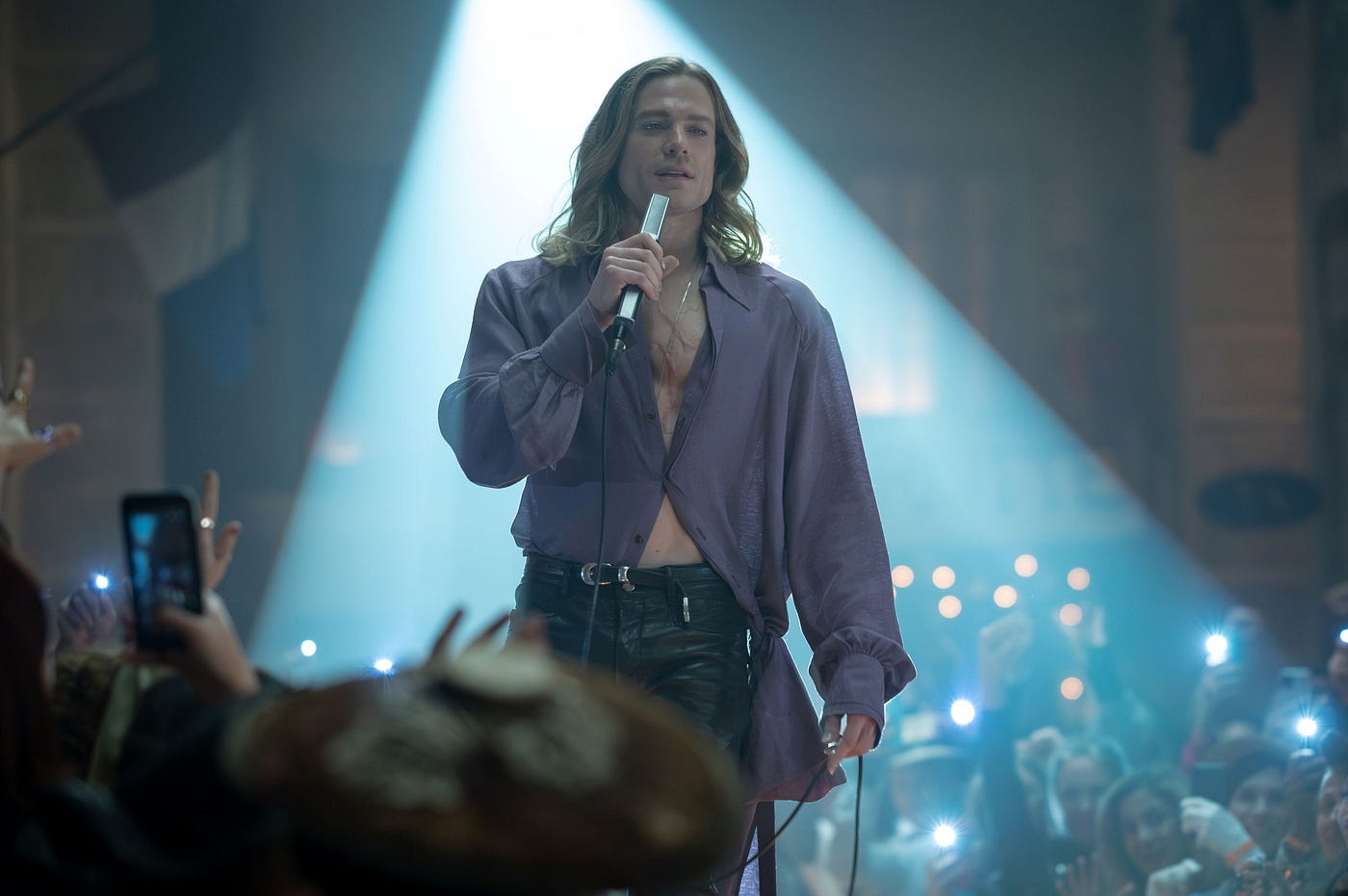
With the entire season of The Vampire Lestat now released, it’s high time for a song ranking. The weekly streaming releases corresponding with each new episode have been the second highlight of my week. Anyone not listening to the songs Daniel Hart has created for this season is seriously missing out, because he and the creative team behind The Vampire Lestat have produced a comprehensive companion piece to the season that elevates the show to a level I have never seen before in television. So, here’s a ranking and breakdown of all 18 songs, from worst and best. My personal ranking criteria is based on how each song captures Lestat’s psyche at a particular moment in the show, whether the song offers any greater insights and/or context for the plot and characters, and if it just sounds good musically — that last one is, admittedly, mostly subjective.
AMC
18. All Fall Down
It’s the song for the opening credits, so there isn’t much to pick apart beyond the gestures toward Lestat’s character and some basic ideas of the death and destruction he’ll be summoning with his music. It doesn’t have nearly as much to say as any of these other songs, which is fine. It’s also a short theme that doesn’t pack much of a punch in comparison to the rest.
17. Black Licorice
Absolute chaos for the ears, “Black Licorice,” is physically hard to listen to since it represents Lestat when he’s still not at his best or most self-reflective. It’s a dense song in terms of cultural references, but not as much to Lestat’s psyche or his world. Some of the lyrics are just plain insanity for shock value. Although fans of the show and characters in-canon alike suggested the chorus is code for something sexual with Louis, it’s supposedly about Lestat’s first kill after reconciling with Louis (we finally see this person in the season finale). I found Lestat’s explanation for the lyrics back in Episode 3 intriguing. Lestat says it’s about “how the current culture has misshapen the mortal mind and how easy and unsatisfying the bringing of death has become,” something felt by vampires when they drain modern victims and see their memories just as an “endless cache” of media. Now that is some interesting commentary, the way the modern media landscape and culture affects the quality of vampire’s food. I like that we keep coming back to critiquing the capitalistic, soulless, impulse-driven culture of the 21st century in this season, and the way it’s impacting the modern vampire because, as we know, the blood affects their energy, their mental state. Lestat has another song that really attacks modern American culture, which we’ll get to momentarily.
16. Nothin’ to Lose
This one also doesn’t have much to say about Lestat himself, nor is it as catchy a listen as some of the other releases. But there isn’t a single song Daniel Hart wrote for this show that I would describe as a nothingburger. The musicians shine more here with some loud, indulgent rock, but the lyrics offer a few nuggets of plot. The opening lines foreshadow Akasha’s return: “I need a mean, mean mom/I need a ravenous queen.” And some of the lines call back to Lestat’s time with her as her Keeper, for instance, “I bit the head off a snake/Got a venom heart/Give me that antidote before it tears me apart.” This appears to reference when he drank Akasha’s blood and how the long-lasting effects have heightened his monstrous nature as he describes to his band at the end of Episode 5, which has led him to where he is now: alone, falling apart, and with “nothing to lose.” The second verse also mentions “The Wolverine Blues,” one of many allusions throughout the “album” to Louis’s misremembrances regarding Lestat. I love how Hart took any chance he could to pull from Louis’s memoir with these songs. It was, after all, the catalyst to Lestat’s whole musical endeavor this season.
15. Plastic Fiends
This song is simply reading modern Americans to filth. It’s one of the densest songs in terms of cultural references, in the same vein as “Black Licorice.” You could spend hours going through each lyric to research who or what Lestat is referencing and why. Lestat digs into everything, from Elon Musk to Vladimir Putin, and that’s just in the first verse. The chorus harps on Americans looking like Saran Wrap and smelling like Febreze. We are the titular “Plastic Fiends,” less and less human each day, less and less consequential to each other and to the vampire species. It’s a nihilistic song, and I’m awed Daniel Hart managed to write such a thorough diss on the hellscape that the U.S. has become in this cultural moment within a song for a fictional vampire. The content doesn’t offer much for Lestat’s characterization beyond his beratement of the aforementioned subjects and his apathetic attitude toward the significance of mortal lives, but it’s a timely track. And the chorus is super catchy.
14. Long Face
Now, do I think “Long Face” is much better to listen to than the previous few songs? No. Do I still find myself smiling and bopping along to it when it comes up on The Vampire Lestat playlist? Yes. But that’s besides the point. “Long Face” is further up on this ranking mainly because it holds more narrative importance than the previous few songs. There’s not as much complicated metaphor or real digging into the self in this one, but it does a great job of showing where Lestat’s arc begins this season. The song is self-indulgent, hypersexual, and simplistic in its lyricism. It’s the epitome of the Lestat we think we know, but what is really his armor. A few lines near the end of the song imply what’s really on his mind. “Another tear/Another chase/Another sneer/Without a trace, you disappear,” among other lyrics feel like call-outs to Louis, and this is one of many songs that responds to the caricature Louis drew of Lestat in his memoir that Lestat now needs to counter with his own narrative. Lestat also explains some of the lyricism to this one in his conversation with Daniel from Episode 3. He calls the song an agreement between himself and the audience, “permission disguised as anthem.” He says the song begins with a performative vampire, but by the end, the listeners get the real thing. It’s another fun meta dialogue from the writers to us, the viewers.
AMC
13. BIG BOSS
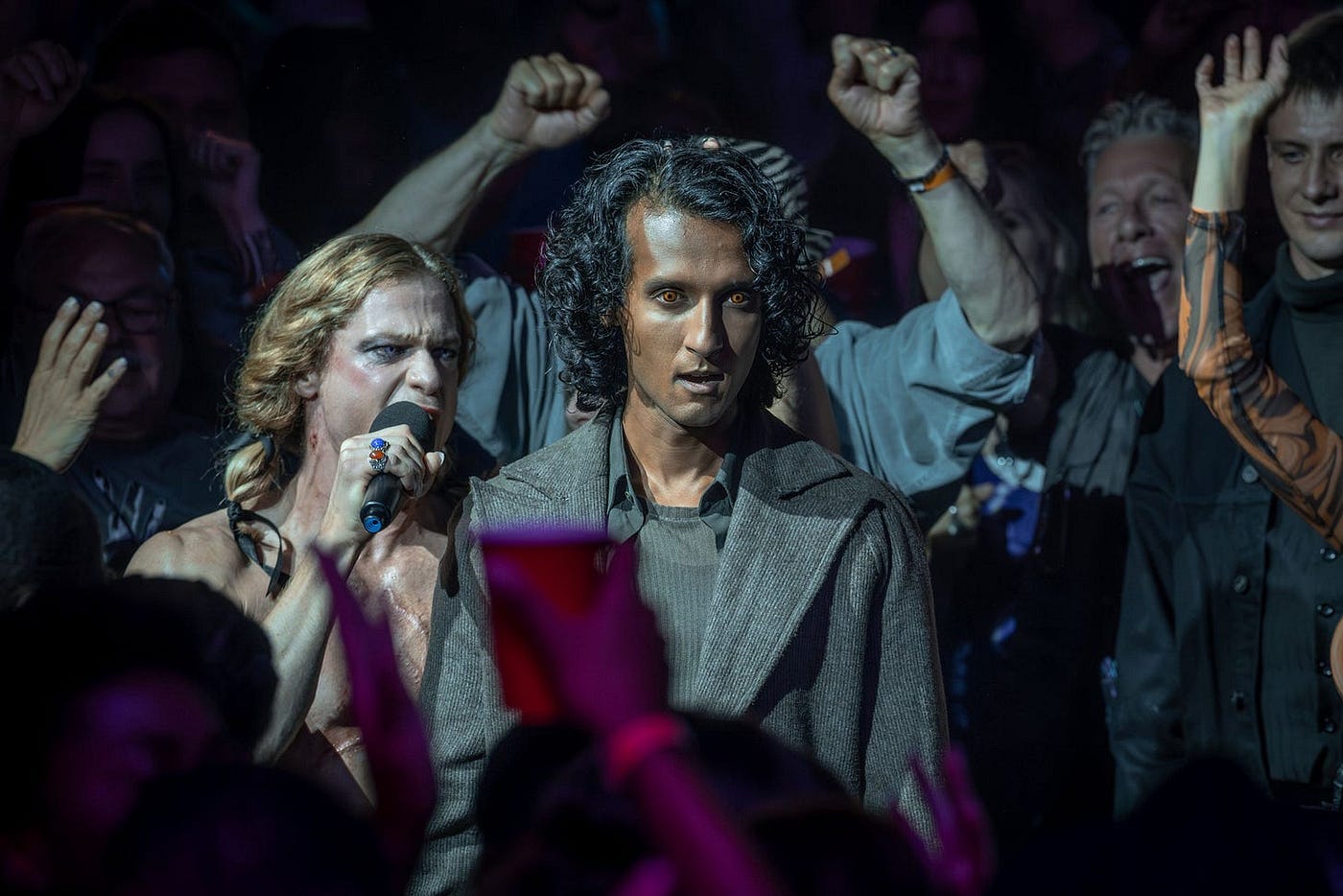
“BIG BOSS” is definitely the pettiest number out of all these. It’s a surface level diss track performed as humiliation ritual, and the lyrics aren’t as rich as some of Lestat’s other songs. The insults go for the low-hanging fruit, mostly punching down on Armand for his poor looks and sexual inadequacies. The up-tempo beat and silly lyrics make it a mildly enjoyable listen, but the show’s context is what elevates the song to another level. Lestat performs the whole thing in pigtails reminiscent of Claudia’s Baby Lulu character and in pinstripe pants that look like the ones he wore during the Trial. The song and performance combined work excellently together to call Armand out for the ways he’s hurt Lestat. I find that the songs Hart wrote for Lestat as direct dialogue to other characters are his strongest. And the wording of the chorus excellently translates the Five Great Laws that Armand is so obsessed with into basic, trivial-sounding rules.
12. Le Fontaine de Sang
Finally, a bit of French from our French vampire. This song is a gorgeous piece of poetry put to music. Because it’s technically not entirely original, it’s gets kicked down lower on the list, and other songs feel more pertinent to Lestat’s specific journey on the show. But “Le Fontaine de Sang” is a powerful piece to listen to that’s more relevant to Lestat beyond its focus on blood. The music doesn’t sound like any of Lestat’s rock songs on his “album.” Like some of his other best pieces, this one is extremely stripped down, with the only instrument being a piano. Because of that, it feels much more raw and vulnerable. It’s a fitting choice since Lestat plays this in Episode 2 as he’s remembering turning his mother and killing his family, something he’s kept secret from everyone and which he still wrestles with. There have been numerous English translations over the decades, but the poem generally tell the story of a narrator who describes his blood spouting out of a wound he can’t find, flowing into everyone and everything around him, which consumes it. The narrator has tried to distract himself with wine, with love, but nothing helps the pain — instead, everything he tries makes it all the worse. If that doesn’t perfectly describe Lestat, especially in this season, I don’t know what does.
11. Dancing With Myself
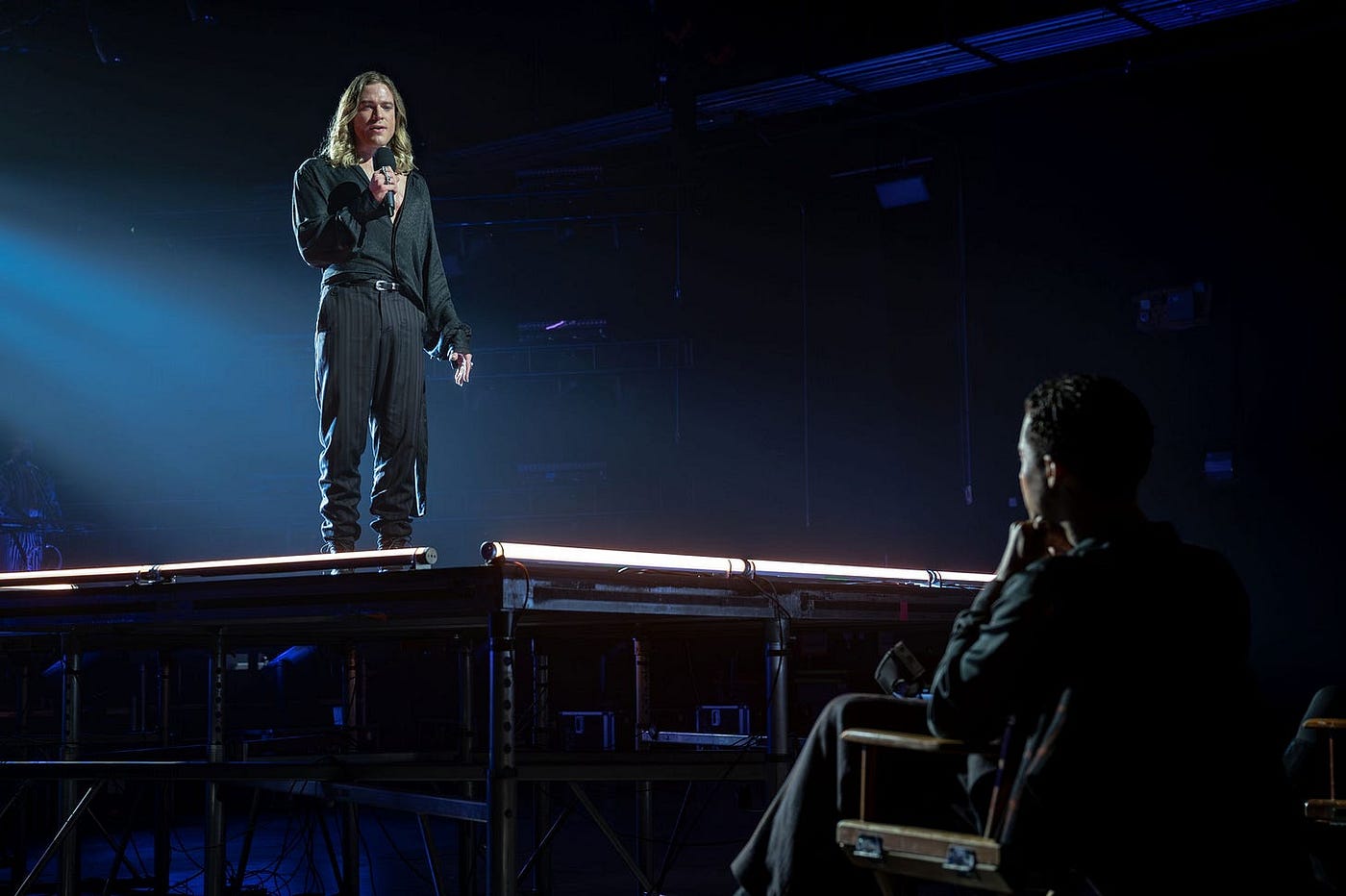
This song is a cover, and that’s the main reason it’s lower on this ranking because even though it’s a bop and I love listening to it, it’s not original to Lestat, even if it was an excellent choice to encapsulate his eternal search for love. This cover version is fun to listen to, and the changes made to its composition paired with Sam Reid’s almost strained, husky voice transform it into a new piece. But the lyrics feel apt as Lestat is singing them while Louis sits in the audience, the very “empty eyes” who have passed him by, leaving him dancing with himself. Louis is the only person Lestat wants, and until he can have him, he’ll be dancing alone, as he does onstage in this scene in Episode 6. Although Lestat has been surrounded by crowds the entire season, he’s never been lonelier. But in small moments he’s been learning how to find “when there’s nothing to lose and there’s nothing to prove.” This really was a lovely choice for a little cover moment.
10. Butterscotch Bitch
It’s too bad we never got to hear a full version of this song in the finale episode because it’s an amusing little listen. It’s not one of the stronger songs, nor does it have much bearing on the canon plot because Lestat never actually gets to sing it — why did we get three false starts to this song and no performance? That was such a tease. But anyway, “Butterscotch Bitch” is campy fun, Lestat at some of his most performative. As such, it falls in with many of his other songs: the lyrics are hypersexual and vocals packed with riffs and wailing like “Long Face.” But that doesn’t mean there aren’t cracks in the lyrics that expose a bit of what’s going on behind the mask. And there are numerous tidbits that foreshadow important plot points this season. “My head is rollin’ round,” alludes to Lestat’s decapitation in the last seconds of Episode 6, and “Burn every witch” calls back to the witch burning his mother took him to as a child that becomes a major point of contention throughout his internal journey in Episode 7. The song itself sort of summarizes the season as a whole. He was “a showgirl in the shower,” with Armand in Episode 4, and “A puking princess on your bathroom floor” back in Episode 1. Lastly, of course, his songs can’t ever not have a lick back at Louis for the memoir, and here it is: “Did the flavor of my failures prove/Good enough to gild your gaping wound?”, a reference as well to the failures that have been the defining theme of this season.

AMC
9. Why Do I Have To Feel?
After this point, the ranking gets tight; all of the following songs do a fantastic job of capturing Lestat’s mental state at specific points, and they all sound great, at least to this writer’s ear. “Why Do I Have to Feel?” is a straightforward and honest song that Lestat performs in Episode 2. Louis’s presence in the audience is what shapes it. Lestat does a lot of gratuitous thrusting during this one, coupled with plenty of moans that make up about a third of the song’s vocals. You can tell just by listening to it that it was written and performed with Louis in mind. Because the lyrics are slow and simple, it’s easy to sing along to, easy to understand. The very question at the heart of the song is relatable for mortal and vampiric audiences alike. Even with its simplicity, there are layers to the song. You find yourself asking as you listen, is this about Gabriella, Nicki, or Louis? All three? Lestat’s expressions of loss and pain could apply to any of them. But the bridge about writing “the prettiest song in the world” is obviously for Louis and Louis only. The music slows down and shifts to a singular guitar just as, onscreen, Lestat slows down time and flies to talk directly to Louis — a visual/musical moment in the episode that had Loustat fans abuzz and that’s still one of the most magical moments of the season overall.
8. Hit The Lights — Bare Bones
This is one of the songs that feels totally different musically and tonally from everything else in this “album.” It’s probably not a song Lestat released in his official posthumous album, but I’m happy we have it to listen to. Worlds away from the glam rock genre that the other songs sit in, this raw, acoustic song captures Lestat at his most vulnerable. That’s why it sticks out and feels like one of the best songs produced for this season to me. And it’s about his mother, mourning their relationship with such honesty that this song reads like a piece from a boy to his mother more than anything else. Lestat feels younger here, like a child, especially with lines that call back to childhood: “Why won’t you let me bring you flowers/Like I used to cheer you up?” He sings the song to himself after his mother has abandoned him again and his entire band has left him, leaving him completely alone for the first time in a long time, which forces him to face the fear that he will be alone for the rest of his life. The simple, universally understood lyrics — “You disappeared/And now I’m left here feelin’ sorry for myself/With my mind and nothin’ else” — combined with Sam Reid’s vocals capture that raw wound of abandonment, and the subsequent hopelessness and self-pity Lestat finds himself wallowing in. Reid’s voice sounds pained here, and it’s the worst I would say he’s sounded on any of these songs as he strains to reach for some of the higher notes, and that’s exactly what makes the song so poignant and reflective of Lestat’s emotional low at this point this season.
7. Cabbage
This song is short by comparison to the others, but the punch it packs makes it by far and away one of my personal favorites. Hart made an anthem with this one that doubles as Lestat’s ode to his in-universe fans, the “Beautiful Unwell,” and to us, the show fans. As the backing vocals shout “Make more,” Lestat instructs his listeners to be “broken,” “unlovable,” “lost and irredeemable.” He’s spent his life seeing himself as a monster, and here, he owns it and reaches out to anyone who might feel the same and tells them, essentially, to be themselves and love themselves for it. Before he amps up to his call to action for the fans, the lyrics offer some insights into Lestat’s self-reflection, such as the intro: “Let’s say I’m drawn to trauma/That drama drives the engine/An exercise/To exorcise the voices that keep me hummin’.” Lestat has faced his demons from the past, he’s grappled with his disappointments surrounding love, and now he says, fuck it, I am the monster. Breadcrumbed throughout is the call to action for the Great Conversion, from the repetition of “Make more!” to the blatant directions to “kill the planet” and “rebuild it” in their image. This song is just a little treasure trove for character and plot, with even its title alluding to how Lestat and his mother used to make fun of mortals.
6. Big Bad Wolf
I can’t believe this gem of a song was buried in the streaming releases but never featured in the show beyond the final lyric. This song totally encapsulates where Lestat is at this season. More than any of the other songs, this is a direct and thorough response to everything Louis claimed in his memoir about Lestat. It’s extremely lyrically dense, packed with references to things Louis has said in the previous seasons. Lestat calls himself “a lot” in the very first verse, repeating the exact wording Louis used to refer to him him in Season 1 in his conversation with Jonah. Lestat is talking directly to Louis throughout the entire song, and I could spend another multi-thousand word article breaking down each reference. It’s awe-inspiring, how much Daniel Hart packed into this song. The attention to detail never fails to impress me. Lestat tears down the vilified image of him as Louis’s “Big Bad Wolf,” pointing out that Louis was actually the one who killed him and betrayed him: “But who’s villain sneaking up from behind with a knife in his hand/And a mouthful of lies?” He hilariously parodies Louis’s big announcement at the end of season 2, “I own the night,” with the repeating lyric in the chorus: “The night’s for sale.” Then, there’s the whole spoken interlude in the middle of the song where Lestat pokes more holes in Louis’s narrative, from his missing scars to his role as Lelio, which results in a chaotic, cacophonous breakdown where he cries, “And I would never say that to Claudia on the train!/I would never, ever say that/You cancerous jackal”. Out of all the songs, this one feels like the Lestat’s biggest pushback against the two-dimensional villain that Louis and the show audience have viewed him as throughout the past two seasons.

AMC
5. Stained Glass Eyes
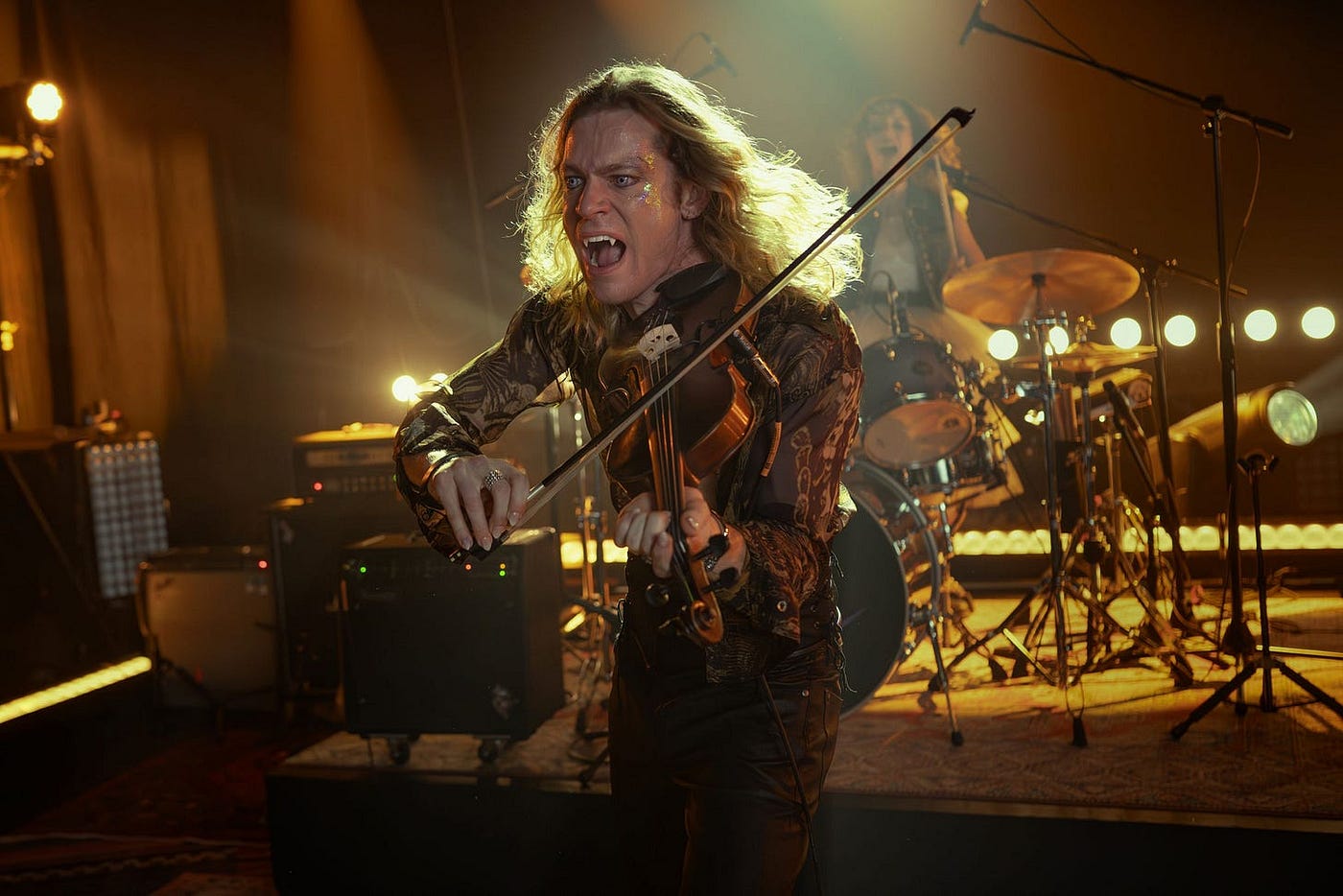
Claudia’s song is another one that’s scaled back by comparison to the others. It sounds nothing like the rest of his rock songs, as his bandmates note in Episode 5. But this is the song that really changes everything for Lestat. He’s encountered all the other ghosts of his past except for Claudia, and she finally shows up this episode. He can’t go on avoiding her memory, so he writes this beautiful song about their relationship. Unlike his other songs, (besides “Le Fontaine de Sang”), the star instrument of this track is the piano, which really separates it from the bunch. The choice to highlight piano reminds us that Lestat and Claudia would play it together. It’s the instrument Lestat taught her to play, making it one of the few things they shared that she did not with Louis. This song does sound more like a ballad in the pop genre. This piece is really an ode from a father to a daughter. The opening lines tell of her “birth”: “The day you were born/I was shakin’ like a leaf on an old oak tree/Then you stayed like a thorn/Red roses rainin’ down til they flooded me.” The words travel through their relationship, briefly narrating how her presence became simultaneously a nuisance and a joy for Lestat. It’s a long-awaited peek into Lestat’s real feelings on his relationship with Claudia and her death. She was so much more to him than the problem he treated her like she was in season 1. In a line referencing the “souvenirs” she took from her kills, he admits how much she could make him smile like no one else (and hurt him, too): “No one ever gets to keep my smile/But you can peel it off me like one of your souvenirs.” Claudia’s been haunting him more than he can say: “No, don’t look away/I’m gonna haunt you/I want you to beg as I taunt you.” The chorus is framed around their final look at each other, as Lestat was the last person she saw before she died. There’s a certain reverence for her from Lestat’s side conveyed through the lyrics as he held her gaze in her final moments and continues to hold her in his heart. Another excellent song from Daniel Hart.
4. Your Biggest Fan
Hands down, “Your Biggest Fan” is one of the best songs that came out of this season. This is Lestat’s attempt at romanticizing and minimizing the horrific reality of his turning. A dreamlike 80’s style music video plays over the pop-style song to drive that point home. The song lyrically and musically does an excellent job at conveying Lestat’s attempt at sanitizing his trauma, and at the same time. This entire song is from the point of view of Magnus, as Daniel calls him in Episode 3, Lestat’s “abuser,” to which Lestat corrects, “emancipator.” This song epitomizes very real coping mechanisms for survivors of sexual assault. Lestat paints Magnus as a romantic hero in the song: “You really caught my eye/I think you’re somethin’ special, babe”. He characterizes himself as “special” and desirable as a way to give himself agency in this “romance,” rather than seeing himself as a victim who was preyed upon. The chorus depicts Magnus as a generous hero offering vampirism to Lestat as a gift, making it seem consensual rather the assault it was: “I wanna give you everythin’ I got/I know you’re stubborn, but you have to ask for it.” The titular lyric, “I’m your biggest fan,” makes Magnus the pursuer and Lestat this mesmerizing object of desire. The only way Lestat has been able to live with this trauma is by romanticizing it to justify what happened to himself (something he does with his mother’s abuse as well). The song’s idealistic lyrics and softer sound convey this. But some lyrics do betray the real sinister nature of Magnus, such as when Lestat mentions how he stalks him as he sleeps: “And that’s me watching as you sleep at night/And that’s me laughing in the darkness as you dream.” The song slowly descends into something slightly anxiety-inducing. The final chorus repeats “My little wolf killer/Drink up and dance around the fire tonight,” as the instruments grow much more intense and the vocals descend into sounds instead of words. Overall, it’s a gorgeous song that’s catchy to listen to and effectively communicates one of the most complex experiences Lestat struggles with in this season.
3. When I Call Out Your Name
This was instantly one of my favorite songs the second I heard it. The lyrics are a treasure trove of insights into Lestat’s feelings on his relationship with his mother, which is the most uncomfortable aspect of this season to watch but also arguably the most important to finally understand Lestat as a character. The music for this song is angsty, signaling Lestat’s inner turmoil over this relationship. There’s a wild despair to the lyrics and a growing intensity in the music as the singer comes closer and closer to acknowledging a gut wrenching truth. It makes for a long build up with a fantastic payoff. The song essentially traces Lestat’s twisted relationship with his mother. The intense dependency on her is clear from the beginning: “If she died, if shе died/That, that would be my death”. But then, the chorus repeats “Two hundred years,” the time Lestat spent abandoned by her and alone in the world, a wound he has never healed from and which has completely warped his conception of love. He asks plainly, “Oh, what are we doin’?/Why are we here?” questioning both this unnatural relationship but also his unnatural existence as a vampire, something that nags at him as a young vampire, which we only see glimpses of, such as when he starts wondering aloud about his own existence and God’s existence while alone as Akasha’s Keeper. The verses go on to briefly tell how their unnatural relationship begins “in the dark,” then to his turning of her, effectively making them into “immortal lovers,” which is “immortally cruel,” as Lestat has kept trying to avoid this physical relationship from what we’ve seen seen in season 3, but she keeps drawing him back in. But the greatest strength of this song is the use of Lestat’s stutter as a musical motif throughout each chorus. He keeps trying to say her name, but can only repeat the beginning of it. This is a callback to Episode 1, when he sees Gabriella for the first time and cannot say her name; in her presence, he regresses to the stutter he had as a child out of trauma. The presence of the stutter in the song as a stylistic choice to convey Lestat’s internal turmoil is masterful with the show’s context. When he finally can say her full name at the end of the song, it’s cathartic and painful at the same time as he screams it over and over again, like an accusation, like a plea. Daniel Hart was brilliant to incorporate this vocal mannerism specific to this fictional character in order to imbue the song with his unique story.
AMC
2. Brutal Love
This song skyrocketed to the top of my ranking after watching Episode 6. How could it not? Finally, a love ballad for Louis. It’s what we’d been waiting for all season. It’s not as specific or obvious in its lyricism as some other The Vampire Lestat songs might be, but the fact that it’s for Louis does give it a bit of an edge over the rest, I must admit. And there are no other love songs on the “album”. This one stands alone. Lestat sings a lot about love and lust and yearning, but not so openly like this, to the sounds of dramatic strings and indulgent instrumentals that felt vaguely, to me, like an elevated version of some of my favorite love songs from boy bands like The Backstreet Boys and Boyz II Men from the late ’90s and early 2000s. It’s campy, and it’s unabashed in its campiness, and that kind of thing is my personal kryptonite. Louis and Lestat’s love is at the center of this entire show, so of course the song about their love ranks high. And the melodrama of it all just screams Lestat. Comparing himself to a “meteor” that writes Louis’s “name in dust” as he falls? That line in particular feels like a direct nod to when Louis “killed” Lestat back in season 1, and Lestat’s dying words, as Claudia recorded them, were Louis’s name, over and over: “Put me in my coffin, Louis, Louis.” The song is so deeply intertwined with death; the lyrics call on images of falling and horizons. Everything about it is a contradiction, just like Lestat and Louis’s relationship. Love should be sweet, but Lestat describes it as “brutal” and “bitter.” Without getting specific, Daniel Hart perfectly embodied Louis and Lestat’s toxic, romantic, magnetic dynamic in a song that’s remained stuck in my head since I first heard a short clip of it back at the start of June and was instantly enraptured with the deep longing in its melody.
1. The Loneliness
They could have ended a season on a song like this. Episode 3 is definitely one of the strongest episodes of the season, and so were its songs. “The Loneliness” takes all of the internal conflicts Lestat has been dealing with for his whole life and pours them out in a super catchy pop rock anthem. The instrumentals for this one are slightly pared back — it’s not a discord of sounds and overwhelming percussion like in some other songs. The electric guitar that takes the solo at the end is especially satisfying to hear, even more so when you know its representative of Lestat’s cathartic acceptance of his loneliness by the end of the song. The lyrics also aren’t as thickly packed with metaphors and cultural references and plot allusions as other tracks. These words are plain and direct. There’s something about that simplicity that makes it stand out above the rest. The sentiment is bare and authentic. For once, Lestat is being completely honest with himself about his fear of loneliness. And instead of pushing it down or distracting himself, he’s acknowledging it, he’s facing it, and he’s even embracing it. He’s finally at a place where he’s asking himself, “How could anybody ever love you?” Lestat’s crippling fear of being alone has hijacked his relationships, made it impossible for others to love him, feeding him back into a loneliness loop. This is the character’s fatal flaw above all others. His affirmations, “Don’t hide it away,” “Don’t bury those feelings,” “Don’t worship that grave,” are a huge step in the right direction for him, and they’re also universally understood. This whole song is so easy to relate to — every one of us has felt some kind of loneliness at some point in our lives. Ironically enough, we’re all connected by the experience. This song captures the pain and comforts at the same time: “Don’t burn alone.”
Share your own song rankings below!
Read this and more articles over on my Substack
메타데이터
- post_id
- 4e4a6bfd96d5
- slug
- a-complete-ranking-and-breakdown-of-every-song-in-the-vampire-lestat-4e4a6bfd96d5
- url
- https://medium.com/@dalechips/a-complete-ranking-and-breakdown-of-every-song-in-the-vampire-lestat-4e4a6bfd96d5
- canonical_url
- https://medium.com/@dalechips/a-complete-ranking-and-breakdown-of-every-song-in-the-vampire-lestat-4e4a6bfd96d5
- author_url
- https://medium.com/@dalechips
- status
- ok
- fetched_at
- 2026-07-31 03:46:06