5 Things That Break Medical AI in Practice (Including 30% Wrong X-Rays)
You filter for chest X-rays, build a dataset, train a model — and only later realize that 20–30% of your data isn’t chest at all.
5 Things That Break Medical AI in Practice (Including 30% Wrong X-Rays)

You filter for chest X-rays, build a dataset, train a model — and only later realize that 20–30% of your data isn’t chest at all.
Elbows, knees, hands — sometimes not even X-rays.
This isn’t a rare edge case. It’s what clinical ML looks like once you move past clean benchmarks and into real systems.
If you want the full breakdown with examples and implementation details, you can read the original version HERE.
1. Metadata Is Not Ground Truth
Medical datasets look structured on paper.
DICOM defines fields for almost everything: body part, modality, acquisition details. In theory, this should make dataset curation straightforward.
In practice, fields are reused, left unchanged, or filled creatively.
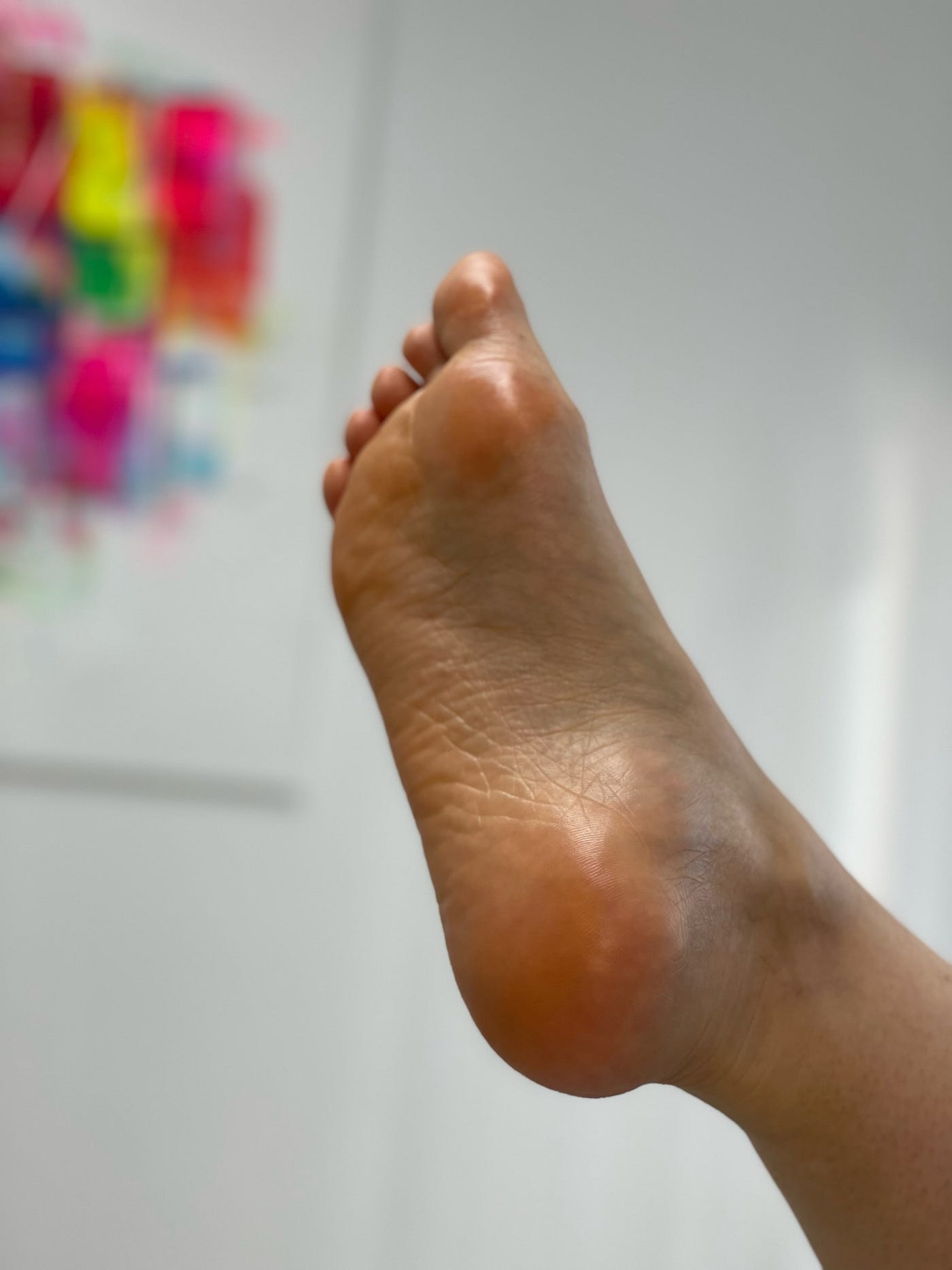
A technologist sets “body part” to chest for one patient, then moves on to the next — and the value carries over. You filter for chest X-rays and end up with a dataset where a significant portion isn’t chest at all.
Not because of bad intent — just because real workflows don’t follow perfect schemas.
This is one of the most common issues we see when working with **real-world medical datasets.**
Takeaway: metadata is a hint, not a label.
2. Every Hospital Is Its Own Distribution
Inside a single hospital, data tends to be consistent.
Across hospitals, everything changes.
Different scanners, reconstruction settings, reporting styles, and annotation habits create entirely different data distributions. A model trained in one environment often degrades quickly in another.
If you’re building systems that need to work across sites, this becomes a core design problem rather than an edge case.
Takeaway: plan for retraining and adaptation, not universal generalization.
3. Clinical Text Is Not Clean NLP Data
Clinical reports are often dictated, not written.
That brings:
- transcription errors
- ambiguous abbreviations
- inconsistent phrasing
“PT” can mean physical therapy, patient, or prothrombin time. Acronyms shift meaning depending on context, and even clinicians sometimes disagree on interpretation.
On top of that, reports are intentionally cautious:
“suggestive of” “cannot be excluded” “may represent”
The result is text that is clinically valid but difficult to model.
Takeaway: treat clinical NLP as a sequence of smaller problems, not a single modeling task.

Chest X-Ray, clearly
4. Medical Images Are Not Just Images
In many domains, images are just pixels.
In medicine, they encode physics.
- CT values correspond to Hounsfield Units
- X-ray intensity reflects attenuation
- MRI brightness depends on acquisition
- Ultrasound depends on angle and speckle
Add artifacts:
- motion
- implants
- noise
- contrast phases
These differences aren’t cosmetic — they directly affect what the model can learn and how it generalizes.
Takeaway: preprocessing and data understanding are part of the model.
5. Metrics Don’t Reflect Clinical Reality
Benchmarks optimize for metrics like accuracy or F1, but these rarely reflect how models behave in clinical workflows.
Clinical systems operate under different constraints:
- extreme class imbalance
- asymmetric risk (false negatives vs false positives)
- decisions that affect real workflows
In some cases, recall matters more than precision. In others, standard metrics don’t capture the actual cost of errors.
These trade-offs only really make sense once you look at how AI systems behave in real-world medical data environments.
Takeaway: metrics should follow the decision, not the textbook.
What This Means in Practice
Clinical ML isn’t about state-of-the-art models.
It’s about:
- mislabeled data
- inconsistent metadata
- ambiguous text
- artifact-heavy images
- shifting data distributions
And systems that still need to work despite all of that, often under real clinical constraints.
The pattern that holds across projects is simple:
verify → simplify → re-check
Final Thought
From the outside, medical AI looks like breakthrough models and clean results.
Up close, it’s mostly engineering work.
If you want the full version with deeper examples, edge cases, and implementation details, you can read it HERE.
메타데이터
- post_id
- 4e7be25cb21a
- slug
- 5-things-that-break-medical-ai-in-practice-including-30-wrong-x-rays-4e7be25cb21a
- url
- https://medium.com/deepsense-ai/5-things-that-break-medical-ai-in-practice-including-30-wrong-x-rays-4e7be25cb21a
- canonical_url
- https://medium.com/deepsense-ai/5-things-that-break-medical-ai-in-practice-including-30-wrong-x-rays-4e7be25cb21a
- author_url
- https://medium.com/@deepsense-ai-team
- status
- ok
- fetched_at
- 2026-06-11 15:16:29