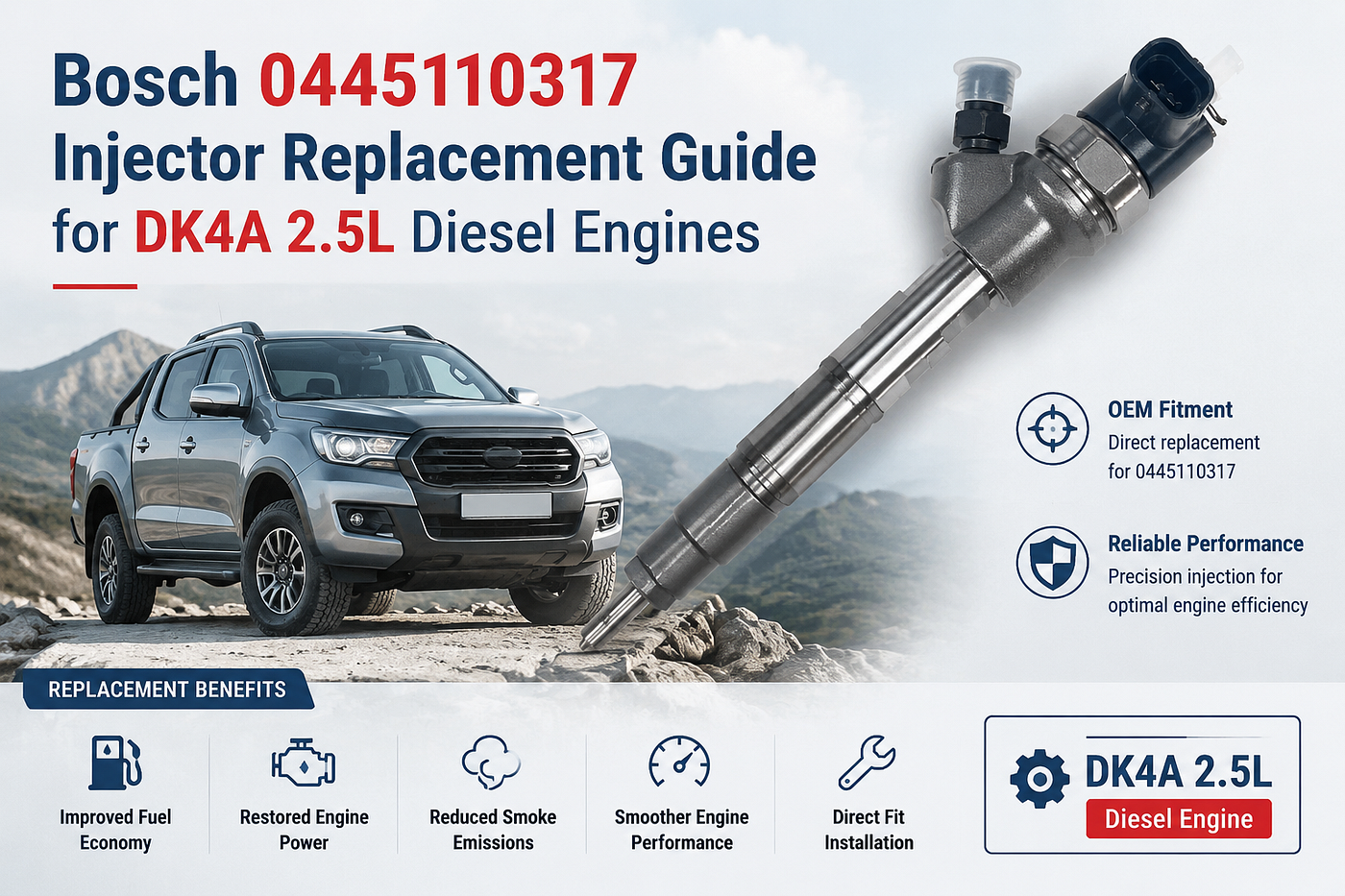
Bosch 0445110317 Injector Replacement Guide for DK4A 2.5L Diesel Engines
Diesel engine performance heavily depends on the health and precision of its fuel injectors. For DK4A 2.5L diesel engines — commonly found…
Bosch 0445110317 Injector Replacement Guide for DK4A 2.5L Diesel Engines
Diesel engine performance heavily depends on the health and precision of its fuel injectors. For DK4A 2.5L diesel engines — commonly found in vehicles like the Nissan Paladin, Nissan Navara NP300, Jinbei Grace, and Xinchen — the Bosch 0445110317 Common Rail Injector is a critical component.
A failing injector not only robs your engine of power but can also lead to catastrophic damage if left unattended. Common symptoms include increased fuel consumption, black smoke emissions, rough idling, and even engine misfires.
This guide provides a comprehensive, step-by-step approach for diagnosing, removing, and replacing your Bosch 0445110317 injector. We prioritize high-pressure safety, ensuring you can perform this repair confidently while maintaining optimal engine performance.
Understanding the Bosch 0445110317 Injector
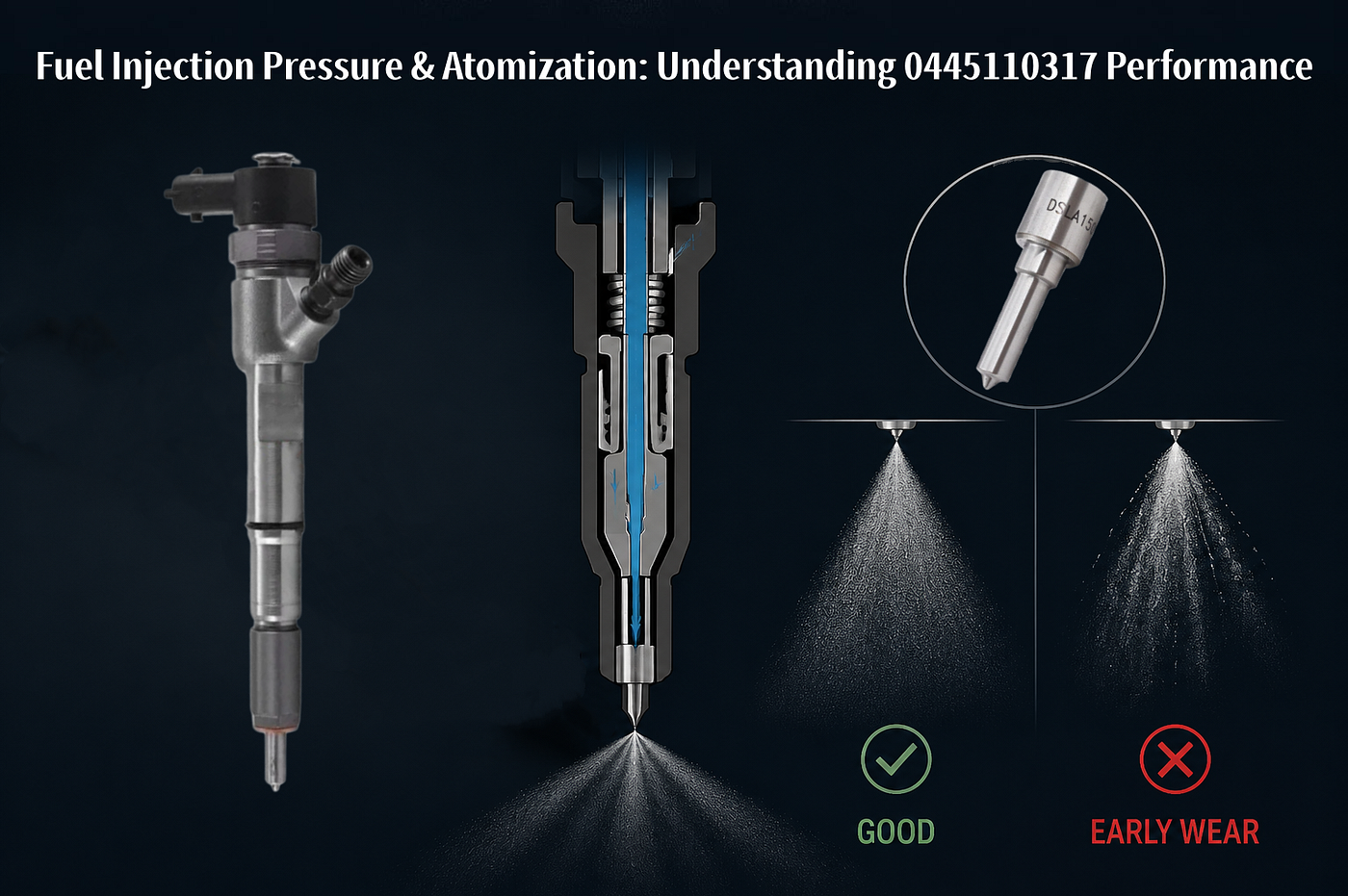
The Bosch 0445110317 is a high-pressure common rail injector designed specifically for diesel engines like the DK4A 2.5L. It is often interchangeable with OE part numbers DK4A-1112010, 0445110482, and utilizes nozzle DLLA145P1720.
Key features include:
- Precision Fuel Atomization: Ensures efficient combustion and power delivery.
- High-Pressure Durability: Built to withstand the extreme pressures (exceeding 1,600 bar) of modern common rail systems.
- Cross-Compatibility: While specific to the DK4A, it is a direct fit for multiple Nissan and Chinese-market commercial vehicles.
Recognizing early signs of injector failure can save costly engine repairs later.
Symptoms of a Failing Injector
A Bosch 0445110317 injector may need replacement if you notice:
- Increased Black Smoke: Incomplete combustion due to poor atomization or a stuck open injector.
- Higher Fuel Consumption: Unmetered fuel delivery reduces efficiency.
- Rough Idling or Misfires: Inconsistent fuel injection timing often caused by worn internal components.
- Engine Warning Lights: The ECU may log specific fault codes related to cylinder balance or injector circuit malfunctions.
- Diesel Knock or “Nailing” Noise: A louder than usual metallic clatter from the engine bay.
Early detection ensures minimal impact on engine longevity.
Safety Warnings & Preparation
Warning: High Pressure Fluid Injection Hazard Common Rail diesel systems operate at extremely high pressures (up to 30,000 PSI). Fuel escaping from a leak or opened line can penetrate skin, causing serious injury or amputation. Never use your hands to check for leaks, and always wear safety gloves and goggles.
Tools Required
Before starting, prepare:
- Socket set and Torque Wrench (Nm spec required)
- Fuel Line Disconnect Tools (Crows foot wrench preferred for high-pressure lines)
- Injector Puller or Slide Hammer (e.g., J-2619–01 style)
- Clean rags, Gloves, and Safety Goggles
- New Copper Sealing Rings and O-rings (Always replace these; never re-use)
- Container for Fuel (Environmental safety)
Cleanliness Protocol
The #1 cause of injector failure is dirt. Clean the engine bay thoroughly (steam clean if possible) around the injectors before disassembly. Even a grain of sand can destroy a new injector.
Step-by-Step Injector Replacement
1. Depressurize the Fuel System
Critical Step: The rail holds high pressure even after the engine is off.
- Turn off the ignition and let the engine cool.
- Disconnect the battery negative terminal.
- Locate the electric fuel pump fuse/relay and remove it.
- Crank the engine for 10 seconds to release residual pressure from the rail.
- Alternative Safety Measure: Wait at least 5 minutes after engine shutdown before loosening any high-pressure fitting.
2. Remove Engine Covers & Connections
- Remove plastic engine covers to access the injectors.
- Disconnect the High-Pressure Fuel Line: Use a backup wrench on the rail nut to prevent twisting the rail. Discard the old line if it is damaged or if the bends are deformed; high-pressure lines are prone to work hardening.
- Unplug the Electrical Connector: Release the locking tab and disconnect the harness from the injector.
3. Extract the Old Injector
- Remove the Hold-Down Clamp bolt (often requires a specific tightening sequence later).
- Use an Injector Puller (Slide hammer attachment). Do not pry against the cylinder head or the injector body, as this can damage the head.
- Important: If the injector is stuck, apply penetrating oil. Do not twist forcefully without proper tools.
- Remove the old Copper Washer from the bottom of the injector bore. If it stays in the head, carefully retrieve it to avoid damaging the seat.
4. Prepare & Install the New Injector
Note: The DK4A engine requires injector coding. You must record the IQA code (Individual Quality Adjustment) printed on the new injector (e.g., a 6–8 digit alphanumeric code). It must be programmed into the ECU via a diagnostic scanner, otherwise the engine will run rough.
- Lubricate: Apply a thin film of clean diesel fuel to the new O-rings. Never use grease or engine oil on common rail O-rings unless specified, as it can cause swelling.
- Insert: Carefully insert the injector straight into the cylinder head by hand. Do not drop it.
- New Sealing Washer: Ensure a new copper sealing washer is fitted at the tip.
- Torque Clamp: Tighten the injector hold-down clamp bolt to manufacturer specifications (Typically 10–15 Nm + a specific angle, or ~25–30 Nm for some DK4A variants — consult your manual).
- Reconnect: Install the high-pressure line. Tighten fittings to spec (Usually 25–35 Nm for M14 lines).
5. Final Assembly & Testing
- Reconnect all electrical connectors and the fuel pump fuse.
- Reconnect the Battery.
- Prime the System: Turn the ignition on (without starting) to allow the lift pump to prime the system. Check for leaks.
- Start the Engine: It may crank longer than usual while air is purged.
- Program the Injector: Use a diagnostic tool (like Launch or Autel) to input the new IQA code into the ECU. Failure to do this will result in a Check Engine Light and poor performance.
- Check for Leaks: Inspect the high-pressure line connections for wetness while idling.
Maintenance Tips for Longevity
- Fuel Quality: Use high-quality diesel fuel and change your fuel filter regularly. Contaminated fuel is the primary killer of Bosch injectors.
- Injector Cleaning: Consider professional ultrasonic cleaning every 100,000 km if performance drops.
- Torque is Key: Always use a torque wrench on clamp bolts and high-pressure lines. Under-tightening causes leaks; over-tightening strips threads.
- Regular Inspection: Periodically inspect the high-pressure fuel pump and lines for signs of wear.
For more detailed specifications, compatible engines, and maintenance tips, visit **0445110317 Common Rail Injector: Engine Applications, Specs & Maintenance Guide**.
FAQ
Q: Can I just replace one injector, or do I need to replace all four? A: You can replace just one if it fails, but it is highly recommended to replace them in sets if they have high mileage (over 150,000 km). Mixing old worn injectors with a brand new one can cause cylinder imbalance.
Q: Why is my engine still smoking after replacing the injector? A: If you did not program the IQA code into the ECU, the engine will over-fuel or under-fuel that specific cylinder. You must use a diagnostic scanner to code the new injector.
Q: Can I reuse the high-pressure fuel lines? A: Technically sometimes yes, but official workshop manuals (like MAN & Kohler) state that high-pressure lines should be replaced if disconnected due to the risk of microscopic fractures and leaks.
Q: Can I use the Bosch 0445110482 instead of the 0317? A: These are often interchangeable, but you must verify the flow rate and valve configuration. The 0482 is frequently listed as a cross-reference for the 0317, but always check with a parts specialist for your specific ECU calibration.
메타데이터
- post_id
- 4e8ef2e5d20f
- slug
- bosch-0445110317-injector-replacement-guide-for-dk4a-2-5l-diesel-engines-4e8ef2e5d20f
- url
- https://medium.com/@donsancustom/bosch-0445110317-injector-replacement-guide-for-dk4a-2-5l-diesel-engines-4e8ef2e5d20f
- canonical_url
- https://medium.com/@donsancustom/bosch-0445110317-injector-replacement-guide-for-dk4a-2-5l-diesel-engines-4e8ef2e5d20f
- author_url
- https://medium.com/@donsancustom
- status
- ok
- fetched_at
- 2026-06-09 14:34:10