Multi-Operator Deployment: How Terminal Boxes Improve Coordination
You may upgrade every part of an FTTH network, yet the real failures often start inside unmanaged terminal points. In multi-operator…
Multi-Operator Deployment: How Terminal Boxes Improve Coordination

You may upgrade every part of an FTTH network, yet the real failures often start inside unmanaged terminal points. In multi-operator deployments, installers frequently face crowded **FAT or FDB** units where fibers from different carriers are mixed without clear routing rules. What looks like a small coordination issue at the distribution point can later turn into service interruptions, repeated site visits, and customer complaints. In practice, the terminal box becomes the true test of node-level reliability.
Terminal Boxes as Coordination Nodes, Not Just Housings
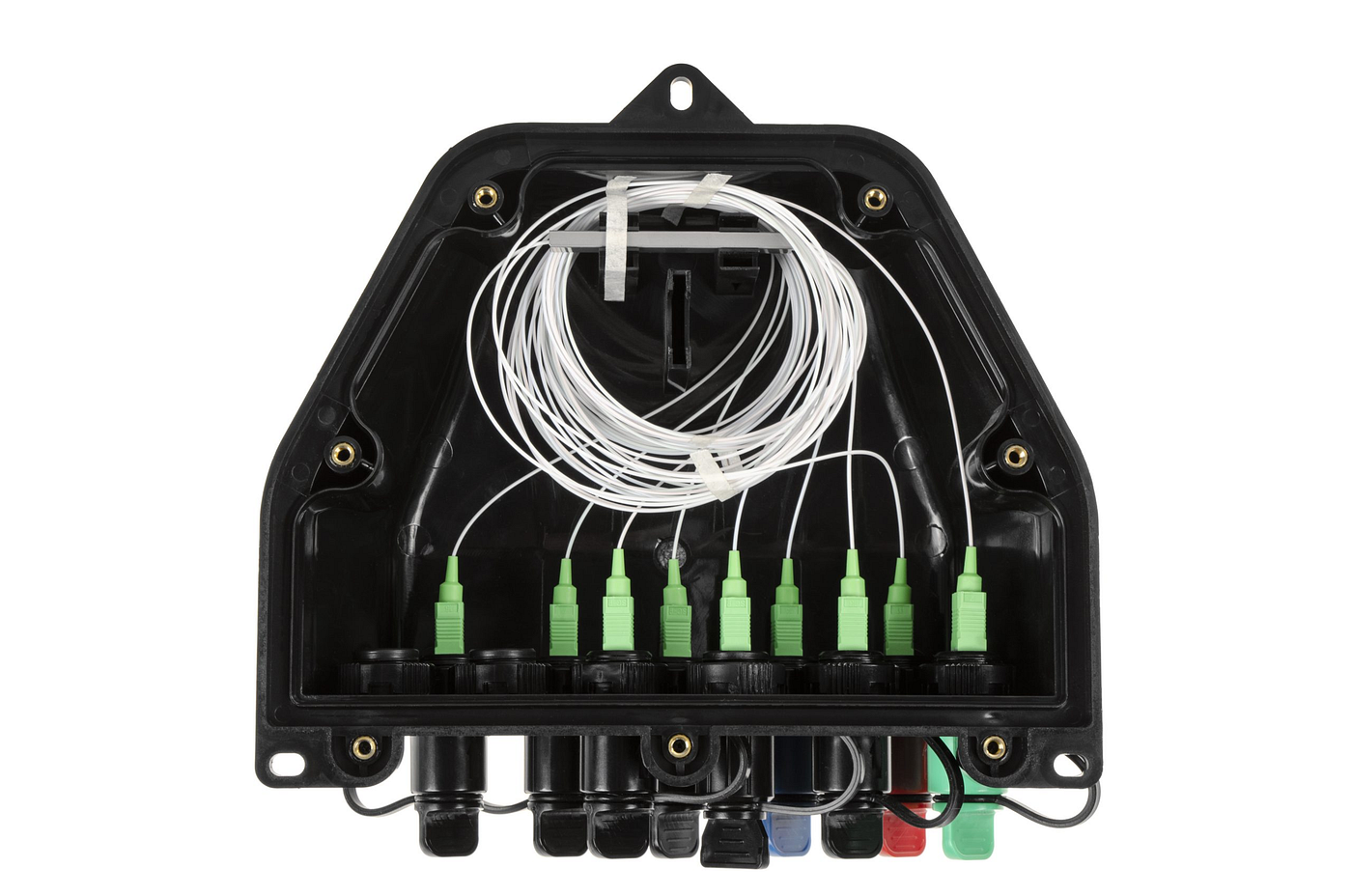
In a shared FTTH environment, the terminal box or FDB is more than a protective shell — it is a coordination node. Proper internal **fiber management** determines whether multiple operators can coexist without interference.
Well-designed FAT and FDB units separate feeder fibers, splitter outputs, and drop cables with clear routing paths and controlled bending radius. Stable adapter mounting prevents micro-movements during patching, reducing signal fluctuation and accidental disconnections. When fiber routing is logical and repeatable, each operator can work independently without risking another network’s stability.
Housing Design and Sealing in Outdoor Multi-Operator Sites
Multi-operator terminal boxes are often installed outdoors, where environmental stress multiplies coordination risks. Housing material and sealing performance directly affect long-term stability.
Outdoor boxes made from UV-resistant PC or reinforced ABS show better aging behavior than low-grade plastics, especially in pole-mounted deployments. A reliable IP65 or IP68 sealing structure — with proper gaskets and cable entry protection — keeps moisture and dust out, even when multiple cables enter from different directions. Without consistent sealing, condensation and corrosion tend to appear first at shared nodes, making the terminal box a high-frequency fault source.
Splitter Choice and Layout Affect Shared Network Stability
In shared FAT or FDB configurations, splitter behavior becomes critical. A 1×8 PLC splitter often offers better margin and thermal stability than a 1×16 in harsh environments, especially when multiple operators share the same enclosure.
Splitter tray layout also matters. Poorly supported PLC splitters can experience IL drift under temperature changes or vibration. In contrast, a dedicated splitter housing with fixed routing channels maintains optical performance and reduces troubleshooting complexity. Choosing the right splitter configuration is not just about port count — it directly impacts coordination efficiency and service lifespan.
Real Deployment Scenario: Pole-Mounted Multi-Operator FDB
In pole-mounted FTTH projects, wind vibration, rain, and frequent access by different contractor teams create constant stress on the distribution point. Without stable fiber management and adapter fixation, connectors loosen over time.
Field data shows that pre-organized, field-ready terminal boxes significantly reduce rework. Clear labeling, separated fiber paths, and robust sealing allow different operators to perform activation or maintenance without disturbing existing services. In these scenarios, the terminal box becomes the silent coordinator between teams.
Engineering for Fewer Revisits and Faster Activation

From a contractor's perspective, coordination failures cost money. Poor cable organization leads to errors, while unstable components increase maintenance frequency. By integrating deployment efficiency into terminal box design — such as pre-loaded splitter trays and pole-mounted-ready structures — installation time drops and activation becomes faster.
HOLIGHT’s engineering approach reflects this reality. HOLIGHT’s terminal box designs focus on consistent sealing and stable fiber routing, helping operators maintain node integrity even in complex shared deployments.
Conclusion
In FTTH networks, overall stability is decided at the node. Well-designed terminal boxes, reliable splitters, proper sealing, and disciplined fiber management turn FAT and FDB units from failure hotspots into coordination anchors for multi-operator deployments.
Learn more at HOLIGHT Fiber Optic Solutions and **FTTHFiberOptic.com. For business inquiries: Crystal@holightoptic.com**
메타데이터
- post_id
- 4e95d3272901
- slug
- multi-operator-deployment-how-terminal-boxes-improve-coordination-4e95d3272901
- url
- https://medium.com/@cryatal970225/multi-operator-deployment-how-terminal-boxes-improve-coordination-4e95d3272901
- canonical_url
- https://medium.com/@cryatal970225/multi-operator-deployment-how-terminal-boxes-improve-coordination-4e95d3272901
- author_url
- https://medium.com/@cryatal970225
- status
- ok
- fetched_at
- 2026-07-14 19:44:39