Full Participation Isn’t a Luxury — It’s a Design Choice
Why most “everyone had a voice” meetings are quietly leaving people out, and what LEGO® SERIOUS PLAY® does differently
Full Participation Isn’t a Luxury — It’s a Design Choice
Why most “everyone had a voice” meetings are quietly leaving people out, and what LEGO® SERIOUS PLAY® does differently
One sentence I hear constantly in meetings is: “We got everyone’s input.”
Did we, though?
Look closely and you’ll usually find the same two or three people doing most of the talking, a few others nodding along, and at least one person who made it through the entire meeting without saying a word.
Silence on a team rarely means someone has nothing to say. More often, it means there wasn’t enough psychological safety, no real space was created, or the moment to speak simply never arrived.
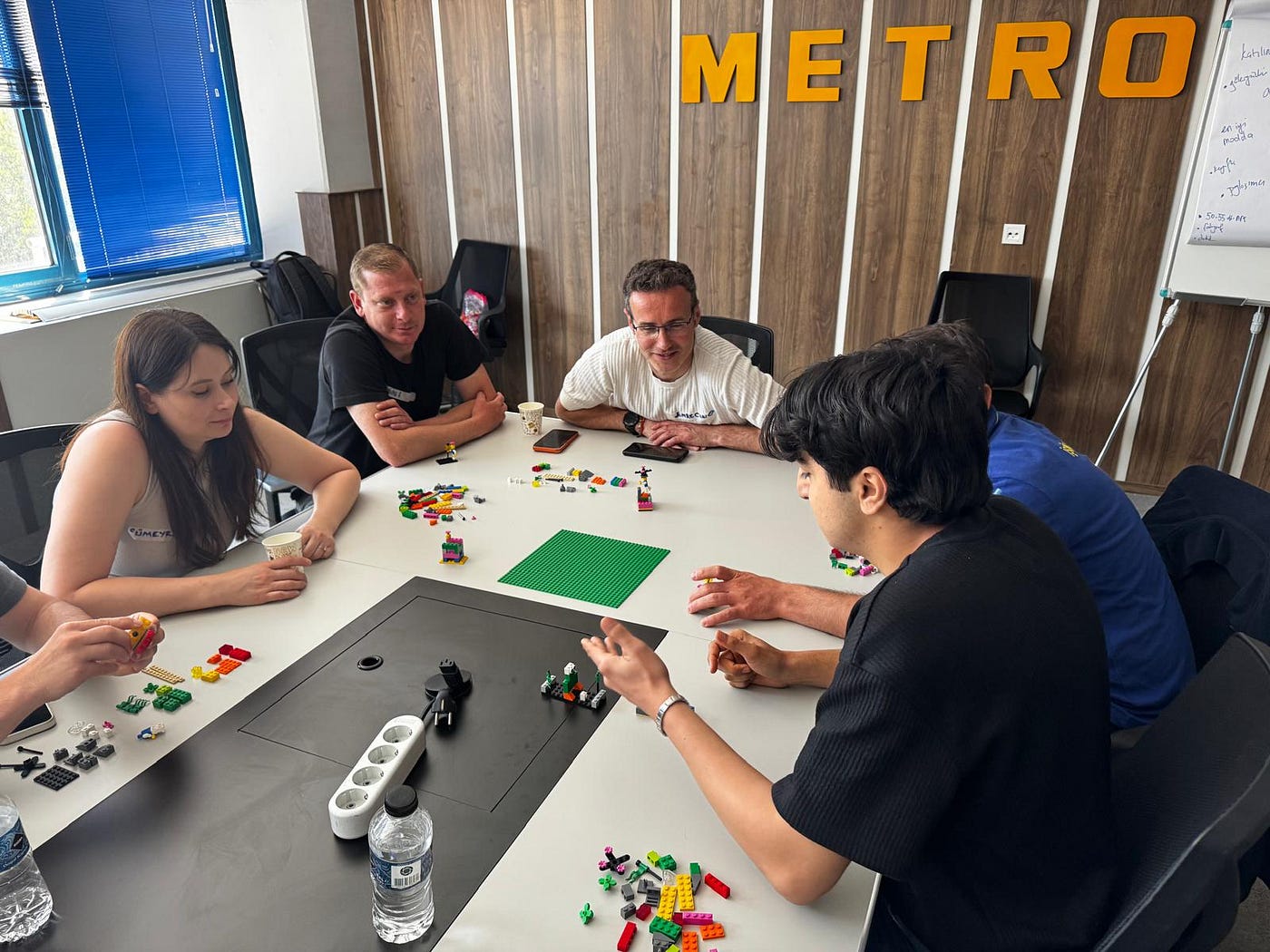
This is exactly what drew me to LEGO® SERIOUS PLAY® from day one. Most facilitation methods treat full participation as a hopeful outcome — something you aim for and might get by the end of the session. LEGO® SERIOUS PLAY® treats it as a built-in feature of the process itself. People build first, then they explain what they built. Everyone explains. Nobody gets to sit in the room as a spectator.
The Loudest Voice Doesn’t Win
In traditional meetings, airtime is usually distributed by invisible hierarchies: seniority, extroversion, apparent subject-matter authority, or simply who thinks fastest on their feet. The predictable result is that a large share of a team’s actual knowledge, experience, and creativity never makes it to the table.
LEGO® SERIOUS PLAY® starts from a different premise entirely. Everyone builds their own model with the bricks in front of them. Everyone then shares what that model means. The conversation isn’t about the person — it’s about the model. That single design decision changes the entire dynamic of a meeting: the room stops orbiting around individuals and starts orbiting around concrete representations of their thinking.
This Is Where Psychological Safety Actually Begins
Amy Edmondson defines psychological safety as a shared climate in which people can speak up without fear of punishment or embarrassment. Most conversations about psychological safety stop at “Can people speak?” I like to add a second question: “Are people actually being heard?”
Being given the floor isn’t enough on its own. People only feel truly heard when they sense that what they said landed with someone — that it had an effect on the other side of the conversation.
LEGO® SERIOUS PLAY® is built for exactly that. While you’re explaining your model, no one interrupts you. No one “corrects” your model. No one assigns meaning to it on your behalf. The meaning of your model belongs to you. Instead of right and wrong answers, different perspectives simply become visible.
When Hands Think, the Mind Works Differently
One of the method’s core assumptions is “hands-on, minds-on.” Hands don’t just produce something — they help you think. As the building process unfolds, people frequently notice connections they hadn’t consciously made before they started talking. That’s why so many participants say, at the end of a session, “I didn’t know I was going to say that.”
The model itself didn’t speak. But it made the thinking visible.
Democratic Meetings Don’t Happen by Accident
Most leaders want everyone on the team to contribute. Good intentions alone rarely deliver that, though — if the structure of the meeting doesn’t change, behavior doesn’t change much either. LEGO® SERIOUS PLAY® offers a concrete design principle instead: equal bricks, equal time, equal right to share, equal attention.
The effect isn’t just more creativity. It’s a genuine rebalancing of a meeting’s invisible power dynamics. I’ve seen this repeatedly in workshops that bring frontline and office staff together in the same room: people who would normally speak far less in that setting deliver remarkably strong contributions through their models. In that moment, titles aren’t talking — models are.
Why Full Participation Actually Matters
People take more ownership of ideas they helped shape. Team members who feel heard don’t just talk more — they take on more responsibility, collaborate more, learn more, and, perhaps most importantly, start understanding each other better.
Organizations today are searching for ways to build psychological safety. Maybe the real question isn’t whether we’re waiting for people to speak up more. Maybe it’s whether we’re actually designing the processes that make speaking up possible for everyone in the first place.
Because psychological safety rarely starts with training people to be braver. More often, it starts with designing meetings where everyone’s voice can be heard naturally — by design, not by chance.
That, to me, is the strongest contribution LEGO® SERIOUS PLAY® makes.
If you’d like to learn more about how LEGO® SERIOUS PLAY® could work for your team’s meetings, workshops, or training programs — or simply want a small taste of the experience — [feel free to reach out.](mailto: ozgur+medium@paramita.com.tr)
메타데이터
- post_id
- 4e9cc74becf1
- slug
- full-participation-isnt-a-luxury-it-s-a-design-choice-4e9cc74becf1
- url
- https://medium.com/@ozgurpoyrazoglu/full-participation-isnt-a-luxury-it-s-a-design-choice-4e9cc74becf1
- canonical_url
- https://medium.com/@ozgurpoyrazoglu/full-participation-isnt-a-luxury-it-s-a-design-choice-4e9cc74becf1
- author_url
- https://medium.com/@ozgurpoyrazoglu
- status
- ok
- fetched_at
- 2026-07-11 09:54:15