The Calligrapher Who Rebuilt Her Life Through Bread
In rural Japan, El Nomoto brought calligraphy, baking and the idea behind her artistic name together in a business of her own
The Calligrapher Who Rebuilt Her Life Through Bread
In rural Japan, El Nomoto brought calligraphy, baking and the idea behind her artistic name together in a business of her own
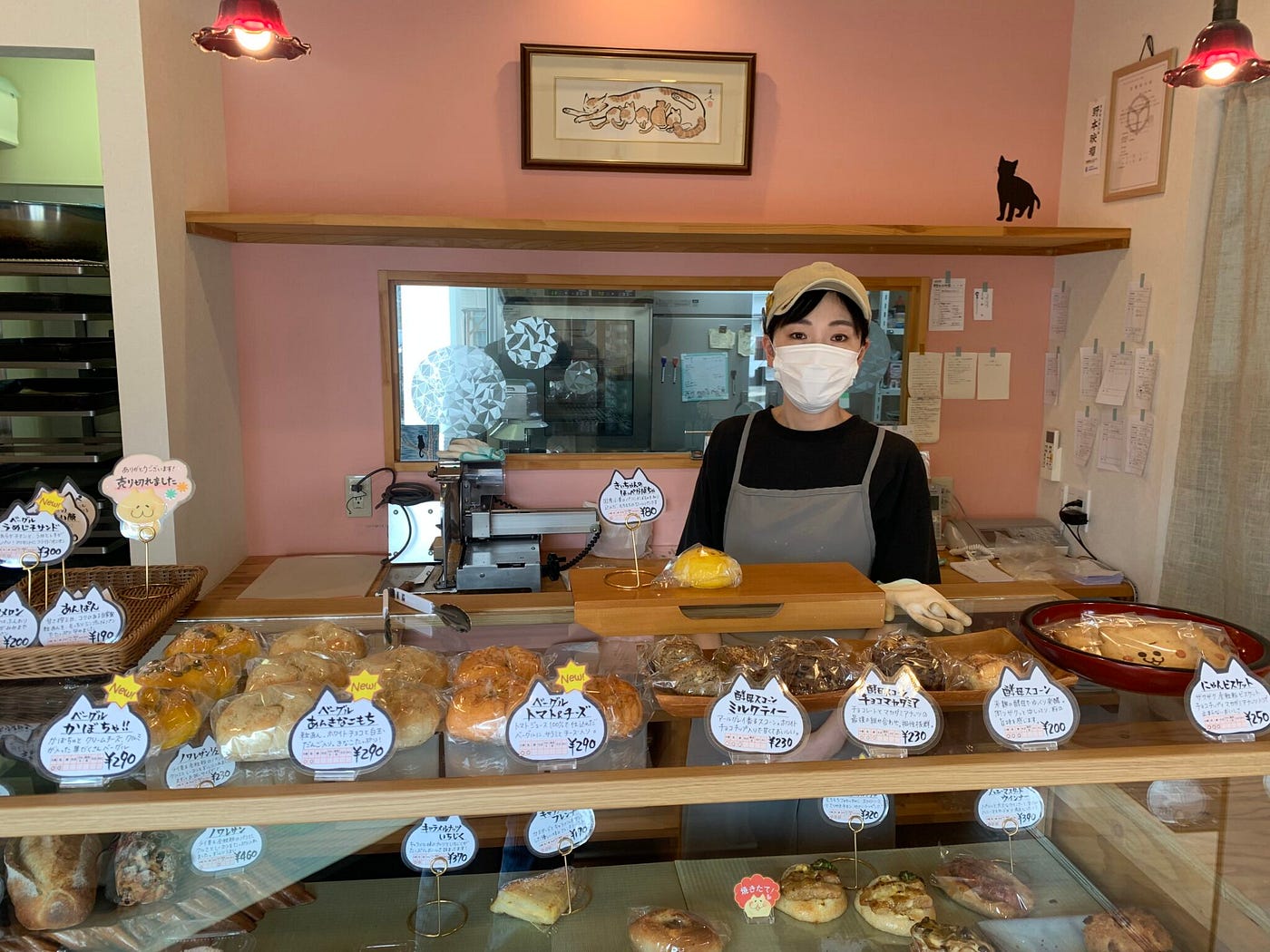
El Nomoto with the cat-shaped bread at Bakeshop Konjoneko. Photo by Takashi Saito.
Visitors come for the cat-shaped bread, playful loaves that give the bakery its cheerful character. Few would guess that the business began with financial anxiety and a young mother’s search for a reliable way to support her family.
The bakery is in Matsue, a quiet castle city in Shimane Prefecture on the Sea of Japan coast, where canals and the broad waters of Lake Shinji give life a gentler rhythm than in Tokyo. El spent much of her early adult life in the capital before returning home.
She is both a baker and a calligrapher. Inside, those two identities meet in the handwritten cards describing the bread on display. Baking, though, was never the career she had imagined for herself.
Learning to bake out of necessity
After graduating from high school in Matsue, El moved to Tokyo to study calligraphy. She later married and became a mother in her mid-twenties.
Everything changed when her husband became unable to work. She suddenly found herself shouldering the financial responsibility for her family while raising a young child, with no clear path to a stable income.
She had no professional baking experience. During that period, however, she met an experienced female baker who recognised her situation and offered to train her.
Over time, El learned the routines and techniques of professional baking. That knowledge gave her a practical way to earn an income and later formed the foundation of her own bakery.
Returning home
In 2015, she returned to her hometown of Matsue as a single mother. Rebuilding her working life in Shimane, one of Japan’s least populous prefectures, meant facing more limited employment opportunities than she had known in Tokyo.
This time, however, she returned with a profession. The idea of opening a bakery for local families took shape gradually, though technical ability alone would not be enough. She also had to learn how to turn what she knew into a working business.
In 2020, El enrolled in an entrepreneurship seminar organised by the Shimane Industrial Promotion Foundation, where she studied the practical foundations of business management. Bakeshop Konjoneko opened the following year.
Bread made for families
Its best-known product is Nyan Butter Bread, a cat-shaped loaf priced at ¥270. The playful shape appeals to children and adults alike, but equal care goes into the ingredients.
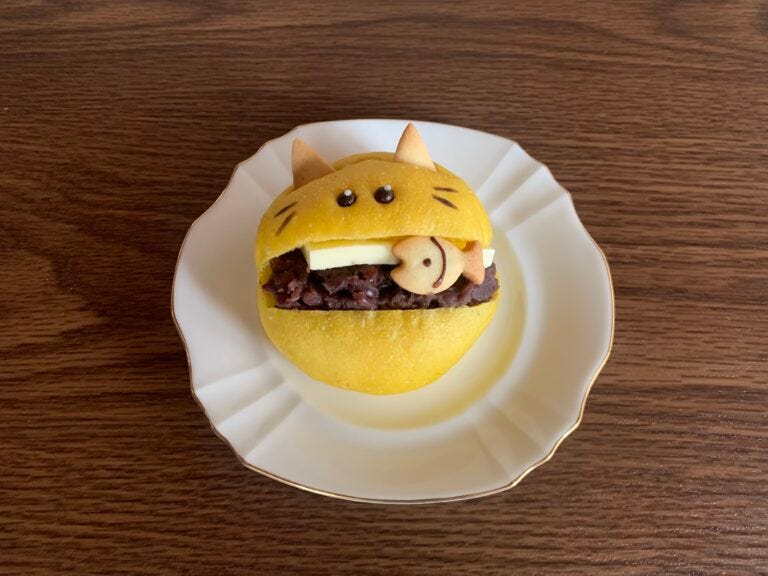
Nyan Butter Bread, the bakery’s best-selling signature loaf. Photo by Takashi Saito.
El uses naturally cultured A-ko yeast made from wheat, malted rice and water. Fillings such as custard, curry and anko, a sweet red-bean paste, are prepared in-house without additives or preservatives.
“My wish,” she says, “is for every loaf to bring happiness — not only to your body, but to your spirit.”
The same care shapes the way the bakery operates. Many bakeries in Japan use a self-service model: customers take a tray and tongs, then select what they want. Here, they tell the staff directly which items they would like.
That small difference encourages conversation and gives the bakery a more personal atmosphere. The shop has developed a loyal local following. It shares its daily selection on Instagram, and popular items sometimes sell out.
Where calligraphy meets baking
El’s artistic background is visible throughout the interior. Long before she learned to shape dough, she had studied the balance, movement and spacing of written characters.
Her handwritten signs lend the space a quiet warmth and carry traces of the artistic life she led before baking became her profession. The bakery’s name came from that earlier chapter as well.
Why she called it Konjoneko
Konjoneko did not begin as a commercial name. El had used it as her artistic name before opening the bakery.
It combines two Japanese words: konjo, meaning grit or the resolve to keep going through difficulty, and neko, meaning cat. Konjo is easy to translate as “grit”, but the English word does not fully convey its mixture of tenacity, endurance and a slightly old-fashioned sense of determination.
A loose rendering of Konjoneko would be “Grit Cat”, though the phrase loses some of the warmth of the Japanese.
Bringing the name into her new profession preserved part of her earlier artistic identity. Its combination of grit and cats also felt at home in the bakery she had built.
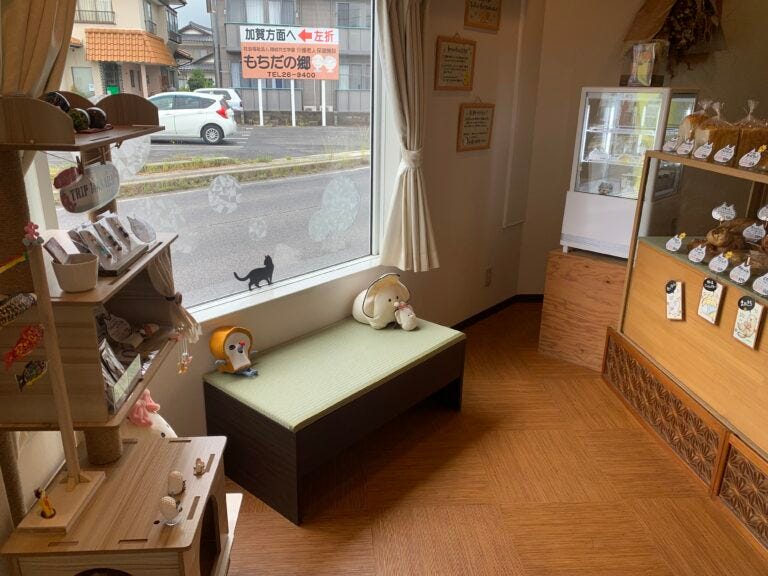
Inside Bakeshop Konjoneko in Matsue. Photo by Takashi Saito.
Beginning again without erasing the past
People often talk about starting over as if it means leaving everything behind. El’s story suggests something different.
Earlier parts of her life fed directly into the work she does now. Konjoneko grew from what she had learned and lived through over many years, not from a fresh start with nothing behind it.
Visitors are usually drawn in by the playful loaves. After hearing her story, they may understand why the name belonged to her long before it belonged to the bakery.
An earlier version of this essay appeared in *The Deities*, an English-language media project based in Shimane, Japan. This version has been revised.
Do you have an intercultural story or experience you want to share? We would love to hear it! **Contribute** to A-Culturated and join the community!
메타데이터
- post_id
- 4e9f9f38024a
- slug
- the-calligrapher-who-rebuilt-her-life-through-bread-4e9f9f38024a
- url
- https://medium.com/a-culturated/the-calligrapher-who-rebuilt-her-life-through-bread-4e9f9f38024a
- canonical_url
- https://medium.com/a-culturated/the-calligrapher-who-rebuilt-her-life-through-bread-4e9f9f38024a
- author_url
- https://medium.com/@uniformwhiskysaitokaiji
- status
- ok
- fetched_at
- 2026-07-18 04:08:09