What ABS in College Baseball Means for Coaches and Players
In its first weeks at the big-league level, ABS saw nearly 1,000 calls challenged, with 55% overturned. That is proof that even the game’s…
What ABS in College Baseball Means for Coaches and Players
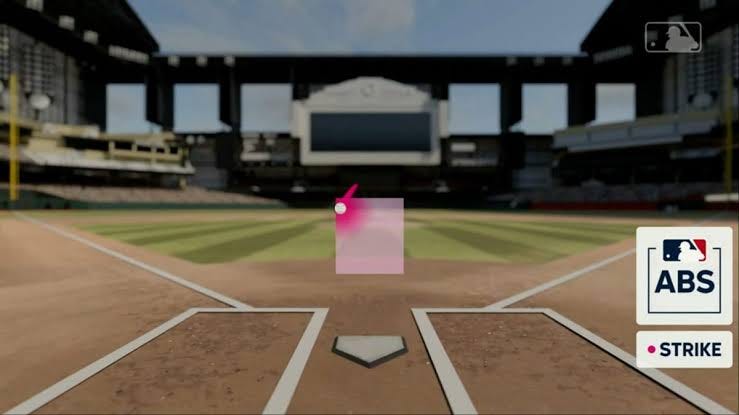
In its first weeks at the big-league level, ABS saw nearly 1,000 calls challenged, with 55% overturned. That is proof that even the game’s best umpires miss more than fans assumed, and that there is real strategy behind when a challenge is worth spending. That same technology has already reached college baseball: in May 2026, the NCAA rules committee approved the SEC’s request to use ABS in its conference tournament, with teams starting with three challenges instead of two. For these select programs, the ABS trial run is a preview of how pitch-level precision is about to reshape strategy, coaching, and evaluation in the college game.

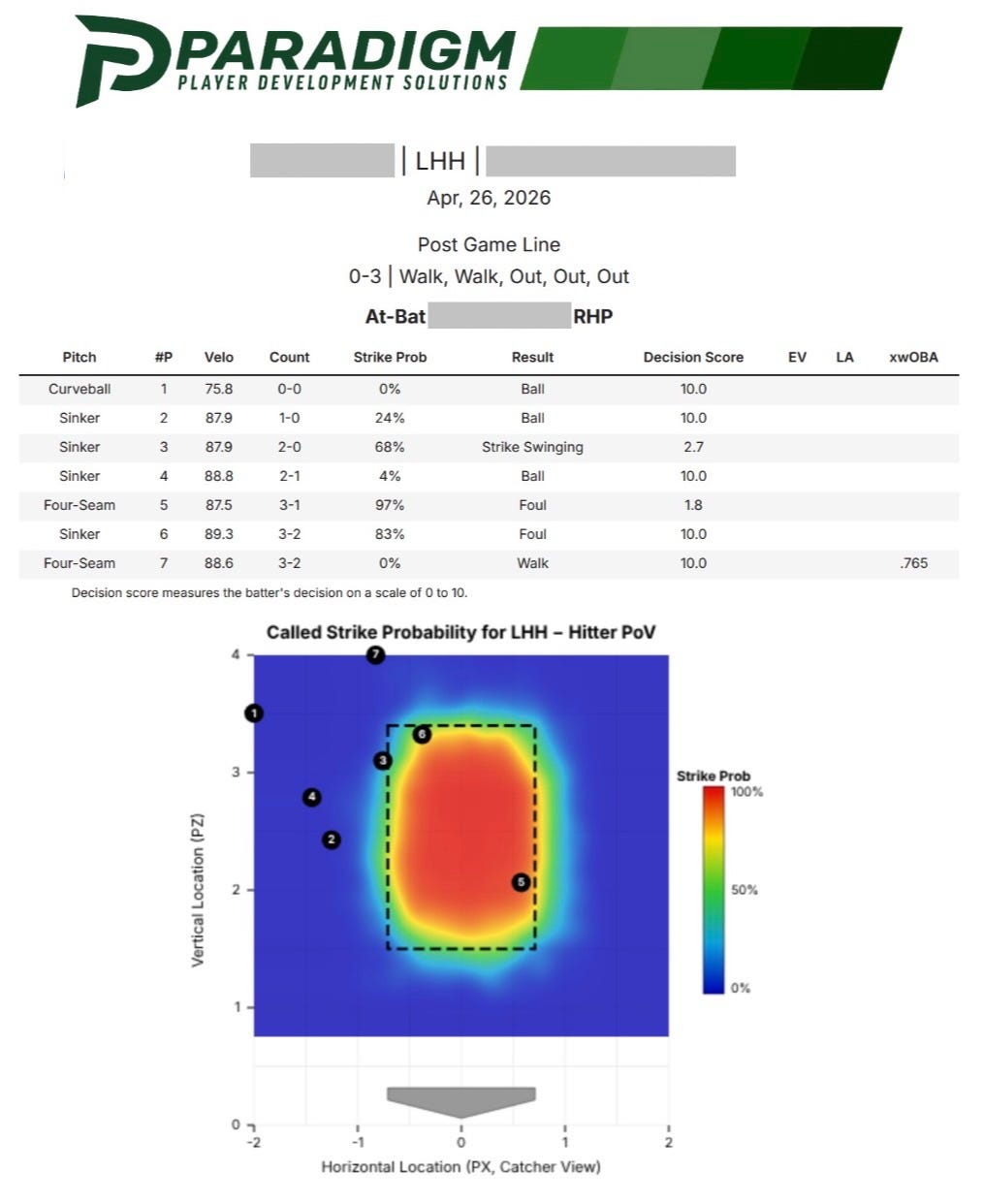
When Paradigm heard about ABS coming to college, the first thing we thought about was how to create an analysis-based tool to determine when to challenge a pitch. This tool could help teams determine when they should challenge based on game scenario. To us, it’s less about whether every missed call gets corrected and more about whether overturning the call changes the game enough to be worth spending a challenge on.
After looking at all the recorded challenges in Hoover and combing through a 120,000 pitch database from 2025 and 2026, we created an internal model that takes runners on base, inning, score, and a count-by-count decision matrix to determine when the risk of challenging is worth the reward.
To start off, we wanted to have a customizable way to display information on whether the challenge is worth the risk. This is what led us to create the “Advanced Challenge Evaluator”, or A.C.E. for short. The matrix is designed to be interactive on a device while also allowing coaches to print it out to be used in the dugout.

Challenge Decision Matrix
The core premise is fairly simple. A.C.E. determines the swing in run value associated with overturning a call by factoring in the game state and tells you whether the expected gain in runs justifies spending a challenge. Every count and situation in baseball carries a run expectancy, the average number of runs a team is expected to score in the inning from that point in the at-bat. If a batter decides to challenge a 3–2 strike call in the bottom of the 9th down 2 runs with bases loaded, that challenge is more valuable than if a batter challenges a 3–2 strike call in the bottom of the 2nd down 5 runs.
Let’s take a look at a real life example that happened in the SEC tournament. Texas is down 6–1 in the top of the 3rd with no one on, no one out, and in a 1–2 count. The Texas pitcher just misses his spot, and the pitch is called a ball. Texas decides to challenge, but the call stands.

The challenge was used on a competitive pitch that only missed by an inch or so, but situationally, it was the wrong time for Texas to burn a challenge. Texas was down 5 runs, and a strike call would’ve resulted in just the first out of the inning, meaning our swing in expected runs would’ve been just 0.195. At the end of the day, that small of a swing is just not worth it to risk a challenge this early in the game.
Let’s take a look at another scenario where challenging might not be worth the risk. If our team was in an 0–0 count in the top of the 3rd with 0 outs, none on, and down a run, challenging an 0–0 strike call nets only +0.042 RV. In the moment, this pitch might feel like a huge deal, but in the grand scheme of things, we’re still too early in the game and there’s not enough leverage to justify wasting a challenge.
Now let’s look at an example of a “good” challenge. Our team is at the plate in a 3–2 count with a runner on 2nd, one out, and down a run in the bottom of the 5th. The umpire calls a strike, and our batter challenges. Provided this pitch was actually borderline, our model determines that this is easily the correct decision. There’s a 0.603 expected run swing on a walk versus a strikeout in this game state.

The A.C.E. model can help us learn that sometimes the situation can get a hitter carried away and lead to inefficient ABS decision-making. It may seem like a good spot to challenge due to the disadvantage of starting a count down 0–1, but the overall run value swing is still so marginal that challenging probably isn’t worth it unless the call was clearly wrong.
ABS challenges are sacred, and teams that burn through them in low-leverage situations will feel it in late-game spots when they’re out of challenges. Should ABS ever expand beyond the SEC tournament, his model should help our clients determine when to use their challenges. Teams that are taking advantage of data in today’s game understand that it essentially doesn’t matter what the result of the challenge was as long as the situation deserved a challenge.
Written By: Jackson Wall
메타데이터
- post_id
- 4eb09b78621d
- slug
- what-abs-in-college-baseball-means-for-coaches-and-players-4eb09b78621d
- url
- https://medium.com/@ParadigmPDS/what-abs-in-college-baseball-means-for-coaches-and-players-4eb09b78621d
- canonical_url
- https://medium.com/@ParadigmPDS/what-abs-in-college-baseball-means-for-coaches-and-players-4eb09b78621d
- author_url
- https://medium.com/@ParadigmPDS
- status
- ok
- fetched_at
- 2026-07-14 15:46:17