There Are Rooms Where the Heart Speaks More Quietly
There are rooms where the heart lowers its voice.
There Are Rooms Where the Heart Speaks More Quietly
There are rooms where the heart lowers its voice.
Not because it has nothing to say, but because it knows the walls are listening with care. These rooms are rarely grand. They do not require velvet, chandeliers, or solemn portraits staring down from gilded frames. Often they are small. A lamp in the corner. A chair angled toward the window. A cup left cooling beside a book. Curtains moving slightly although no one remembers opening the window.
A private room teaches a different language.
Outside, feelings must often make themselves presentable. They are trimmed before company. Smoothed into phrases. Given a shape that does not disturb the table. But in a room where one feels safely unwatched, the heart speaks in softer materials. Breath. Stillness. The slow unclenching of a hand. The careful removal of a face worn for others.
Intimacy begins there, I think. Not with confession, but with permission.
The permission to be less clear. Less useful. Less composed. To sit beside someone without arranging the silence into entertainment. To let a thought rise and then sink again, unjudged. To admit that some truths are not ready to become sentences.
There is a kind of closeness that only survives in such rooms. It cannot bear too much light. It cannot be dragged into public and asked to prove itself. It grows in the small hush between two people who do not need to fill every pause to feel present.
This is where silence becomes different from absence.
Absence is a hollow left by withdrawal. It has a temperature. You feel it in the chair no one takes, the message unanswered too long, the doorway where someone used to appear. Absence makes the room larger and colder. It sharpens ordinary objects until they seem accusatory.
Silence, when it is kind, does not do this.
Kind silence remains inhabited. It sits beside you. It lets the room breathe. It does not demand performance. It does not punish. It does not pretend nothing hurts. A shared silence can hold more tenderness than speech because it does not rush to translate what may still be fragile.
But fear complicates everything.
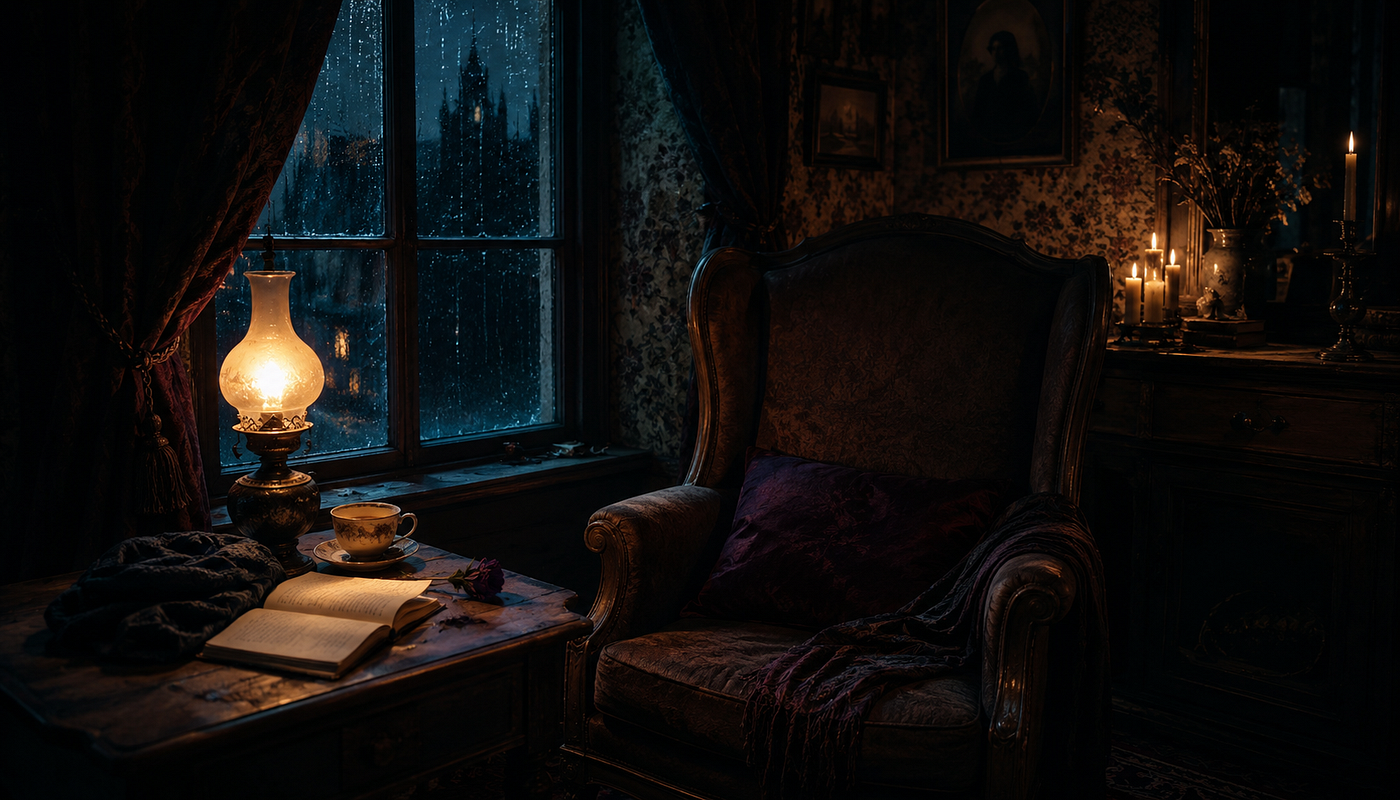
A quiet room can shelter the heart, or it can teach it to hide too well. Privacy can become refuge. It can also become exile with prettier curtains. There are rooms where we retreat because we feel safe, and rooms where we retreat because being found feels unbearable. The difference is not always clear at first. Both rooms are quiet. Both ask the world to wait outside.
The body usually knows.
In refuge, the shoulders lower. The breath returns. The self becomes more whole, even if sorrow remains.
In exile, the silence tightens. Time thickens. The room begins to feel less like shelter and more like proof that no one knows how to reach you.
This is why private spaces are powerful. They reveal what public life conceals. A person may walk through the day with poise, answer kindly, smile at the right moments, and then enter one particular room and become suddenly unguarded. Not dramatically. Only truthfully. The voice changes. The eyes lose their rehearsed brightness. The heart, no longer forced to shout over the world, begins to speak in its real register.
If someone is allowed into that room, the invitation should not be misunderstood.
To enter a private space is not to own it. To hear the quieter heart is not to claim authority over it. Some people mistake access for possession. They are shown softness once and begin to behave as if all doors should remain open forever.
That is not intimacy.
Intimacy is learning the room’s rules. Where not to step. Which objects carry weight. When to speak. When to let the candle burn lower without comment. It is the art of remaining near without turning nearness into pressure.
Perhaps the most tender rooms are those where nothing is forced to happen.
No revelation. No performance of healing. No demand that the person inside explain why the curtains are drawn or why the chair has been turned away from the light. Only presence. Only the quiet sense that fear has not been mocked for existing.
A heart that speaks softly must not be shouted over, even by love.
This is a difficult lesson for people who believe affection should always move toward exposure. They think to love someone is to bring everything into the open. Sometimes it is. Sometimes love is the lamp lit after years of darkness.
But sometimes love is the hand that does not touch the locked drawer.
Sometimes love is noticing the silence and not confusing it with emptiness.
There are rooms where the heart speaks more quietly because it is finally safe enough not to defend itself. There are other rooms where it speaks quietly because it has almost given up being heard.
We must learn the difference.
And when we are invited into such a room, we should enter carefully. With clean hands. With patience. With no appetite for drama. We should understand that the hush is not an absence of feeling, but feeling in its most unarmored form.
Not every silence asks to be broken.
Some ask only to be kept company.
메타데이터
- post_id
- 4eb0fecff4ec
- slug
- there-are-rooms-where-the-heart-speaks-more-quietly-4eb0fecff4ec
- url
- https://medium.com/@joana.kerzenwax.rpllc/there-are-rooms-where-the-heart-speaks-more-quietly-4eb0fecff4ec
- canonical_url
- https://medium.com/@joana.kerzenwax.rpllc/there-are-rooms-where-the-heart-speaks-more-quietly-4eb0fecff4ec
- author_url
- https://medium.com/@joana.kerzenwax.rpllc
- status
- ok
- fetched_at
- 2026-08-16 20:25:39