⚙️ Before Distributed Systems, There Was the Rehat
Sometimes the best lessons in scalability don’t come from classrooms or data centers — they come from the fields where we grew up. 🌾
⚙️ Before Distributed Systems, There Was the Rehat
Sometimes the best lessons in scalability don’t come from classrooms or data centers — they come from the fields where we grew up. 🌾
This is a story about a simple farming tool called the Rehat, and how it taught me more about scalable systems than any textbook ever could.
I grew up in a remote rural village in India. Back then, electric motor pumps were unheard of — even electricity itself was unreliable and rarely present. ⚡
As a kid, I was fascinated by how my parents managed farming with such limited resources. I watched them work tirelessly, using simple tools and age-old techniques, and I marveled at how much they achieved with so little.
Our lives revolved around the land, the animals, and the clever ways people adapted to what they had.
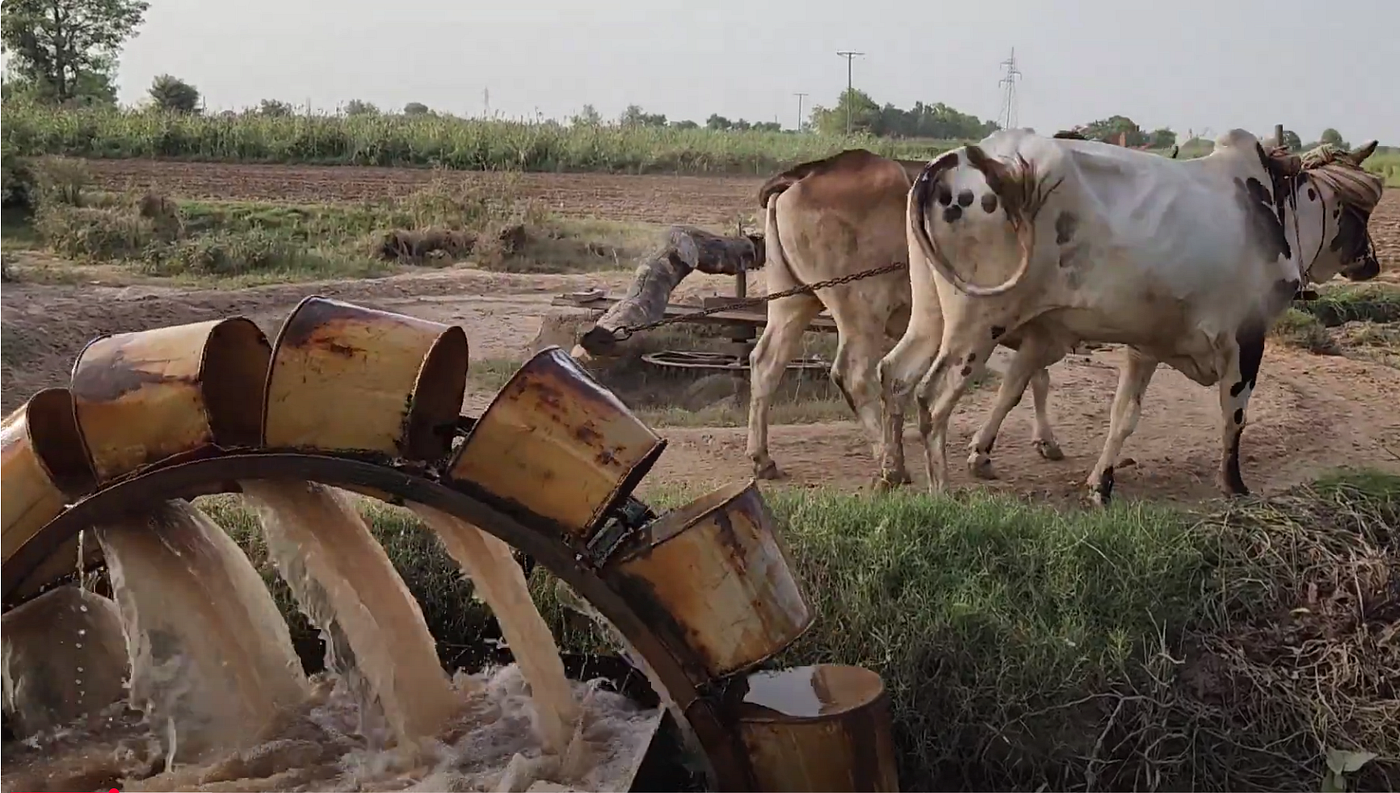
One of those ingenious inventions was called the Rehat — a traditional water-lifting system used long before electric or diesel motors reached rural India. It was elegant in its simplicity.
The Rehat had a large wooden wheel fitted with several buckets and connected to a smaller wheel through a long axle. As bulls walked in circles on the field, they turned the smaller wheel, which rotated the larger one over the well. The buckets dipped into the water, rose, and emptied into a basin that carried water to the crops. 🐂💦
What fascinated me most was its scalability.
🌤️ In the dry season, when the water level dropped, farmers simply added more buckets to the wheel to draw enough water. 🌧️ When the water level rose again, they removed a few buckets to keep the system balanced and efficient.
No redesigns. No complex machinery. Just smart, practical adaptation.
Years later, when I began working in software, I realized how similar it was to what we call scalability in system design — adding or removing servers, threads, or resources based on demand.
That simple system, built with wood, rope, and animal strength, carried the same wisdom we apply in modern engineering:
💡 Scale up when resources are low. 💡 Scale down when they’re plenty. 💡 Keep the system simple, flexible, and reliable.
Every time I hear “add or remove buckets,” I’m reminded of the Rehat — and of those quiet mornings walking behind the bulls as they turned the wheel, teaching me the essence of scalability long before I ever wrote a line of code.
💭 What’s something from your roots, childhood, or community that shaped how you think about problem-solving or technology today? I’d love to hear your stories — sometimes the most timeless engineering wisdom comes from the simplest places. 🌱
메타데이터
- post_id
- 4eb3a0a60615
- slug
- ️-before-distributed-systems-there-was-the-rehat-4eb3a0a60615
- url
- https://medium.com/@ravindarm/%EF%B8%8F-before-distributed-systems-there-was-the-rehat-4eb3a0a60615
- canonical_url
- https://medium.com/@ravindarm/%EF%B8%8F-before-distributed-systems-there-was-the-rehat-4eb3a0a60615
- author_url
- https://medium.com/@ravindarm
- status
- ok
- fetched_at
- 2026-07-16 21:53:24