When I Fixed a Hidden Camera in My Mother's Bedroom.. Found Something I Shouldn’t Have Seen In Life
As I stared at the screen, my mind spinning in a vacuum of pure, suffocating revulsion, a shadow stepped into the frame from the dark…
When I Fixed a Hidden Camera in My Mother's Bedroom.. Found Something I Shouldn’t Have Seen In Life
As I stared at the screen, my mind spinning in a vacuum of pure, suffocating revulsion, a shadow stepped into the frame from the dark corner of the room behind her bed — a part of the space that the hidden camera’s lens could barely resolve...
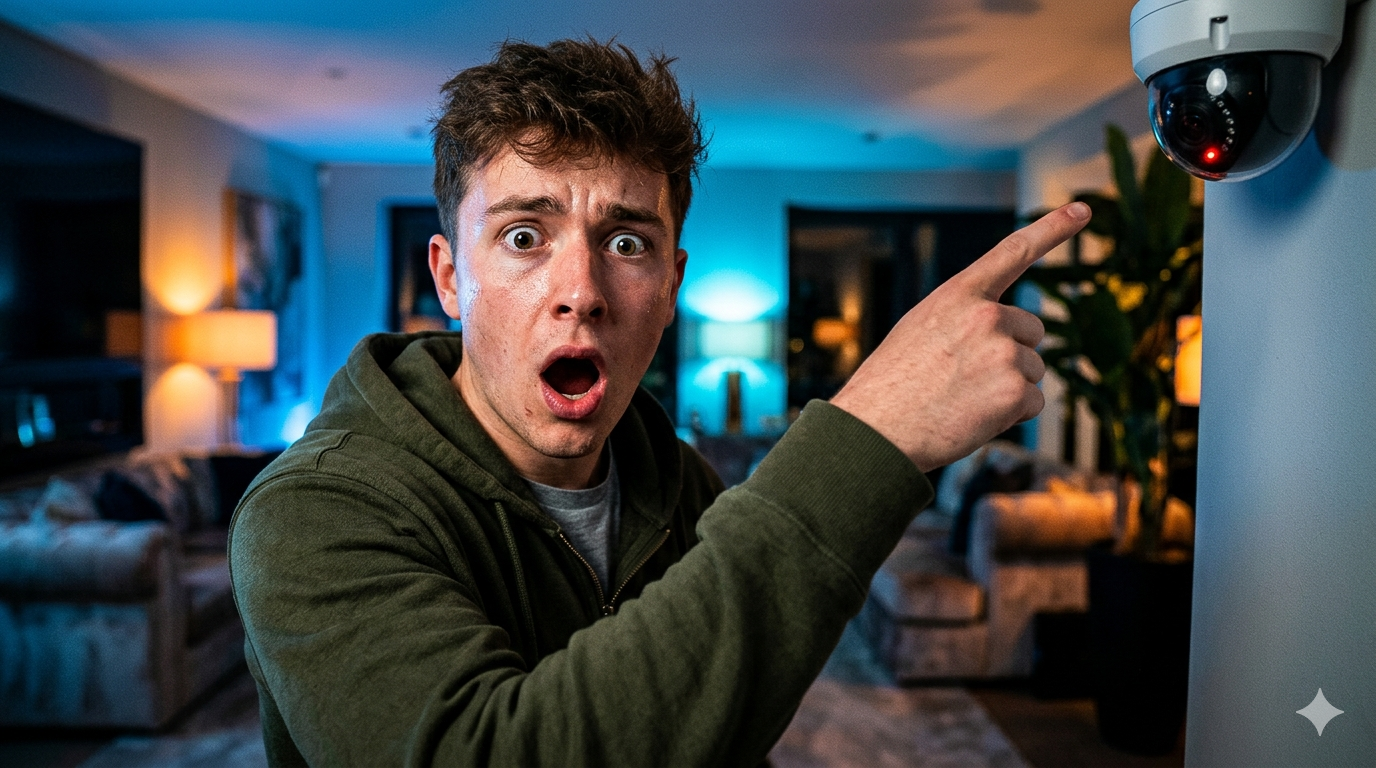
Image generated by Google Gemini.
There is a particular brand of silence that settles into the foundation of a house when a family is slowly, systematically dying from the inside out. It isn’t a peaceful quiet, nor is it the heavy stillness that follows a sudden explosion of grief. It is an oily, viscous sort of silence that sticks to the walls, leaks from the floorboards, and pools in the dark corners of the rooms where nobody wants to look. For a teenager, growing up inside that kind of atmosphere feels like drowning in slow motion. You spend years operating under a profound, crushing confusion, watching the people who are supposed to be your anchors dissolve into unrecognizable shapes, while you are left completely powerless to arrest the decay.
Non Members Can Read 👉 Here
My name is Kaelen. I am nineteen years old, and for the vast majority of my existence, my world has been entirely contained within a crumbling, Victorian-style manor sitting on a jagged, fog-shrouded peninsula along the coast of Maine. The house smells permanently of dry rot, damp wool, old iron filings, and the sharp, chemical tang of the ocean at low tide. By trade, I am an apprentice watchmaker and micro-mechanic. I spend my long, solitary hours sitting at a scarred oak workbench beneath a green-shaded banker’s lamp, using microscopic tweezers, brass loupes, and fine files to repair the internal architecture of antique timepieces.
I chose this work because mechanical gears do not possess the capacity for malice or deception. An eighteen-karat gold pocket watch or a rusted grandfather clock escapement does not lie to you about its structural failure. If a mainspring is compromised, it shows itself in a clean, metallic fracture or a flat, dead resistance when you wind the crown. It is a predictable, absolute transaction between a man’s focus and the physical laws of the universe. In my workshop, with the rhythmic, hypnotic tick-tick-tick of dozens of synchronized clocks filling the air, I found a sanctuary — a way to build a highly disciplined, unassailable reality far away from the volatile, terrifying currents of my family life.
For a long time, I desperately required that distance because my home was dominated by a grotesque, unfolding tragedy. When I was twelve, my father was involved in a catastrophic industrial mining accident that didn’t take his life, but left him in a state of permanent, waking decomposition. His nervous system was shattered, rendering him a silent, rigid prisoner within his own body, his muscles locked in a perpetual, agonizing spasm. We couldn’t afford a long-term care facility, so our home became a private hospice. The downstairs parlor was converted into a medical ward, smelling permanently of antiseptic rubs, stale sheets, and the sickeningly sweet, heavy odor of organic tissue degradation.
My mother, Rowena, took on the burden of his care with a fierce, terrifying intensity that quickly curdled from devotion into something entirely monstrous. She was a woman of fifty, once possessing a striking, dark-haired elegance, but the years of wiping bile, changing soiled linens, and lifting a dying man’s weight had warped her into a gaunt, hollow-eyed ghost. Yet, it wasn’t the exhaustion that frightened me. It was the absolute, impenetrable secrecy that began to define her behavior as the years dragged on.
She began to change. The protective, affectionate mother of my childhood vanished, replaced by an insular, paranoid stranger who locked herself in her upstairs bedroom for hours at a time, completely ignoring my father’s agonizing, low groans from the parlor below. She stopped purchasing regular groceries, instead filling our pantry with strange, industrial glass jars containing thick, yellowish organic pastes and chemical fixatives that smelled identical to the laboratory compounds used to preserve dead tissue.
More than that, a physical transformation began to manifest in her that my watchmaker’s eyes — trained to notice the smallest deviations in line, symmetry, and color — could not ignore. Her skin developed a peculiar, waxy translucence, a dull, oily pallor that seemed entirely devoid of healthy human blood. Her fingers became permanently stained with a deep, dark brown chemical dreg that wouldn’t wash away, no matter how hard she scrubbed at the kitchen sink.
I tried to suppress my rising panic. I tried to anchor my anxious mind in the repetitive, comforting tasks of my clockwork. But the air in our home grew increasingly suffocating, charged with an unspoken horror that made my chest ache with a profound sense of doom. I felt like I was watching an antique timepiece whose mainspring had snapped, its gears violently tearing each other apart inside the casing while I sat frozen at the bench.
Then came the rainy autumn afternoon when the absolute, visceral dread became too heavy to bear. Driven by a desperate, terrified need to discover what was destroying my mother — and what was leaking from her locked room into the rest of our lives — I used my micro-mechanical skills to alter a small, high-definition security lens, disguising it inside the iron framework of an antique mantle clock that sat directly opposite her bed.
When I fixed a hidden camera in my mother’s bedroom… Found Something I Shouldn’t Have Seen In Life. And the story of the absolute, agonizing degradation that unfolded on that digital screen is a truth that has remained locked in the deepest, darkest vault of my soul until today.
The Growth of the Hidden Lens
The process of installing the lens felt like a deep, irreversible violation of my own moral architecture, a dirty transaction that made my hands shake even as my fingers executed the microscopic work. I sat at my workbench for three nights straight, completely ignoring the antique pocket watches that needed my attention, focusing entirely on gutting a late-nineteenth-century brass carriage clock.
I removed the dead escapement wheel and the broken hairspring, clearing a small, hexagonal void directly behind the Roman numeral XII on the porcelain dial. Using a micro-drill, I bored an almost invisible, pinprick aperture through the center of the numeral, positioning the tiny, high-definition optical sensor directly behind it. The camera was powered by a lithium-polymer cell disguised within the dummy brass mainspring barrel, wired to transmit its digital feed over a closed, localized wireless frequency directly to the old laptop hidden beneath the floorboards of my workshop.
The installation required a terrifying, high-stakes deception. I waited until a Tuesday afternoon when Rowena was forced to leave the manor for her bi-weekly trip to the regional medical supply depot town, three hours down the coast. The house was entirely silent except for the low, wet, rhythmic rattling of my father’s breathing from the parlor — a sound that resembled a leaking bellows inside a ruined pipe organ.
I crept up the creaking, carpeted stairs to the second floor, my heart violently hammering against my ribs like a trapped bird. My mother’s bedroom door, which was usually secured with a heavy, brass rim-lock, had been left slightly ajar, a rare oversight born from her increasing, frantic haste.
When I stepped into her room, the atmosphere hit my lungs like a physical blow. The air didn’t smell like a woman’s sanctuary; it didn’t hold the scent of lavender, powder, or old perfume. It was thick, hot, and completely saturated with an unholy, suffocating stench that made a wave of pure, sour bile rise into my throat.
It was a mixture of waterlogged wool, rancid animal grease, and a sweet, oily chemical tang that I recognized instantly as formalizing fluid — the organic fixatives used in pathology laboratories to arrest the decomposition of dead meat. The windows were entirely sealed from the inside with thick, black industrial plastic sheeting, completely blocking out the gray autumn light, leaving the room in a state of permanent, stagnant twilight.
I didn’t let my eyes linger on the chaotic mess of her dressing table, which was littered with unlabeled amber glass vials, stained cotton swabs, and bone-handled surgical scrapers. Moving with a frantic, silent speed, I placed the brass carriage clock on the high mantlepiece opposite her four-poster bed, angling the hidden lens until the digital alignment grid on my phone confirmed a perfect, panoramic view of the entire space.
As I backed out of the room, my boot brushed against a heavy, galvanized iron bucket sitting in the shadow of the nightstand. The bucket was half-filled with a thick, yellowish, gelatinous lard that caught the thin beam of my flashlight, glistening with a sickening, oily sheen. A single, coarse tuft of stiff, white animal hair was floating in the center of the grease.
I fled back downstairs to my workshop, my skin crawling with a deep, instinctual animal dread, locking the door behind me. I sat at my bench for hours, my eyes staring blankly at a disassembled chronometer, waiting for the digital feed to activate, completely unaware that the visual reality about to manifest on my laptop screen would permanently destroy the horizon of my youth.
The First Transmission
The digital feed came alive at exactly seven o’clock that evening. I sat in the pitch-dark of my workshop, the only illumination coming from the harsh, cold blue glare of my laptop screen. The camera’s infrared night-vision mode kicked in, rendering my mother’s bedroom in a stark, monochromatic palette of ghostly grays and whites.
Rowena entered the room. On the screen, her movements were unnervingly smooth, completely devoid of the heavy, limping exhaustion she displayed when she was downstairs tending to my father. She walked over to the center of the room and reached up, tearing down the overhead light bulb fixture, replacing it with a specialized, high-intensity ultraviolet lamp she pulled from her leather medical bag.
When she flipped the switch, the infrared feed deactivated, replaced by a blinding, surreal violet illumination that filled the screen. Under the ultraviolet light, the true, disgusting geometry of her secret life became visible with a terrifying, crystalline clarity.
The walls of her bedroom were not clean. They were completely covered in a complex, systematic network of large, greasy handprints and smeared tracks that glowed with a brilliant, luminescent green under the UV spectrum — the distinct, chemical signature of organic lipids and decomposing biological proteins that had been wiped across the wallpaper over a period of years.
But it was my mother’s physical state that made me let out a sharp, strangled gasp of horror, my hand flying to my mouth to suppress a scream.
Rowena stood before the full-length mirror and began to untie her heavy wool housecoat, letting it drop to the floorboards. She was entirely naked, but her body did not resemble that of a human being anymore.
Her skin was completely covered in a thick, glistening coat of that same yellowish, industrial lard I had seen in the iron bucket. The grease caught the violet light, making her flesh look like a wet, peeled carcass sitting on a butcher’s block. Her spinal column was grossly distorted, her vertebrae protruding against her skin like a row of jagged river stones, as if some heavy, internal parasite were slowly reshaping her skeletal framework from within.
More than that, her skin was covered in hundreds of deep, neat, surgical incisions that had been held together not with medical stitches, but with crude, industrial iron staples that had begun to rust against her flesh, turning the surrounding tissue a dark, necrotic green-black color. There was no blood leaking from the wounds; instead, a thick, clear, vitreous fluid was slowly weeping from the margins of the staples, dripping down her thighs to pool on the floor.
She didn’t look at her reflection with sorrow or shame. Her face was a mask of absolute, manic intensity. She reached onto her dressing table and picked up a long, bone-handled surgical curette — a sharp, loop-shaped blade used for scraping organic tissue.
With a slow, rhythmic, completely unbothered precision, she raised the blade to her own thigh. She drove the steel deep into her flesh, bypassing the fat layers, and began to execute long, scraping strokes, systematically harvesting her own subcutaneous tissue, pulling the clear, vitreous grease out of her own body and depositing it into a large glass specimen jar.
The narrative unfolding on my screen was not an act of self-harm born from madness; it was an industrial, chemical harvest. She was operating on herself with the cold, detached efficiency of a laboratory technician processing a specimen.
As I stared at the screen, my mind spinning in a vacuum of pure, suffocating revulsion, a shadow stepped into the frame from the dark corner of the room behind her bed — a part of the space that the hidden camera’s lens could barely resolve.
It was a man. But he didn’t move like a person. He was a tall, skeletal figure of sixty, dressed in a long, waterproof black leather apron that glistened with the same yellowish lard. His face was a terrifying, asymmetrical skull with wide, watery amber eyes that held no pupils — completely featureless, dead pools of clinical curiosity.
I recognized him instantly, my heart freezing in my chest. It was Dr. Silas Vance, the retired municipal coroner who had certified the medical details of my father’s industrial accident seven years ago, a man who was supposed to have passed away in a house fire three years down the coast.
Vance approached my mother from behind, his long, gaunt fingers clicking sharply as he pulled on a pair of thin, yellowed latex gloves. He didn’t touch her with passion or tenderness; he approached her with the heavy, calculated gravity of a scientist examining a successful culture in a petri dish.
He reached out, his gloved fingers sinking into the open, stapled incisions on her back, widening the wounds with a brutal, mechanical force that made my mother’s head snap back, her mouth opening in a wide, silent scream of absolute, ecstatic compliance. Vance pulled a long, stainless-steel measuring probe from his apron pocket and drove it deep into the muscle tissue of her spine, calling out numbers into a small, handheld dictation recorder.
“Subject shows advanced tissue conversion,” Vance’s voice came through the laptop speakers, amplified by the camera’s microphone into a low, oily, vibrating drone that filled my workshop. “The integration of the preservation lipids is now ninety percent complete. The host’s psychological baseline of maternal guilt has successfully prevented any external interference from the boy. The final harvesting phase can commence within forty-eight hours.”
I sat frozen in the dark, a thick, sour bile bursting from my throat, my body shaking with a violent, uncontrollable tremor. My entire life — the seven years of caring for my father, the isolation of the manor, the financial ruin — had been nothing but a controlled, synthetic environment designed by this medical monster to use my mother’s body as a breeding ground for some grotesque, industrial preservation experiment.
Before my brain could process the full depth of the degradation, the vintage rotary telephone hanging on the workshop wall began to ring.
Rrring. Rrring.
The sound was an explosive, deafening intrusion in the quiet room. I collapsed backward off my stool, my hands blindly reaching out to shut the laptop lid, before I stumbled toward the wall like a man who had been poisoned. My fingers, slick with a cold, greasy sweat, lifted the heavy black receiver.
“Kaelen,” a voice came through the line.
It was the voice from the screen — the low, baritone, immaculate cadence of Dr. Silas Vance. But it held a dark, triumphant intimacy now that made my ears hum with a terrifying white noise.
“I see you have accessed the laboratory,” Vance murmured, his voice accompanied by the distinct, hollow sound of a metal instrument clicking against glass over the line. “Your mechanical skills are truly impressive, boy. Disguising the lens within the carriage clock was an elegant touch. But it changes nothing. Your mother has already signed the logs. She belongs to the collection now. Do not attempt to alter the clockwork.”
The Laboratory of the Dead
“You’re a monster,” I choked out, my voice a thin, ragged whisper that didn’t sound human. I gripped the receiver so hard the plastic housing began to crack against my palm. “You’re killing her… you’ve turned her into a carcass… I will call the police! I will burn that room to the ground!”
Vance let out a short, dry laugh that sounded like dry bones rattling in a tin box. “The police will find nothing but a madwoman who has spent seven years mutilating herself because she couldn’t bear the guilt of her husband’s ruin, Kaelen. I am a coroner; I know exactly how to write a closing report. Look down the hallway, boy. The mainspring is winding down.”
The line went dead, replaced by the heavy, rhythmic click of a broken connection.
I dropped the receiver, its weight clattering against the wainscoting, and ran out of the workshop into the dark, freezing corridor of the manor. The house felt entirely different now; the oily silence had transformed into a heavy, mechanical pressure, as if the walls themselves were the iron plates of a massive pressure cooker sealing us inside.
As I passed the parlor door, I heard my father let out a long, wet, rattling groan — a sound of profound, animal agony that was louder and more desperate than anything he had produced in years.
Driven by a sudden, terrifying suspicion, I threw open the parlor door and shoved my flashlight beam toward his medical bed.
My father was entirely naked, his rigid, locked limbs twisting against the restraints. His skin was completely covered in a thick, uniform layer of that same yellowish, luminescent lard. But the horror was his chest — his sternum had been surgically opened, held apart by four heavy iron retractors, exposing his beating heart beneath a thick layer of clear, amber chemical preservation fluid that was being pumped through his chest cavity by a small, hand-cranked laboratory pump sitting on the bedside table.
Beside the bed sat an empty glass jar with my mother’s handwriting on the label: “Harvest Session 41. Internal Stabilization Compound.”
She hadn’t been caring for him to save his life. She had been systematically harvesting her own subcutaneous tissue, processing it with Vance’s chemical fixatives, and pumping it into my father’s open chest to keep his organs mechanically alive in a state of permanent, waking death, using him as a storage vault for their synthetic preservation lipids.
A wave of pure, elemental fury — a rage born from the absolute, disgusting violation of my family’s souls — shattered the paralysis of my fear. The watchmaker vanished; the primal animal took his place. I didn’t cry. I didn’t scream. I turned and ran toward the main staircase, my heavy work boots fracturing the old pine treads as I tore upward toward her bedroom.
The air on the second-floor landing was hot and thick, smelling so intensely of rancid fat and formalizing acid that my eyes began to stream with tears, blinding me as I reached her door.
I didn’t knock. I threw my entire nineteen-year-old frame against the heavy oak panels, the old brass rim-lock tearing out of the wood frame with a loud, splintering crash.
The door swung inward, and I stepped into the purple light of the laboratory.
The Shattering of the Gears
The room was exactly as it had appeared on the blue screen, but the physical scale of the degradation was overwhelming. The heat was suffocating, the ultraviolet lamp hummed with a high-pitched, electric vibration that made my teeth ache, and the stench of the lard was so dense it felt like a greasy film was instantly coating the interior of my throat.
Rowena was sitting on the edge of the four-poster bed, her naked, greased body shaking with a violent, rhythmic tremor. She was holding a large, industrial syringe filled with the thick, clear vitreous fluid she had harvested from her own thighs, the long steel needle positioned directly over the main artery in her neck.
Standing beside her, his long gloved hand resting on her shoulder with a sickening, possessive authority, was Dr. Silas Vance. He looked at me through the violet light, his featureless amber eyes wide with a manic, crystalline focus that held no human empathy.
“You are an interruption to the cadence, Kaelen,” Vance said, his baritone voice entirely calm, completely devoid of any moral panic. “The final injection must be executed within the hour to ensure total tissue stabilization before the extraction. Step away from the mantlepiece.”
“Mother!” I screamed into the room, my voice tearing through my throat, a bleeding sound that was swallowed by the heavy hum of the lamp. “Look at me! Look at what he’s doing to you! He’s turned you into a butcher’s specimen! Dad is downstairs with his chest ripped open! Come back to me! Please!”
Rowena turned her head toward me with a slow, mechanical rotation that looked entirely inhuman. Her hollow, waxy face didn’t register recognition or maternal love. Her glazed eyes stared right through me, focusing on the brass carriage clock sitting behind me on the mantlepiece.
“The clock is beautiful, Kaelen,” she whispered, her voice a flat, dead, oily drone that sounded like a recording being played at the wrong speed. “Silas says the clockwork is almost finished. The gears are turning perfectly. We are going to live forever inside the preservation. No more pain. No more guilt. Just the clean, quiet grease.”
She raised her arm to drive the long needle into her neck.
A roar of pure, unadulterated madness erupted from my lungs. I didn’t launch myself at her; I launched myself at the small instrument table sitting beside Dr. Silas Vance.
I grabbed a heavy, two-foot-long iron bone-saw — a vintage surgical tool with a massive, serrated steel blade — and swung it with every ounce of physical strength I possessed, my watchmaker’s muscles locking into a single, violent arc of survival.
Vance saw the blow coming, his features twisting into a snarl of cold, scientific fury. He raised his long arm to block the swing, his yellowed latex glove slicing through the air.
CRACK.
The heavy steel teeth of the bone-saw caught him directly across the forearm, tearing through the leather apron and the flesh beneath, fracturing the bone with a horrific, wet sound. But there was no red blood that sprayed from his arm. Instead, a massive torrent of thick, yellowish, rancid lard — the same preservation lipid that had saturated my family’s life — burst from the wound, showering the walls and the floorboards in a greasy, luminescent spray.
Vance let out a high-pitched, metallic shriek of pure agony, his body stumbling backward against the ultraviolet lamp fixture.
The heavy metal lamp toppled over, its high-intensity bulb striking the iron frame of the bed and exploding into a hundred white-hot shards. The electrical spark instantly ignited the pool of industrial chemical fixatives and formalizing alcohol that had leaked from the dressing table.
A sudden, violent sheet of blue-orange flame erupted into the room, feeding on the greased wallpaper and the buckets of lard with an impossible, industrial velocity. The air became a furnace within three seconds, the thick black plastic sheeting over the windows melting into long, weeping ribbons of toxic smoke that filled the space with absolute darkness.
Through the smoke, I saw Vance’s figure entirely engulfed in the blue fire, his oily body burning with the intense, blinding brilliance of a magnesium flare. He didn’t run; he threw himself forward, his burning, skeletal fingers reaching out to grab my mother, dragging her down into the center of the flaming bed as the four-poster framework began to collapse into the floorboards.
I scrambled through the blinding, suffocating dark, my hands blindly reaching through the fire to grab my mother’s arm, trying to tear her away from his burning grip. But her skin was too slick, too completely saturated with the grease. She slid through my fingers like wet soap, her face disappearing into the blue sheet of fire as she let out her final, silent sigh of compliance.
“Go, Kaelen,” her voice came through the roar of the flames, a single, clear note that sounded like the mother of my childhood before the accident. “Fix the clocks. Keep the time clean.”
The floorboards beneath the bed fractured with a massive, thundering roar, collapsing into the parlor level below, carrying my mother, Dr. Silas Vance, and the entire laboratory down into the furnace of the downstairs ward.
I stumbled backward out of the room, the heat blistering the skin on my face and hands, and threw myself down the burning staircase, tumbling out through the front doors into the freezing, wet mud of the Maine rain just as the entire roof of the manor collapsed inward in a massive geyser of sparks and black smoke.
The Clean Movement
It has been one year since that camera lens changed everything.
The ruins of the Victorian manor on the peninsula were permanently cleared away six months ago, the blackened stone foundation filled in with crushed gravel and salt sand, leaving nothing behind but an empty plot of land looking out over the gray waters of the Atlantic. The official police investigation stated that a catastrophic house fire, fueled by improperly stored medical oxygen tanks and heating oil, had instantly consumed the residence, resulting in the tragic loss of all three family members.
The local community mourned my parents as victims of a long, heartbreaking struggle with industrial illness, completely blind to the monstrous, systemic degradation that had occurred within those locked rooms. They looked at me with a deep, pitying empathy — the solitary nineteen-year-old survivor who had lost everything in a single night.
I live in a small, rented room above a commercial bakery in a town twenty miles down the coast. My watchmaker’s workbench is set up beneath a new, clean LED lamp, and the space smells exclusively of sweet flour, yeast, and the sharp, clean aroma of fine mineral oil. The doors to my room remain unlocked during the day, and the large windows look out over a bustling street where people live normal, transparent lives.
I am completely alone. There is no subtle romance waiting for me in the village, no new companion to help me carry the weight of my memories. I have accepted that some internal mechanisms have been so thoroughly warped by horror that they can never hold a true balance again.
But the emotional impact of what I saw through that hidden lens remains a permanent, rhythmic ache inside my chest — a structural distortion that governs every click of the clocks I repair.
I looked through a pinhole aperture to discover the truth about my mother, and I discovered that the people who create us can become the very monsters who harvest us in the dark. She taught me that love can be twisted into a grotesque, chemical laboratory, and that the protection we pray for can sometimes be the very grease that accelerates our destruction.
Every evening, when the fog rolls inward from the ocean and rattles the glass of my workshop window, I turn off my ledger lamp and sit in the quiet room. I pull a single, tiny gear from my pocket — the brass balance wheel from the carriage clock that I recovered from the ash of the fire — and I hold it tightly between my fingertips until the delicate teeth draw blood.
And there, in the clean, silent darkness of the Maine night, I weep. I don’t cry for Dr. Silas Vance, and I don’t cry for the monster my mother became. I cry for the father who spent seven years as a living specimen jar, and I cry for the beautiful, dark-haired woman who used to sing to me before the silence took over our home. I cry for the profound, devastating loss of my ability to look at another human face without searching for the incisions beneath the skin. But as I look down at my hands — scarred from the fire, but still steady, still capable of regulating the finest movements of time — I pick up my tweezers and return to the bench, knowing that while the mechanism of my life was completely shattered, the boy who watches the gears is still keeping the time.
👉 Follow Lost Memories for More Stories.
💛 A Message From My Heart
Every time I write a story, I think about the children who never got the chance to write theirs. Somewhere, in a forgotten lane of a crowded city, a small orphan sits with a broken pencil, trying to draw a future he cannot see. Another little girl, barefoot and silent, stares through the school gate she cannot enter — because poverty has already decided the first chapter of her life.
I want to change that chapter.
My dream is simple, yet enormous: To give free, high-quality education to orphans and underprivileged children — education so powerful, so world-class, that it lifts them out of the shadows they were born into.
I imagine a place… A global education hub where children from every corner of the world, especially those who have lost everything, can learn with dignity. A place filled with books, hope, and second chances. A place where a child’s background doesn’t decide their destiny — only their dreams do.
But dreams need helping hands.
If my writing touched your heart today, I invite you to touch theirs. Even a small donation becomes a pencil, a book, a warm meal, or a doorway to a future they never thought they deserved.
You are not just donating — you are rewriting someone’s life story. A story that might have remained unwritten without you.
Thank you for believing in children the world has forgotten.
메타데이터
- post_id
- 4ebb26960d3f
- slug
- when-i-fixed-a-hidden-camera-in-my-mothers-bedroom-found-something-i-shouldnt-have-seen-in-life-4ebb26960d3f
- url
- https://medium.com/write-a-catalyst/when-i-fixed-a-hidden-camera-in-my-mothers-bedroom-found-something-i-shouldnt-have-seen-in-life-4ebb26960d3f
- canonical_url
- https://medium.com/write-a-catalyst/when-i-fixed-a-hidden-camera-in-my-mothers-bedroom-found-something-i-shouldnt-have-seen-in-life-4ebb26960d3f
- author_url
- https://medium.com/@lostmemoriesofficial
- status
- ok
- fetched_at
- 2026-07-11 20:05:18