When Art Becomes Conscience: Why the Jan Mitra Samman to Prof. Chawky Frenn Matters to the World
On 10 January 2026, in Varanasi — one of the world’s oldest living cities — something deeply contemporary unfolded. At the People’s…
When Art Becomes Conscience: Why the Jan Mitra Samman to Prof. Chawky Frenn Matters to the World
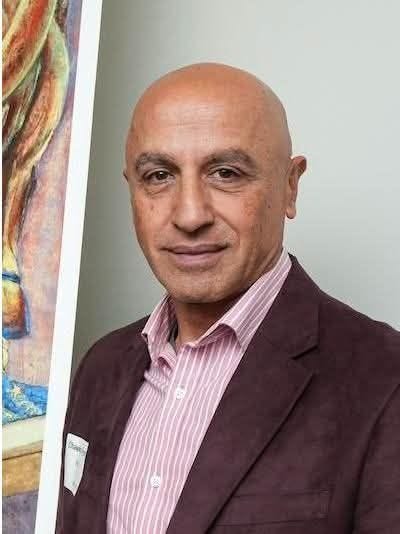
Prof. Chawky Frenn
On 10 January 2026, in Varanasi — one of the world’s oldest living cities — something deeply contemporary unfolded. At the People’s Vigilance Committee on Human Rights (PVCHR), a space rooted in the struggles of India’s most marginalized communities, the Jan Mitra Samman was conferred on **Professor Chawky Frenn**, an internationally respected artist, educator, and cultural activist.
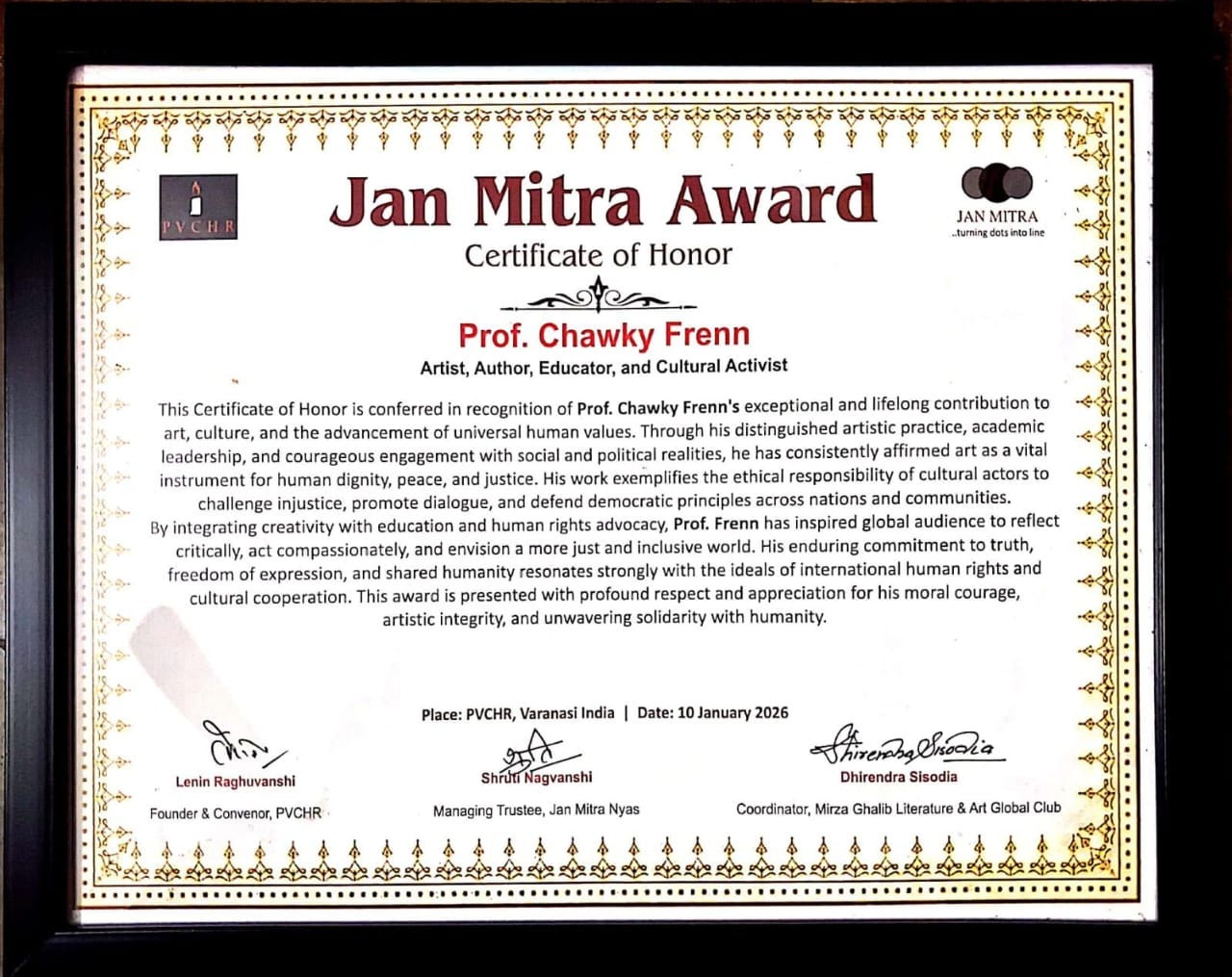
Professor Chawky Frenn receives the Jan Mitra Award (Certificate of Honor) in Varanasi on 10 January 2026, recognizing his lifelong contribution to art, human dignity, peace, and justice. The certificate is jointly signed by Lenin Raghuvanshi (Founder & Convenor, PVCHR), Shruti Nagvanshi (Managing Trustee, Jan Mitra Nyas), and Dhirendra Sisodia (Coordinator, Mirza Ghalib Literature & Art Global Club), symbolizing a shared commitment to culture, democracy, and human rights.
This was not simply an award ceremony. It was a moral declaration.
[embed]Development is not charity — it is justice. When communities are heard, real change begins.
The event resonated far beyond the hall in Pandeypur. Within hours, it was carried by newspapers, digital portals, cultural platforms, and independent media across India — from Jubilee Post, **Junputh, Mehta Art Gallery, [Gaon Giraw](https://gaongiraw.in/jan-mitra-samman-to-prof-chocky-frain-from-the-lotus-flowers-of-jan-mitra-samman-recipients-chandra-mishra-and-prof-suresh-nair/), [MD News](http://जन मित्र सम्मान प्राप्तकर्ताओं चंद्र मिश्रा और प्रो. सुरेश नायर के कर कमलों से प्रो. चॉकी फ्रेन को जन मित्र सम्मान। – MD NEWS https://mdnews.co.in/?p=76868), [Dharalakshya Samachar](https://dharalakshyasamachar.com/?p=18252), and multiple other Hindi and English platforms. Social media networks and civil society pages amplified it further. The wide coverage was not because of spectacle, but because the message was urgent: art, when guided by conscience, remains one of humanity’s most powerful forces against injustice**.
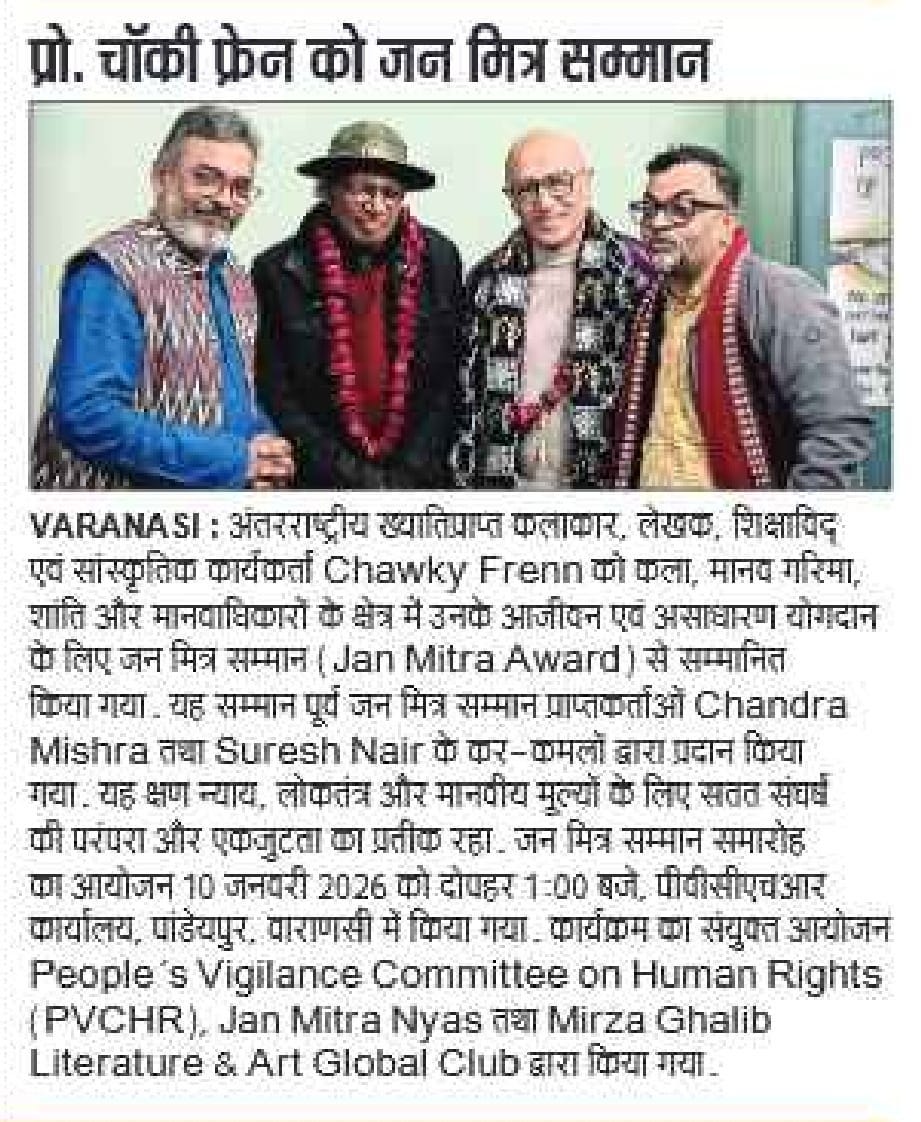
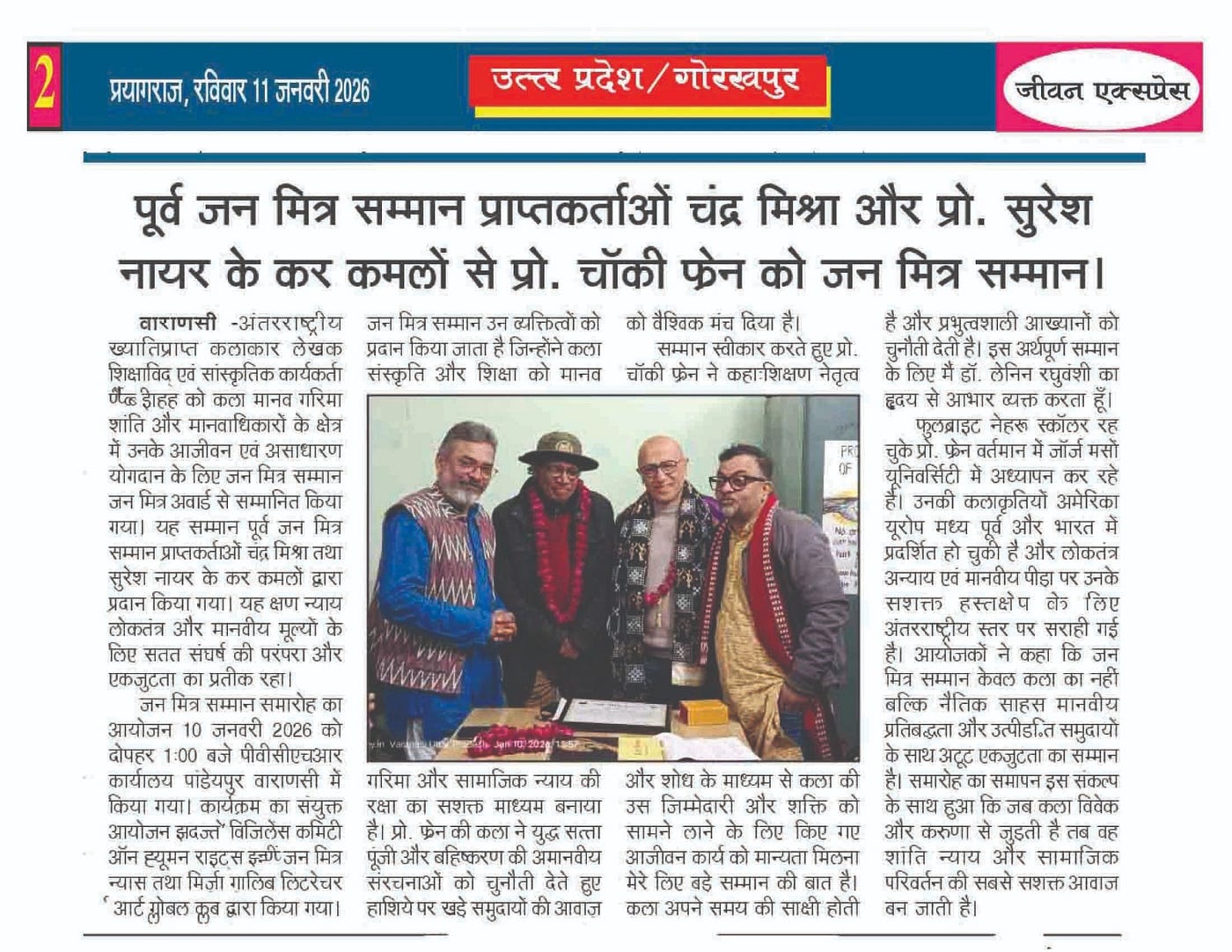
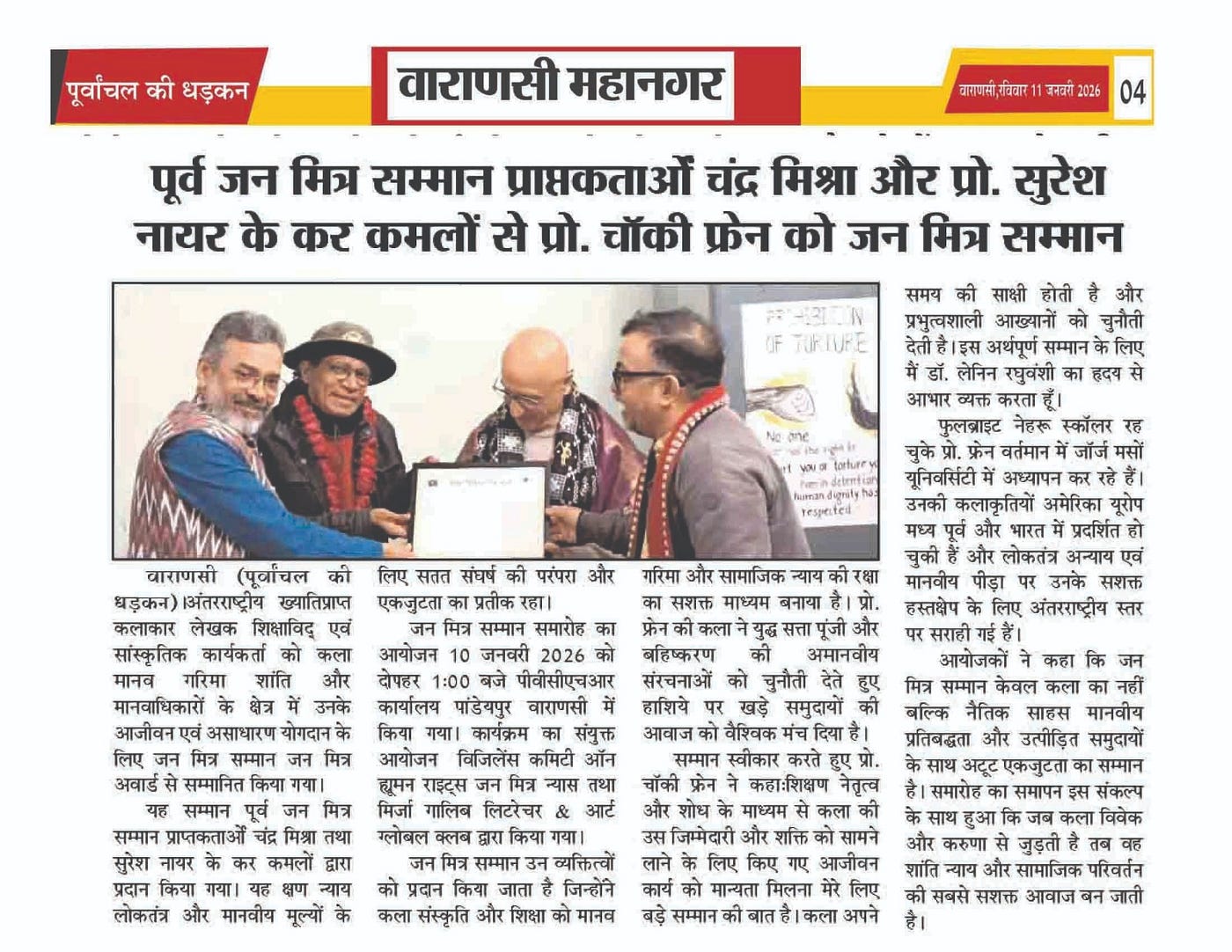
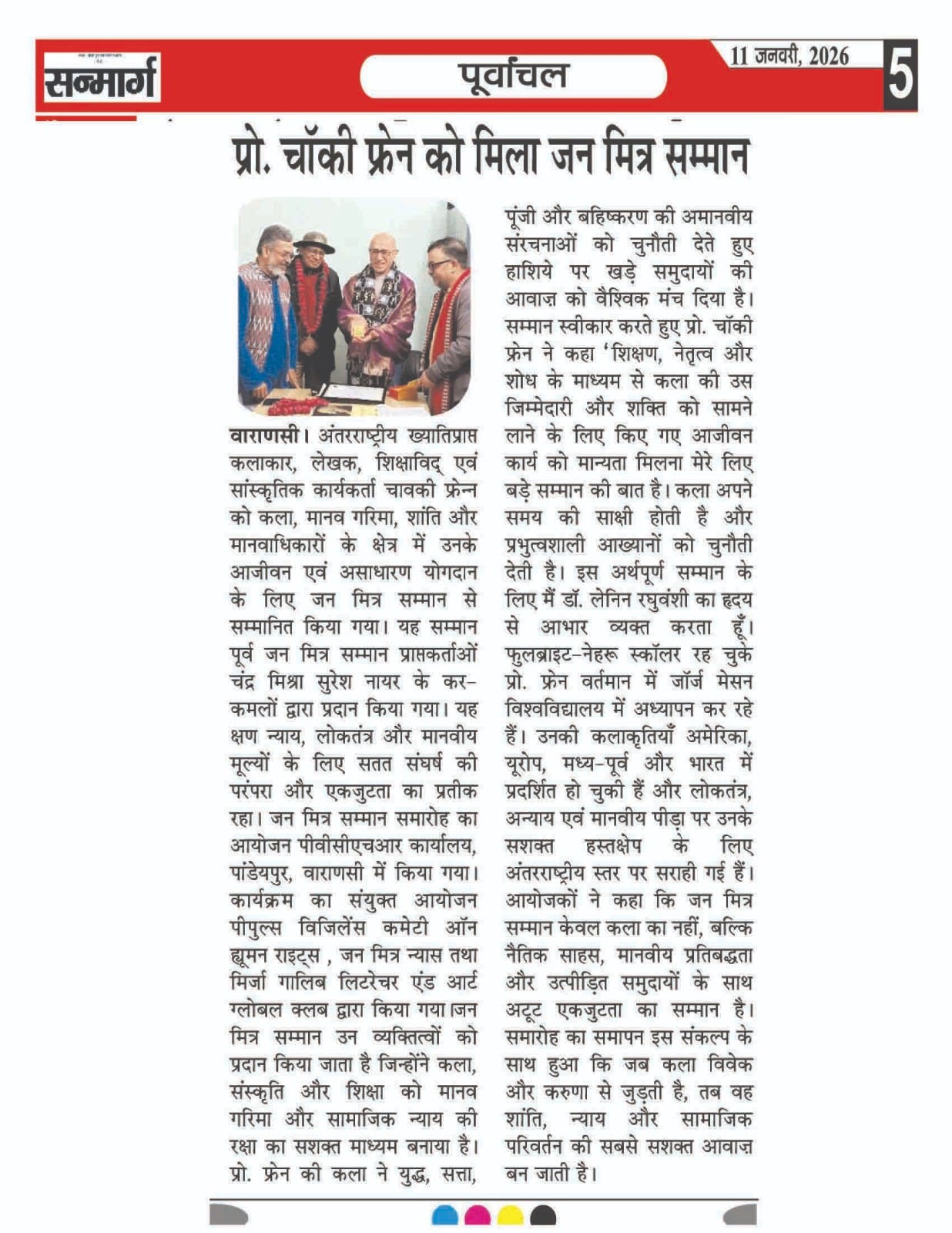
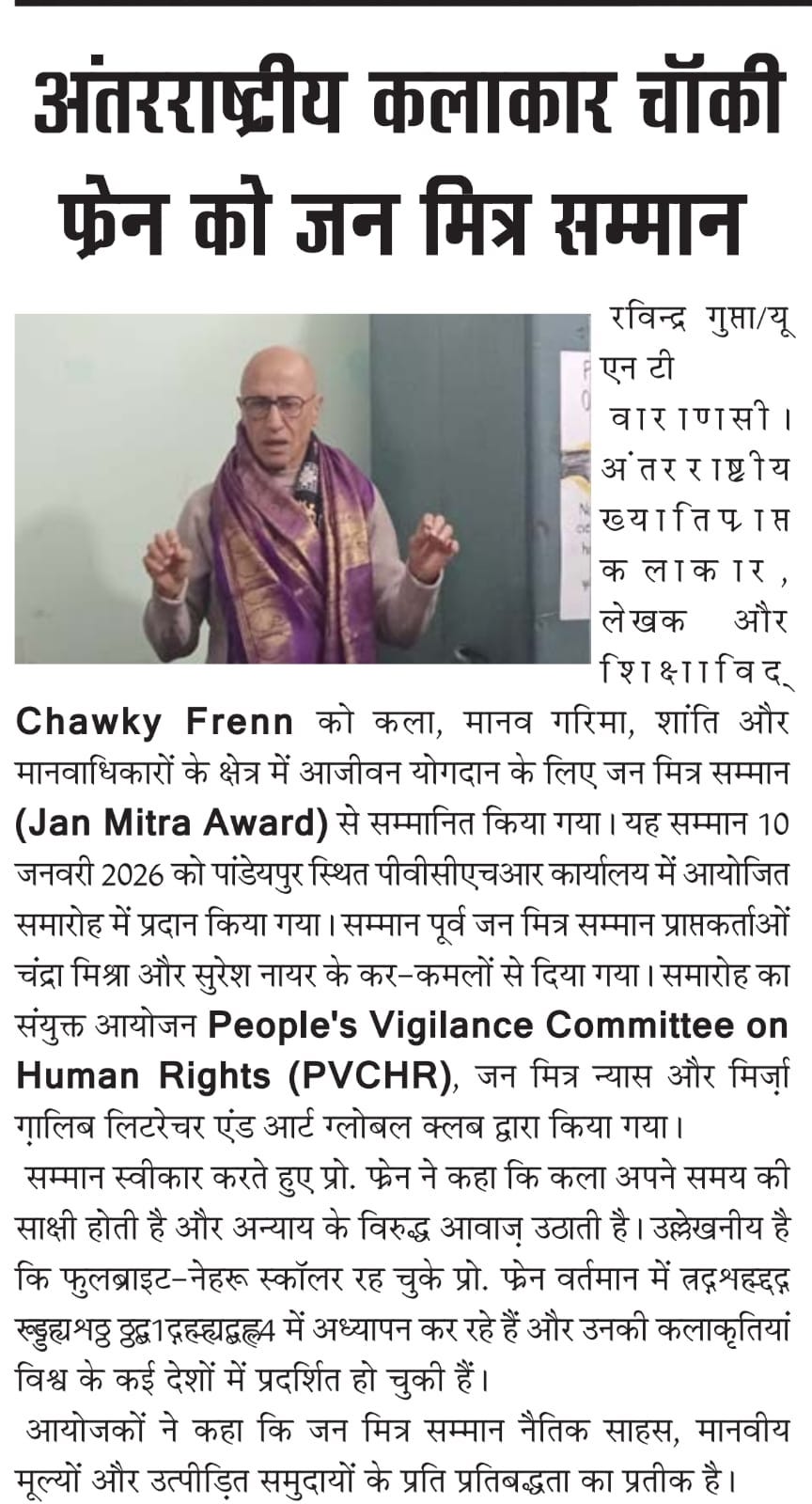
Internationally renowned artist and human rights advocate Prof. Chawky Frenn is honoured with the Jan Mitra Samman at PVCHR, Varanasi, on 10 January 2026, presented by former awardees Chandra Mishra and Prof. Suresh Nair, in recognition of his lifelong contribution to art, peace, democracy, and human dignity.
[embed]
Why This Award Matters
The Jan Mitra Samman, instituted by PVCHR, honors individuals whose work strengthens democratic values and affirms the ethical responsibility of art, culture, and education in defending human dignity. In a world increasingly shaped by authoritarianism, disinformation, and the commercialization of culture, this award stands for something increasingly rare: moral clarity.
Professor Chawky Frenn’s life and work embody that clarity.
Born in Zahlé, Lebanon, Prof. Frenn grew up amid the devastations of civil war. Sectarian violence, displacement, and political collapse were not academic subjects for him; they were lived realities. Those experiences did not harden him into cynicism. Instead, they shaped a life-long commitment to using art as a form of witness, resistance, and healing.
Now a Professor of Art at **George Mason University in the United States, Prof. Frenn has spent decades teaching young people that art is not a decorative luxury. It is a language of truth**. His paintings, writings, exhibitions, and public interventions consistently challenge war, authoritarianism, racism, and the erasure of human suffering.
His works are held in collections including the Library of Congress, major museums in the United States and Europe, and institutions in India and the Middle East. Yet, for him, recognition has never been the goal. Responsibility has been.
The Citation: A Moral Portrait
The citation accompanying the Jan Mitra Samman reads not like an academic résumé but like a moral portrait. It recognizes Prof. Frenn’s lifelong contribution to art, culture, and universal human values, affirming that his work has consistently positioned art as a vital instrument for human dignity, peace, and justice. It honors his courage in confronting social and political realities, his defense of democratic principles, and his unwavering solidarity with humanity.
This is why the award was formally presented by **Chandra Mishra and [Prof. Suresh Nair](https://medium.com/@shruti_25784/jan-mitra-award-bestowed-upon-prof-suresh-k-nair-for-artistic-contributions-to-peac-ae675970db76)**, themselves former recipients of the Jan Mitra Samman — figures whose lives have been dedicated to democracy, ethical public life, and social justice. The moment symbolized continuity: one generation of conscience passing the torch to another.
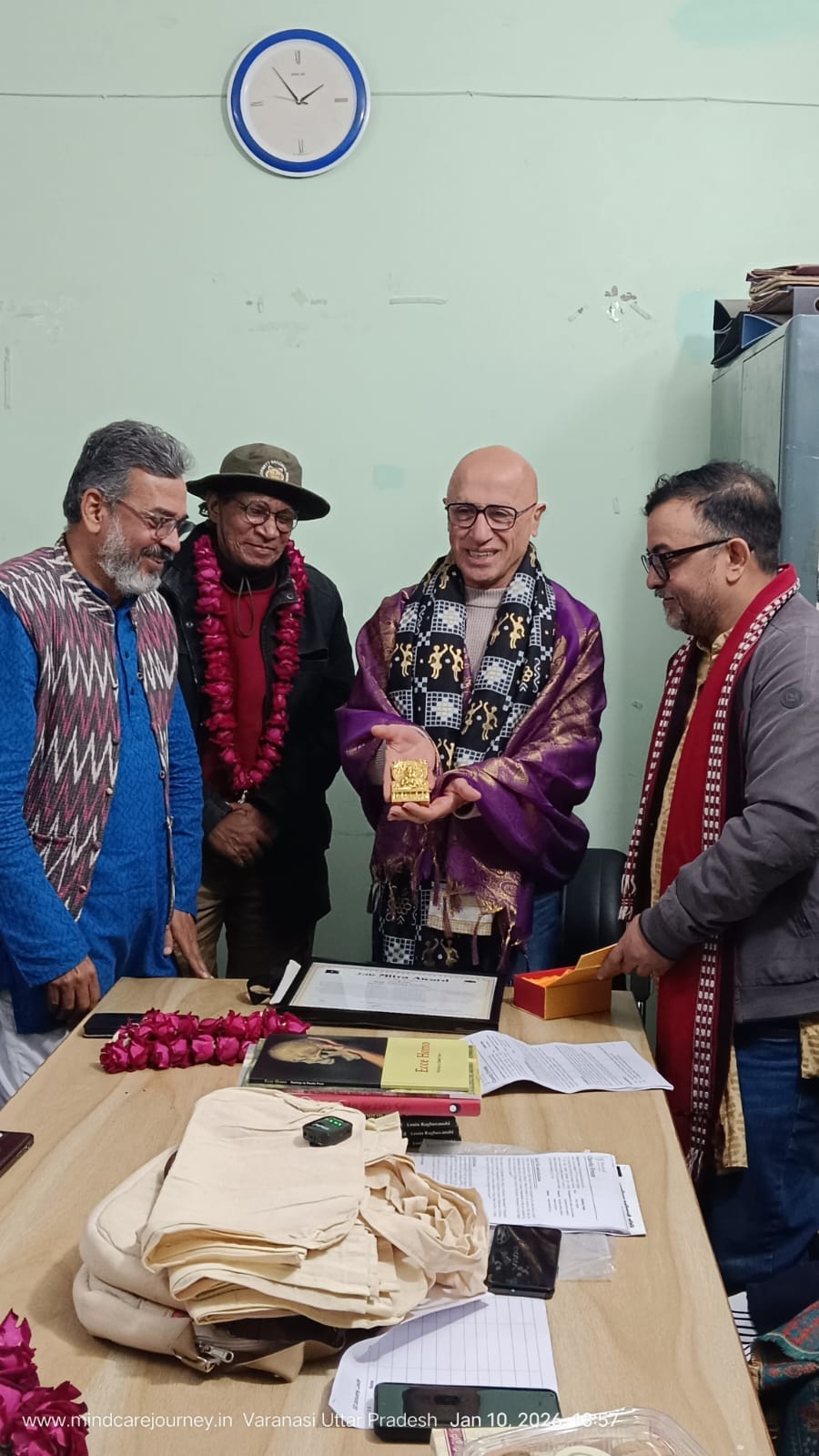
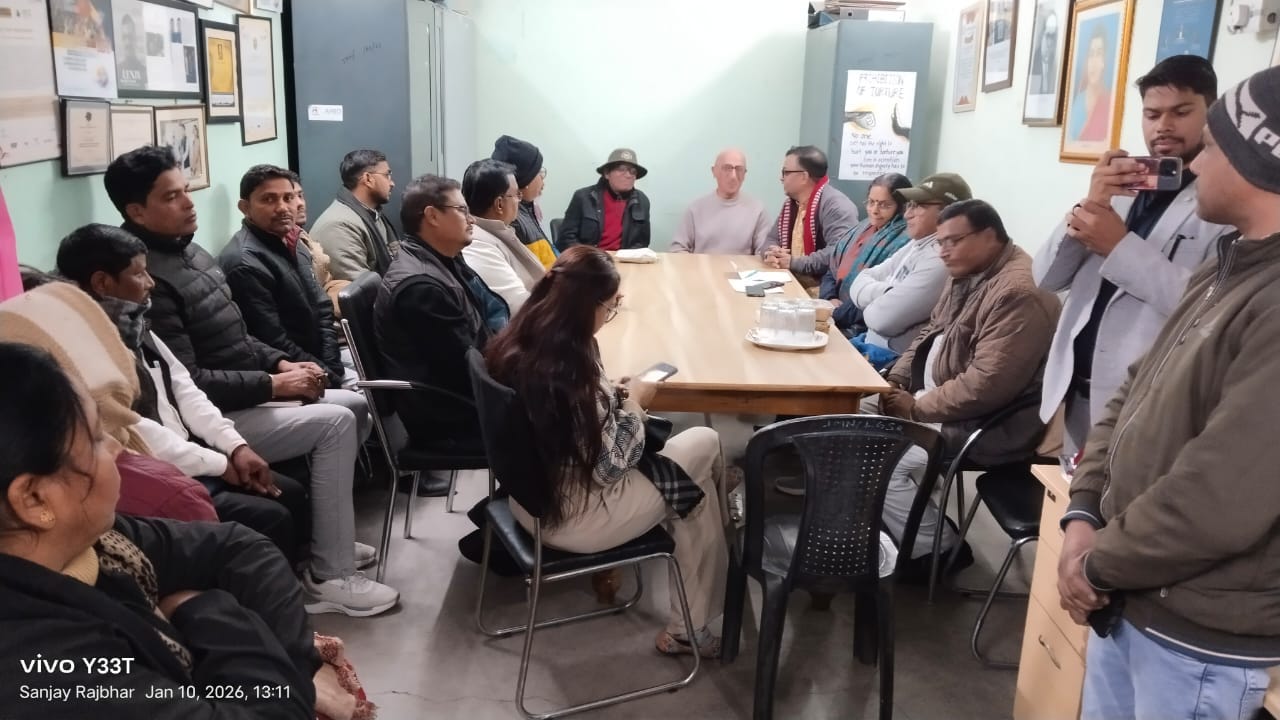
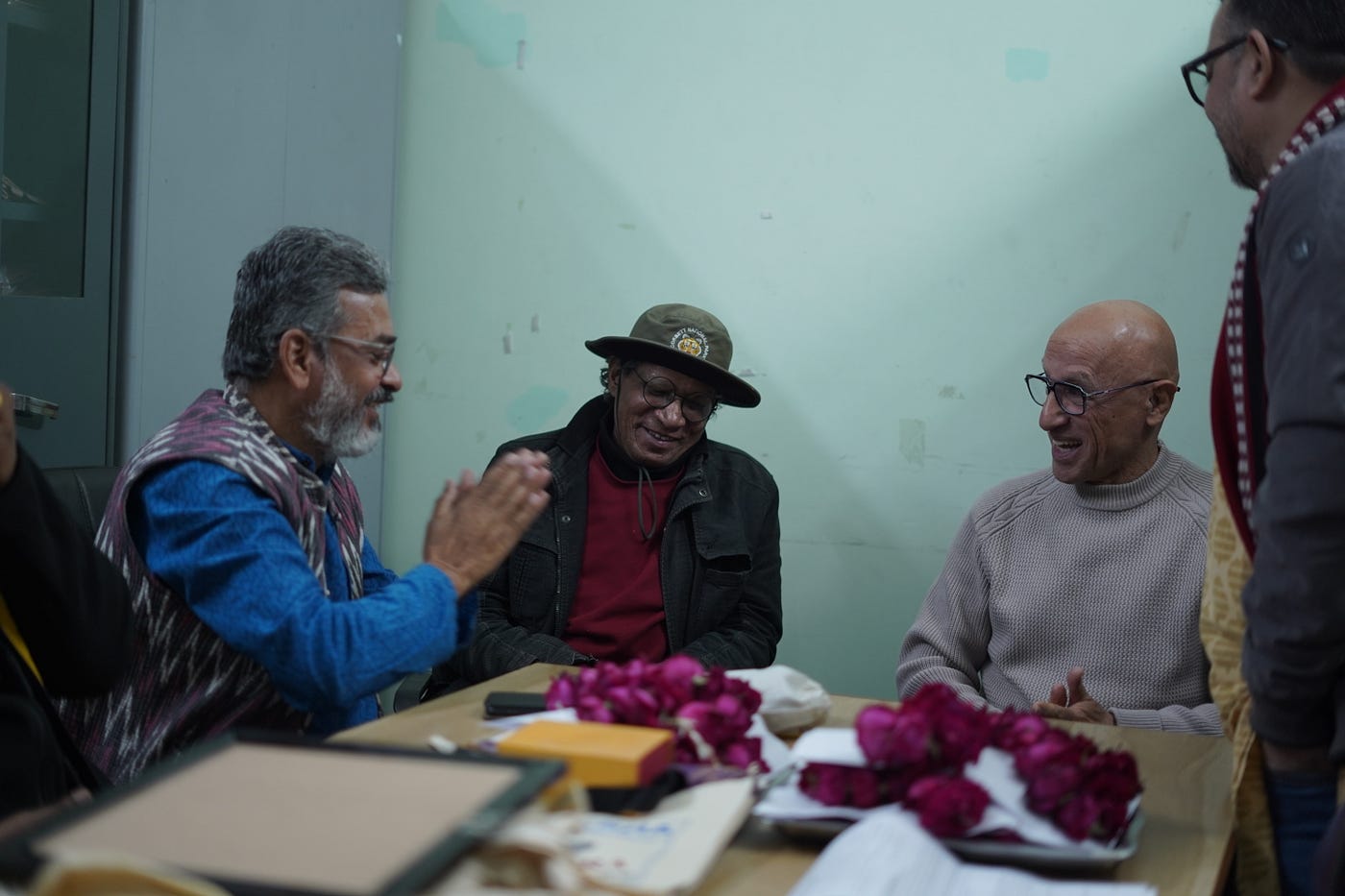
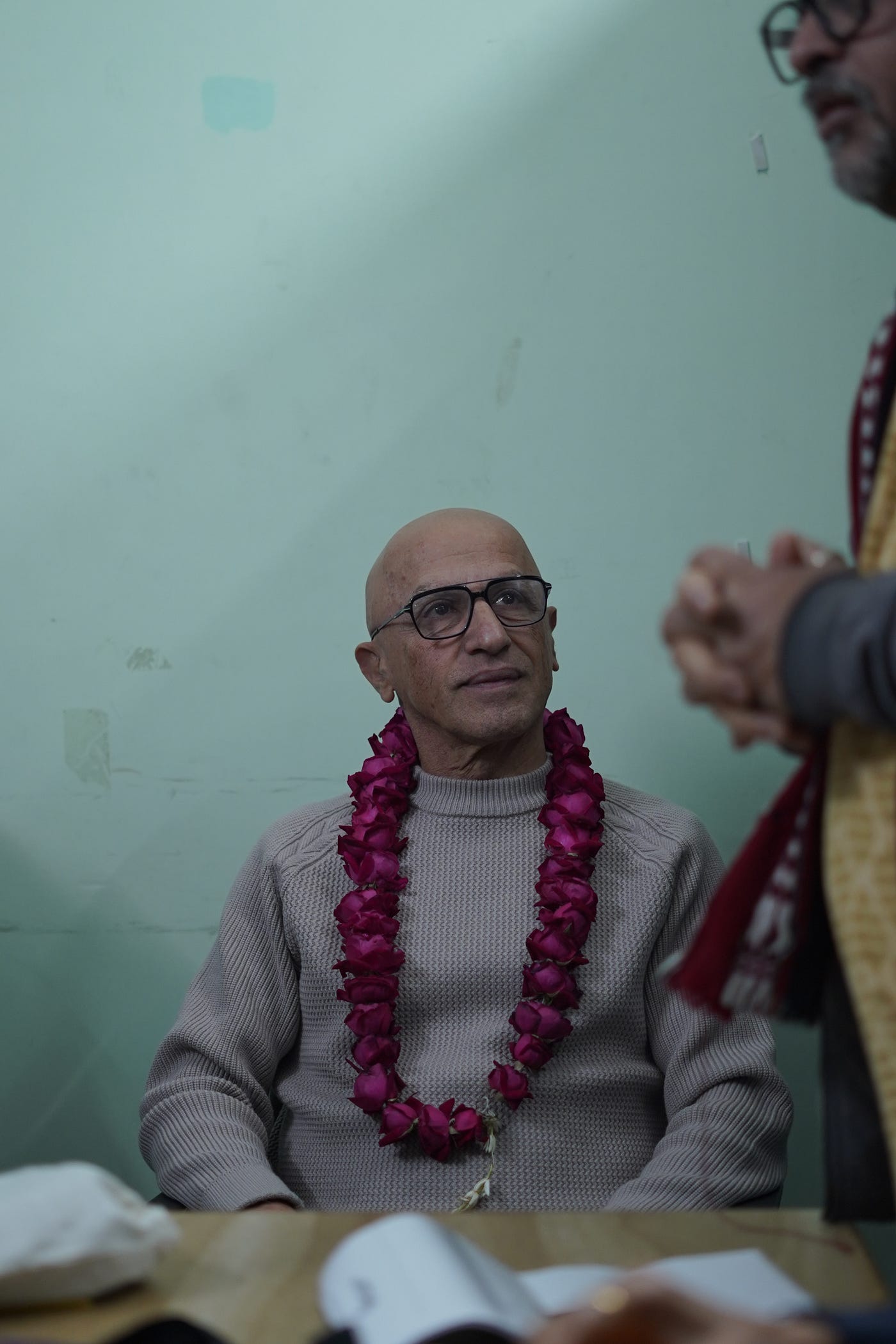
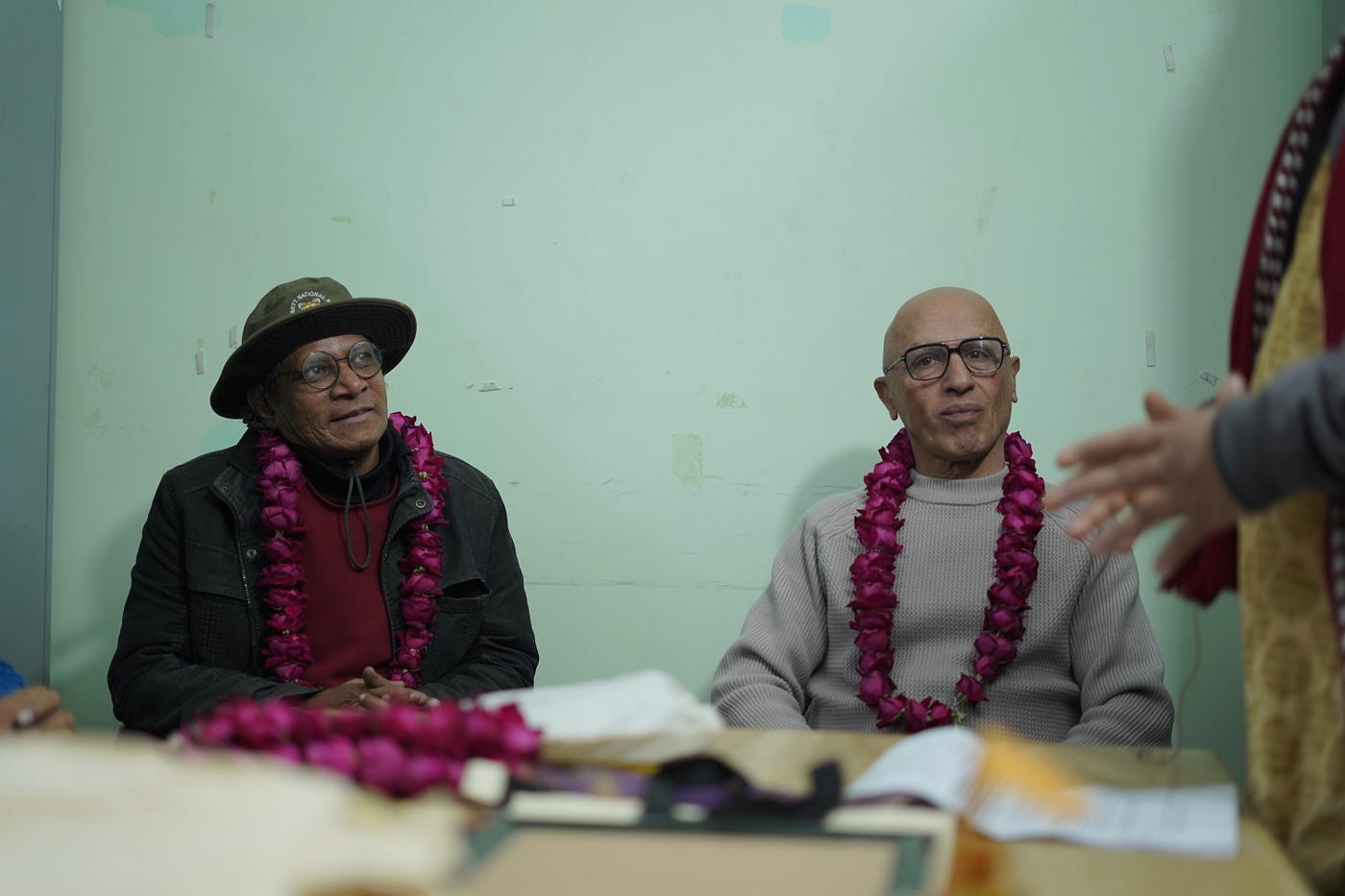
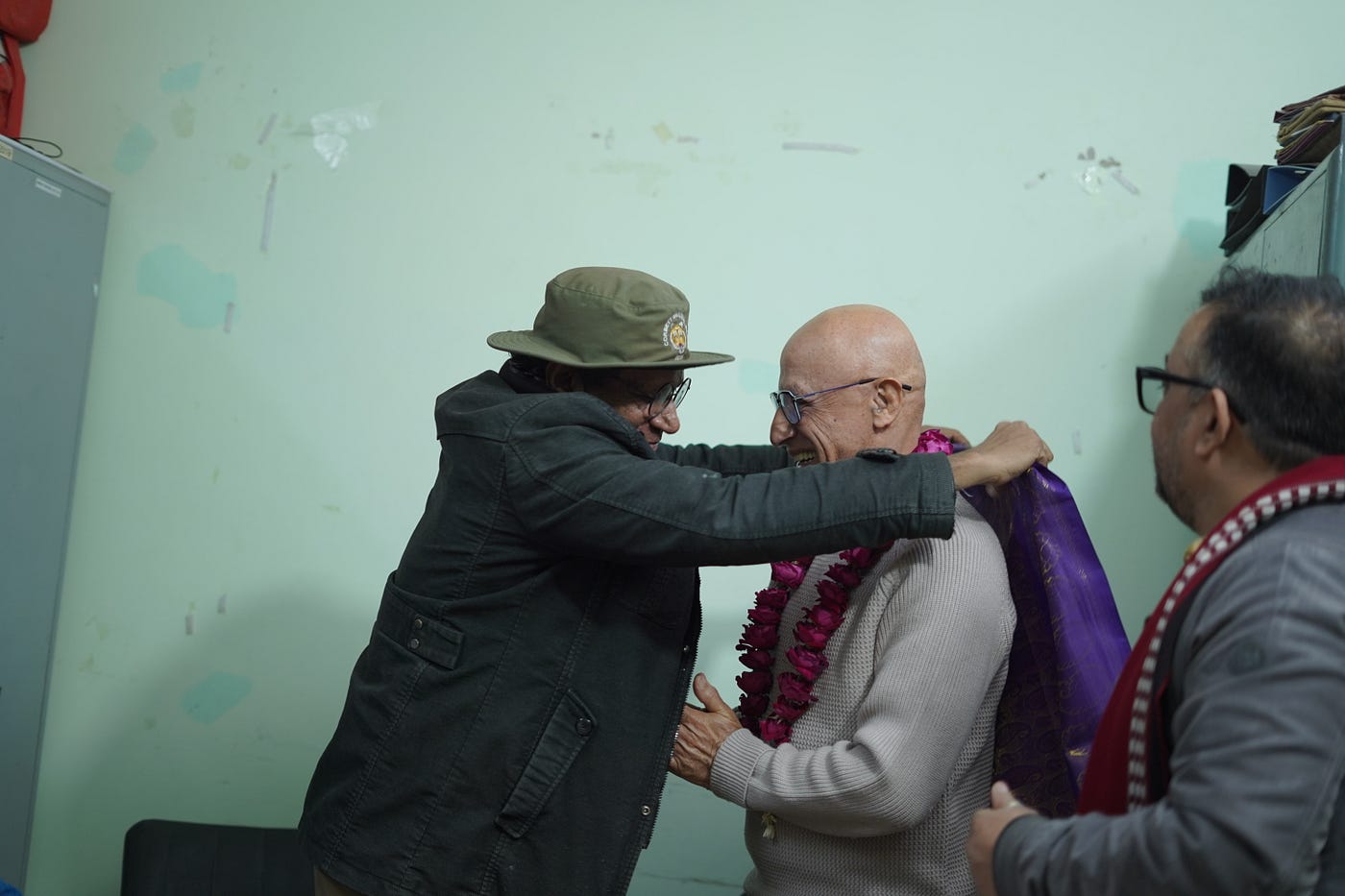
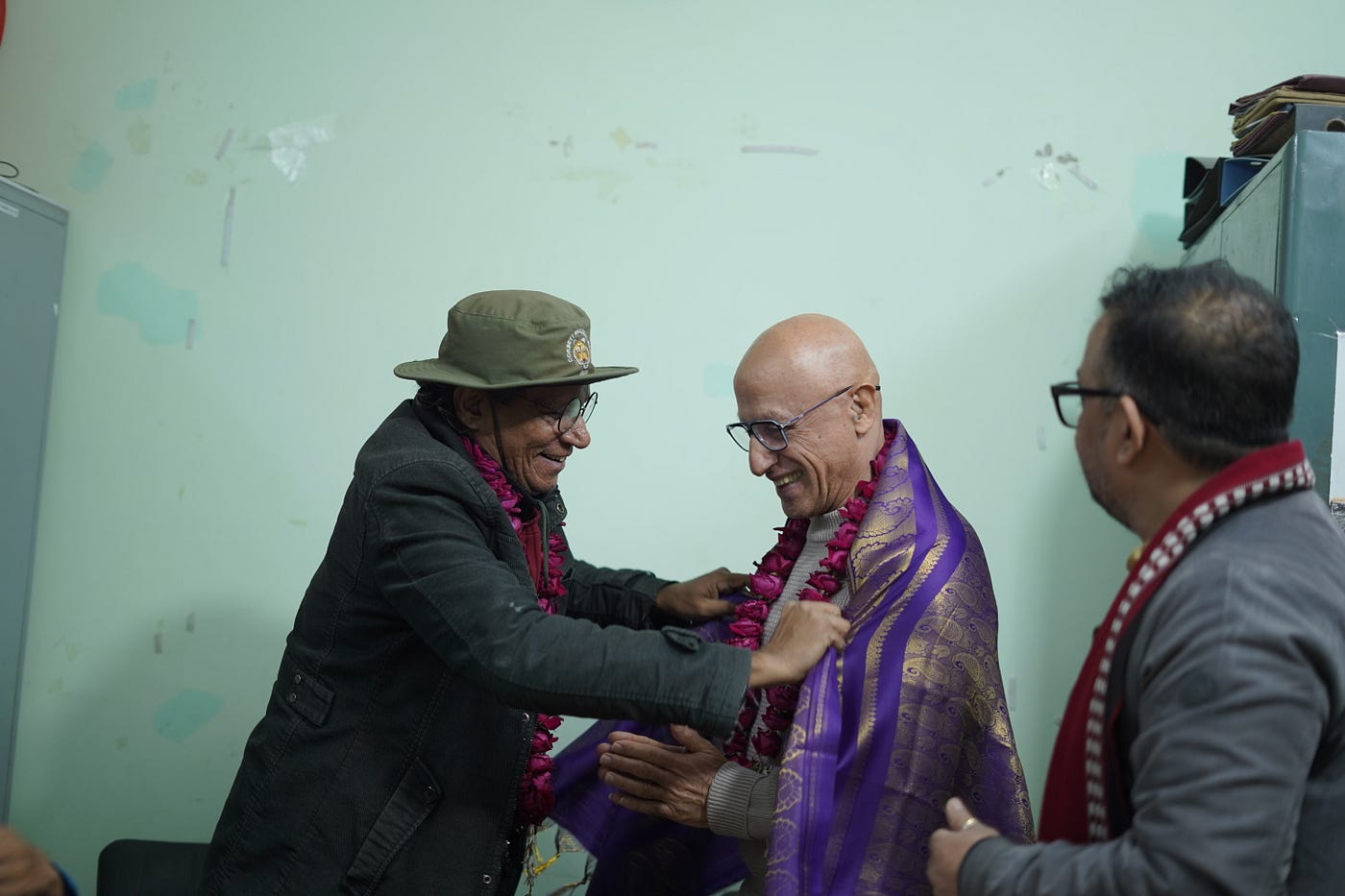
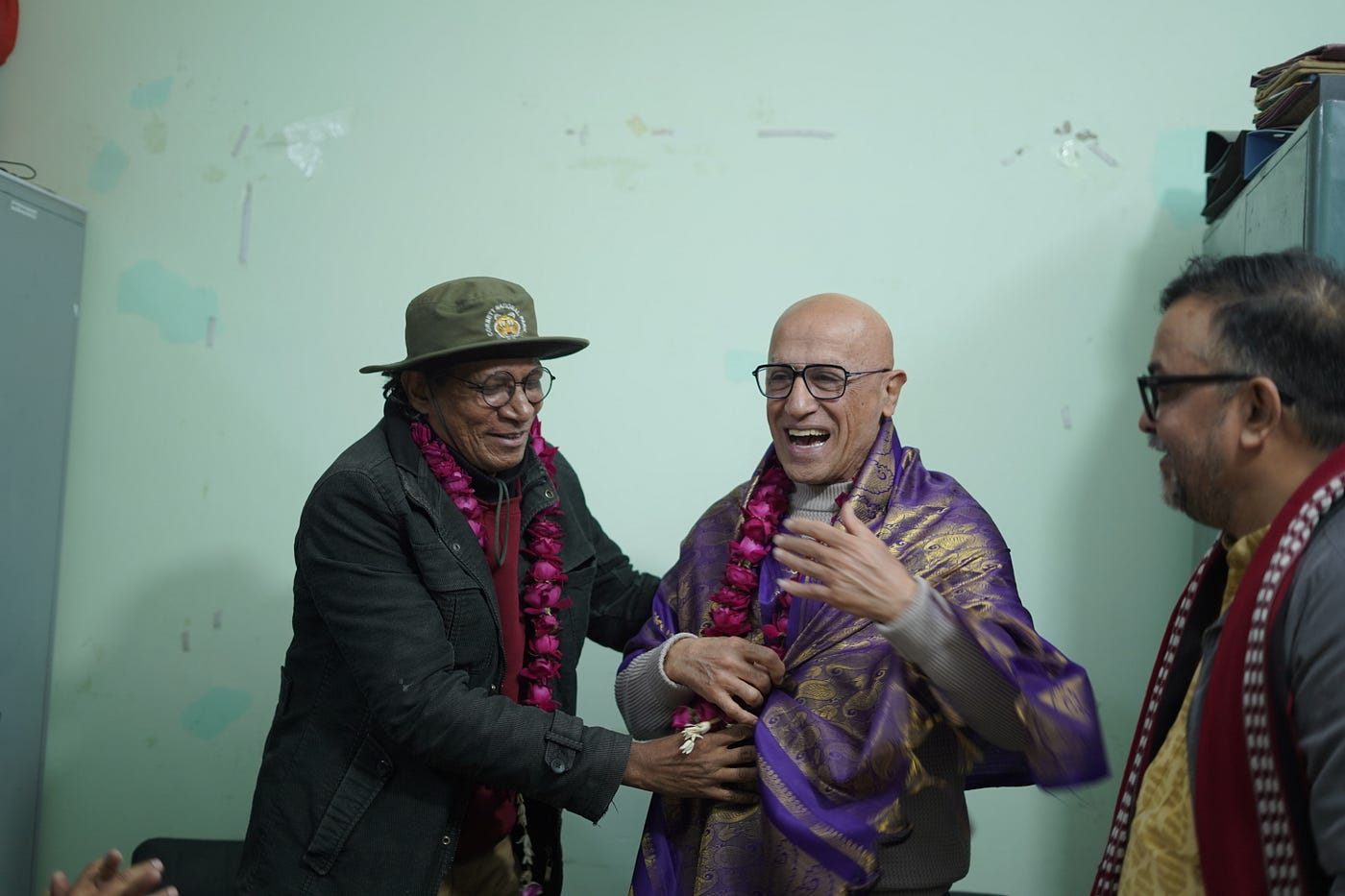
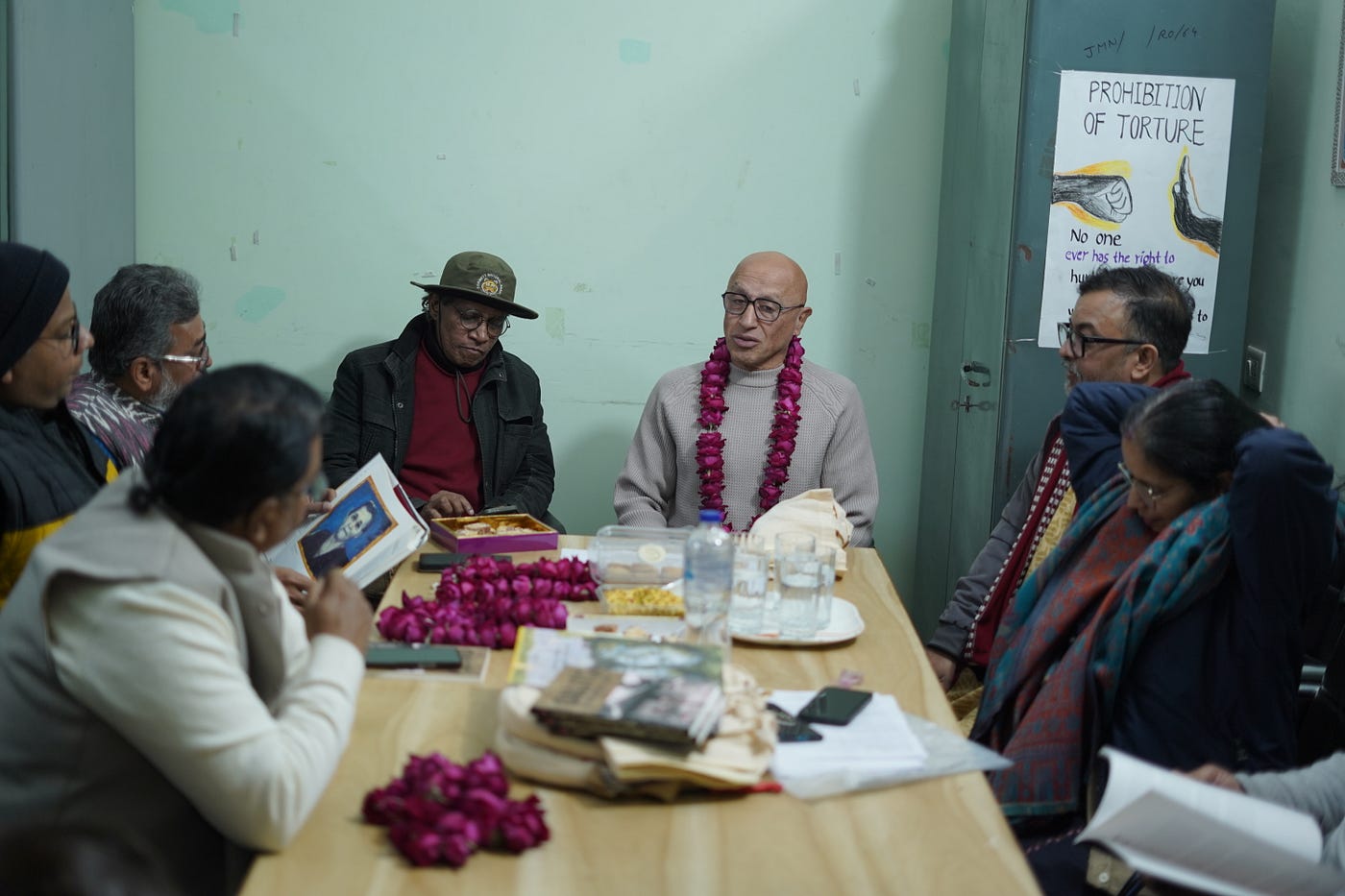
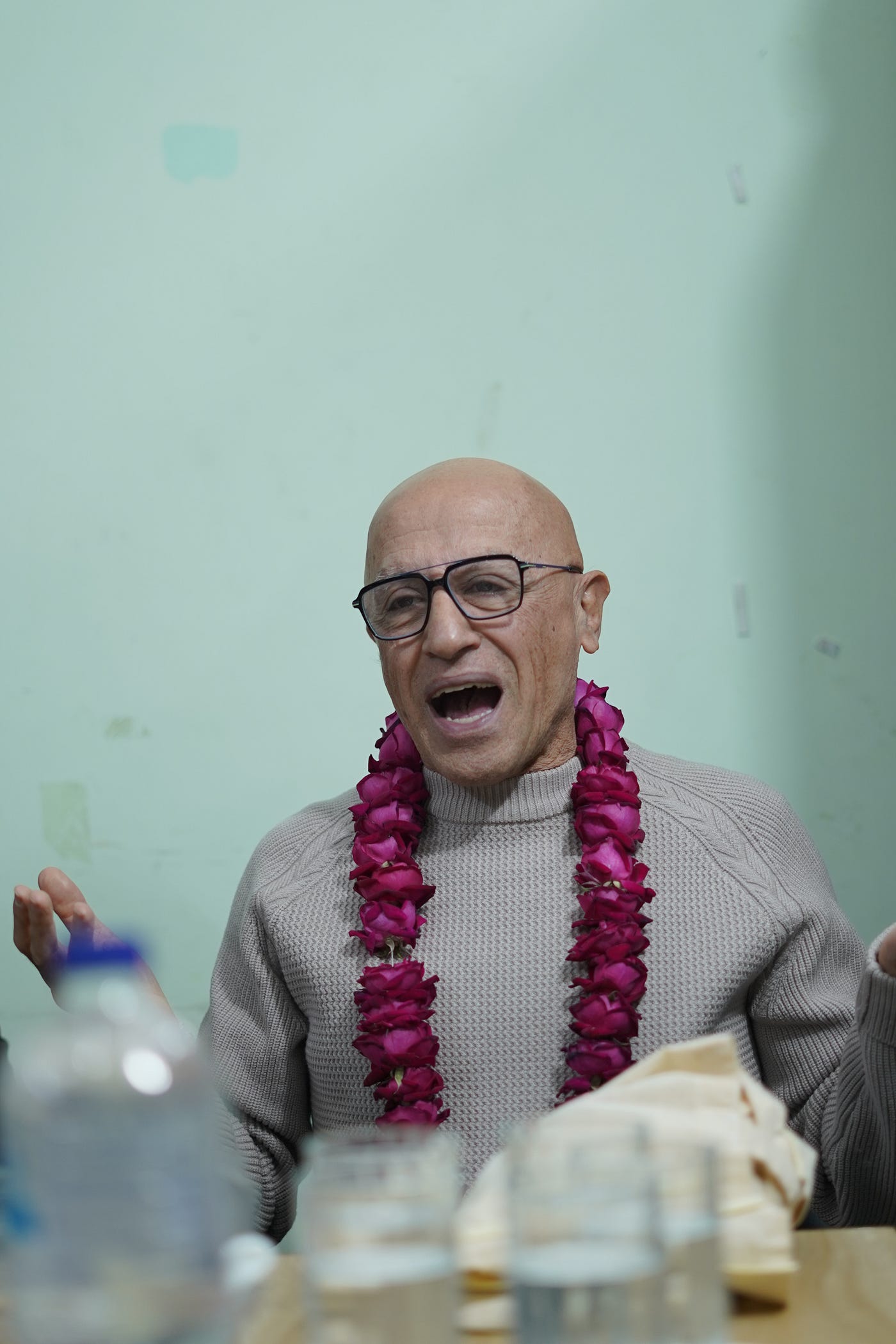
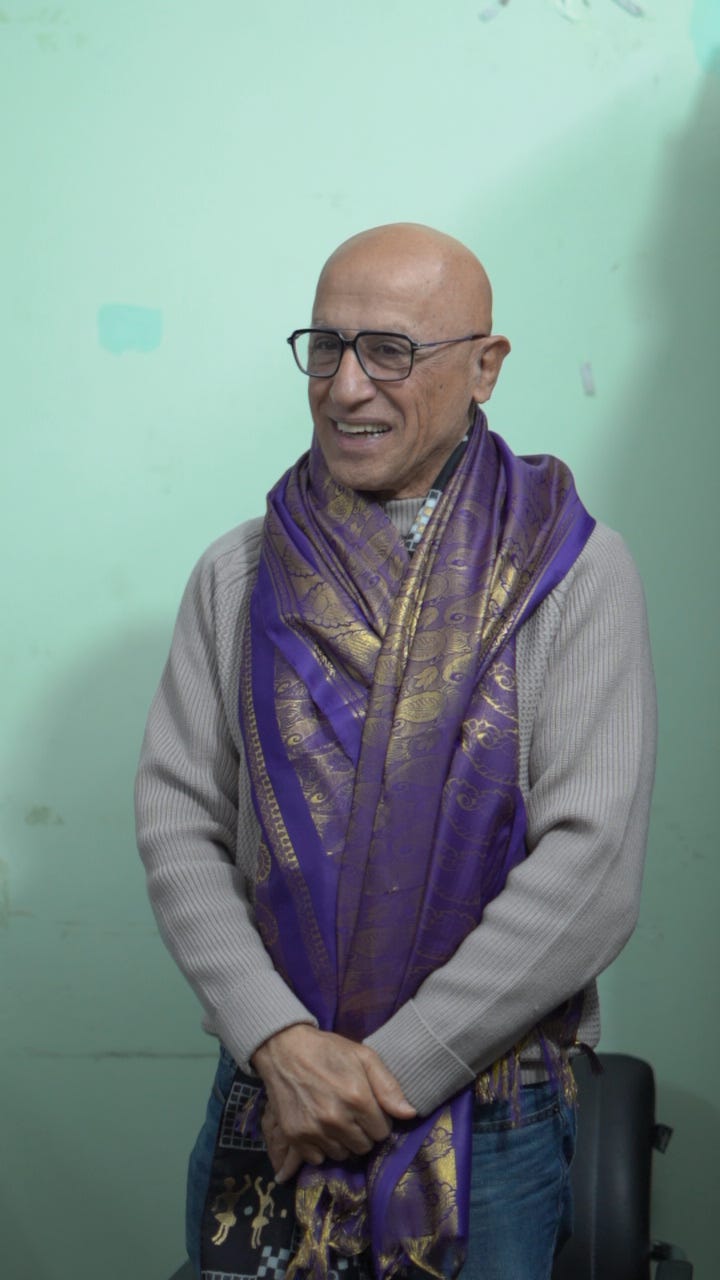
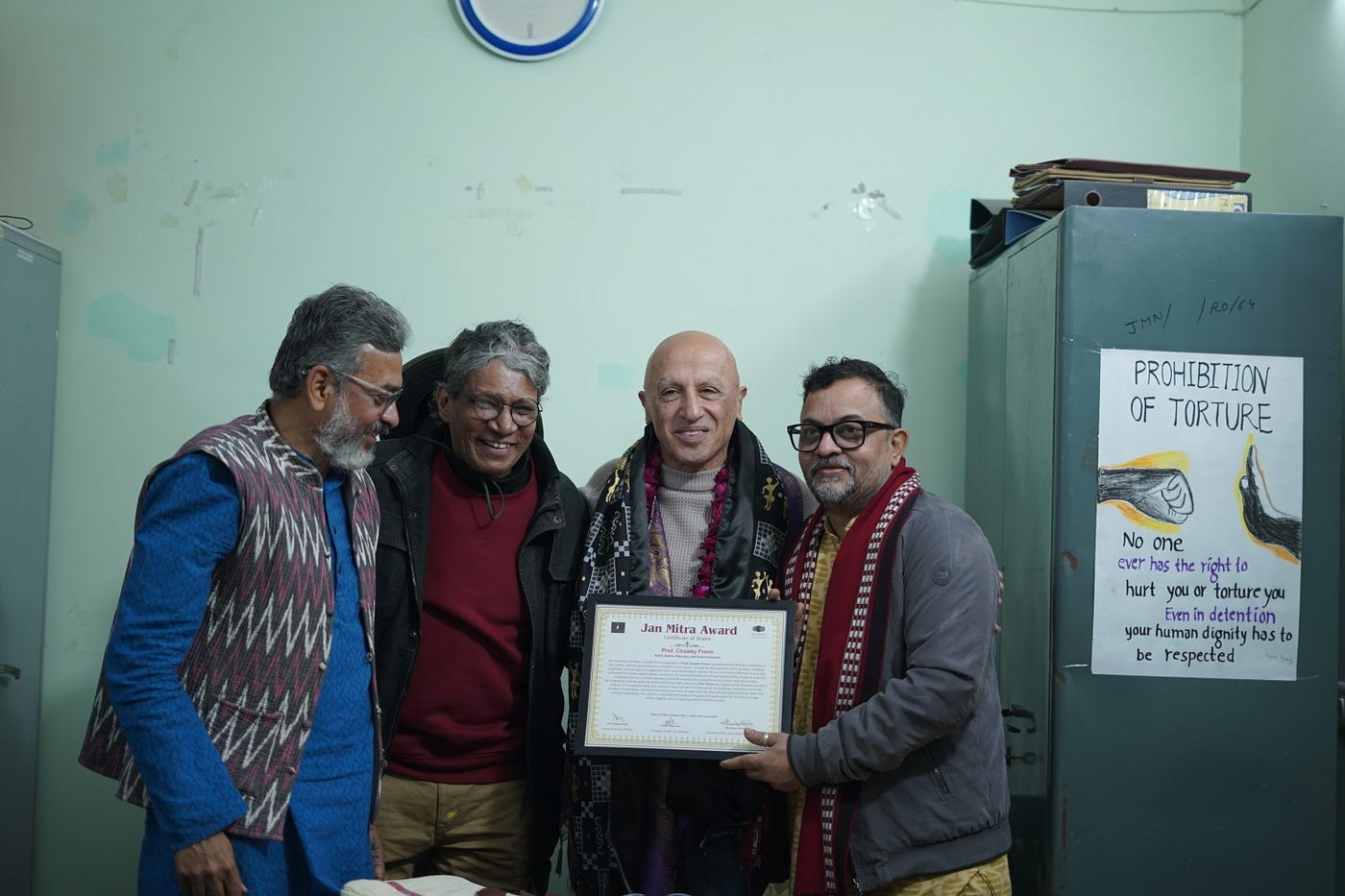
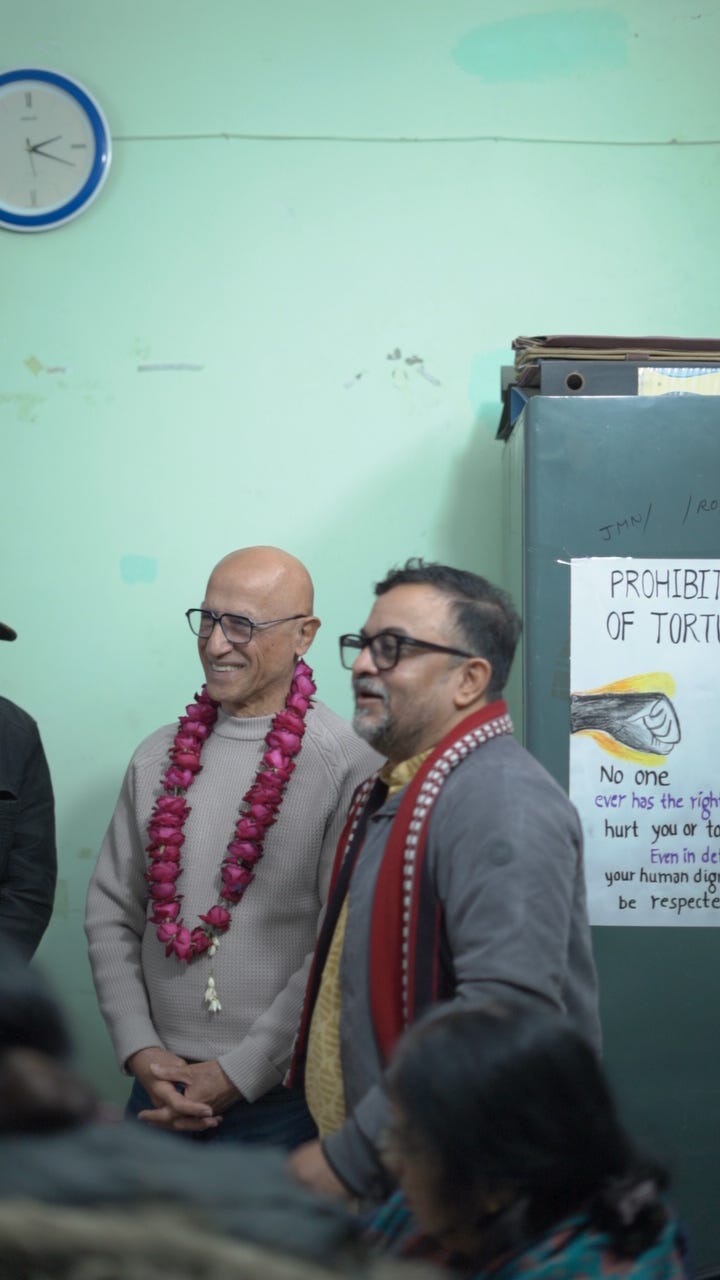
A sequence of moments from the Jan Mitra Samman ceremony at PVCHR, Varanasi (10 January 2026), capturing the evolving process of honour — from welcome and garlanding to reflection, dialogue, and celebration — as Prof. Chawky Frenn is recognised for his lifelong commitment to art, peace, and human dignity.
A Hall Filled with the People’s Presence
The PVCHR hall in Varanasi was filled beyond capacity. Delegations had arrived from Sonbhadra, Jaunpur, and Gorakhpur — regions that know exploitation, displacement, caste violence, and economic injustice not as theory but as daily reality. Human rights defenders, students, artists, survivors of violence, writers, and social workers gathered together not to watch a celebrity, but to honor a fellow traveler in struggle.
This gathering was important. Too often, global art remains disconnected from the lives of the oppressed. This ceremony bridged that divide. It placed a world-renowned artist in direct dialogue with communities who know what injustice costs.
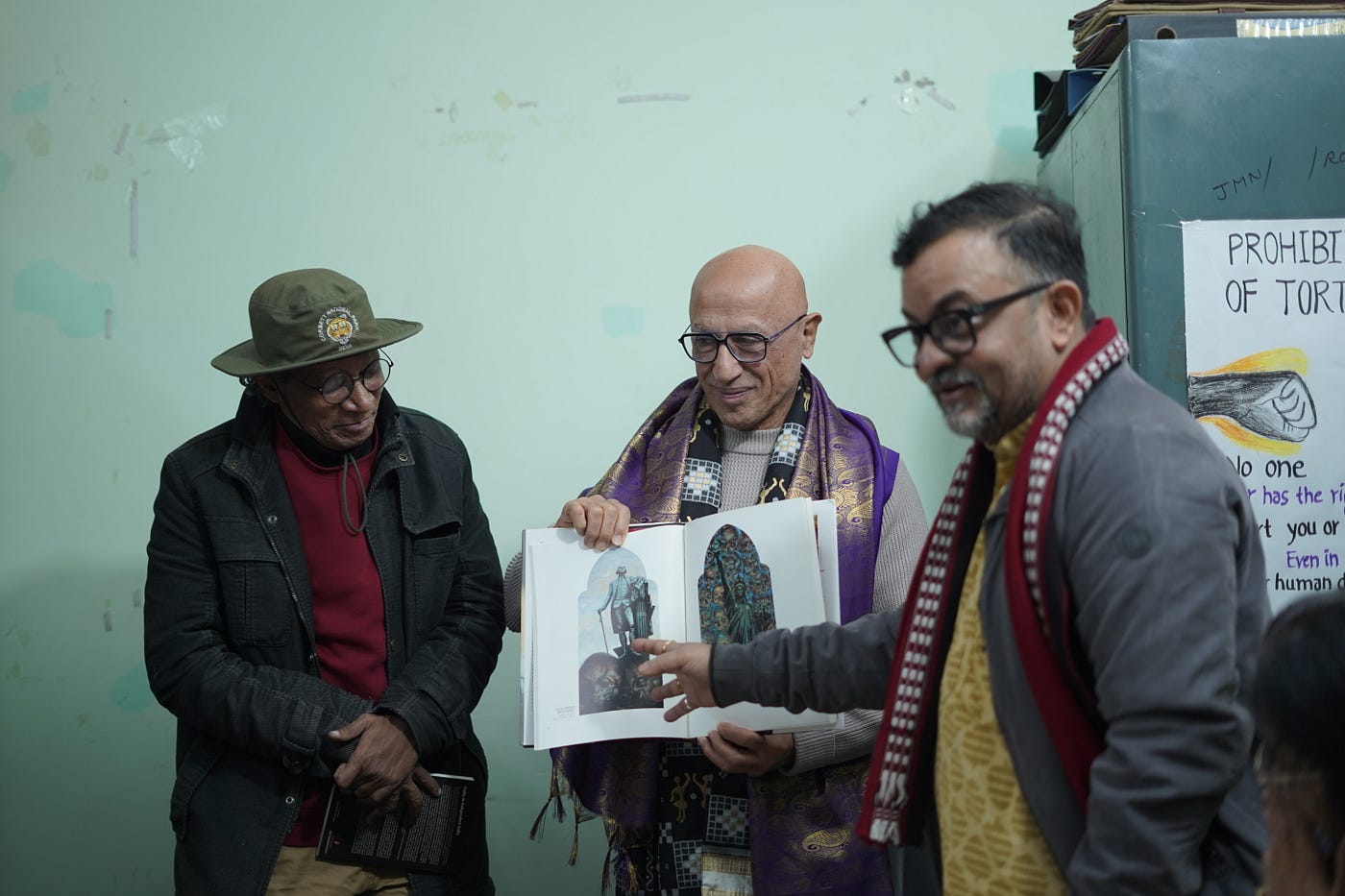
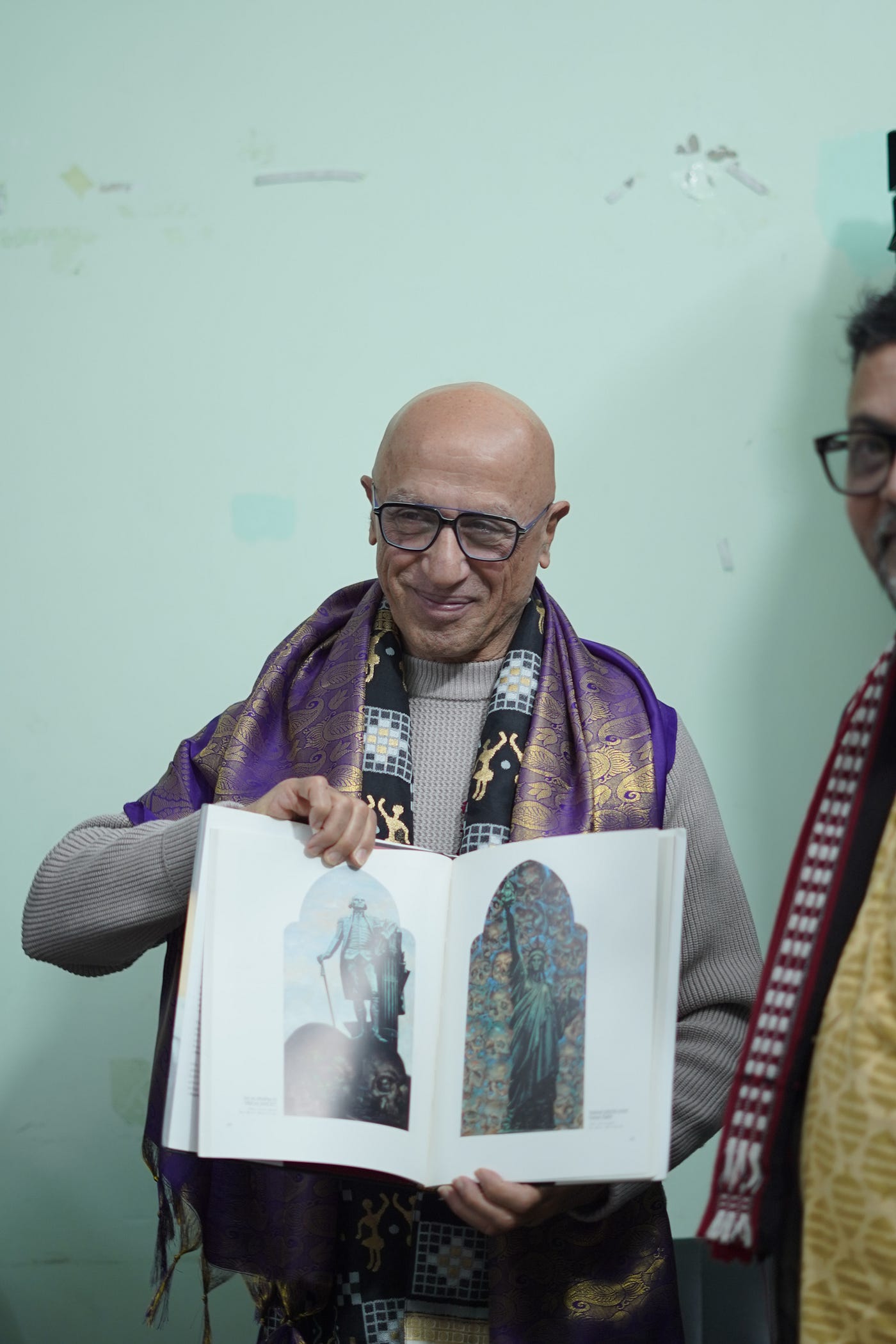
Prof. Chawky Frenn presents and discusses one of the three art books he donated to the Mirza Ghalib Literature & Art Global Club during the Jan Mitra Samman ceremony at PVCHR, Varanasi, symbolising the sharing of knowledge, culture, and global artistic dialogue.
When Gifts Become Messages
What distinguished this ceremony was not only who was honored, but how.
Professor Frenn himself donated three books on art to Shruti Nagvanshi, Managing Trustee of Jan Mitra Nyas, for the library of the Mirza Ghalib Literature and Art Global Club. This was an act of knowledge-sharing across borders — a gesture that affirmed that libraries in Varanasi are as worthy of global art resources as any elite university.
PVCHR presented Prof. Frenn with a statue of the Buddha, the Buddha of Kashi. In a world scarred by war — from Lebanon to Gaza to Ukraine — and by long-standing conflicts elsewhere, the Buddha’s image stood as a reminder that peace is not passive. It is a disciplined refusal to surrender to hatred.
Chandra Mishra gifted him his book *The Last Beggar* along with a shawl made by an entrepreneur rehabilitated from begging. This gift carried a profound social meaning. It told a story of transformation: that those whom society discards can reclaim dignity when justice and opportunity replace stigma.
A silk shawl woven by a Banarasi weaver was also placed around Prof. Frenn’s shoulders. It was not merely fabric — it was the labour, culture, and survival of generations of artisans. In honoring a global artist with a local weaver’s craft, the ceremony declared something essential: there is no hierarchy of dignity between international art and grassroots labour.
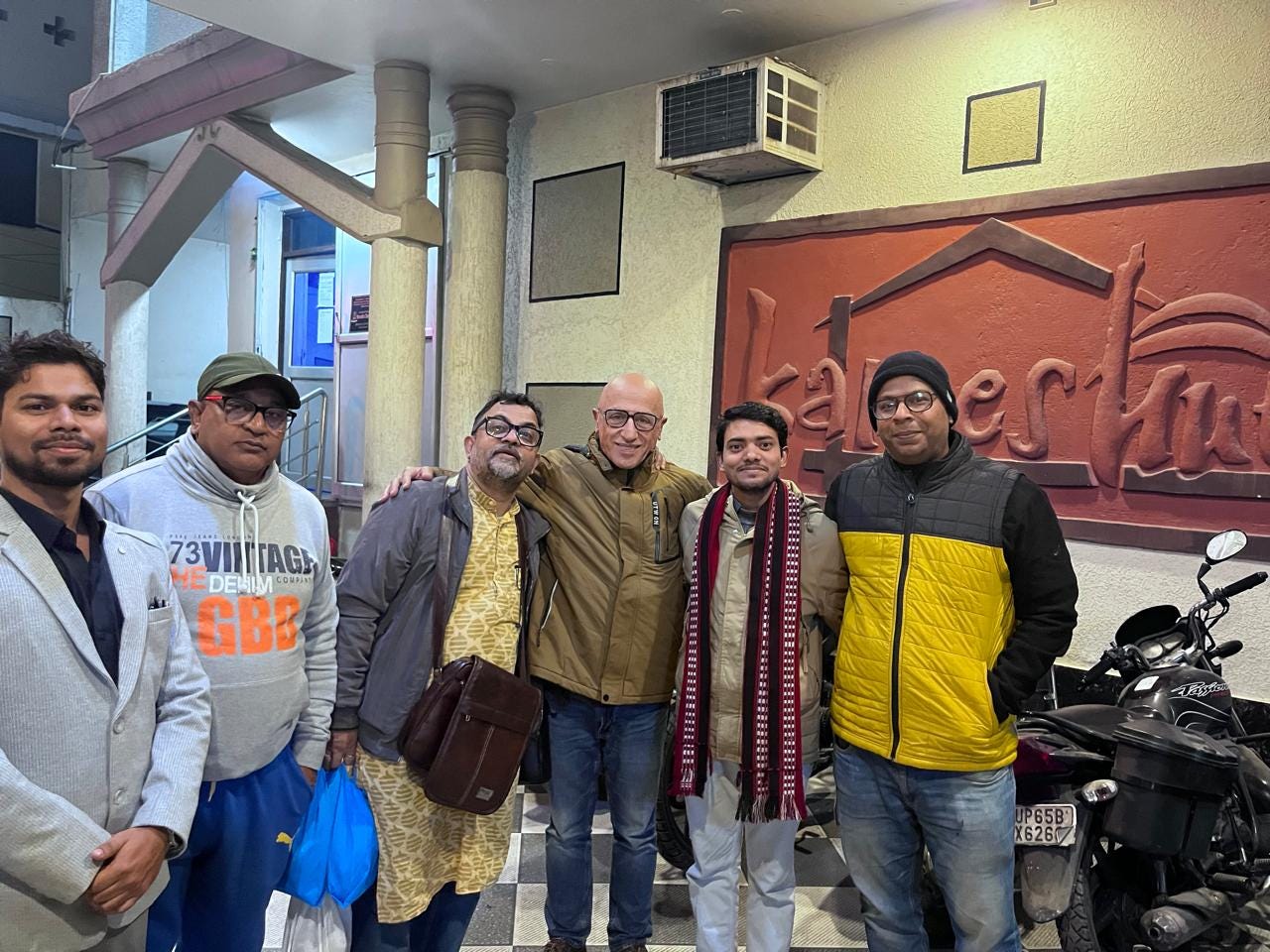
Prof. Chawky Frenn with friends, city cultural workers, and students of Banaras Hindu University (BHU) during a celebratory dinner at Kamesh Hut Hotel, Varanasi, marking a warm city welcome following the Jan Mitra Samman ceremony.
What Prof. Frenn Said
In his acceptance remarks, Prof. Frenn did not speak as a distant intellectual. He spoke as someone who has seen war and exile, and who understands the stakes of silence.
He reminded us that art must bear witness to its time, amplify marginalized voices, and question dominant narratives. He expressed deep gratitude for the recognition and for the work of PVCHR, Jan Mitra Nyas, and the Mirza Ghalib Global Club in linking art to human rights and social justice.
Why the Media Paid Attention
The wide coverage of this event — across Hindi, English, and international digital platforms — was not accidental. At a moment when art is often reduced to market value or political neutrality, this ceremony offered a different model: art as ethical engagement.
From **Jubilee Post to [Junputh](https://x.com/Junputh/status/2010298031367975046?s=20), from cultural platforms like [Mehta Art Gallery** ](https://www.mehtaartgallery.com/2026/01/11/when-art-becomes-conscience-prof-chawky-frenn-honoured-with-the-jan-mitra-samman-in-varanasi/)to grassroots Hindi media, journalists recognized that something important had happened in Varanasi. A global artist had been honored not by corporate sponsors or elite galleries, but by human rights defenders, social movements, and cultural workers rooted in the struggles of the poor.
This is why the story travelled.
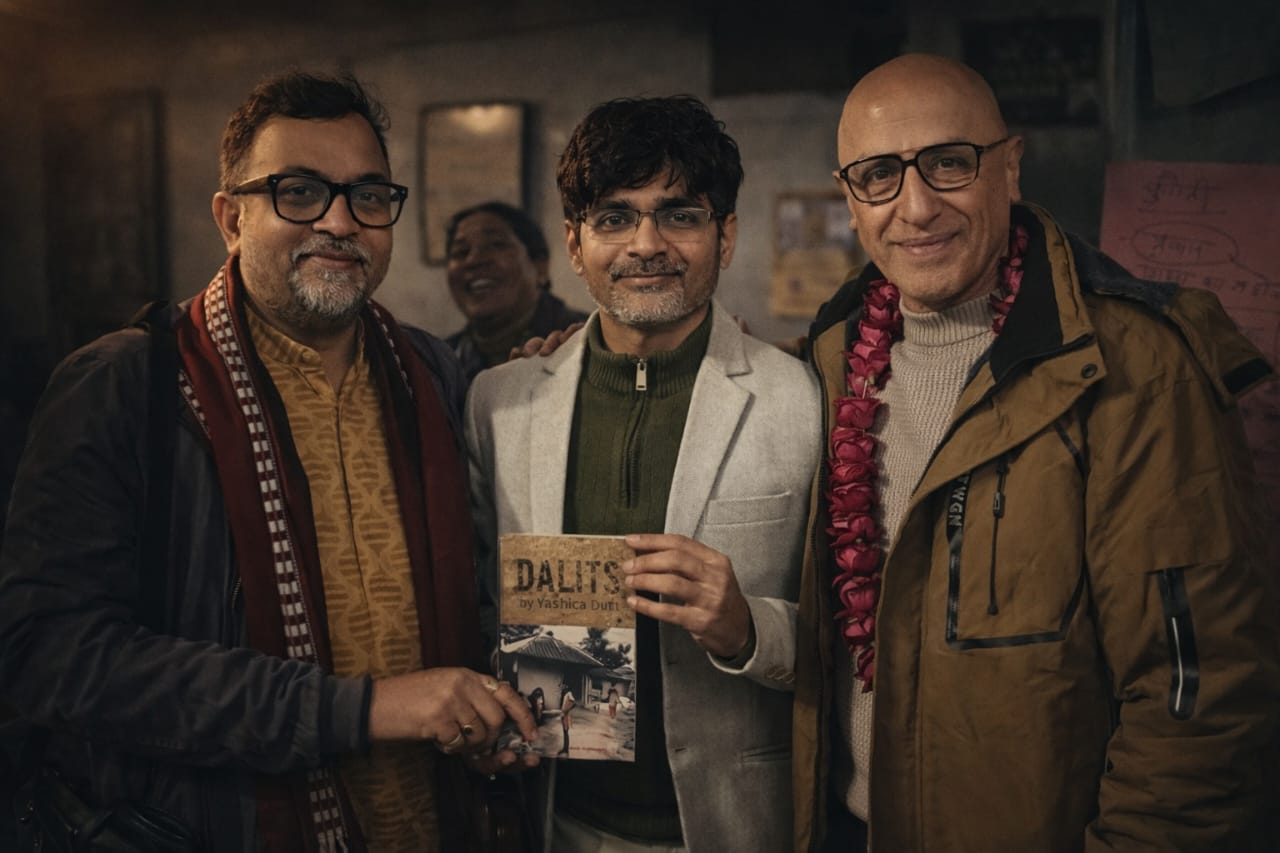
With Lenin Raghuvanshi and Vikash Srivastava (Founder, Gorakhpuriya Bhojpuriya), Prof. Chawky Frenn stands in solidarity for the global future of Bhojpuri as a mother tongue, highlighting the link between language, cultural identity, and human dignity during the Jan Mitra Samman engagements in Varanasi.
A Global Message from Kashi
The Jan Mitra Samman to Prof. Chawky Frenn sends a message that reaches far beyond India:
That art must not serve power — it must speak to power. That culture must not erase suffering — it must make it visible. That education must not be neutral — it must be ethical.
In a fractured world, we need artists who do not look away, educators who do not compromise, and cultural leaders who refuse to separate beauty from justice.
Chawky Frenn is one of those rare figures.
And on that January afternoon in Varanasi, with the voices of Sonbhadra, Jaunpur, and Gorakhpur in the hall and the eyes of the media on the event, the Jan Mitra Samman became what it was always meant to be:
A global affirmation that human dignity still has allies — and that art, when guided by conscience, remains one of them.
메타데이터
- post_id
- 4ebf6d913e0a
- slug
- when-art-becomes-conscience-why-the-jan-mitra-samman-to-prof-chawky-frenn-matters-to-the-world-4ebf6d913e0a
- url
- https://medium.com/@lenin_75290/when-art-becomes-conscience-why-the-jan-mitra-samman-to-prof-chawky-frenn-matters-to-the-world-4ebf6d913e0a
- canonical_url
- https://medium.com/@lenin_75290/when-art-becomes-conscience-why-the-jan-mitra-samman-to-prof-chawky-frenn-matters-to-the-world-4ebf6d913e0a
- author_url
- https://medium.com/@lenin_75290
- status
- ok
- fetched_at
- 2026-06-29 01:02:39