Indexing on Solana: A Complete Guide to Deposits, Withdrawals, Memos, and Security
Building payment infrastructure on Solana requires understanding how to properly index blockchain data for centralized applications…
Indexing on Solana: A Complete Guide to Deposits, Withdrawals, Memos, and Security
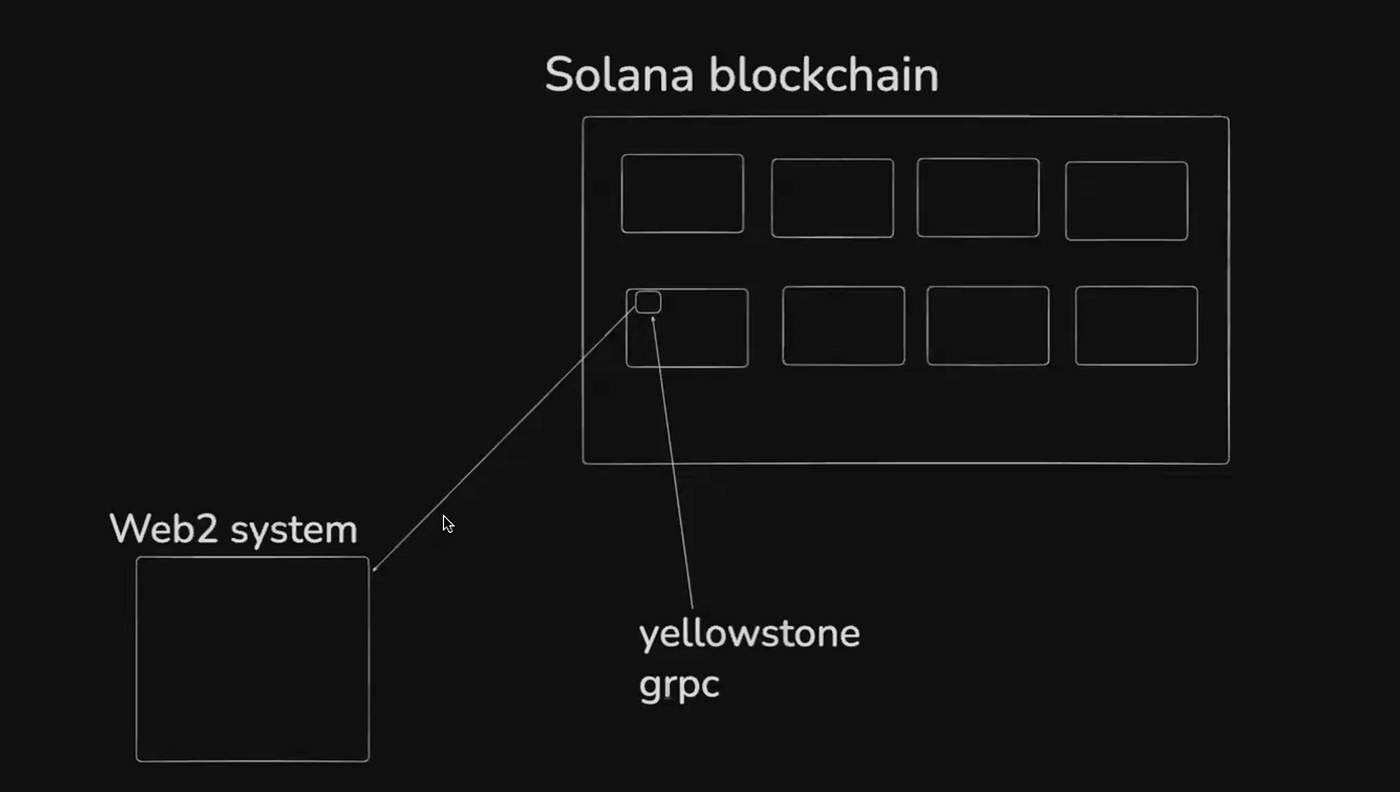
Building payment infrastructure on Solana requires understanding how to properly index blockchain data for centralized applications. Whether we’re building a centralized exchange (CEX), crypto gateway, or e-commerce platform, indexing is the foundation that enables us to track user deposits, process withdrawals securely, and maintain accurate balances.
This comprehensive guide covers everything we need to know about Solana indexing, from basic concepts to advanced security considerations for production systems.
What is Indexing?
Indexing means copying over the state of a blockchain to a Web2 system. In the context of Solana, it involves extracting specific transaction data from the high-throughput blockchain and storing it in traditional databases like PostgreSQL or MongoDB.
The goal isn’t to copy the entire blockchain — that would be expensive and unnecessary. Instead, we focus on indexing specific addresses or transactions relevant to our application. For example, we might want to track:
- All transactions to our exchange’s deposit address
- Activity on specific liquidity pools
- Transactions involving particular token contracts
- User deposits and withdrawals
The Solana blockchain processes hundreds of transactions per second since Genesis, generating terabytes of data. Our indexing system needs to efficiently filter this stream to capture only the transactions we care about.
How to Index: Yellowstone & Geyser
The most robust approach to Solana indexing is using Yellowstone, built on top of the Geyser plugin. These tools allow us to subscribe to real-time blockchain events as they happen.
Understanding the Architecture
When validators on the Solana network receive transactions and create blocks, they can run additional processes (plugins) that extract and forward specific transaction data. Yellowstone provides a gRPC interface to these plugins, enabling us to:
- Subscribe to specific accounts or programs
- Filter transactions based on our criteria
- Receive real-time updates as transactions are confirmed
Available RPC Providers
Several providers offer Yellowstone services:
- Triton: Created Yellowstone, offers premium indexing services
- Helios: Competitor with their own indexing tools
- Quicknode: Provides RPC and indexing infrastructure
- Alchemy: Web3 infrastructure provider
Pricing and Access
Free Yellowstone servers exist (like parafi.tech) but with limitations—typically only allowing subscriptions to predefined accounts like the vote program. For production use, expect to pay:
- Shift.io: ~$200/month for one connection
- Titan: ~$1000/month for premium access
- Custom validators: Exchanges often run their own validators with Geyser plugins
The Problem with Naive Payment Flows
Before diving into proper indexing solutions, let’s understand why simple payment flows fail. Consider a basic e-commerce site selling t-shirts for 0.5 SOL:
Broken Flow:
- User sends 0.5 SOL to our address
- User’s client gets transaction signature
- Client forwards signature to our backend
- Backend verifies signature and ships product
Critical Problems:
1. Lack of Atomicity (Client Crash) If the user’s client crashes after step 1 but before step 3, the money is sent but our backend never knows. The user loses their SOL with no product shipped.
2. Transaction Sniping (Impersonation) An attacker can monitor our payment address, grab any transaction signature, and claim it with their own session cookie before the real user can. Our backend has no way to verify who actually sent the payment.
The Solution: Memo Program + Indexing
Solana’s Memo Program (MemoSq4gqABAXKb96qnH8TysNcWxMyWCqXgDLGmfcHr) provides the solution. This program logs arbitrary strings on-chain, allowing us to attach identifiers to transactions.
Secure Architecture:
- Frontend requests to make a purchase
- Web2 Backend generates unique identifier (random number or user ID) and returns it
- Frontend constructs transaction with TWO instructions:
system_program::transferto send SOL to our addressmemo_programcall with the unique identifier - User signs and sends this atomic transaction
- Indexer (Yellowstone client) sees the transaction and parses the memo
- Processor uses the identifier to credit the correct user
Implementation Example:
import {
  Connection,
  Keypair,
  LAMPORTS_PER_SOL,
  SystemProgram,
  Transaction,
  sendAndConfirmTransaction
} from "@solana/web3.js";
import { createMemoInstruction } from "@solana/spl-memo";

// Connect to Solana cluster
const connection = new Connection("http://localhost:8899", "confirmed");

// Create keypair for the fee payer
const feePayer = Keypair.generate();

// Request airdrop
const airdropSignature = await connection.requestAirdrop(
  feePayer.publicKey,
  LAMPORTS_PER_SOL
);

// Confirm airdrop
const { blockhash, lastValidBlockHeight } =
  await connection.getLatestBlockhash();
await connection.confirmTransaction({
  signature: airdropSignature,
  blockhash,
  lastValidBlockHeight
});

// Create transaction with transfer and memo
const memoInstruction = createMemoInstruction("Hello, World!");
const sendSolana = SystemProgram.transfer({
  fromPubkey: feePayer.publicKey,
  toPubkey: Keypair.generate().publicKey,
  lamports: 0.5 * 1000_000_000
});

const transaction = new Transaction()
  .add(sendSolana)
  .add(memoInstruction);

// Sign and send
const transactionSignature = await sendAndConfirmTransaction(
  connection,
  transaction,
  [feePayer]
);
console.log("Transaction Signature: ", transactionSignature);
Why This Works:
- Solves Atomicity: The indexer runs independently and will always see confirmed transactions
- Prevents Sniping: Payment and user identifier are locked together in one atomic transaction
- Cost Effective: We can use simple RPC polling instead of expensive Yellowstone for single-address indexing
Required Memo Extension for Token Accounts
For enhanced security with token transfers, Solana offers the Required Memo extension. This ensures all incoming token transfers must include a memo.
Creating Token Account with Required Memo:
import {
  TOKEN_2022_PROGRAM_ID,
  getAccountLen,
  ExtensionType,
  createInitializeAccountInstruction,
  createEnableRequiredMemoTransfersInstruction,
} from "@solana/spl-token";

export async function createTokenWithMemoExtension(
  connection: Connection,
  payer: Keypair,
  tokenAccountKeypair: Keypair,
  mint: PublicKey,
): Promise<string> {
  // Create account instruction
  const accountLen = getAccountLen([ExtensionType.MemoTransfer]);
  const lamports = await connection.getMinimumBalanceForRentExemption(accountLen);

  const createAccountInstruction = SystemProgram.createAccount({
    fromPubkey: payer.publicKey,
    newAccountPubkey: tokenAccountKeypair.publicKey,
    space: accountLen,
    lamports,
    programId: TOKEN_2022_PROGRAM_ID,
  });

  // Initialize account instruction
  const initializeAccountInstruction = createInitializeAccountInstruction(
    tokenAccountKeypair.publicKey,
    mint,
    payer.publicKey,
    TOKEN_2022_PROGRAM_ID,
  );

  // Enable required memo transfers instruction
  const enableRequiredMemoTransfersInstruction =
    createEnableRequiredMemoTransfersInstruction(
      tokenAccountKeypair.publicKey,
      payer.publicKey,
      undefined,
      TOKEN_2022_PROGRAM_ID,
    );

  // Send transaction
  const transaction = new Transaction().add(
    createAccountInstruction,
    initializeAccountInstruction,
    enableRequiredMemoTransfersInstruction,
  );

  return await sendAndConfirmTransaction(
    connection,
    transaction,
    [payer, tokenAccountKeypair],
  );
}
Transferring to Required Memo Account:
const message = "Hello, Solana";

const transaction = new Transaction().add(
  new TransactionInstruction({
    keys: [{ pubkey: payer.publicKey, isSigner: true, isWritable: true }],
    data: Buffer.from(message, "utf-8"),
    programId: new PublicKey("MemoSq4gqABAXKb96qnH8TysNcWxMyWCqXgDLGmfcHr"),
  }),
  createTransferInstruction(
    sourceAccount,
    destinationAccount,
    payer.publicKey,
    transferAmount,
    undefined,
    TOKEN_2022_PROGRAM_ID,
  ),
);

await sendAndConfirmTransaction(connection, transaction, [payer]);const message = "Hello, Solana";

const transaction = new Transaction().add(
  new TransactionInstruction({
    keys: [{ pubkey: payer.publicKey, isSigner: true, isWritable: true }],
    data: Buffer.from(message, "utf-8"),
    programId: new PublicKey("MemoSq4gqABAXKb96qnH8TysNcWxMyWCqXgDLGmfcHr"),
  }),
  createTransferInstruction(
    sourceAccount,
    destinationAccount,
    payer.publicKey,
    transferAmount,
    undefined,
    TOKEN_2022_PROGRAM_ID,
  ),
);

await sendAndConfirmTransaction(connection, transaction, [payer]);
Deposit Architecture Patterns
Pattern 1: Memo-Based Deposits (Recommended)
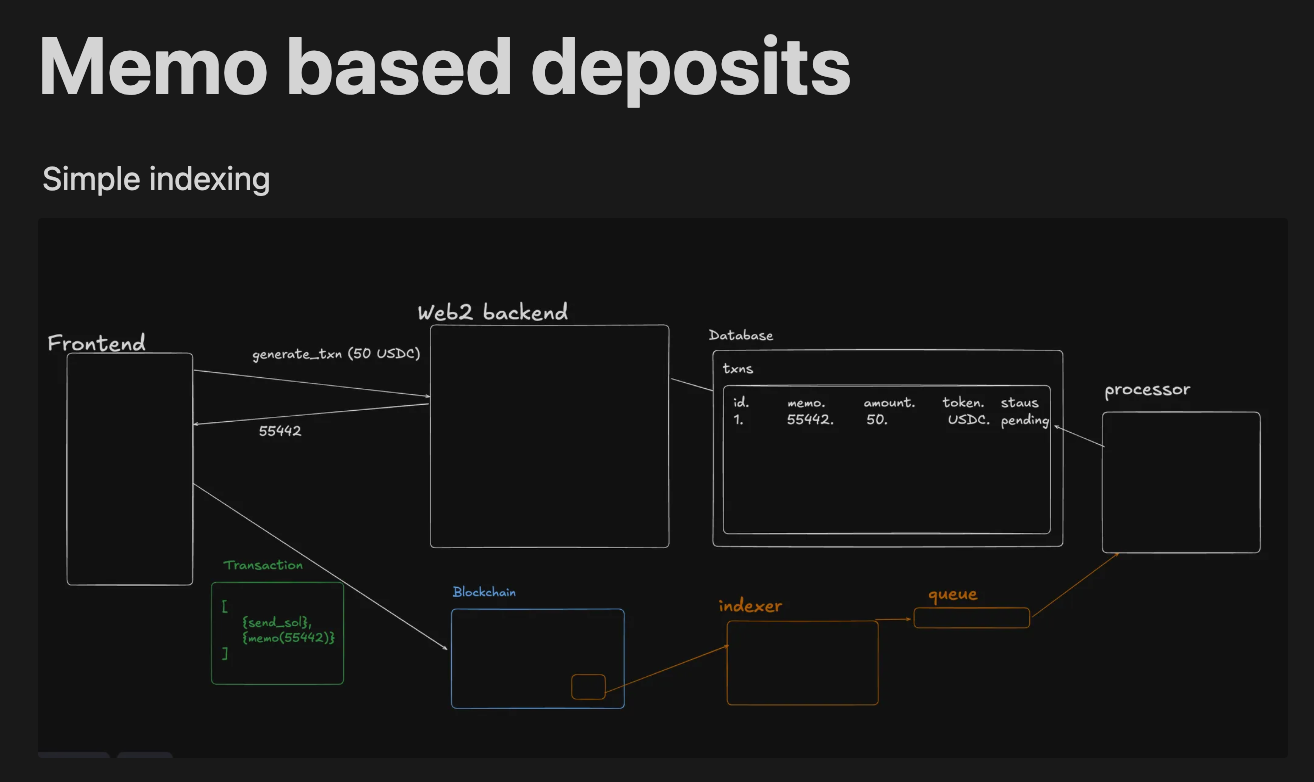
All users send funds to a single address with unique memo identifiers:
Advantages:
- Simple to implement and maintain
- Cost-effective indexing (can use simple RPC polling)
- No private key management complexity
- Perfect for most applications
Process:
- User requests deposit
- Backend generates unique seed/nonce, stores in database as ‘pending’
- Frontend creates transaction with transfer + memo containing seed
- Indexer monitors single address and processes transactions
- Processor matches memo to database record and updates user balance
Pattern 2: Unique Deposit Addresses (Binance-Style)
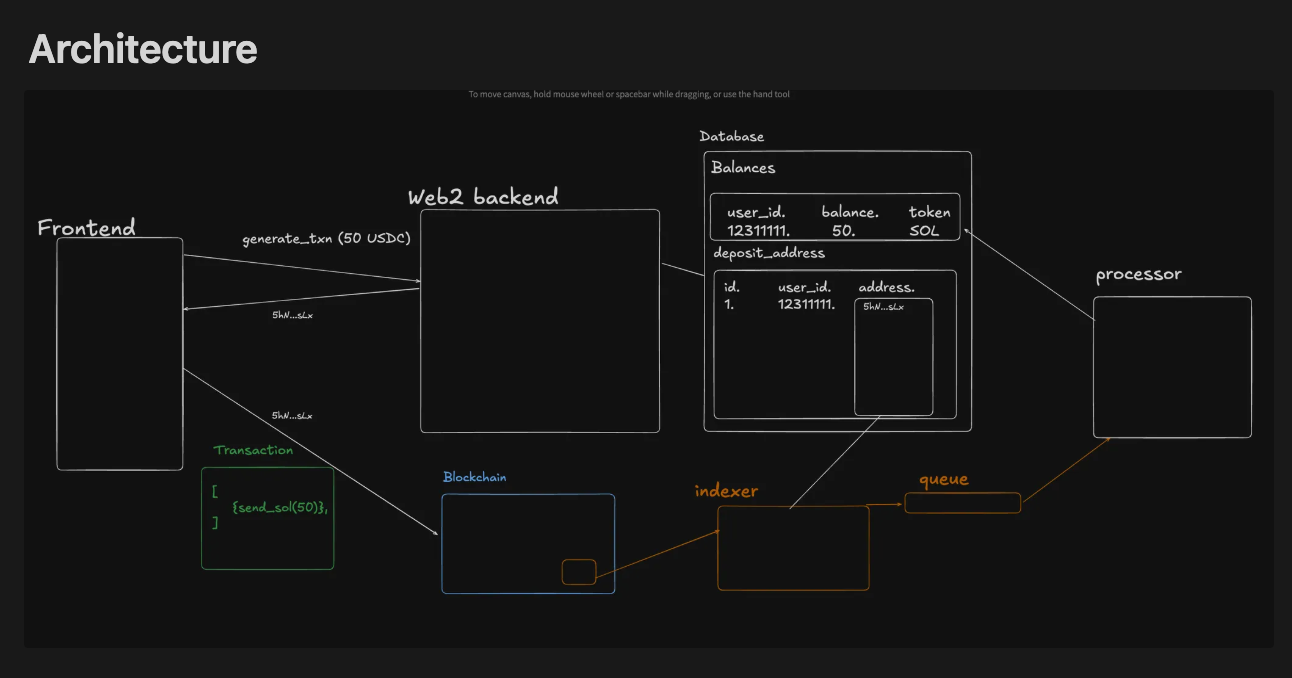
Every user gets their own unique deposit address:
Advantages:
- Familiar to users from traditional exchanges
- Clear separation of user funds
- Easy to track individual user activity
Disadvantages:
- Complex private key management for millions of addresses
- Requires fund consolidation (“sweeper”) process
- Higher gas costs for moving funds between addresses
- More complex indexing (must monitor many addresses)
The Sweeper Problem
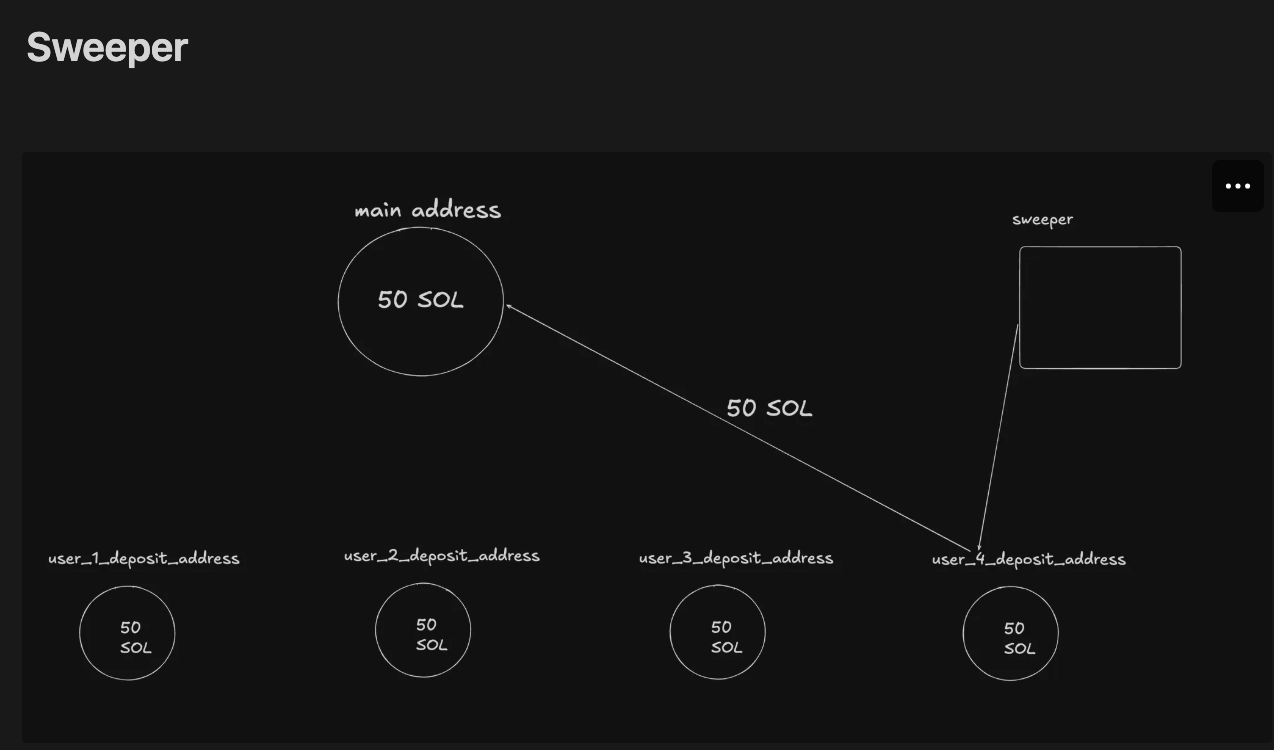
When using unique deposit addresses, funds get scattered across thousands of wallets. A sweeper process must periodically consolidate these funds:
- Monitor all user deposit addresses for incoming funds
- Calculate gas fees needed to move funds from each address
- Send SOL to addresses that need gas for token transfers
- Sweep funds from deposit addresses to main treasury
- Timing sweeps during low gas periods for cost efficiency
This complexity makes memo-based deposits preferable for most applications.
Withdrawal Architecture and Security
Withdrawals are the most critical and dangerous operations in any centralized crypto platform. Once funds leave our control, they cannot be recovered, making security paramount.
The Withdrawal Problem
When a user wants to withdraw 100 SOL from their 400 SOL balance:
- The database shows 400 SOL belongs to the user
- The actual SOL sits in our centralized “hot wallet”
- We must atomically reduce the user’s database balance AND send blockchain transaction
- Any failure in this process can result in lost funds or double-spending
Naive Withdrawal Flow (DANGEROUS):
app.post('/withdraw', (req, res) => {
  // 1. Check user's balance (400 SOL)
  // 2. REDUCE balance in DB (set to 300 SOL)
  db.balances.update({ userId: 1, currency: 'SOL' }, { $inc: -100 });
// 3. Get MPCs to sign withdrawal transaction
  const signature = MPC1.sign() + MPC2.sign() + MPC3.sign();
  // 4. Send transaction to blockchain
  connection.sendTransaction(signature);
});
Critical Problems:
1. Database Before Blockchain If we reduce the balance first but the blockchain transaction fails (network issues, old blockhash), the user loses their funds in the database but the money never leaves our wallet.
2. Blockchain Before Database If the blockchain transaction succeeds but the database update fails (DB crash), the user receives their 100 SOL but still has 400 SOL in their account — they can withdraw again (double-spend).
3. Race Conditions Multiple simultaneous withdrawal requests could all check the same balance, all see sufficient funds, and all proceed — allowing withdrawal of more funds than available.
Robust Withdrawal Implementation
Queue-Based Processing
The solution is using a message queue system (like Kafka) for sequential processing:
- API Endpoint validates request and places it in withdrawal queue
- Single Worker process pulls requests one by one:
- Checks and locks user’s balance
- Creates and signs transaction
- Sends transaction to blockchain
- Updates database on confirmation
- Acknowledges queue message
Idempotent Withdrawals
To handle worker crashes, we must make withdrawals idempotent (safe to retry):
Critical Insight: Store signature BEFORE broadcasting
async function processWithdrawal(withdrawalRequest) {
  // 1. Create withdrawal transaction
  const transaction = createWithdrawalTx(withdrawalRequest);

  // 2. Get MPC signatures
  const signature = await getMPCSignatures(transaction);

  // 3. STORE signature in database BEFORE broadcasting
  await db.withdrawals.update(withdrawalRequest.id, {
    signature: signature,
    status: 'signed'
  });

  // 4. NOW broadcast to blockchain
  await connection.sendTransaction(signature);

  // 5. Wait for confirmation and update status
  await confirmTransaction(signature);
  await db.withdrawals.update(withdrawalRequest.id, { status: 'completed' });
  await updateUserBalance(withdrawalRequest);
}
If the worker crashes after storing the signature, a new worker can:
- Check if signature exists in database
- Query blockchain to see if transaction was confirmed
- If confirmed: just update database status
- If not confirmed: safely create new transaction
Advanced Security: Defending Against Insider Threats
Attack Vector 1: Stolen JWT Secrets
Threat: Malicious insider or hacker obtains JWT secret key, can forge user cookies and call withdrawal API.
Mitigation: Multi-Factor Authentication (MFA)
- Withdrawal API requires valid OTP sent to user’s email/phone
- Even with stolen cookies, attacker needs access to user’s communication channels
Attack Vector 2: Internal System Bypass
Threat: Malicious developer with server access bypasses public API entirely, directly calls internal MPC functions.
Mitigation: Cryptographic Handshake Between Browser and MPCs
- Key Generation: Upon login, user’s browser generates ephemeral public/private key pair
- Key Registration: Using MFA, browser registers public key directly with each MPC server
- Request Signing: For withdrawals, browser signs request with private key
- Verification: MPCs verify signature against registered public key before signing blockchain transaction
This ensures that even with full backend access, attackers cannot forge withdrawal requests without the user’s private key (which never leaves the browser).
Implementation Example:
// Browser-side: Generate and register keys
const keyPair = await crypto.subtle.generateKey(
  {
    name: "ECDSA",
    namedCurve: "P-256",
  },
  true,
  ["sign", "verify"]
);
// Register public key with MPCs (after MFA verification)
const publicKeyJWK = await crypto.subtle.exportKey("jwk", keyPair.publicKey);
await registerKeyWithMPCs(publicKeyJWK, otpToken);
// Sign withdrawal request
const withdrawalRequest = { amount: 100, address: "...", userId: 12345 };
const signature = await crypto.subtle.sign(
  { name: "ECDSA", hash: "SHA-256" },
  keyPair.privateKey,
  new TextEncoder().encode(JSON.stringify(withdrawalRequest))
);
// Send signed request to backend
await fetch('/withdraw', {
  method: 'POST',
  body: JSON.stringify({ request: withdrawalRequest, signature: signature })
});
Multi-Party Computation (MPC) for Fund Security
Modern exchanges secure their hot wallets using MPC clusters instead of single private keys:
MPC Architecture:
- 3–5 MPC nodes each hold a “share” of the private key
- Threshold signing requires majority (e.g., 3 of 5) to sign transactions
- No single point of failure — compromising one node doesn’t expose funds
- Geographic distribution of nodes for additional security
MPC Workflow:
- Withdrawal request validated and placed in queue
- Worker process creates unsigned transaction
- Transaction sent to MPC cluster for signing
- Each MPC node validates request and provides signature share
- Shares combined to create final transaction signature
- Signed transaction broadcast to blockchain
Proof of Reserves: Building Trust
Leading exchanges are implementing Proof of Reserves to demonstrate they hold sufficient funds to cover user balances. As highlighted by Backpack’s recent announcement, this involves:
Core Components:
- Daily Balance Attestations: Cryptographic proofs of all user balances
- Merkle Tree Inclusion Proofs: Users can verify their balance is included in the total
- External Audits: Third-party verification of reserve calculations
- Real-time Reconciliation: Continuous monitoring of asset vs. liability balance
Implementation Considerations:
- Physical Balances Only: Include assets that can be “touched” on-chain (available balances, open orders, unborrowed lends)
- Margin Risk Management: Over-collateralized borrows must be factored into reserve calculations
- Fiat Complications: Traditional bank deposits require special handling (deposit tokens)
- Perpetual Futures: Real-time PnL settlement automatically included in reserves
Cost Optimization Strategies
Cheap Indexing for Single Address
For applications using memo-based deposits, we can avoid expensive Yellowstone subscriptions:
// Simple polling indexer
async function pollForTransactions() {
  const signatures = await connection.getSignaturesForAddress(
    ourDepositAddress,
    { limit: 50 }
  );

  for (const sig of signatures) {
    if (!processedSignatures.has(sig.signature)) {
      const transaction = await connection.getTransaction(sig.signature);
      processMemoTransaction(transaction);
      processedSignatures.add(sig.signature);
    }
  }
}
// Run every 20 seconds
setInterval(pollForTransactions, 20000);
This approach costs nearly nothing compared to $200–1000/month Yellowstone subscriptions.
When to Use Expensive Indexing
Reserve Yellowstone/Geyser for scenarios requiring:
- Multiple address monitoring (unique deposit addresses)
- Real-time processing (high-frequency trading, liquidations)
- Program-wide monitoring (DeFi protocol indexing)
- Cross-chain arbitrage (sub-second transaction processing)
Production Deployment Checklist
Infrastructure Requirements:
- Message queue system (Kafka/Redis) for withdrawal processing
- Database with proper indexing on user_id, transaction signatures
- MPC cluster for secure transaction signing
- Monitoring and alerting for all critical processes
- Geographic redundancy for indexing infrastructure
Security Measures:
- MFA required for all withdrawal operations
- Browser-MPC cryptographic handshake implemented
- Regular security audits and penetration testing
- Incident response procedures documented
- Key rotation procedures for MPC nodes
Operational Procedures:
- Daily proof of reserves generation
- User balance reconciliation monitoring
- Withdrawal queue monitoring and alerting
- Regular sweeper execution (if using unique addresses)
- Gas fee optimization for blockchain operations
Conclusion
Building robust indexing infrastructure on Solana requires careful consideration of security, cost, and operational complexity. The memo-based deposit approach provides an excellent balance of simplicity and security for most applications, while proper withdrawal architecture with MPC security and queue-based processing ensures funds remain safe.
Key takeaways for implementation:
- Use memo-based deposits unless we have specific requirements for unique addresses
- Implement proper withdrawal queues with idempotent processing
- Secure hot wallets with MPC clusters and cryptographic handshakes
- Consider proof of reserves for building user trust
- Optimize costs by avoiding expensive indexing when simple polling suffices
The landscape of centralized crypto infrastructure continues evolving toward more transparent, verifiable, and secure systems. By implementing these patterns correctly, we can build applications that provide the user experience of centralized systems with the security guarantees that approach decentralized protocols.
Written with ❤ by Prapti for solana community!
메타데이터
- post_id
- 4ecb2d2f3f69
- slug
- indexing-on-solana-a-complete-guide-to-deposits-withdrawals-memos-and-security-4ecb2d2f3f69
- url
- https://medium.com/@praptii/indexing-on-solana-a-complete-guide-to-deposits-withdrawals-memos-and-security-4ecb2d2f3f69
- canonical_url
- https://medium.com/@praptii/indexing-on-solana-a-complete-guide-to-deposits-withdrawals-memos-and-security-4ecb2d2f3f69
- author_url
- https://medium.com/@praptii
- status
- ok
- fetched_at
- 2026-07-18 00:58:22




