Britain's fiscal trap tightens as growth stalls and debt mounts
With gilt yields rising and a 4.7% GDP-to-debt-interest ratio, the Treasury's options are narrowing faster than Rachel Reeves's political…
Britain's fiscal trap tightens as growth stalls and debt mounts
With gilt yields rising and a 4.7% GDP-to-debt-interest ratio, the Treasury's options are narrowing faster than Rachel Reeves's political room to manoeuvre.
It was a Tuesday morning in late February when the Office for National Statistics released the latest public sector finance figures, and the number that ought to have stopped the nation's political class dead was this: £8.3 billion. That's what the government spent on debt interest in January alone. Not on hospitals. Not on schools. On the simple privilege of having borrowed too much for too long.
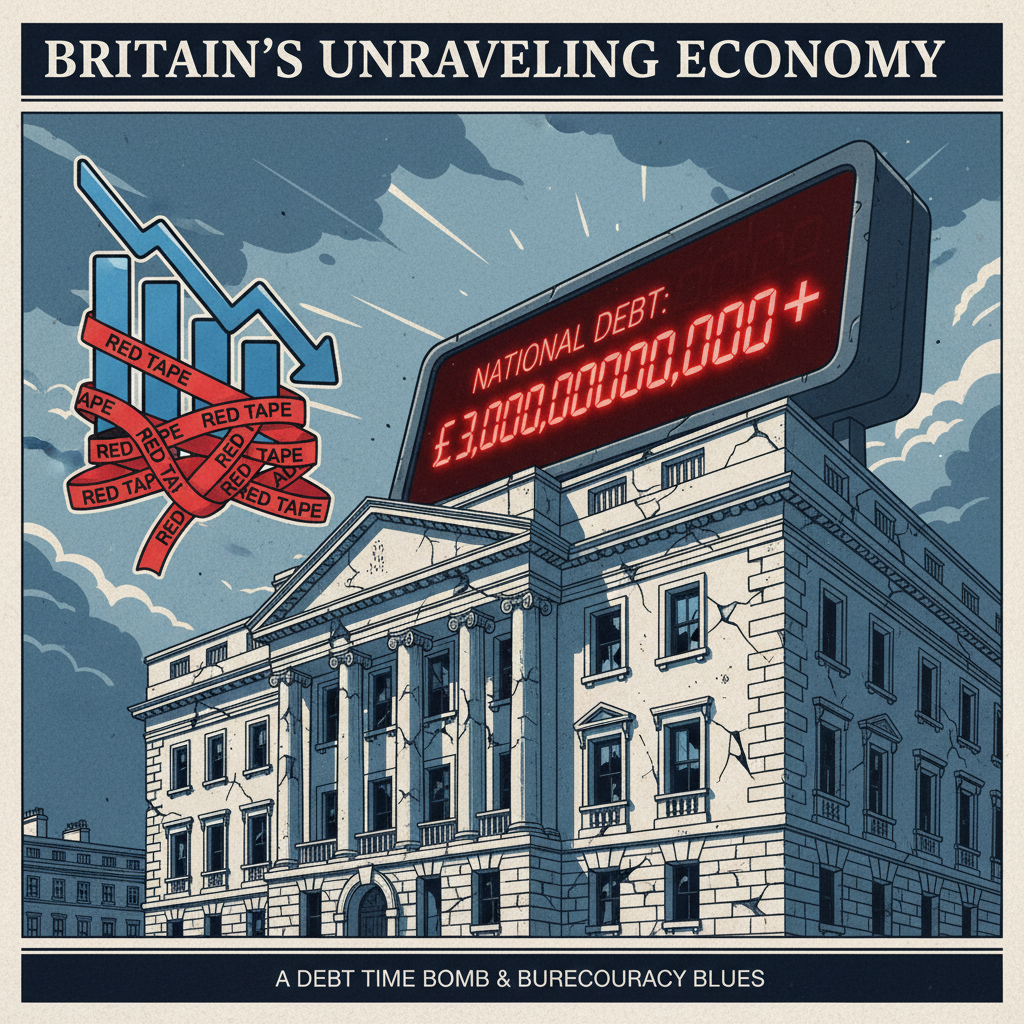
The reaction from Westminster? A collective shrug. A few Labour backbenchers tweeted about "Tory legacy". A handful of Conservative MPs cited "Labour's spending splurge". The markets, however, did not shrug. The yield on ten-year gilts ticked up another 12 basis points that week, pushing the effective interest rate on UK government debt toward 4.3%. For a country carrying £2.7 trillion in national debt, every basis point costs roughly £270 million a year. Do the maths. It isn't pretty.
The low-growth trap
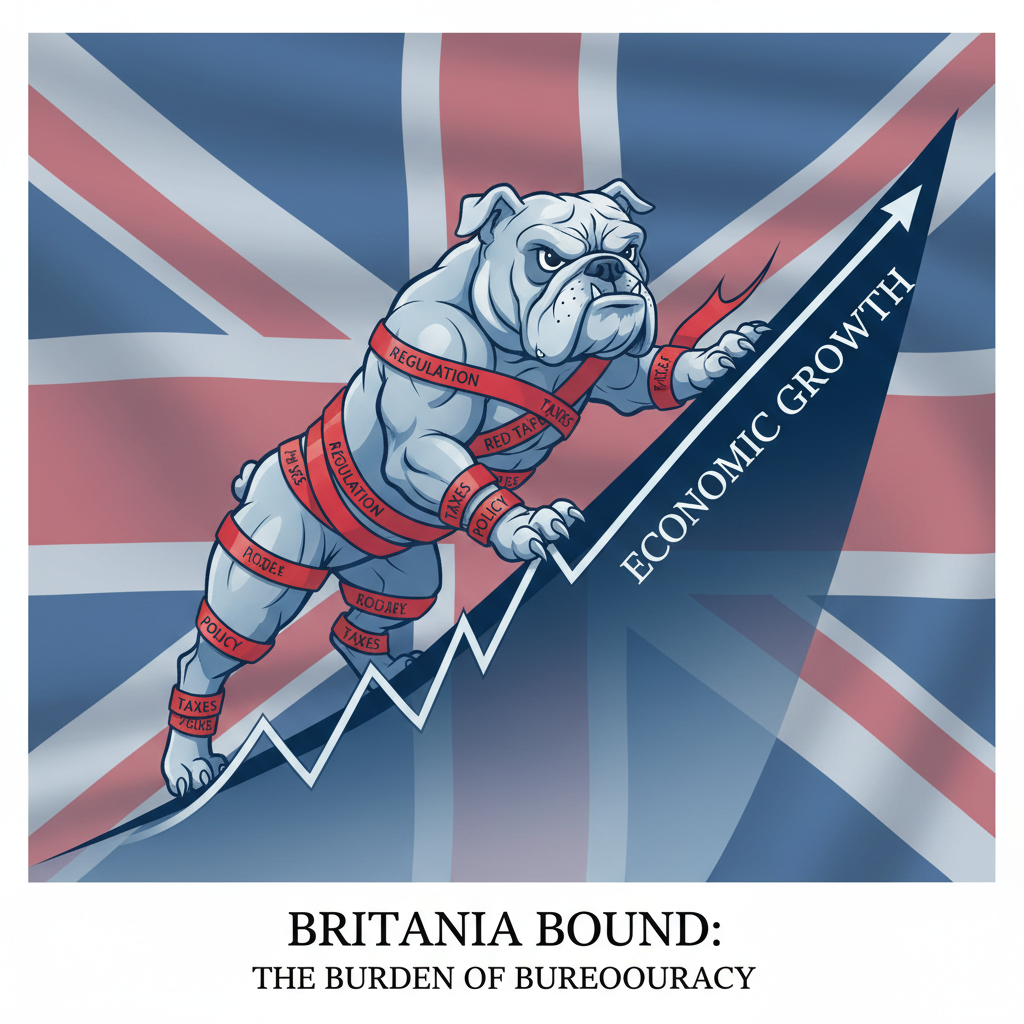
Here's the uncomfortable truth that neither Keir Starmer nor Rachel Reeves wants to utter aloud: the UK has cornered itself into a low-growth, high-tax equilibrium that nobody in power seems willing to break. The Office for Budget Responsibility's March forecast pegged potential GDP growth at a meagre 1.2% annually over the next five years. Meanwhile, government spending as a share of GDP has climbed to 45.1%, a peacetime record outside the pandemic.
You don't need a PhD in economics to see the problem. Growth is anaemic, taxes are at a seventy-year high, and the state keeps getting bigger. The Institute for Fiscal Studies calculated that by 2028, the tax burden will hit 37.7% of GDP. That's not a Labour number or a Conservative number. That's a post-war high, full stop. And what are we getting for it? Waiting lists that still top 6.3 million. Potholes that swallow bicycles whole. A defence budget that the former chief of the General Staff, General Sir Patrick Sanders, described as "inadequate for the threats we face".
The pension time bomb nobody wants to defuse
Let me tell you about John, a retired civil servant I met in Guildford last autumn. John gets a full public sector pension indexed to the triple lock. He voted Labour in 2024, mostly because he disliked Boris Johnson's Covid fines. He now votes Reform. He thinks the country is "going to the dogs". He also thinks his pension should keep rising at 8% a year, index-linked, for life.
John is not a bad man. He's a symptom. The state pension alone will cost £138 billion this year, up from £104 billion five years ago. The triple lock—which guarantees annual increases by the highest of inflation, earnings growth, or 2.5%—has become a fiscal sacred cow. No major party dares touch it. But as the Centre for Social Justice pointed out in January, by 2040 the state pension bill will consume nearly a third of all income tax receipts. That's money that won't go to defence, or infrastructure, or the NHS.
And yet, when the Work and Pensions Committee floated the idea of means-testing winter fuel payments, the backlash was ferocious. Liz Kendall, the Work and Pensions Secretary, spent three days on the defensive. The policy was dropped before lunch on day four.
The taxes that strangled growth
The irony is exquisite. Rachel Reeves inherited a fiscal mess, then made it worse. Her decision to raise employer National Insurance contributions by 1.2 percentage points in the October 2024 Budget was sold as a "tax on business". In reality, it was a tax on jobs. The Office for Budget Responsibility itself admitted the measure would reduce employment by roughly 50,000 over the medium term. The Resolution Foundation, hardly a bastion of free-market radicalism, estimated it would knock 0.3% off GDP.
Meanwhile, the non-dom crackdown has driven an estimated 10,000 wealthy individuals out of the country since April. The capital gains tax rise to 24% for higher-rate taxpayers has frozen the housing market in London's pricier boroughs. Stamp duty remains a deadweight cost that the Institute of Economic Affairs has called "the most damaging property tax in the developed world".
And for what? The fiscal headroom Reeves claimed in her March statement was a pathetic £9.9 billion. That's about three weeks of NHS spending. One unexpected spike in energy prices, one recession in Germany, one trade war with the United States, and that headroom evaporates.
The Javier Milei option
There's a joke going around the City that the only British politician who talks sense about the economy is an Argentine. Javier Milei, the libertarian president of Argentina, visited London in February for a conference at the Institute of Economic Affairs. He told a packed room that "the state is not the solution, the state is the problem." He then outlined his programme: cutting government spending by 15% in real terms, abolishing half the ministries, slashing taxes, and deregulating everything that moved.
The audience, mostly bankers and hedge fund managers, applauded warmly. But the question from the floor was telling: "Can you imagine a British politician doing this?" The silence was the answer.
Because here's the thing. Milei inherited an inflation rate of 211% and a fiscal deficit of 15% of GDP. He had a mandate for shock therapy. Britain's problem is slower, more corrosive. It's not hyperinflation; it's a slow bleed of competitiveness, a steady degradation of public services, a quiet acceptance that decline is inevitable. The debt-to-GDP ratio is 101.3%—lower than Italy's, higher than Germany's. The current account deficit is 3.1% of GDP. The trade balance with the EU has worsened by £23 billion since Brexit.
No single crisis. Just a thousand small cuts.
What happens next
The bond market is patient, but not infinitely so. If gilt yields rise another 100 basis points—and with US Treasury yields at 4.8% and the Bank of England cutting rates only grudgingly, that's entirely possible—the debt interest bill rises by roughly £27 billion. That's the entire defence budget gone.
Reeves's options are narrowing. She can raise taxes again, which would choke growth further. She can cut spending, which would infuriate her party's base and trigger strikes. Or she can do nothing and hope the economy recovers on its own. That last option is the most likely, and the most dangerous.
The truth, which James Melville captured in his stark warning from early 2025, is that Britain has a low-growth, high-regulation economy that shot itself in the foot with a tax-driven assault on the very thing it needs most: business and wealth creation. The political class knows this. They read the same briefings. They attend the same dinners. But they lack the courage—or perhaps the electoral incentive—to do anything about it.
So the debt piles up. The yields creep higher. The growth stays sluggish. And John from Guildford keeps getting his 8% pension rise, blissfully unaware that the bill is coming due.
It always does.
메타데이터
- post_id
- 4eeb5c07e954
- slug
- britains-fiscal-trap-tightens-as-growth-stalls-and-debt-mounts-4eeb5c07e954
- url
- https://medium.com/@worldnews99/britains-fiscal-trap-tightens-as-growth-stalls-and-debt-mounts-4eeb5c07e954
- canonical_url
- https://medium.com/@worldnews99/britains-fiscal-trap-tightens-as-growth-stalls-and-debt-mounts-4eeb5c07e954
- author_url
- https://medium.com/@worldnews99
- status
- ok
- fetched_at
- 2026-06-25 07:00:49