The Audience Cost Trap: Why 2026 Is More Dangerous Than 1962
On the evening of 22 October 1962, John F. Kennedy went on national television and told the American public that the Soviet Union had…
The Audience Cost Trap: Why 2026 Is More Dangerous Than 1962

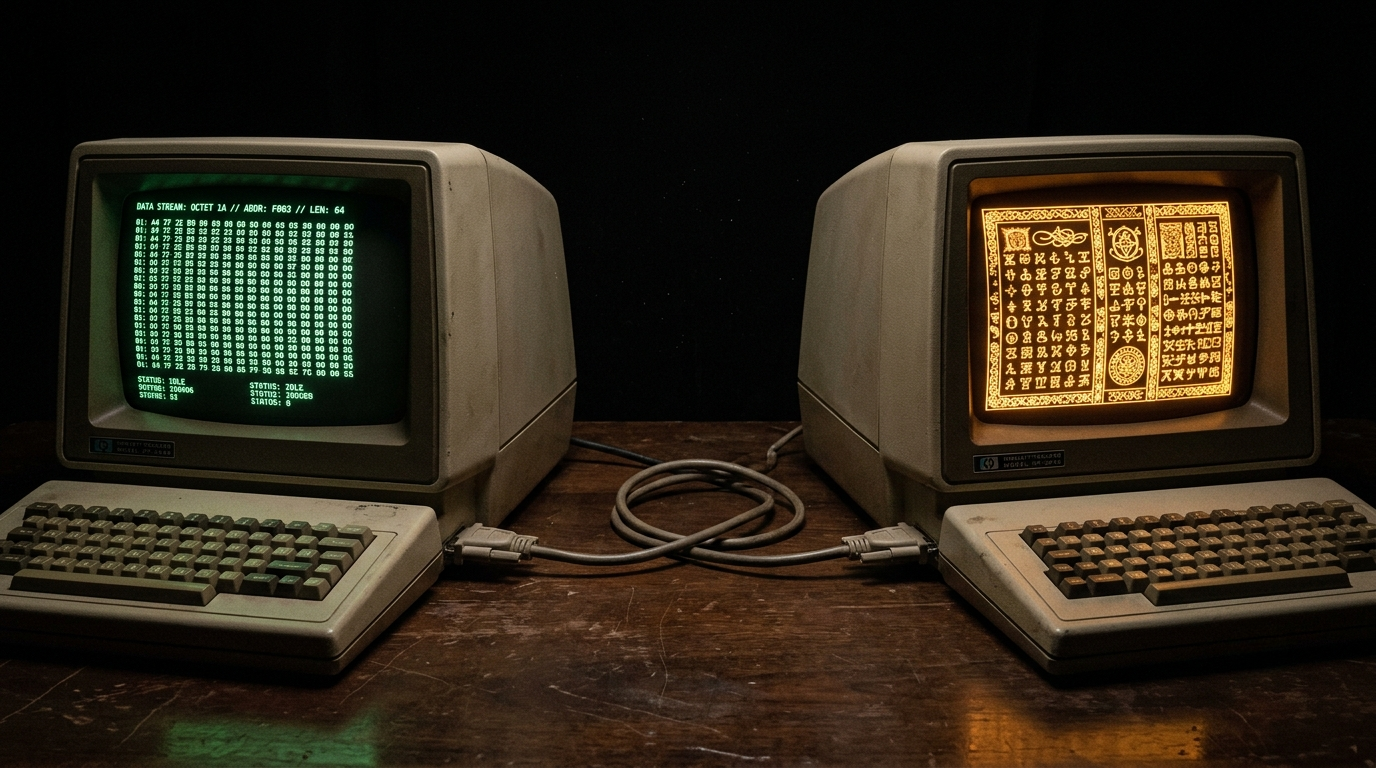
Two crises, sixty four years apart — one resolved by a call nobody was told about. All images generated by the author unless stated
On the evening of 22 October 1962, John F. Kennedy went on national television and told the American public that the Soviet Union had placed nuclear missiles ninety miles from Florida and that the United States Navy would blockade Cuba until they were removed. He said it publicly, on camera, to the loudest audience available to him. That was not incidental to the strategy. It was the strategy.
Political scientists have a name for what Kennedy did that night and a theory built around it that has shaped how diplomats and generals think about crisis bargaining for thirty years since. The theory explains why Kennedy’s gamble worked. It also explains, if you follow it far enough, why the version of the same gamble now running in the Gulf between Washington and Tehran is more dangerous than the one that ran in the Caribbean in 1962, not because the missiles are bigger, but because the room where the crisis actually gets solved has gone missing.
The mechanism: audience costs
In 1994 the political scientist James Fearon published a paper that gave the mechanism a name: audience costs. The argument is simple enough to state in a sentence. A leader who publicly threatens an adversary and then backs down pays a political price with his own domestic audience, humiliation, an election lost, a coalition that no longer trusts him, and because that price is visible in advance, a public threat is a more credible signal of resolve than a private one. Adversaries watching a leader box himself in are supposed to read the boxing-in as proof he means it.
It is an elegant piece of game theory and Kennedy’s blockade speech is the example Fearon reaches for first. Publicly commit and backing down becomes so costly that you won’t. Nikita Khrushchev, watching, is supposed to read exactly that calculation and fold.
The mechanism’s less comfortable implication is built into its own logic: it does not just signal resolve, it manufactures rigidity. The more publicly and irreversibly a leader commits, the harder it becomes to reverse course for entirely domestic reasons that have nothing to do with the merits of reversing course. Audience costs do not just deter your opponent. They can trap you.
What actually happened in October 1962
Here is the part of the Cuban Missile Crisis that the blockade speech tends to eclipse. The public standoff did not resolve the crisis. A telephone call and a secret meeting did.
On the night of 27 October, the single most dangerous day of the thirteen, Attorney General Robert Kennedy met secretly with Soviet Ambassador Anatoly Dobrynin at the Justice Department. The public deal, announced openly, was straightforward: Soviet missiles out of Cuba, in exchange for an American pledge not to invade. The deal that actually closed the crisis had a second, unpublished half. The United States agreed to remove its own Jupiter missiles from Turkey, a concession Kennedy could not afford to make in public, because it would have looked to NATO and to his own electorate exactly like what it was: trading away an American missile base to get a Soviet one removed. Robert Kennedy was explicit about the need for secrecy in the room. “Especially so that the correspondents don’t find out,” he said. “At our place, for the time being, even Salinger does not know about it.” Salinger was the White House press secretary.
The secret held for years. It surfaces only in a softened form in Robert Kennedy’s own posthumous memoir, published in 1969 and was not fully confirmed in the historical record until American and Soviet accounts, Dobrynin’s memoirs, Khrushchev’s own smuggled recollections, declassified State Department cables, were laid alongside each other decades later.
Notice what this means for the audience-cost story. The theory says Kennedy’s public commitment made his threat credible and forced Khrushchev to concede. What the record actually shows is that the crisis ended because both leaders found a way to evade the public commitment each had built for himself, Kennedy got his public win, missiles out of Cuba, visible to every voter; Khrushchev got his own private win, missiles out of Turkey, visible to almost nobody, certainly not to the Politburo hardliners who would have called it a humiliating retreat. The audience-cost trap did not spring cleanly. It was defused by moving the actual concession somewhere the audience couldn’t see it.
There is a further wrinkle in the record worth sitting with, because it complicates the tidy version of this story rather than simply confirming it. The decision to send Robert Kennedy to Dobrynin with the Turkey offer was not made by the full Executive Committee that had spent thirteen days deliberating. It was made in a smaller Oval Office meeting that most of ExComm was never told about. The wider committee, McNamara, Rusk, Bundy and the rest, arguing from recorded tapes we can still listen to today, genuinely shifting position as the days wore on, shaped the menu of options Kennedy chose from: blockade, air strike, invasion, negotiation. The single decision that actually ended the crisis was made by Kennedy and a handful of people he personally selected, in a room the wider group didn’t know existed.
Even the case audience-cost theory was built to explain, in other words, worked because a leader still listening to genuine internal argument used a private channel to get himself out of the trap his own public rhetoric had built. Both pieces mattered. Take either one away and the crisis plausibly does not end the way it did.

The room that argued — and the smaller room next door that decided.
When there is no private channel: July 1914
Fearon’s theory has an unglamorous twin case and it does not have a happy ending.
The July Crisis of 1914 is what audience costs look like with no off-ramp. By the last days of July, Austria-Hungary, Russia, Germany, France and eventually Britain had each made public commitments, alliance guarantees, mobilisation announcements and ultimatums delivered through diplomatic channels that leaked within hours, that made backing down look, to each domestic public, like national humiliation. Apply Fearon’s logic to the crisis and the mobilisation timetables read as the mechanism’s purest and most literal form: once the machinery of troop trains and reservist call-ups began moving, reversing it was not merely a political embarrassment. It carried real strategic cost, because an adversary who kept mobilising while you stopped would arrive at the front first. The audience-cost trap had been welded to a railway schedule. There is no comparably definitive scholarship pinning the audience-cost framework to July 1914 by name, this is this piece’s own extension of Fearon’s logic to the case, not a claim belonging to any named historian, but the parallel is exact enough to be worth drawing.
Secret channels existed in 1914, as they had in 1962. The Kaiser and the Tsar exchanged personal telegrams directly, cousin to cousin, in the crisis’s final days, each urging restraint. They failed to produce anything resembling the Jupiter trade. No private off-ramp was found in time and the mechanism ran to its conclusion.
When there is no real crisis at all: Able Archer
There is a third case and it is in some ways the most unsettling of the three because it shows the mechanism can manufacture danger from a training exercise.
In 1981, KGB chairman Yuri Andropov launched Operation RYAN, the largest peacetime intelligence gathering effort in Soviet history, built on the conviction that NATO was preparing a surprise nuclear first strike and tasked with detecting the warning signs in advance. The indicators Soviet officers were ordered to track ranged from troop movements to, reportedly, the price of blood at Western donor centres, a doctrine so anxious it had begun manufacturing its own evidence, since foreign KGB stations, aware their reports were expected to confirm the thesis, felt pressure to send back alarming material whether or not they believed it.
Into that already-primed environment, NATO ran Able Archer 83, a routine command post exercise rehearsing nuclear release procedures, 2 to 11 November 1983. Soviet leadership, according to the later account of KGB defector Oleg Gordievsky, genuinely believed it might be cover for a real first strike. There is no evidence any launch order was drafted or any weapon moved to genuine readiness. There is ample evidence, confirmed by British intelligence at the time and by Gordievsky afterward, that the fear on the Soviet side was real and not performed for effect. Nobody in Washington or Brussels had built a public trap for themselves. A closed information environment and a doctrine already primed to expect the worst did the job on their own.
Three cases, three lessons. 1962: the trap sprung, and a private channel, chosen by a leader still hearing real dissent, got both sides out of it. 1914: the trap sprung, no channel was found and the mechanism ran to war. 1983: no real trap at all and mutual certainty-performance nearly manufactured one from nothing.

Two podiums, one continent, the same week.
Ankara, and a funeral in Najaf, the same week
On 8 July 2026, at a NATO summit in Ankara, Donald Trump told reporters the memorandum of understanding ending the US war with Iran was “over,” that Iran was “vicious, violent,” and that continuing to negotiate with its government was “a waste of time.” He said this hours after ordering strikes on more than eighty targets inside Iran, in response to attacks on commercial tankers in the Strait of Hormuz and he said he would likely order further strikes that same night. It was said in public, at a podium, with the assembled press of a military alliance in the room.
In the same week, in Najaf and then Mashhad, the six-day state funeral of Iran’s Supreme Leader Ali Khamenei, killed in the strike that opened the war in February, was drawing to its close. A senior adviser to the Supreme Leader’s office, Ali Akbar Velayati, posted publicly that Iran had “its finger on the trigger” and would not remain “silent against humiliation.” He said this during the funeral itself, the single most audience-cost-loaded platform available to a government whose martyred leader’s name was still being carried through the streets.
Put the two statements side by side and the mechanism is unmistakable. Each side is performing certainty for its own audience, in public, at the moment of maximum political cost for backing down. It is Kennedy’s blockade speech and Velayati’s funeral statement, running simultaneously, aimed at entirely different domestic constituencies who will each punish their own leader for looking weak.
What is missing is the other half of 1962. There is no reported equivalent of the Jupiter trade, no private channel through which either side can make the concession the other needs without paying for it in public. If one exists, it has not surfaced in any account available at the time of writing. The single publicly known channel between Washington and Moscow this year, a Trump-Putin call about the separate Ukraine war, has no reported Iran equivalent. Absent evidence to the contrary, the honest reading is that both sides are negotiating, to the extent they are negotiating at all, entirely in the open. That is precisely the condition 1962 needed to escape and did not have this time.
The room that isn’t arguing
Here is where the comparison stops being about two crises and starts being about two teams.
1962’s inner circle was chosen by a president still listening, in the next room, to genuine disagreement, advisers who argued for air strikes, advisers who argued for blockade and advisers whose positions visibly moved over thirteen days of taped deliberation. The final decision came out of a smaller circle, yes. But it was a circle operating alongside a wider one that was allowed to keep arguing.
The documented pattern around the 2026 Iran war is not that. It is closer to the opposite.
In March 2026, Joe Kent, Trump’s own appointed director of the National Counterterrorism Center, an Army Ranger with eleven combat deployments and a Gold Star widower whose first wife was killed in a 2019 ISIS suicide bombing, resigned. His letter, posted publicly: “Iran posed no imminent threat to our nation, and it is clear that we started this war due to pressure from Israel and its powerful American lobby.” He invoked his wife’s death directly, writing that he could not send “the next generation” to die in a war that “serves no benefit to the American people.” Imminent threat is not incidental phrasing. It is the specific legal standard that permits a president to use military force without congressional authorisation. Kent, in his resignation letter, was telling the country the legal basis for the war had not been met, from inside the administration that started it.
Trump’s response did not engage the substance. “I always thought he was weak on security,” he told reporters. “Didn’t know him well.” About his own Senate confirmed appointee, eight months into the job.
Director of National Intelligence Tulsi Gabbard testified to Congress that the intelligence community continued to assess Iran was not building a nuclear weapon. Trump’s recorded response: “I don’t care what she said.” Gabbard herself was confirmed only narrowly, 52 to 48, with Senator Mitch McConnell the sole Republican vote against her, stating for the record before any of this happened: “In my assessment, Tulsi Gabbard failed to demonstrate that she is prepared to assume this tremendous national trust.”
General Dan Caine, Chairman of the Joint Chiefs of Staff, is perhaps the clearest case, because his path to the job is itself a story about what happens to institutional guardrails under this kind of pressure. Under the Goldwater-Nichols Act, the Chairman must already be a sitting four-star officer who has served as a service chief, Vice Chairman or combatant commander. Caine had done none of it. He was a retired three-star, out of uniform, when Trump nominated him, after firing the sitting, fully qualified Chairman, Gen. Charles Q. Brown, specifically to make room. Because Caine was retired, his confirmation required two Senate votes on the same day: one reinstating him to active duty, at the rank of Major General, a demotion from the three stars he’d held in retirement, and a second, moments later, confirming him as Chairman, a position that carries automatic elevation to four-star. Three stars down to two, then straight up to four, inside a single sitting of the Senate.
Asked directly under oath in May whether the war had produced a victory, Caine did not validate the claim and did not directly contradict it. He said: “Only political leaders decide victory or defeat.” A precisely bounded non-answer, from a man whose position, unlike Kent’s advisory post, makes resignation in protest an act of a different constitutional weight entirely and who chose the narrowest form of dissent available to him rather than none at all.
Three different institutional vantage points, intelligence assessment, counterterrorism operations, military command, and three variations on the same signal: this doesn’t add up the way it’s being described. One of the three said so and left. One was told her assessment didn’t matter. One gave the government’s own commander-in-chief the most minimal possible non-endorsement compatible with keeping his job.
The actual argument
None of this is a claim that Donald Trump is less intelligent than John Kennedy, or that his advisers are less capable than McNamara and Bundy. That comparison is not available from the documented record and it is not the one this piece is making.
The comparison the record supports is institutional, not personal. In 1962, a crisis built on the audience-cost mechanism was escaped because a functioning pipeline existed between dissenting expert judgment and the final decision, even when that final decision was made by a small circle, the small circle was still operating inside a system where disagreement got heard, weighed and in places incorporated. In 2026, the documented pattern is that dissenting expert judgment is not incorporated. It is removed. A counterterrorism chief who says the legal threshold for war hasn’t been met resigns and is publicly dismissed as barely known to the president who appointed him. A director of national intelligence whose assessment contradicts the president’s is told her assessment doesn’t matter. A fully qualified Chairman of the Joint Chiefs is fired to make room for one who isn’t qualified and the one who isn’t qualified still finds a way to withhold his endorsement rather than give it.
Both conditions, a public trap with no private exit, and a decision-making apparatus with no internal correction, were present in July 1914. Neither was present in October 1962. The mechanism running in the Gulf right now is the same one Fearon named and Kennedy rode to a resolution sixty four years ago. What has changed is not the mechanism. It is who is left in the room to catch the mistake before it closes.

The mechanism hasn’t changed. The players left on the board have.
Part of the What If AI Investigated series. Sources: James Fearon, “Domestic Political Audiences and the Escalation of International Disputes,” American Political Science Review (1994); JFK Presidential Library and Museum archival record of the Cuban Missile Crisis; National Security Archive briefing books on the Jupiter missile trade; David A. Welch and James Blight’s analysis of the ExComm tapes; David Gibson, Talk at the Brink (2012); Oleg Gordievsky’s account of Operation RYAN and Able Archer 83, as corroborated by declassified UK and US intelligence assessments; contemporaneous reporting on the 2026 Iran war ceasefire collapse (7–8 July 2026) and the Khamenei state funeral; Congressional testimony and resignation correspondence of Joseph Kent, Tulsi Gabbard, and Gen. Dan Caine; Senate confirmation records, 2025.
메타데이터
- post_id
- 4eeea940358a
- slug
- the-audience-cost-trap-why-2026-is-more-dangerous-than-1962-4eeea940358a
- url
- https://medium.com/what-if-ai-investigated/the-audience-cost-trap-why-2026-is-more-dangerous-than-1962-4eeea940358a
- canonical_url
- https://medium.com/what-if-ai-investigated/the-audience-cost-trap-why-2026-is-more-dangerous-than-1962-4eeea940358a
- author_url
- https://medium.com/@jamie_gray027
- status
- ok
- fetched_at
- 2026-07-10 03:40:03