An Interview with the 2020 Chairperson for Projects
Received on 06/04/2022
An Interview with the 2020 Chairperson for Projects
Received on 06/04/2022
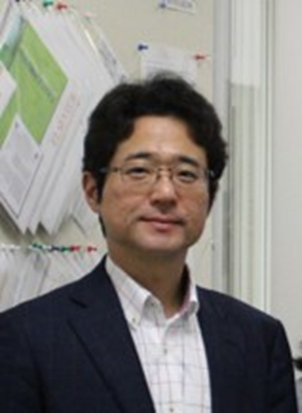
Ayodeji Matuluko
Ph.D. Candidate, Glasgow Caledonian University, UK
Remote Volunteer, FIP Antimicrobial Resistance Commission
2020 FIP YPG Chairperson of Projects

Thank you for agreeing to do this interview. Could you please tell us what made you decide to pursue your Ph.D. in the area of antimicrobial resistance (AMR) and what you find most rewarding while working on it?
Thank you for inviting me to share my experience.
The first few encounters that stimulated my interest in AMR occurred when I was a 4th-year pharmacy student on a 6-month mandatory placement at a Community Pharmacy in Lagos, Nigeria. In the unique context of my home country, Nigeria, antimicrobials are easily accessible over the counter and I just found it mind-boggling how clients would determine by themselves that they needed antibiotics and expected to be given them. It was quite overwhelming for me to strike a balance between carrying out my duties within the pharmacy and trying to do the right thing by ensuring that antibiotics were only given as indicated and were prescribed by a medical doctor. This actually worried me a lot, and then during my internship (pre-registration) year after pharmacy school, in one of the largest tertiary hospitals in Nigeria I was exposed to another set of unique challenges in that setting. I witnessed widespread prescription of oral and intravenous antibiotics, not based on any existing hospital-developed or national antibiotic prescribing guidelines. The worst incident that made me develop a keen interest in how to solve the AMR problem was when there was an outbreak of Klebsiella spp. in a pediatric ward and the ward had to be closed down. Concurrently, antibiotics (Cephalosporins, Carbapenems, and Quinolones) were not effective and the medical team visited the pharmacy unit to request that we order Colistin, a last-resort antibiotic. I was scared, to put it mildly.
That is really a bit of the backstory behind how I eventually decided to do research in the field of AMR with a focus on the appropriate use of antibiotics in the hospital setting. Research actually found me, or rather my PhD topic found me. I did not always want to do a PhD. My plan was that after my MSc at University College London I would work in the clinical setting and carry out Antimicrobial Stewardship (AMS) research as a practice-based researcher with possible links to academia, and do a sort of clinical pharmacy residency in Infectious Diseases/AMS. However, opportunities like that were not widespread — if not non-existent — where I worked at the time. I started to search for doctoral research topics/programs online and let a few people in my network know that I was nursing the idea of doing a Ph.D., while gradually coming to terms with the fact that the Ph.D. route was the best for me to achieve my career goals and pursue my passion in AMR.
What I find most rewarding about doing research in the field of AMR, particularly in AMS, is that I get to carry out impactful work that can actually make a change, no matter how tiny it is, alongside the greater scale of the AMR work being carried out by thousands of researchers globally. It is better than sitting back and complaining about the problem. And that’s quite fulfilling for me; to know that I am taking action!
You are a Remote Volunteer with FIP’s AMR Commission. Could you please tell us more about the FIP AMR Commission, the reason for its establishment, and its goals?
Yes, I have been volunteering with FIP’s AMR Commission since January 2021.
The FIP Commission on AMR was launched in September 2020, but in fact, FIP has been leading on AMR for many years. The FIP Bureau set up the FIP Commission on AMR to further continue FIP’s leadership in the global fight against AMR. The Commission is focused on further developing the Pharmacy’s role in addressing AMR and exploring opportunities to increase the Pharmacy’s impact on AMR across all settings and scopes of practice. The Commission will drive the new FIP Pharmacy AMR Roadmap, which will guide actions globally, sustaining momentum and tracking and evaluating the progress of this global health priority for pharmacy. The Commission is also focused on the implementation of the AMR-specific FIP Development Goal (FIP DG17) which looks at the role of pharmacists, pharmaceutical scientists, and pharmaceutical educators in reducing AMR.
The Commission is made up of Pharmacy AMR and AMS experts representing each WHO region. You can watch the launch event of the FIP Commission on AMR here: https://virtual2020.fip.org/programme-session/launch-of-fip-commission-on-antimicrobial-resistance-amr-m16/ Learn more about FIP’s AMR work by visiting the website (which is undergoing updating) here: https://www.fip.org/antimicrobial-resistance. You can also visit the FIP DG17 website on AMS here: https://developmentgoals.fip.org/dg17/
From your experience so far as a remote volunteer, what have been some of your highlights?
One of my major highlights so far has been the opportunity to engage with stakeholders in the Commission, who are AMR/AMS experts in their respective regions. As part of my involvement in the Commission, I also co-moderated our 2021 webinar on the FIP DG17 — which is Antimicrobial Stewardship — during World Antimicrobial Awareness Week (WAAW) in 2021. Link to the webinar here: https://www.youtube.com/watch?v=d9YUP_wSYk4&t=1038s
What are some ways you think FIP-YPG members can get involved in the global fight against AMR?
There are numerous ways for FIP YPG members to get involved, within and even beyond pharmacy (in collaboration with other healthcare professionals and within broader fields such as the social sciences). Using the WHO’s global action plan on AMR as a standard (and equally each individual country’s national action plan on AMR), the key objectives that need to be addressed to mitigate AMR include (1) increasing awareness of AMR through communication, education and training; (2) surveillance and research; (3) increased focus on infection prevention, sanitation and hygiene; (4) optimizing the use of antimicrobials in all settings (including the animal, agricultural and environmental sectors); and lastly (5) development of new antimicrobials, diagnostic technologies and vaccines, through sustained investment.
Raising awareness on AMR is a good starting point and can be achieved through various media, including community outreaches and online media, and participation in WAAW yearly. There are also internship/training/volunteering opportunities in different regions, for pharmacy students and early career pharmaceutical professionals to find out more about AMR and carry out cross-disciplinary projects. The COVID pandemic has also meant that strategies such as improved infection prevention and hand hygiene have been given greater importance than before. Pharmacists as medicine experts also have key roles to play as AMS leaders, including the surveillance of antimicrobial use within the community and in hospital settings.
Everyone doing something no matter how little, in their own little corner, will ensure that we can address the present global health threat of AMR.
This is great, Thanks for the nuggets on how to get involved in combatting AMR. Thank you for your time and Best of luck.
메타데이터
- post_id
- 4ef4b280857c
- slug
- an-interview-with-the-2020-chairperson-for-projects-4ef4b280857c
- url
- https://medium.com/@fip.ypg/an-interview-with-the-2020-chairperson-for-projects-4ef4b280857c
- canonical_url
- https://medium.com/@fip.ypg/an-interview-with-the-2020-chairperson-for-projects-4ef4b280857c
- author_url
- https://medium.com/@fip.ypg
- status
- ok
- fetched_at
- 2026-07-27 06:30:21