Secure Your Judgment: The Necessity of Legal Translations Guam
In the complex world of modern litigation, legal battles rarely stay contained within a single border. As the world becomes increasingly…
Secure Your Judgment: The Necessity of Legal Translations Guam

Explore how certified experts in Legal Translations Guam bridge the linguistic gap to ensure valid international service of process and protect due process rights across the Pacific.
In the complex world of modern litigation, legal battles rarely stay contained within a single border. As the world becomes increasingly interconnected through trade, travel, and digital communication, lawsuits frequently spill over international lines. Nowhere is this more apparent than in Guam. Strategically positioned as the “Gateway to Asia” and a crucial U.S. territory in the Pacific, Guam sits at a unique intersection of American law and international interests.
For attorneys and litigants operating in this region, the process of notifying a defendant of a lawsuit — known as “service of process” — can quickly become a logistical nightmare when the defendant is located in a different country or speaks a different language. While the mechanics of delivering papers are often the primary concern, there is a hidden linchpin that holds the entire procedure together: language.
Without accurate, professional translation, even the most robust legal case can crumble before it begins. This is where the specialized industry of **Legal Translations Guam** becomes essential. Certified translators act as the silent guardians of due process, ensuring that justice is not lost in translation.
This article explores why certified translators are indispensable in the international service of process in Guam, the specific challenges of the region, and how professional linguistic support protects the integrity of the legal system.
Understanding International Service of Process
Before diving into the nuances of translation, it is important to understand what “service of process” entails in an international context. In simple terms, service of process is the procedure by which a party to a lawsuit gives an appropriate notice of initial legal action to another party (such as a defendant), court, or administrative body in an effort to exercise jurisdiction over that person so as to enable that person to respond to the proceeding before the court, body, or other tribunal.
In Guam, which operates under U.S. federal law and local territorial statutes, the rules are strict. Every individual has a right to know they are being sued and to understand the nature of the allegations against them. When a defendant is located in a foreign country — whether it be Japan, the Philippines, South Korea, or mainland China — sending a stack of English documents is rarely sufficient.
Courts generally require that documents be served in the official language of the country where the documents are being served, or at the very least, in a language the defendant understands. Failure to do so isn’t just a discourtesy; it is often a violation of the defendant’s due process rights. If a court in Guam issues a summons, and that summons is delivered to a recipient in Tokyo who reads only Japanese, the service may be deemed invalid.
This requirement creates a massive demand for high-quality **Legal Translations Guam** services. The translation of these documents acts as the bridge that allows the legal authority of a Guam court to be recognized and respected across borders.
The High Stakes of Legal Translation
One might ask: “Why can’t I just use a bilingual staff member or an online translation tool?”
In the high-stakes arena of international litigation, cutting corners on translation is a recipe for disaster. Legal translation is a discipline far removed from conversational interpretation. It requires not only fluency in two languages but also a deep understanding of two distinct legal systems.
The “Mirror Image” Requirement
Legal documents are highly structured. A summons, a complaint, or a subpoena has specific sections, formatting, and numbering that must be preserved. A certified translator ensures that the translated document is a “mirror image” of the original. If the English complaint has a paragraph numbering system, the translated version must match it exactly so that attorneys and judges can reference specific lines without confusion.
Terminology and Nuance
Legal terminology often lacks a direct equivalent in other languages. For example, concepts like “escrow,” “lien,” or “deposition” might work differently or not exist at all in the target country’s legal framework. A translator specializing in **Legal Translations Guam** knows how to choose the most accurate equivalent or provide a descriptive translation that conveys the correct legal weight without altering the meaning.
A mistranslated word in a contract dispute or a divorce decree can change the entire outcome of a case. If “shall” (mandatory) is translated as “may” (permissive), the obligations of the defendant change entirely. In the context of service of process, if the nature of the lawsuit is misrepresented due to bad translation, the defendant may later argue they were not properly informed, leading to a dismissal of the case.
Guam’s Unique Linguistic Landscape
Guam is a melting pot of cultures. While English and Chamorro are the official languages, the island’s economy and demographics are heavily tied to Asia. Tourism, military contracting, and international investment bring a constant flow of people and businesses from the Philippines, Japan, Korea, Taiwan, and China.
This diversity makes the landscape of **Legal Translations Guam** particularly complex.
The Philippine Connection
A significant portion of Guam’s population has ties to the Philippines. Legal matters involving family law, inheritance, and property disputes often span the Philippine Sea. Consequently, there is a high demand for translations in Tagalog, Ilocano, and Visayan languages. A certified translator must understand the regional variations of these languages to ensure the documents are respectful and intelligible to the recipient.
The Asian Economic Hub
Business disputes often involve entities in Japan, South Korea, and China. The intricacies of corporate law in these nations require translators who are not just linguists, but subject matter experts. For instance, translating a corporate lawsuit involving a Japanese conglomerate requires familiarity with Japanese corporate hierarchy and honorifics, which can influence how a recipient perceives the seriousness of the document.
In this multicultural environment, a “one-size-fits-all” approach does not work. **Legal Translations Guam** providers must offer a wide array of language pairs and specialized dialects to serve the community effectively.
What Is a “Certified” Translation?
When the court requires a translation, they almost always require a “certified translation.” But what does that mean?
In the United States legal system, a certified translation is not necessarily one done by a person with a specific academic degree, but rather one that is accompanied by a signed statement attesting to the accuracy of the translation and the qualifications of the translator.
This statement is often called a “Certificate of Accuracy” or an “Affidavit of Translation.” It typically includes:
- The Translator’s Credentials: A statement confirming the translator is competent to translate from the source language to the target language.
- Statement of Accuracy: A declaration that the translation is a true, accurate, and complete representation of the original document.
- Signature and Date: The translator’s signature, often notarized to add an extra layer of authentication.
For **Legal Translations Guam**, this certificate is the golden ticket. It tells the judge and the foreign authorities that the document can be trusted. Without this certification, the translated documents are essentially hearsay and can be rejected by the court.
The Role of Translators in the Service Workflow
To fully appreciate the value of **Legal Translations Guam**, it helps to visualize where they fit into the workflow of international service of process.
Phase 1: Case Assessment An attorney in Guam files a complaint against a foreign defendant. The court issues the summons. The attorney realizes the defendant is in a non-English speaking country.
Phase 2: The Hand-Off The attorney contacts a professional service like Stellar Konsulting. They hand over the English documents. This is a critical juncture where confidentiality is paramount. Professional agencies follow strict data security protocols to protect sensitive client information — something a casual translator might not guarantee.
Phase 3: The Translation Process The agency assigns the document to a linguist who specializes in legal terminology for the specific target dialect. The translator works methodically, ensuring every legal statute cited in the Guam document is referenced correctly in the target language.
Phase 4: Editing and Proofreading A second linguist typically reviews the work. This “four-eyes principle” eliminates human error. In **Legal Translations Guam**, accuracy is non-negotiable.
Phase 5: Formatting and Certification The document is formatted to match the original. The Certificate of Accuracy is generated, signed, and notarized.
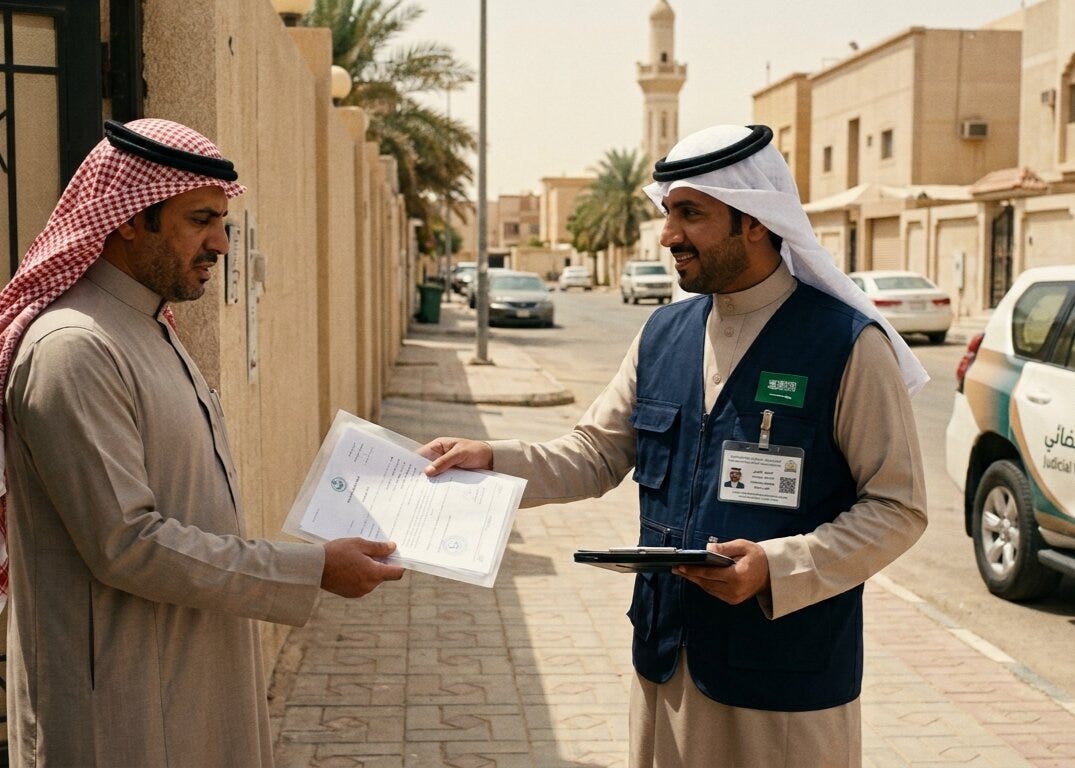
Phase 6: Delivery for Service The translated packet is returned to the attorney or process server. It is now ready to be sent abroad. When the foreign process server delivers the papers, they hand over both the English original and the certified translation. This ensures the defendant cannot claim ignorance of the language.
Common Pitfalls to Avoid
Navigating international litigation is difficult enough without self-inflicted wounds. Here are common mistakes lawyers and individuals make regarding translations, and how prioritizing professional **Legal Translations Guam** services can avoid them.
1. Using Machine Translation
In the age of AI, it is tempting to use Google Translate or similar tools. For legal documents, this is dangerous. AI struggles with context and the specific rigidness of legal syntax. A machine might translate “suit” (lawsuit) as “suit” (clothing). Such errors make a mockery of the court process and can lead to the service being quashed.
2. Relying on the Defendant to Translate
Some plaintiffs assume they can send the English documents and let the defendant figure it out. This shifts the burden of due process onto the accused, which most courts reject. If the defendant is in a jurisdiction where English is not the official language, the service is likely invalid without a translation.
3. Ignoring Local Dialects
Translating a document into “Chinese” is too vague. Is it Simplified Chinese for mainland China, or Traditional Chinese for Taiwan or Hong Kong? Is the defendant in a region where a specific dialect is predominant? **Legal Translations Guam** experts ask these questions upfront to ensure the translation is culturally and regionally appropriate.
The Cost of Getting It Wrong
The cost of professional translation is often a concern for clients. However, the cost of bad translation is exponentially higher.
Imagine a scenario where a Guam business sues a supplier in Seoul. They spend thousands of dollars on filing fees and hiring international process servers. To save money, they ask a friend to translate the documents. The papers are served. Six months later, the case moves to a default judgment because the defendant never responded.
Suddenly, the defendant’s lawyers appear. They move to vacate the judgment, arguing that the translation was unintelligible and material facts were garbled. The judge reviews the translation, agrees it is substandard, and throws out the service. The plaintiff is back to square one. They have lost months of time, thousands in legal fees, and now must pay for proper **Legal Translations Guam** services anyway — plus the cost of re-serving the papers.
Investing in certified translation from the start is an insurance policy against procedural failure.
Why Professionalism Matters in Guam
Guam is a close-knit community, but its legal reach is global. The reputation of a law firm or a company often hinges on their attention to detail. Utilizing professional translation services signals to the court and the opposition that the plaintiff is serious, diligent, and respectful of procedural rules.
Furthermore, certified translators are bound by codes of ethics. They maintain strict impartiality. Unlike a friend or family member who might translate, a professional has no stake in the outcome of the case. This neutrality is crucial if the translation is ever challenged in court.
Providers of **Legal Translations Guam** act as an extension of the legal team. They understand deadlines. Litigation moves fast, and delays in translation can mean missing a statute of limitations or a court-imposed deadline. Professional agencies have the infrastructure to handle rush jobs without sacrificing quality.
Best Practices for Attorneys and Litigants
For those involved in legal disputes in Guam requiring international service, adhering to the following best practices is essential:
- Identify Language Needs Early: Do not wait until the last minute. As soon as you know a foreign defendant is involved, assess the translation needs.
- Verify the Dialect: Confirm the specific language and region of the defendant.
- Provide Clean Copies: Give the translators legible, high-quality scans of the documents.
- Work with Reputable Agencies: Choose a company that specializes in legal work, not just general translation.
- Ask for the Affidavit: Ensure the final deliverable includes the notarized Affidavit of Translation.
The Future of Legal Service in Guam
As Guam continues to grow as a strategic economic and military hub in the Pacific, the volume of cross-border litigation will likely increase. The complexity of these cases will evolve, but the fundamental need for clear communication will remain.
The role of the certified translator is evolving as well. Modern agencies are integrating secure cloud technologies and advanced terminology management databases to ensure consistency across large volumes of documents. However, the human element — the certified linguist who understands the soul of the language — remains irreplaceable.
**Legal Translations Guam** is not just a keyword; it is a critical service sector that supports the rule of law. It ensures that no matter where a defendant lives or what language they speak, they are afforded the dignity of understanding the legal actions affecting their lives. It ensures that the courts in Guam can exercise their jurisdiction effectively, without being hampered by linguistic borders.
Conclusion
International service of process is a formidable challenge, fraught with procedural landmines and logistical hurdles. In this intricate dance of global litigation, certified translators are the unsung heroes. They bridge the gap between the U.S. legal system prevalent in Guam and the diverse legal and linguistic landscapes of Asia and beyond.
By ensuring accuracy, cultural appropriateness, and strict adherence to legal formatting, these professionals safeguard the validity of the legal process. They protect plaintiffs from costly delays and defendants from violations of their rights.
For any legal action originating in Guam and reaching across the ocean, professional translation is not an optional luxury — it is a procedural necessity. When the stakes are high, and the distance is vast, the clarity provided by a certified translation is the only way to ensure that justice is truly served.
If you are navigating the complexities of international litigation in Guam, do not leave your case to chance. Ensure your documents are translated with the precision and authority the court demands.
Ready to Secure Your International Service of Process?
Navigating the waters of international law requires a partner you can trust. At Stellar Konsulting, we specialize in the meticulous details of international process service and certified translations. We understand the unique requirements of the Guam legal system and offer the speed, accuracy, and confidentiality your case deserves.
Don’t let language barriers jeopardize your legal success. **Contact our team of experts today** to discuss your translation needs.
Stellar Konsulting Phone: +1 (213) 786 1161 Email: operations@stellarkonsulting.com Website: https://stellarkonsulting.com/
메타데이터
- post_id
- 4eff35431f79
- slug
- legal-translations-guam-4eff35431f79
- url
- https://medium.com/@internationalprocessservice/legal-translations-guam-4eff35431f79
- canonical_url
- https://medium.com/@internationalprocessservice/legal-translations-guam-4eff35431f79
- author_url
- https://medium.com/@internationalprocessservice
- status
- ok
- fetched_at
- 2026-06-26 03:39:16