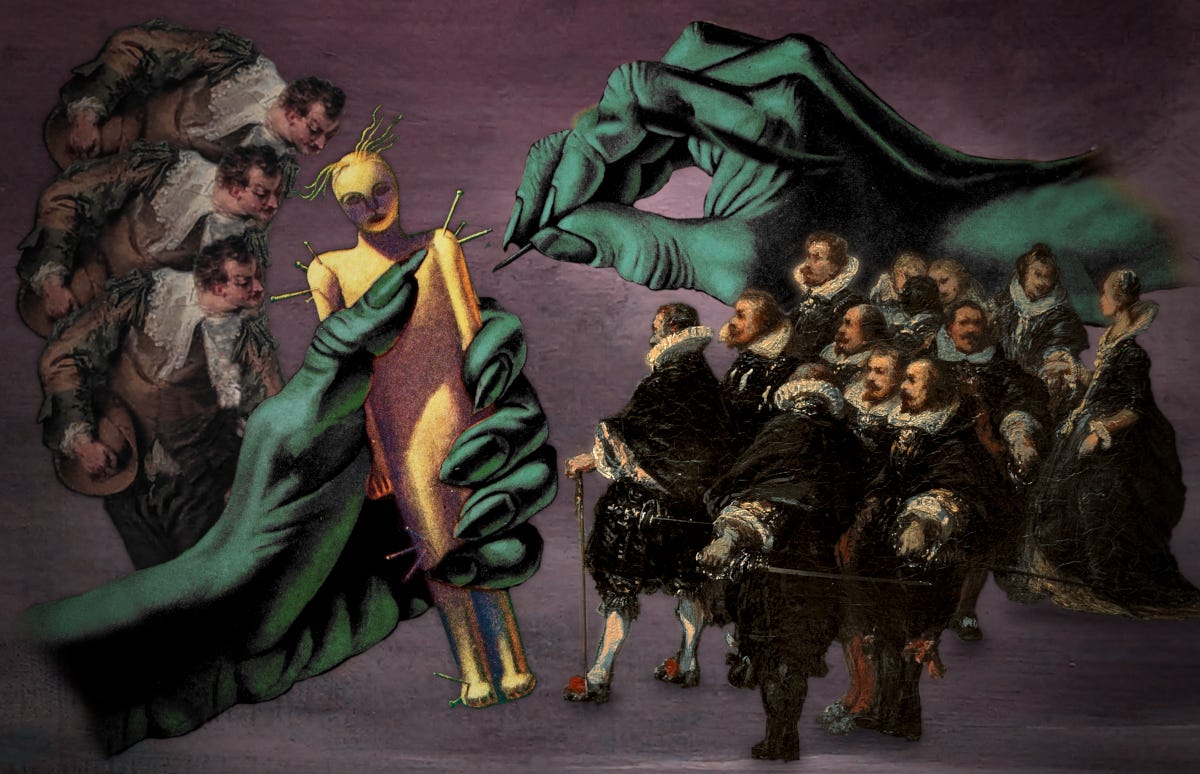
The Sleeping Sickness Epidemic That Medicine Still Can’t Explain
How encephalitis lethargica disabled a million people in the 1920s, and what it warns us about Long COVID today
The Sleeping Sickness Epidemic That Medicine Still Can’t Explain
How encephalitis lethargica disabled a million people in the 1920s, and what it warns us about Long COVID today
Photo by Robina Weermeijer on Unsplash
Imagine waking up one morning with what feels like the flu: sore throat, low fever, headache, maybe a little malaise. Nothing dramatic. Nothing that would make you think history is about to run you over.
Then your eyelids start to droop. Your movements slow. You sit longer than usual, staring at nothing. You become harder to rouse, harder to engage, harder to reach. And for some people, it got worse than that. They did not die right away. They just seemed to leave while their bodies stayed behind.
That was encephalitis lethargica, sometimes called “sleeping sickness,” though that label barely captures how strange and devastating it really was. Between about 1917 and 1928, it swept through the United States and much of the world, infecting an estimated one million people and killing at least half of them. Many who survived were left with permanent neurological damage so profound that survival came with an asterisk.
The Disease Nobody Really Understood
The Austrian neurologist Constantin von Economo was the first physician to formally describe the illness in 1917. The name he gave it roughly translates to “inflammation of the brain that makes you sleepy,” which is technically accurate in the same way that calling a house fire “a temperature problem” is.
In many patients, the disease began with symptoms that looked familiar enough: sore throat, fever, headache, fatigue. Then things took a turn. People developed double vision, tremors, slowed speech, slowed movement, and an overwhelming drowsiness that could deepen into stupor or coma. Some died during the acute phase. Others seemed to improve, only to develop a severe Parkinson-like syndrome months or years later. They became rigid, slow, and in some cases almost unable to initiate movement at all.
That delayed phase is one of the reasons encephalitis lethargica was so haunting. It did not always hit once and leave. For some patients, it came back in a different form and stayed.
In the United States, the epidemic appears to have peaked between 1920 and 1924, although cases continued into the late 1920s. A 1929 survey by the Matheson Commission documented 52,781 U.S. cases between 1919 and 1928, and that was almost certainly an undercount. Surveillance in that era was limited, diagnostic criteria were imperfect, and public health infrastructure was nowhere near what we would expect today.
A Public Health System Out of Its Depth
To be fair to the people working in medicine and public health at the time, this was not the kind of disease they were equipped to handle. Germ theory was still relatively young in practical terms. Laboratory tools were crude by modern standards. And encephalitis lethargica did not behave in a neat, familiar way.
This was not cholera tracing itself through water. It was not smallpox announcing itself in patterns officials already knew how to track. It was a neurological disease with an uncertain cause, inconsistent presentation, and long-term consequences that could unfold years after the initial illness. That is a nightmare scenario for public health because you cannot easily control what you do not even fully recognize.
So what happened? Mostly what happens when institutions do not know what else to do. Namely, patients were treated supportively. Families absorbed much of the burden. Hospitals managed symptoms. And people who developed chronic post-encephalitic Parkinsonism were often pushed into long-term facilities where they could be housed, fed, and supervised, but not really helped.
That is one of the bleakest lessons of this epidemic. The damage was not only biological. It was also social. Families reorganized their lives around caregiving. Young adults disappeared into institutions. And once patients entered those systems, many of them also disappeared from public attention.
The Research Boom Could Not Solve It
Scientists did not ignore encephalitis lethargica. In fact, they did the opposite. Just in the 1920s, over 9,000 scholarly articles were written and published about the disease. That is not the record of a forgotten disease in its own time. That is the record of a medical community trying very hard to solve a problem that kept refusing to sit still.
The biggest question was the obvious one: what caused it?
Because the epidemic overlapped with the 1918 influenza pandemic, many researchers suspected influenza. That theory had a certain logic to it. The timing fit. The scale fit. The idea of a post-infectious complication was plausible. (Just look at our current concerns about long COVID.) But later studies using preserved brain tissue did not find evidence of influenza viral genes. The theory held on for a long time, but it never really closed the case.
The leading modern hypothesis points instead toward an autoimmune process, possibly triggered by infection with streptococcal bacteria. In other words, the immune system may have responded to an infection and then, in some patients, misfired badly enough to attack the brain. More specifically, researchers have focused on the basal ganglia, which help regulate movement and aspects of behavior and cognition.
That theory makes sense. It also remains a theory. And that is part of what makes encephalitis lethargica so unsettling. Even now, after all the retrospective analysis and all the neurological detective work, the exact cause has never been pinned down with certainty. The disease surged, devastated lives, and then largely vanished. From a scientific standpoint, that is almost rude.
What von Economo Got Right
If there is one bright thread in this story, it is that careful clinical observation during the epidemic helped expand our understanding of the brain. This is because von Economo noticed that different patients had different sleep-related symptoms.
Some patients were pathologically sleepy. Others were profoundly sleepless. By linking these clinical patterns to specific areas of brain injury, he helped identify regions involved in sleep and wakefulness, including parts of the hypothalamus and midbrain. That work became foundational for sleep medicine.
The epidemic also taught researchers more about movement disorders. The Parkinsonian symptoms seen in survivors gave neurologists another window into the role of the basal ganglia and dopaminergic systems. So while medicine failed to stop the epidemic, the disease did leave behind knowledge that later shaped neuroscience in important ways.
That may sound like a consolation prize, and for the patients who suffered through it, it absolutely was. Still, it mattered. Sometimes science learns in the middle of tragedy, which is useful but never elegant.
The Long Aftermath and “Awakenings”
By the 1960s, many survivors with chronic post-encephalitic Parkinsonism had been institutionalized for decades. Some had entered hospitals as young adults and remained there, largely silent and motionless, as staff turned over and institutional memory faded. New clinicians often did not know what disease had put them there in the first place.
Then Oliver Sacks arrived. In 1966, the British neurologist began working at Beth Abraham Hospital in the Bronx and recognized what many others had not: these patients were survivors of encephalitis lethargica. When L-DOPA became available as a treatment for Parkinson’s disease, he used it in some of these patients and saw dramatic results. People who had seemed unreachable for years began to move, speak, and engage again.
That story became his 1973 book *Awakenings, and later the 1990 film adaptation starring Robin Williams and Robert De Niro. The title is memorable, but it is also a little misleading. These patients had not simply been asleep. Many appeared to be aware, at least in some sense, but trapped inside bodies that would not cooperate. L-DOPA did not so much wake them as briefly unlock them, and I do mean briefly*.
The responses were often unstable. Some patients cycled between immobility and excessive involuntary movements. Some improved, then declined. Some found a workable balance with treatment over time, but many did not. So the story of Awakenings is not really a triumph of modern medicine. It is a story about temporary rescue, partial restoration, and the limits of what medicine can repair after years of neglect and neurological injury.
The Lesson We Should Not Miss
From a public health perspective, encephalitis lethargica should be a warning. It reminds us that infectious diseases do not always confine themselves to fever, cough, vomiting, rash, or whatever symptom cluster makes officials comfortable. Some infections, or immune responses to infections, can alter the brain and nervous system in ways that are catastrophic, prolonged, and poorly understood. They can leave behind a wave of survivors whose acute illness is over but whose lives have been permanently changed.
Once those patients stop being part of the emergency phase, it becomes very easy for systems to stop seeing them. And that may be the most modern part of this old story. Researchers studying the neurological consequences of Long COVID (including fatigue, cognitive dysfunction, and movement-related symptoms) have at times drawn comparisons to encephalitis lethargica.
The comparison is not exact, of course. And it should not be pushed too far. But the underlying public health question is familiar: what do we do when a major infectious event leaves behind a smaller group of people with chronic neurological damage? Well, the answer the 1920s gave was, more or less, put them somewhere and move on.
That is not an answer any serious healthcare system should be comfortable repeating.
Final Thoughts
Encephalitis lethargica has been called one of the great medical mysteries of the twentieth century, and that is true. But it was not only a mystery. It was also a mass disabling event. It exposed the limits of early twentieth-century medicine, the fragility of public health systems, and the ease with which chronically ill patients can vanish into institutions and footnotes.
We remember the dead more easily than the living who were left behind. That may be the cruelest part of this history. While the epidemic has disappeared, its many lessons should not.
메타데이터
- post_id
- 4f036eb36d7d
- slug
- the-sleeping-sickness-epidemic-that-medicine-still-cant-explain-4f036eb36d7d
- url
- https://medium.com/microbial-instincts/the-sleeping-sickness-epidemic-that-medicine-still-cant-explain-4f036eb36d7d
- canonical_url
- https://medium.com/microbial-instincts/the-sleeping-sickness-epidemic-that-medicine-still-cant-explain-4f036eb36d7d
- author_url
- https://medium.com/@epiren
- status
- ok
- fetched_at
- 2026-07-08 21:20:17