The Gene-Editing Tool I Could Never Escape (and Why I’m Glad I Didn’t)
The one topic I couldn’t escape during my biology degree: CRISPR.
The Gene-Editing Tool I Could Never Escape (and Why I’m Glad I Didn’t)
The one topic I couldn’t escape during my biology degree: CRISPR.
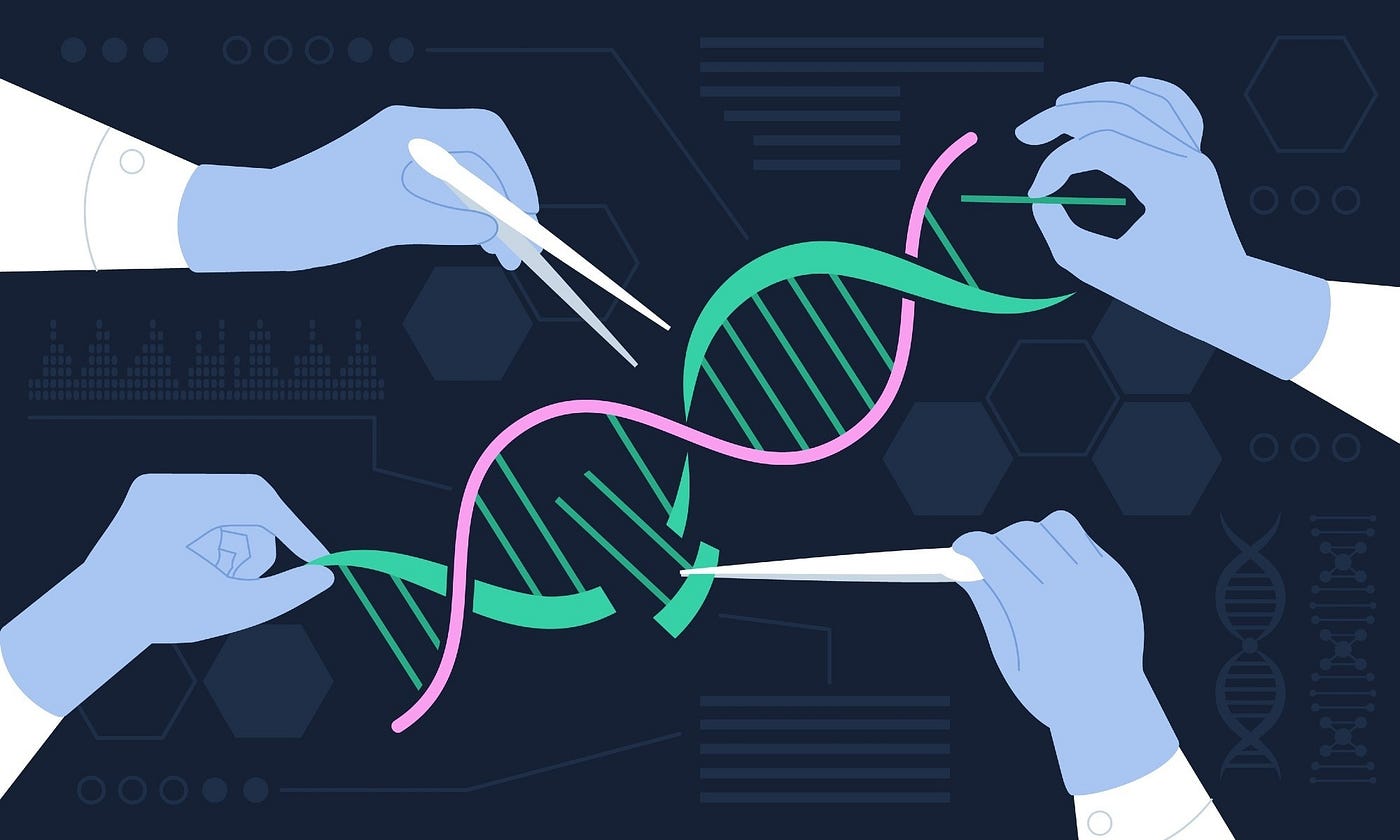
Figure 1. DNA and genome editing. Source: iStock (n.d.).
I first came across it in a tutorial module. One of our assignments involved watching a live seminar on CRISPR, taking notes, and then using those notes to write an essay. At the time, I wasn’t interested. I took notes, submitted the essay, and moved on.
Except CRISPR didn’t move on.
It appeared again in genetics lectures, developmental biology, biotechnology, and even discussions about ethics. By my final year, I had started joking that CRISPR — and the one professor who always brought it up — was like a recurring character who somehow appeared in every season.
Looking back, I realised the problem wasn’t CRISPR. It was that I had never stopped to ask why every lecturer seemed obsessed with it. Once I finally did, everything started to make sense.
So, what actually is CRISPR?
Surprisingly, CRISPR wasn’t discovered as a gene-editing tool at all.
Its story began in bacteria. In 1987, Japanese researchers noticed unusual repeating DNA sequences while studying Escherichia coli, but nobody knew what they did. It wasn’t until years later that Spanish microbiologist Francisco Mojica realised these repeated sequences were actually part of a bacterial immune system. Bacteria were storing small pieces of DNA from viruses that had previously infected them, allowing them to recognise and destroy the same virus if it attacked again.
Think of it as bacteria keeping a “most wanted” list of past infections.
Scientists later discovered that some bacteria use a protein called Cas9 alongside guide RNAs to find matching viral DNA and cut it. Once researchers realised this system could be programmed to target almost any DNA sequence, everything changed.
In 2012, Jennifer Doudna and Emmanuelle Charpentier demonstrated that CRISPR-Cas9 could be adapted into a simple, programmable gene-editing tool. Their landmark paper transformed decades of basic microbiology into one of the biggest breakthroughs in modern science, earning them the 2020 Nobel Prize in Chemistry.
So how does CRISPR actually edit DNA?
Knowing that CRISPR can edit genes is impressive, but understanding how it does it is what makes the technology so remarkable.
Imagine the human genome as a book containing around 3 billion letters. Somewhere in that enormous book might be a single spelling mistake responsible for causing disease. Finding that exact mistake by chance would be almost impossible.
CRISPR solves this problem using two key components: a guide RNA and an enzyme called Cas9.
The guide RNA acts like a postcode or GPS. Scientists design it to match a specific DNA sequence, allowing it to travel through the genome until it finds the exact stretch of DNA they want to change. Once it arrives, the Cas9 protein acts like molecular scissors, cutting both strands of the DNA at that precise location (Jinek et al., 2012).
Once the DNA has been cut, the cell immediately tries to repair the damage. This is where scientists take advantage of the cell’s own repair machinery in two different ways. Sometimes the repair process introduces small errors that effectively switch a gene off. Alternatively, researchers can provide a new piece of DNA for the cell to copy, allowing a faulty gene to be corrected or replaced.
This ability to cut DNA at almost any chosen location in the genome transformed genetics.Before CRISPR, editing genes was often slow, technically difficult and expensive. CRISPR made gene editing faster, cheaper and far easier to programme for specific DNA targets, allowing laboratories around the world to investigate diseases that had previously been extremely difficult to study.
Why is everyone so excited about it?
The easiest way to think about CRISPR is as a biological “find and edit” tool.
If DNA is like a massive instruction manual, CRISPR allows scientists to locate a specific sentence and remove, replace or modify it with a high degree of precision.
One of the most exciting uses of CRISPR is in medicine. Many inherited diseases are caused by a mutation in a single gene, making them ideal candidates for gene editing.
A landmark example is sickle cell disease, where a mutation in the HBB gene causes red blood cells to become rigid and sickle-shaped. In 2023, the first CRISPR-based treatment, Casgevy, was approved in the UK and several other countries. Rather than simply treating symptoms, the therapy edits a patient’s own blood stem cells so they can produce healthy red blood cells, dramatically reducing painful crises and, for some patients, offering the possibility of long-term freedom from severe symptoms.
Scientists are also investigating CRISPR as a treatment for inherited blindness, Duchenne muscular dystrophy and certain cancers. In cancer research, immune cells can be genetically edited to recognise and attack tumour cells more effectively.
Beyond medicine, CRISPR is helping researchers develop crops that are more resistant to drought, disease and pests, reducing the need for pesticides while improving food security. It is even being investigated as a way to control mosquitoes that spread malaria by reducing their ability to reproduce or transmit disease.
Although not every application will become routine clinical practice, these examples show why CRISPR is considered one of the most important biological discoveries of the twenty-first century.
When science moves faster than ethics
Of course, with great scientific power comes difficult ethical questions.
In 2018, Chinese scientist He Jiankui announced that he had edited the genomes of twin girls before they were born. He used CRISPR to alter a gene called CCR5, which produces a protein that some strains of HIV use to enter immune cells. By disrupting this gene, he claimed the edits would reduce their susceptibility to HIV infection.
The announcement shocked scientists around the world because international guidelines had warned against editing embryos in ways that could pass genetic changes on to future generations. Many criticised the work because the procedure was carried out before its safety had been properly established, the children could not consent, and any genetic changes could potentially be inherited by future generations. There were also concerns that disrupting CCR5 might not provide the protection that had been promised and could have unforeseen biological consequences.
The international scientific community widely condemned the experiment, and He Jiankui was later sentenced to prison in China.
For me, this was the first time CRISPR became more than just another lecture topic. The technology clearly had the potential to transform medicine, but it also raised questions that science alone could not answer.
I’ve always found the ethics of science fascinating, perhaps because I enjoy a good debate. Whenever a lecture moved beyond the science itself and into questions about what researchers should do, rather than simply what they could do, I found myself paying far more attention.
The CRISPR babies case was the moment I became genuinely interested in gene editing. Instead of memorising facts for an exam, I found myself wanting to understand both the science and its wider consequences. That shift made many of my lectures far more engaging, not because they became easier, but because I was genuinely curious about the subject.
Just because we can edit the human genome doesn’t always mean we should.
A different perspective
I still smile whenever CRISPR appears in another lecture because, somehow, it always does.
But I understand why now.
When I first encountered it, I saw it as another complicated topic to memorise for an assignment. Now I see it as one of the best examples of how curiosity-driven research can completely transform science. Nobody studying strange DNA repeats in bacteria expected to revolutionise medicine.
CRISPR has taught me that some of the biggest scientific breakthroughs begin with people asking surprisingly simple questions. It has also reminded me that every major discovery brings new responsibilities alongside new opportunities.
So, although I’ll probably continue joking that CRISPR follows me everywhere, I don’t mind nearly as much anymore.
Sometimes the topics that seem impossible to escape turn out to be the ones worth understanding the most.
Until the next topic I can’t seem to escape…
– Dani
Key Terms
Bacteria — Single-celled microorganisms that lack a nucleus. CRISPR originally evolved as an adaptive immune system in certain bacteria.
Cas9 — An enzyme that acts like molecular scissors, cutting DNA at a specific location chosen by the guide RNA.
CCR5 — A gene that encodes the CCR5 protein, a receptor found on the surface of certain immune cells. Some strains of HIV use this receptor to enter cells, which is why it was targeted in the CRISPR babies experiment.
CRISPR — Short for Clustered Regularly Interspaced Short Palindromic Repeats. It is a natural defence system found in bacteria that scientists have adapted into a powerful gene-editing tool.
DNA (Deoxyribonucleic Acid) — The molecule that stores the genetic instructions needed for an organism to grow, develop and function.
Gene —A section of DNA that contains the instructions for making a protein or a functional RNA molecule.
Gene editing — The process of changing an organism’s DNA by adding, removing or altering specific genetic sequences.
Genome — The complete set of DNA in an organism, including all of its genes and non-coding DNA.
Guide RNA (gRNA) — A short RNA molecule that directs Cas9 to the exact DNA sequence scientists want to edit.
HBB gene — The gene that provides instructions for making part of haemoglobin, the protein in red blood cells that carries oxygen. Mutations in this gene cause sickle cell disease.
HIV (Human Immunodeficiency Virus) — A virus that attacks the immune system. Without treatment, it can lead to AIDS.
Mutation — A permanent change in the DNA sequence. Some mutations have no effect, while others can cause genetic disorders or contribute to disease.
Protein — Molecules made from amino acids that carry out most of the work inside cells, including building structures, transporting molecules and catalysing chemical reactions.
RNA (Ribonucleic Acid) — A molecule involved in reading and using the genetic information stored in DNA. Different types of RNA perform different roles, including helping to make proteins and guiding CRISPR to its target.
References
- Cyranoski, David. “The CRISPR-Baby Scandal: What’s Next for Human Gene-Editing.” 26 Feb. 2019.
- Doudna, Jennifer A., and Emmanuelle Charpentier. “The New Frontier of Genome Engineering with CRISPR-Cas9.” Science, vol. 346, no. 6213, 28 Nov. 2014, pp. 1258096–1258096, https://www.science.org/doi/10.1126/science.1258096, 10.1126/science.1258096. Accessed 25 July 2026.
- Ishino, Y, et al. “Nucleotide Sequence of the Iap Gene, Responsible for Alkaline Phosphatase Isozyme Conversion in Escherichia Coli, and Identification of the Gene Product.” Journal of Bacteriology, vol. 169, no. 12, 1987, pp. 5429–33, 10.1128/jb.169.12.5429–5433.1987.
- iStock. (n.d.) DNA and genome editing. Available at: https://www.istockphoto.com/vector/dna-and-genome-editing-gm1189916097-337094197 (Accessed: 25 July 2026).
- Jinek, M., et al. “A Programmable Dual-RNA-Guided DNA Endonuclease in Adaptive Bacterial Immunity.” Science, vol. 337, no. 6096, 28 June 2012, pp. 816–821, https://www.science.org/doi/10.1126/science.1225829, 10.1126/science.1225829. Accessed 25 July 2026.
- Medicines and Healthcare products Regulatory Agency. “MHRA Authorises World-First Gene Therapy That Aims to Cure Sickle-Cell Disease and Transfusion-Dependent Β-Thalassemia.” 16 Nov. 2023.
- Mojica, Francisco J.M., et al. “Intervening Sequences of Regularly Spaced Prokaryotic Repeats Derive from Foreign Genetic Elements.” Journal of Molecular Evolution, vol. 60, no. 2, Feb. 2005, pp. 174–182, https://link.springer.com/article/10.1007/s00239-004-0046-3, 10.1007/s00239–004–0046–3. Accessed 25 July 2026.
- The Nobel Prize. “The Nobel Prize in Chemistry 2020.” 2020.
메타데이터
- post_id
- 4f388c3d372d
- slug
- the-gene-editing-tool-i-could-never-escape-and-why-im-glad-i-didn-t-4f388c3d372d
- url
- https://medium.com/@thebiologynotebook/the-gene-editing-tool-i-could-never-escape-and-why-im-glad-i-didn-t-4f388c3d372d
- canonical_url
- https://medium.com/@thebiologynotebook/the-gene-editing-tool-i-could-never-escape-and-why-im-glad-i-didn-t-4f388c3d372d
- author_url
- https://medium.com/@thebiologynotebook
- status
- ok
- fetched_at
- 2026-08-19 16:19:04