Long-Tail Keywords Strategy for Beginners (2026 Guide)
Every new website owner wants traffic, but ranking for broad terms feels almost impossible. Big brands already own those short phrases with…
Long-Tail Keywords Strategy for Beginners (2026 Guide)
Every new website owner wants traffic, but ranking for broad terms feels almost impossible. Big brands already own those short phrases with large budgets and thousands of backlinks. Long-tail keywords give smaller businesses a fair and realistic chance to compete online. These longer phrases carry clear intent and attract people who are ready to act. A smart seo keywords strategy always starts with these easier and more specific terms. This guide explains the full process in simple steps you can follow today.
What Are Long-Tail Keywords?
Long-tail keywords are search phrases that usually contain three or more words together. They are longer, more detailed, and much closer to real human questions. Someone typing “shoes” is only browsing, without any clear plan or buying purpose. Someone typing “best running shoes for flat feet” already knows what they want. That second phrase is a long-tail keyword, and it brings serious, focused visitors. A strong keywords search strategy always works at this deeper level of detail. Fewer people search these terms, yet those people are far more valuable.
Why They Convert Better
Conversion happens when a visitor trusts your page and takes the action you want. Long-tail searches show intent, so the visitor is already halfway convinced already. Your page only needs to answer one clear question in a helpful way. Broad keywords bring crowds, but most of them leave within a few seconds. Specific keywords bring fewer people, yet many of them become customers or subscribers. This is why a focused keywords strategy for digital marketing beats random guessing. Quality traffic will always defeat empty traffic in any serious business plan.
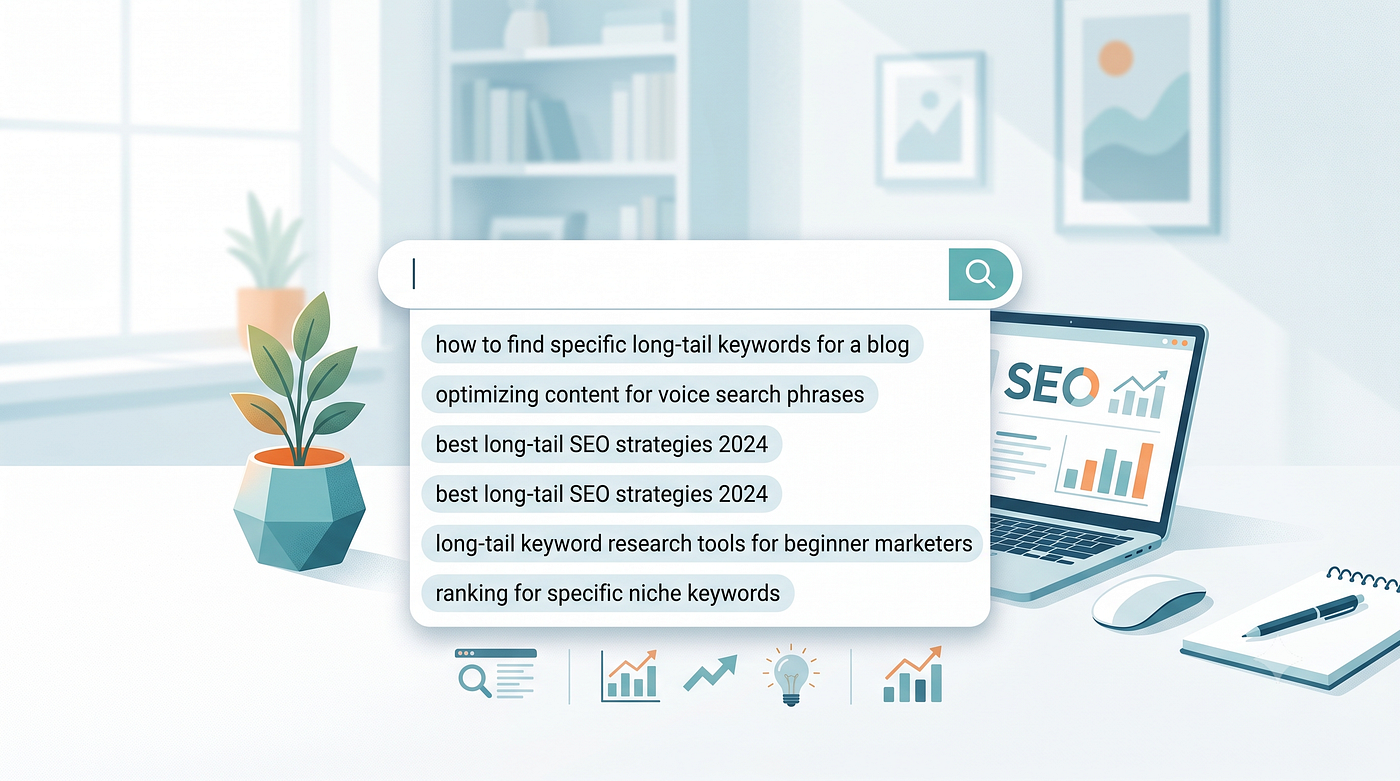
Why Long-Tail Keywords Matter in 2026
Search engines now understand meaning, not only the exact words that you typed. AI answers and chat assistants also read content in natural, conversational human language. People speak full questions into their phones instead of typing two short words. This shift makes long-tail phrases the natural language of modern search behavior today. Competition on short keywords keeps rising, while many long-tail gaps still remain open. Teams that build marketing strategy keywords around real questions earn steady, lasting traffic. Beginners can still rank in 2026 if they choose their battles wisely.
How to Build Your Long-Tail Keyword Strategy
The process below is simple, repeatable, and works for almost every industry. Follow it in order, because each step feeds the step that comes next.
Step 1: Know Your Audience Before Any Tool
Tools cannot tell you what your customer worries about late at night. Start by listing the problems your product or service actually solves for people. Write these problems in plain language, exactly as a customer would say them. Ask your support team which questions arrive again and again every single week. Read reviews, forum threads, and comments to hear the real words people use. This human research makes every later step faster and far more accurate. Skipping it is the most common mistake that beginners make when starting.
Step 2: Build a Seed Keyword List
Seed keywords are the short base terms that describe your main business topics. A bakery might use bread, cakes, cupcakes, and custom birthday order terms. Keep this list small, with roughly ten to fifteen honest core terms. These seeds are not your targets, they are only your starting points. Every long-tail phrase you find later will grow out of these roots. Group them by service, product, or customer problem to stay properly organized. A tidy sheet now saves many hours of confusion during the writing stage.
Step 3: Expand With Free and Paid Tools
Type each seed into Google and study the autocomplete suggestions that appear instantly. Scroll down and read the “People also ask” box for genuine user questions. The “related searches” section at the bottom holds more useful long-tail ideas. Free tools like Google Keyword Planner and Search Console add real performance data. Paid tools such as Ahrefs or Semrush show volume, difficulty, and content gaps. This stage is repetitive, so many teams now automate the boring parts. Alakis AI builds custom workflows that collect, clean, and sort keyword data automatically.
Step 4: Match Every Keyword to Search Intent
Intent means the reason behind the search, and it decides your page type. Informational searches want answers, so a guide or blog post fits them best. Commercial searches compare options, so a review or comparison page works much better. Transactional searches want to buy, so a product or service page suits them. Navigational searches look for a specific brand, login page, or company website. Google shows all this clearly if you simply read the current top results. Never fight the intent, because the algorithm will always protect the searcher first.

Step 5: Sort by Difficulty and Real Value
Not every long-tail keyword deserves a place in your content calendar this quarter. Check keyword difficulty scores, but treat them as guidance rather than strict law. Look at who ranks today, and ask if you can realistically beat them. A new site should target low-difficulty phrases with clear buying or learning intent. Volume matters less than relevance while your domain is still young and small. Ten easy keywords beat one impossible keyword that never brings a single visitor. Build momentum first, then chase the harder and more competitive terms later.
A Simple Example You Can Copy
Imagine you run a small accounting firm serving local restaurants and cafes. The seed keyword “accounting services” is far too broad for a young website. A better target is “accounting services for small restaurants in Manchester” instead. That phrase has lower competition and speaks directly to one clear customer group. You can then write a guide about restaurant bookkeeping mistakes and hidden costs. Each article targets one question, and together they cover the whole topic properly. This cluster approach is how small sites slowly build real topical authority.
Placing Keywords Naturally Inside Your Content
Placement matters as much as research, because search engines read structure very carefully. Put your main keyword in the title, the H1, and the opening paragraph. Use natural variations inside your H2 and H3 headings wherever they truly fit. Mention the phrase within the first hundred words and once again near the end. Add it to the meta description, the URL slug, and one image alt tag. Never repeat the same phrase endlessly just to please a search engine crawler. Write for a human first, then check that the keyword sits comfortably.
Many writers learn this balance faster with structured lessons and guided practice sessions. Alakis Campus offers practical courses that teach content optimization step by step. Trained writers make fewer mistakes and need far less editing before publishing.
Using Long-Tail Keywords in Paid Campaigns
Organic search is not the only place where these phrases prove their real value. A careful keyword strategy google ads approach lowers your average cost per click. Broad terms attract clicks from people who never intended to buy anything today. Long-tail terms attract people who already know the exact product they truly need. Use phrase match and exact match to keep your daily budget tightly controlled. Add negative keywords weekly so wasted spending never grows quietly in the background. Small budgets stretch much further when every single click carries a genuine purpose.
Mistakes Beginners Should Avoid
Keyword stuffing still happens, and it still damages both rankings and reader trust. Some beginners chase huge volume terms and then wonder why nothing ever improves. Others publish thin posts that answer the question in only two short lines. Ignoring search intent wastes effort even when the keyword research looks perfect. Many similar posts create cannibalization, where your own pages compete against each other. Forgetting internal links leaves your best pages buried deep inside the website. Fix these habits early and your growth curve becomes far more predictable.
Track, Measure, and Improve Every Month
Publishing is the beginning of the work, and never the end of it. Open Google Search Console and study impressions, clicks, and average position every week. A page with impressions but no clicks needs a stronger title and description. A page ranking eleventh often needs only a small update to reach page one. Refresh older articles with new sections, fresh data, and better internal links. Track conversions too, because rankings without leads will never pay your bills. Small monthly improvements compound into very large results across a full year.

Conclusion
Long-tail keywords remain the fairest path for beginners who lack very big budgets. They cost less, convert better, and reward patience with steady and reliable growth. Start with your audience, build seeds, expand with tools, and respect search intent. Sort keywords by difficulty, write genuinely helpful content, and place phrases with care. Review your data monthly and improve the pages that already show early promise. A disciplined seo keywords strategy turns a quiet website into a dependable growth channel. Consistency, not clever tricks, is what finally moves you onto the first page.
Ready to Grow Your Search Traffic?
Alakis Virtual helps businesses plan, write, and publish content that ranks and converts. Our team builds keyword maps, content calendars, and optimized pages for your brand. If you prefer to learn the process yourself, Alakis Campus teaches it clearly. If you want the research automated, Alakis AI can build that system. Contact Alakis Virtual today and let us build your search growth plan together.
메타데이터
- post_id
- 4f61bfabe4c2
- slug
- long-tail-keywords-strategy-for-beginners-2026-guide-4f61bfabe4c2
- url
- https://medium.com/@alakisvirtual.social/long-tail-keywords-strategy-for-beginners-2026-guide-4f61bfabe4c2
- canonical_url
- https://medium.com/@alakisvirtual.social/long-tail-keywords-strategy-for-beginners-2026-guide-4f61bfabe4c2
- author_url
- https://medium.com/@alakisvirtual.social
- status
- ok
- fetched_at
- 2026-08-10 14:37:49