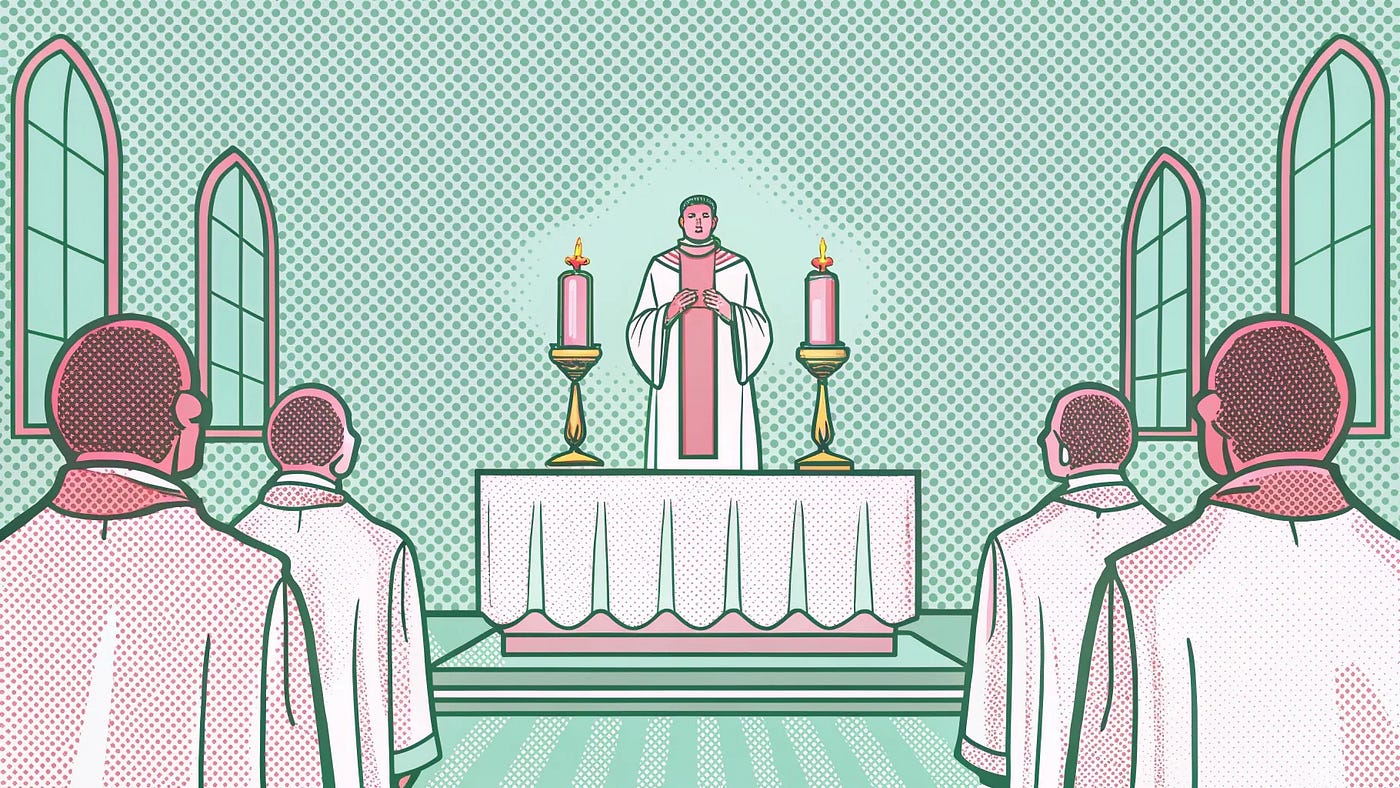
Why Classical Education Could Be the Key to Reviving Both Schools and Society
American students rank far behind their international peers, and many parents feel schools no longer instill the values that sustain civic…
Why Classical Education Could Be the Key to Reviving Both Schools and Society
American students rank far behind their international peers, and many parents feel schools no longer instill the values that sustain civic life. In a powerful TEDx talk, educator Rebekah Hagstrom makes the case that classical education — built on grammar, logic, and rhetoric — offers a way forward. But what does this ancient model look like in practice, and why might it hold the answer for our future?
🌿 This is part of an open notebook project — a second brain in public. Thanks for reading.

In her TEDxMahtomedi talk, Rebekah Hagstrom explains why she believes a classical education is the best preparation for young people and for a healthy civic life. As headmaster and founder of Liberty Classical Academy, Hagstrom describes the method, the developmental logic behind it, and the measurable academic and moral results her school has experienced. The following summarizes her case for bringing classical education to more children and communities.
Why rethink education?
Hagstrom begins from two frustrations many parents feel: academic underchallenge and a perceived erosion of values. She points to international comparisons showing American students lagging behind peers in many developed countries — ranked 14th in reading, 17th in science, and 25th in math out of 34 developed nations — and she asks how a society can thrive when young people are not being formed intellectually or morally.
“When did we lose our soul?”
She recalls a pastor’s question at a funeral to illustrate the cultural cost of that moral drift and frames classical education as a response that addresses both the mind and the soul.
The classical model: three stages that follow development
At the heart of Hagstrom’s argument is a simple, developmentally grounded structure: classical education moves students through the grammar, logic, and rhetoric stages. Each stage matches what children are naturally ready to learn and builds toward independent, persuasive thinkers.
Grammar stage (Lower School)
- Young children are excellent at memorization, so the curriculum packs foundational facts and skills into songs, chants, rhymes, and actions. These repeating, engaging methods make learning feel effortless and joyful.
- Students begin reading the classics early, working from texts that have stood the test of time and carry deep, layered content.
- Practical skills that support later learning are introduced early: cursive handwriting (for documented cognitive benefits) and Latin (as the root of many English words and Romance languages). Hagstrom notes that roughly 65% of English vocabulary originates in Latin, which helps explain improved performance on standardized tests and later language learning.
- History is taught sequentially from ancient to modern times, repeatedly across the twelve years, using primary documents instead of relying solely on textbooks so students read what thinkers of the past actually wrote.
Logic stage (Middle School)
- Adolescents naturally become more argumentative and curious about cause and reason. The curriculum capitalizes on this by emphasizing understanding over rote facts.
- Students receive formal instruction in logic: how to construct reasoned arguments, identify logical fallacies, and research carefully.
- Activities like comparative analysis, role-based writing from historical figures’ perspectives, and structured debates train students in both critical thinking and civil discourse.
- Writing instruction becomes formalized as a process, preparing them for advanced composition in later years.
Rhetoric stage (High School)
- Older teens are forming independent opinions and separating from family viewpoints. The rhetoric stage teaches them to analyze, synthesize, and then communicate their ideas with clarity and persuasion.
- Students engage in extensive discussion, debate, and two years of formal rhetoric training focused on speaking and writing effectively.
- Hagstrom calls this the “crown jewel of a classical education,” the culmination where students learn not only what to think but how to express it convincingly.
Values, character, and civic formation
Classical education, as Hagstrom presents it, intentionally addresses moral formation alongside intellectual training. At her school, the soul is nurtured through a Judeo-Christian perspective, while students are also exposed to other faith traditions so they can understand differing viewpoints.
The approach aims to cultivate virtues such as respect for others (including those with opposing beliefs), responsibility, accountability, compassion, and a durable internal moral compass to guide decision-making.
Outcomes Hagstrom reports
Hagstrom reports strong outcomes for students at Liberty Classical Academy:
- Academic: students score highly on standardized tests; Hagstrom cites performance in the top tiers nationally on college entrance exams (reported roughly in the top 13% on the ACT and top 17% on the SAT).
- Financial: graduates receive meaningful scholarship offers — Hagstrom mentions an average estimate of about $3,000 per student per year toward college.
- Skills and habits: students become deep thinkers who can reason logically, write well, and speak persuasively. Above all, they “learn how to learn,” a phrase Hagstrom highlights as central to the model.
- Moral and civic benefits: students demonstrate respect for opposing views, internalize guiding values, and show character traits that shift focus from self toward service of others.
A vision for civic life
Hagstrom asks readers to imagine a society in which citizens know their history in depth, can distinguish reason from emotion, recognize logical fallacies, and communicate respectfully. Such citizens would be harder to manipulate, better equipped to avoid repeating past mistakes, and more able to debate public issues without denigrating one another.
Her closing invitation is a practical one: consider what type of education future leaders — and one’s own children — should receive. Classical education, she argues, produces not only high academic performance but the habits, virtues, and rhetorical abilities necessary for a flourishing civic life.
Training the Mind and Character
Rebekah Hagstrom’s summary of classical education presents a coherent, developmentally informed program that trains the mind and forms character. By aligning curriculum with natural stages of growth, using timeless texts and primary sources, teaching logical reasoning and persuasive rhetoric, and attending to moral formation, classical schools aim to create citizens who think deeply, speak clearly, and act responsibly. For parents and educators seeking an education that marries intellectual rigor with moral purpose, this model offers a compelling alternative.
- 📬 Want more insights like this? Subscribe to my Substack for original reflections and behind-the-scenes commentary.
- 📺 Watch the full video here.
메타데이터
- post_id
- 4f75a613a11e
- slug
- why-classical-education-could-be-the-key-to-reviving-both-schools-and-society-4f75a613a11e
- url
- https://medium.com/@johnricard/why-classical-education-could-be-the-key-to-reviving-both-schools-and-society-4f75a613a11e
- canonical_url
- https://medium.com/@johnricard/why-classical-education-could-be-the-key-to-reviving-both-schools-and-society-4f75a613a11e
- author_url
- https://medium.com/@johnricard
- status
- ok
- fetched_at
- 2026-07-18 00:48:11