Navigating the Horizon: Tax Law Changes and the TCJA Expiration in 2025
As the calendar inches toward December 31, 2025, the tax and accounting world is abuzz with anticipation over the expiration of key…
Navigating the Horizon: Tax Law Changes and the TCJA Expiration in 2025
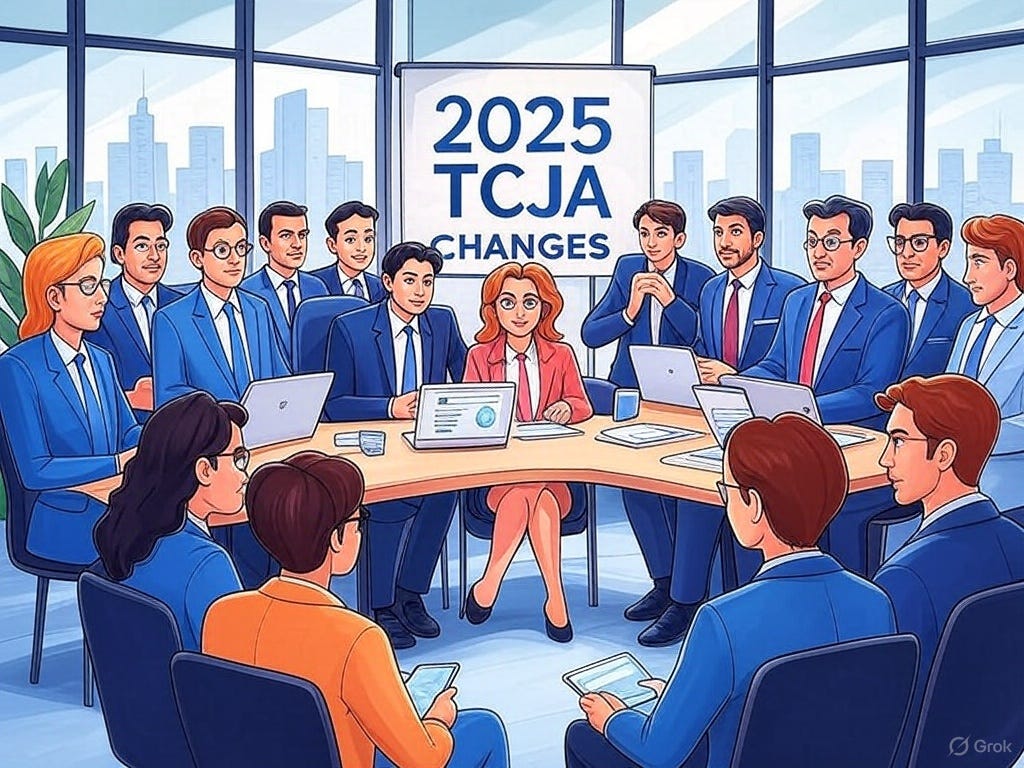
As the calendar inches toward December 31, 2025, the tax and accounting world is abuzz with anticipation over the expiration of key provisions from the Tax Cuts and Jobs Act (TCJA) of 2017. This landmark legislation, which reshaped the U.S. tax landscape, is set to see many of its temporary measures sunset, potentially triggering significant changes to personal income tax rates, estate tax exemptions, and corporate tax structures. With a new presidential administration taking office in 2025, debates over extensions, modifications, or entirely new tax policies are heating up. Tax professionals and firms are proactively preparing clients for these shifts, emphasizing strategic planning to mitigate uncertainty and capitalize on opportunities.
[embed]
The TCJA: A Recap and What’s at Stake
Enacted under President Donald Trump, the TCJA introduced sweeping reforms, including lower personal and corporate tax rates, increased standard deductions, and a doubled estate tax exemption. However, many of these provisions were temporary, designed to expire after 2025 unless extended by Congress. As the deadline approaches, the potential reversion to pre-TCJA rules is prompting urgent discussions among taxpayers, advisors, and policymakers.
Personal Income Tax Rates
One of the TCJA’s most visible changes was the reduction of individual income tax rates across most brackets. For example, the top marginal rate dropped from 39.6% to 37%, and other brackets saw similar cuts. If these provisions expire, rates will revert to their pre-2017 levels, increasing tax liabilities for many households. For high earners, this could mean a nearly 3% jump in their top rate, while middle-income families may also face higher effective taxes due to bracket adjustments.
Additionally, the TCJA’s expansion of the standard deduction (nearly doubled to $12,950 for individuals and $25,900 for married couples filing jointly in 2022, adjusted annually for inflation) and the elimination of personal exemptions are set to reverse. This could complicate tax planning, particularly for families with multiple dependents. Tax firms are advising clients to model scenarios under both current and potential post-2025 tax regimes to optimize deductions and credits now.
Estate Tax Exemptions
The TCJA doubled the federal estate and gift tax exemption from $5.49 million per individual in 2017 to $11.18 million in 2018, with annual inflation adjustments bringing it to approximately $14 million per individual in 2025. This allowed wealthy families to transfer significantly more assets tax-free. Upon expiration, the exemption is expected to revert to around $7 million (adjusted for inflation), effectively doubling the number of estates subject to the 40% federal estate tax.
This looming change is a critical concern for high-net-worth clients. Estate planning professionals are urging action now, such as leveraging the current high exemption through gifting strategies or trusts before the window closes. “The potential halving of the exemption is a wake-up call,” says Sarah Thompson, a CPA and estate planning specialist. “Clients need to act proactively to lock in the current benefits, especially with the uncertainty of retroactive legislation.”
Corporate Tax Rates
The TCJA slashed the corporate tax rate from 35% to 21%, a move credited with boosting business investment but criticized for widening the federal deficit. If the provision sunsets, the rate could revert to 35%, significantly increasing tax burdens for C corporations. However, political consensus on corporate taxes is murky. Some policymakers advocate for a compromise rate (e.g., 25–28%), while others push for maintaining the 21% rate to preserve U.S. competitiveness.
Small businesses, particularly pass-through entities like LLCs and S corporations, are also watching closely. The TCJA’s 20% Qualified Business Income (QBI) deduction, which benefits many pass-through owners, is also set to expire. Its loss could raise effective tax rates for millions of entrepreneurs. Firms are helping business clients evaluate restructuring options, accelerating income, or investing in tax-advantaged opportunities before 2026.
The Political Landscape: Extensions or New Policies?
The TCJA’s expiration coincides with a new administration following the 2024 election, adding complexity to the tax outlook. President-elect Donald Trump, who championed the TCJA, has signaled support for extending its provisions or introducing new tax cuts, potentially including a further reduction in corporate rates or expanded individual relief. However, a divided Congress or fiscal concerns — given the Congressional Budget Office’s projection of a $1.9 trillion deficit in 2025 — could stall such plans.
Conversely, Democratic proposals, such as those floated by Vice President Kamala Harris during her campaign, emphasize raising corporate taxes and introducing wealth taxes while preserving middle-class relief. A bipartisan compromise could emerge, but gridlock remains a risk. “The political environment is as critical as the tax code itself,” notes Michael Chen, a tax policy analyst. “Firms must prepare clients for multiple scenarios, from full expiration to partial extensions.”
How Firms Are Preparing Clients
Tax and accounting firms are taking a proactive stance, leveraging technology and expertise to guide clients through this pivotal moment. Key strategies include:
- Scenario Planning: Firms are using advanced tax software to model outcomes under current and post-TCJA rules, helping clients understand potential tax liabilities and optimize strategies like Roth conversions or charitable giving.
- Accelerating Income and Deductions: Advisors are recommending that clients accelerate income into 2025 or defer deductions to 2026, depending on their tax bracket and the likelihood of higher rates.
- Estate Planning Urgency: For high-net-worth clients, firms are prioritizing irrevocable trusts, spousal lifetime access trusts (SLATs), and other tools to utilize the $14 million exemption before it shrinks.
- Business Restructuring: Companies are exploring entity changes, such as converting from pass-through to C corporation status, to hedge against QBI deduction loss or corporate rate hikes.
- Client Education: Firms are hosting webinars and publishing guides to demystify the TCJA expiration, emphasizing the need for early action. “Communication is key,” says Thompson. “Clients who understand the stakes are more likely to act decisively.”
Looking Ahead: A Time for Action
The TCJA expiration is not just a tax event; it’s a catalyst for strategic financial planning. Whether it’s a family adjusting to higher income taxes, an estate planner securing wealth for future generations, or a business bracing for a new corporate tax reality, the end of 2025 marks a turning point. Tax professionals are at the forefront, armed with data-driven insights and a commitment to client success.
As debates over extensions or new policies unfold, one thing is clear: inaction is not an option. Clients who engage now — working closely with their advisors to navigate uncertainties — will be best positioned to thrive in the post-TCJA era. For more resources, firms like Wolters Kluwer and Surgent offer tools and CPE courses to stay ahead of the curve. The clock is ticking, and 2025 is shaping up to be a defining year for tax planning.
메타데이터
- post_id
- 4f7bd9eb3121
- slug
- navigating-the-horizon-tax-law-changes-and-the-tcja-expiration-in-2025-4f7bd9eb3121
- url
- https://medium.com/@jakemlatimer/navigating-the-horizon-tax-law-changes-and-the-tcja-expiration-in-2025-4f7bd9eb3121
- canonical_url
- https://medium.com/@jakemlatimer/navigating-the-horizon-tax-law-changes-and-the-tcja-expiration-in-2025-4f7bd9eb3121
- author_url
- https://medium.com/@jakemlatimer
- status
- ok
- fetched_at
- 2026-06-26 03:39:16