We know it’s hurting us, so why don’t we stop?
Technical process of coming up with a solution.
We know it’s hurting us, so why don’t we stop?
Technical process of coming up with a solution.
Understanding the Problem
To move beyond assumptions, I mapped user behavior across different stages using affinity mapping, empathy mapping, personas, and journey flows.
Across all methods, a consistent pattern emerged:
People are aware of the impact of screen time but struggle to act on it.
1. Affinity Mapping
Grouped raw inputs to identify recurring patterns in physical and mental health issues.

2. Stakeholder Mapping
Identified all stakeholders influencing the problem from users to systems and policies.

Mapped out our stakeholders
Insights:
- The problem is influenced by systems, not just individuals
- Institutions and workplaces shape user behavior through schedules and expectations
2. User Understanding
Personas and empathy maps highlighted a shared mindset:
- “I should take a break, but I can’t right now.”
- “If I slow down, my work will suffer.”
This reflects a conflict between health and productivity, where productivity almost always wins.
User Persona
Defined key user types to represent common goals, frustrations, and needs.


Personas of different individuals
Insights:
- Both students and professionals share similar pain points despite different routines
- Core needs revolve around balance, focus, and reducing fatigue
Empathy Mapping
Captured what users say, think, feel, and do to understand their mindset and behavior.
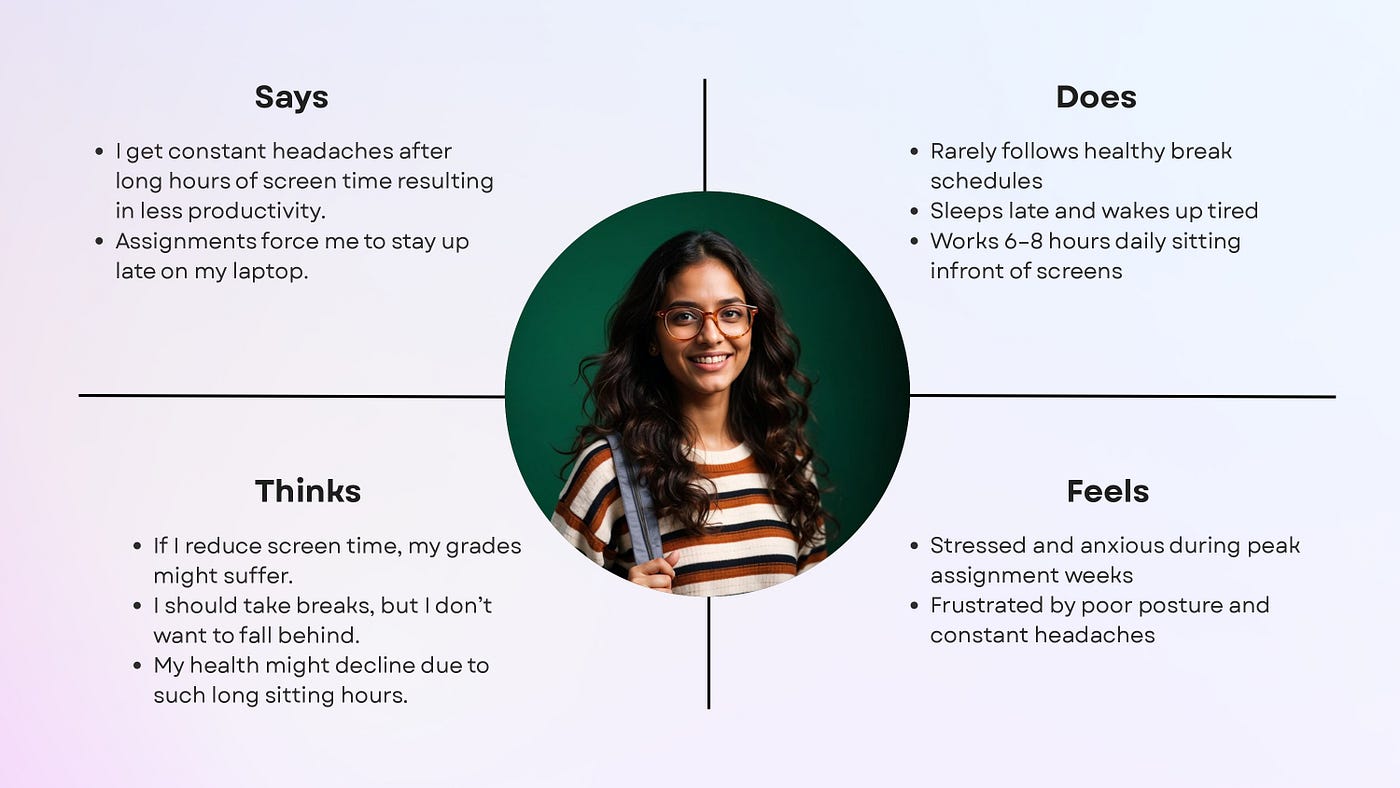


Empathy mapping done of one of our user
Insights:
- Users feel conflicted between taking care of health and meeting deadlines
- Guilt and stress are common, even when users are aware of unhealthy habits
User Journey Mapping
Mapped daily routines to identify when and where screen fatigue builds up.


Mapped daily routine of different users
Insights:
- Screen exposure starts early and continues throughout the day with little recovery time
- Fatigue builds gradually, leading to reduced focus and extended screen use at night
- There are multiple missed opportunities for small, effective interventions
Ideations
Based on the research insights, I explored multiple directions to address the gap between awareness and action.

- Gamified Break System Using rewards, streaks, and points to motivate users to take consistent breaks.
- Productivity Timers with Break Integration Structuring work sessions with built-in break intervals to reduce decision fatigue.
- Smart Screen Interventions Concepts like screen dimming or overlays during long usage to gently interrupt continuous screen time.
- Posture & Activity Tracking Detecting sitting patterns and suggesting movement or posture correction in real time.
- AI-Based Wellness Suggestions Personalized nudges such as “stretch now” or “rest your eyes” based on usage patterns.
- Physical + Digital Solutions Exploring ideas like smart glasses or device-based interventions that reduce strain.
- Reminder Systems Timely prompts to take breaks, hydrate, or relax — without being intrusive.
- Guided Wellness Activities Quick exercises, breathing techniques, or relaxation prompts during breaks.
Insights:
- The solution should not feel like an interruption.
- It should fit within existing workflows.
- It should make breaks feel rewarding, not restrictive.
Final Solution: A gamified break management system
The final solution is a digital gamified break management system designed to help users build consistent break habits without disrupting their work.
Core Features:
- Break nudges Timely, context-aware reminders that don’t feel intrusive
- Gamification Rewards, streaks, and points to build consistency
- Guided break activities Quick, actionable exercises during breaks
- Full screen overlays It helps to know if the person actually took the break or not as the desktop screen becomes unaccessible during the break time.
- Flexible control Options to snooze or skip, with light consequences to maintain accountability.
Information architecture
Based on the research insights, I explored multiple directions to address the gap between awareness and action.

Flow of the app.
This blog covers the research and thinking behind the project. For the full case study and final solution, visit:
[embed]My Framer Site Made with Framerishtuff.framer.website
메타데이터
- post_id
- 4f8b1a366ffd
- slug
- we-know-its-hurting-so-why-don-t-we-stop-4f8b1a366ffd
- url
- https://medium.com/@ishikajain7015/we-know-its-hurting-so-why-don-t-we-stop-4f8b1a366ffd
- canonical_url
- https://medium.com/@ishikajain7015/we-know-its-hurting-so-why-don-t-we-stop-4f8b1a366ffd
- author_url
- https://medium.com/@ishikajain7015
- status
- ok
- fetched_at
- 2026-06-09 15:37:30