Chikankari Sarees: The Threads of History and Elegance
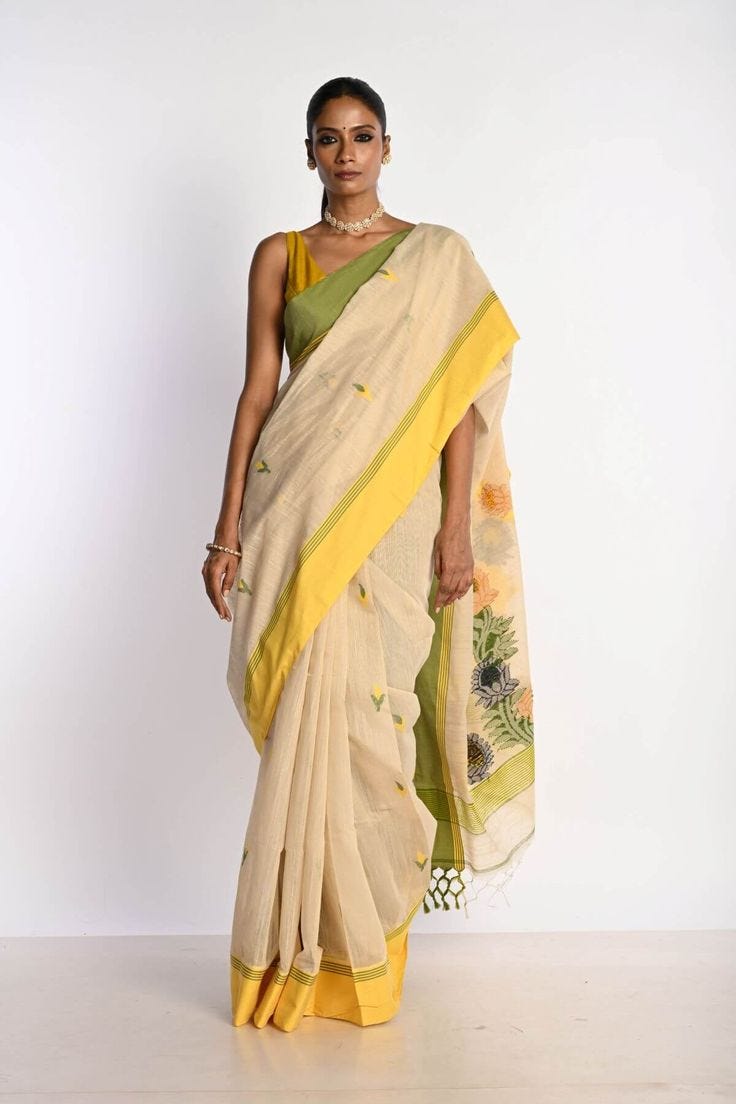
Chikankari sarees are the epitome of grace, blending centuries-old craftsmanship with modern elegance. Originating from the city of…
Chikankari Sarees: The Threads of History and Elegance
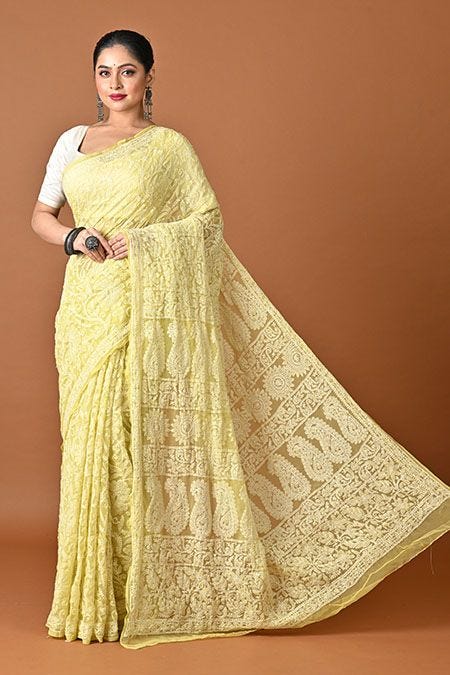
Chikankari sarees are the epitome of grace, blending centuries-old craftsmanship with modern elegance. Originating from the city of Lucknow, Uttar Pradesh, these sarees are celebrated for their intricate hand-embroidery, which transforms simple fabrics into works of art. Let us delve into the fascinating history of Chikankari sarees and explore the different types that have evolved over the years.
A Glimpse into the History of Chikankari Sarees
The Mughal Era: Origins of Chikankari
The origins of Chikankari embroidery can be traced back to the Mughal era, around the late 16th or early 17th century. While the exact roots of the craft are debated, it is widely believed to have Persian influences. The term “Chikan” is derived from the Persian word Chikeen, meaning embroidery.

The art form gained prominence under the patronage of Empress Noor Jahan, the wife of Emperor Jahangir. Renowned for her artistic sensibilities, Noor Jahan is said to have introduced Chikankari embroidery to her court. Initially, it was practiced exclusively for the Mughal elite, with delicate white-on-white embroidery symbolizing sophistication and luxury. Over time, this intricate craft extended to sarees, becoming a staple in the royal wardrobe.
The Nawabi Era: Flourishing in Lucknow
Chikankari reached its zenith during the rule of the Nawabs of Awadh in Lucknow. The Nawabs, known for their patronage of arts and culture, provided a significant boost to Chikankari artisans. The sarees, with their intricate motifs and refined embroidery, became a symbol of the Nawabi lifestyle, epitomizing elegance and opulence.
Colonial Decline and Revival
The British colonial era brought challenges for Chikankari artisans. The influx of machine-made textiles and industrialization led to a decline in the demand for hand-embroidered garments. However, the craft survived, thanks to the dedication of a few families who preserved the tradition.
Post-independence, efforts to revive India’s traditional handicrafts brought Chikankari embroidery back into the limelight. Organizations and cooperatives were established to support artisans and promote Chikankari globally. Today, Chikankari sarees are celebrated as a fusion of heritage and contemporary fashion.
Types of Chikankari Sarees
Chikankari sarees are as diverse as they are beautiful. Depending on the fabric, embroidery techniques, and designs, several types of Chikankari sarees have emerged:
1. Based on Fabrics
The choice of fabric plays a crucial role in the final look of a Chikankari saree. Traditional and modern materials enhance the versatility of this craft:
- Cotton Chikankari Sarees: Ideal for everyday wear, these sarees are light, breathable, and perfect for summer.
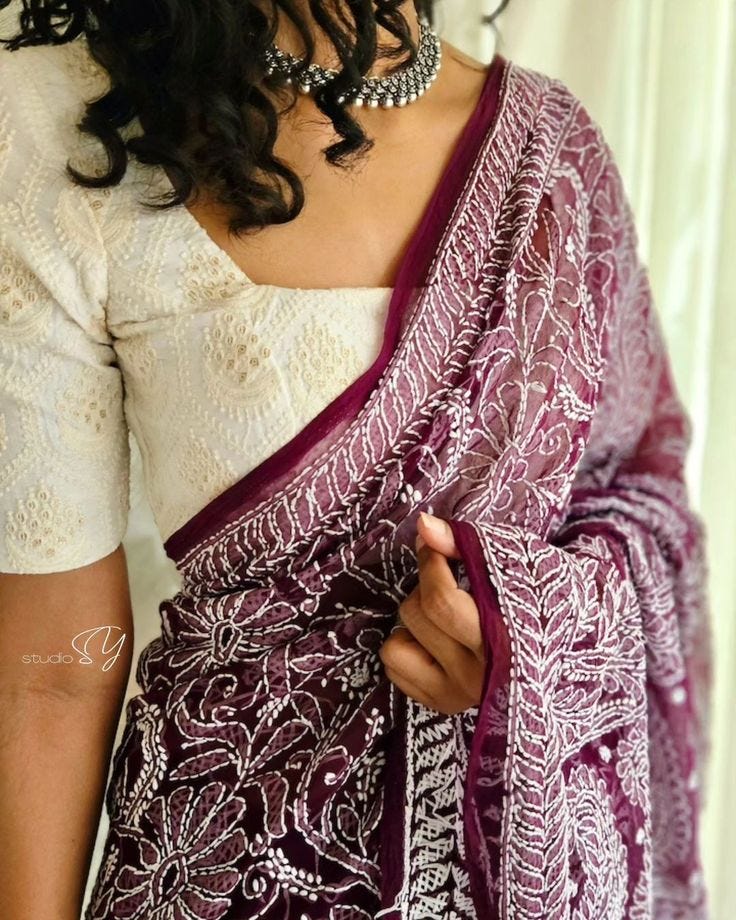
- Georgette Chikankari Sarees: Popular for formal occasions, the flowing texture of georgette enhances the embroidery’s beauty.

- Silk Chikankari Sarees: A luxurious variant, silk sarees with Chikankari work are perfect for weddings and festive occasions.
- Organza Chikankari Sarees: These sarees add a touch of contemporary charm, combining transparency with intricate embroidery.

2. Based on Embroidery Techniques
The uniqueness of Chikankari lies in its diverse stitches, each adding a distinct texture and dimension:
- Bakhiya (Shadow Work): Features embroidery on the reverse side of the fabric, creating a shadow-like effect on the front.

- Phanda and Murri: These stitches form small knots or grain-like patterns, often used for floral motifs.

- Keel Kangan: Adds depth to the embroidery, typically seen in paisleys and other intricate designs.

- Jaali Work: A lattice-like openwork that requires great skill and precision.

3. Based on Motifs and Designs
The motifs on Chikankari sarees are inspired by nature and Mughal architecture:
- Floral Designs: Flowers, creepers, and vines are the most common motifs, symbolizing elegance and simplicity.

- Geometric Patterns: Adds a modern touch to traditional embroidery.

- Paisley Motifs: A classic design inspired by Mughal aesthetics.

4. Contemporary Variations
Modern Chikankari sarees often incorporate embellishments like sequins, beads, and mirror work. These additions make them suitable for festive and bridal wear, blending traditional craftsmanship with contemporary flair.
Conclusion
Chikankari sarees are more than just garments; they are a testament to India’s rich cultural heritage and the enduring artistry of its craftsmen. From their origins in the Mughal courts to their modern adaptations, these sarees continue to captivate fashion enthusiasts around the world.
Whether you’re drawn to their historical charm or their timeless elegance, a Chikankari saree is a must-have for anyone who appreciates the beauty of handcrafted textiles. Each stitch tells a story, connecting the past to the present in the most exquisite way.
메타데이터
- post_id
- 4f8cd7e77046
- slug
- chikankari-sarees-the-threads-of-history-and-elegance-4f8cd7e77046
- url
- https://medium.com/@shirlssharings/chikankari-sarees-the-threads-of-history-and-elegance-4f8cd7e77046
- canonical_url
- https://medium.com/@shirlssharings/chikankari-sarees-the-threads-of-history-and-elegance-4f8cd7e77046
- author_url
- https://medium.com/@shirlssharings
- status
- ok
- fetched_at
- 2026-07-21 10:23:46