Morality Who?
What is morality?
Morality Who?
What is morality?
For centuries, we have treated it as a set of rigid rules that separate the civilized world from the wild. We grow up believing that no matter what, things like stealing or violence are fundamentally wrong, But what happens when a country is completely fractured by severe poverty, overpopulation, and deep corruption? Suddenly, our textbook definitions of right and wrong start to fall apart and are not the same.
Think about the extreme divides we see in a place like India, where multimillion dollar high rises look right down onto sprawling slums. When the system works purely to protect the rich, cache wealth, and leave millions of people with absolutely no way to survive, traditional morality stops being a guide and becomes a trap. Expecting someone who sleeps on a freezing pavement to respect the property laws of the wealthy just to be a “good citizen” doesn’t feel like morality anymore. It honestly feels like a joke.
To understand why a desperate person turning to crime in a broken society isn’t a failure of personal character, we have to look at how the earliest modern philosophers built the concepts of law and human rights in the first place.
Back in the 17th and 18th centuries, thinkers like Thomas Hobbes and John Locke started with a simple thought experiment: What were humans like before governments, laws, and police existed? They called this the State of Nature. To Hobbes, it was a nightmare of pure survival where resources were scarce and life was solitary, poor. To escape this terror, humanity originally made a trade called the Social Contract. Citizens gave up absolute freedom, and in return, the government guaranteed them safety and the right to live.
This contract is the invisible foundation of our laws. But it comes with a reality check from Immanuel Kant: ought implies can. You cannot logically demand someone to follow a rule unless it is practically possible for them to do so. If a system offers a person zero options to earn an honest living, it cannot realistically expect them to obey its rules.
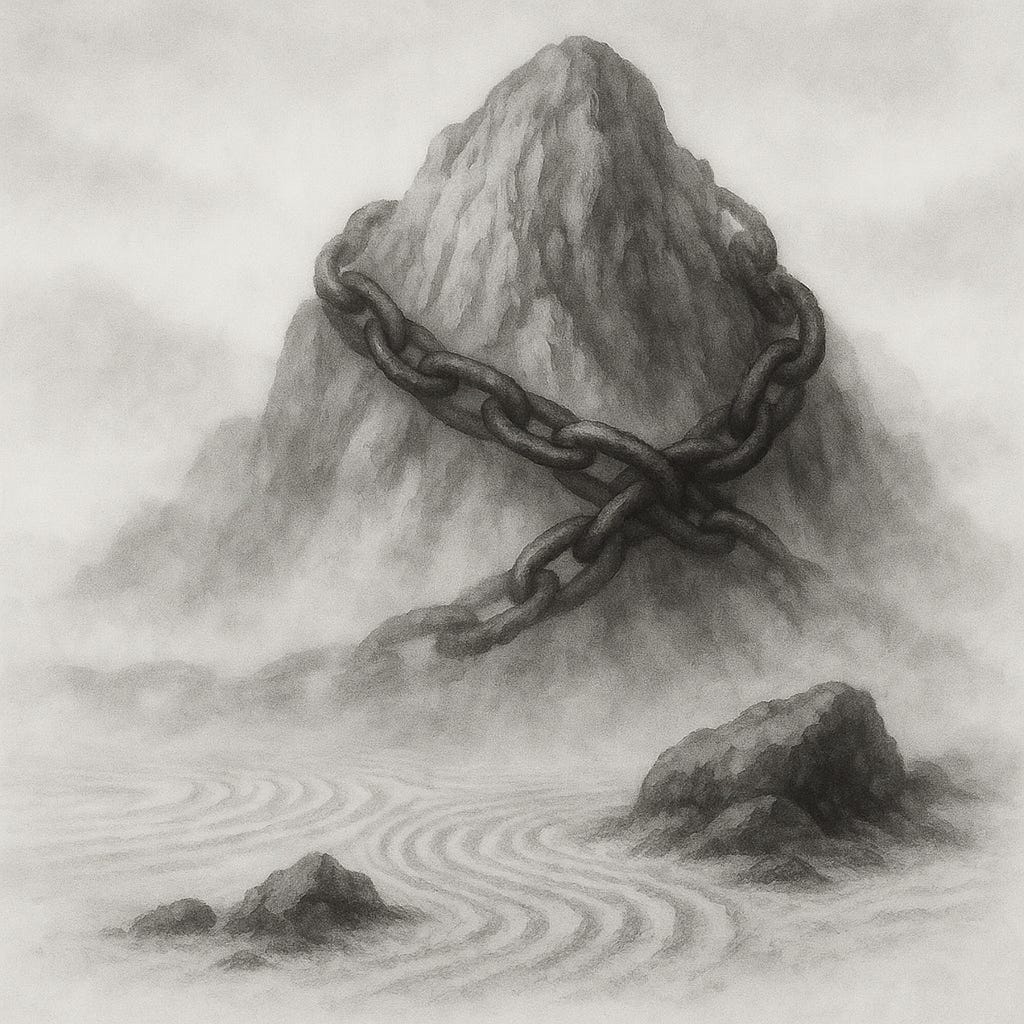
When a corrupt elite uses divide and rule tactics stoking social friction while the system fails the state hasn’t just strained the contract, it has broken it.
Jean Jacques Rousseau argued that laws in an unequal society are often just a trick played by the powerful. They protect property, but fail to protect life. When survival is threatened by this kind of neglect, Thomas Hobbes noted that you are automatically released from the contract and thrown back into a desperate “State of Nature.”
In that space, conventional morality resets to zero. A person stealing to feed their family is no longer bound by the laws of a society that abandoned them as they are technically operating under the harsh law of biological necessity.
When chaos is all over a failing nation, it’s easy to blame the individuals on the street. The ordinary citizens who suffer from these crimes are entirely justified in their anger and fear. They obviously aren’t wrong but if we think about it, neither is the starving thief.
As Karl Marx observed, human morals don’t exist in a vacuum as they are entirely shaped by our economic realities. The moral guilt belongs to the system. Demanding perfect behavior from people given no choice but to scramble for scraps is a farce. True morality cannot exist where the baseline right to survive has been stripped away.
메타데이터
- post_id
- 4fa17f89e1c6
- slug
- morality-who-4fa17f89e1c6
- url
- https://medium.com/@taibajaved1016/morality-who-4fa17f89e1c6
- canonical_url
- https://medium.com/@taibajaved1016/morality-who-4fa17f89e1c6
- author_url
- https://medium.com/@taibajaved1016
- status
- ok
- fetched_at
- 2026-06-09 15:37:30