Welcome to the Future: Google’s New AI Model Enables Robots to Follow Natural Language Commands
Artificial Intelligence has come a long way in the last few years, and we are now witnessing some remarkable advancements in the field. In…
Welcome to the Future: Google’s New AI Model Enables Robots to Follow Natural Language Commands
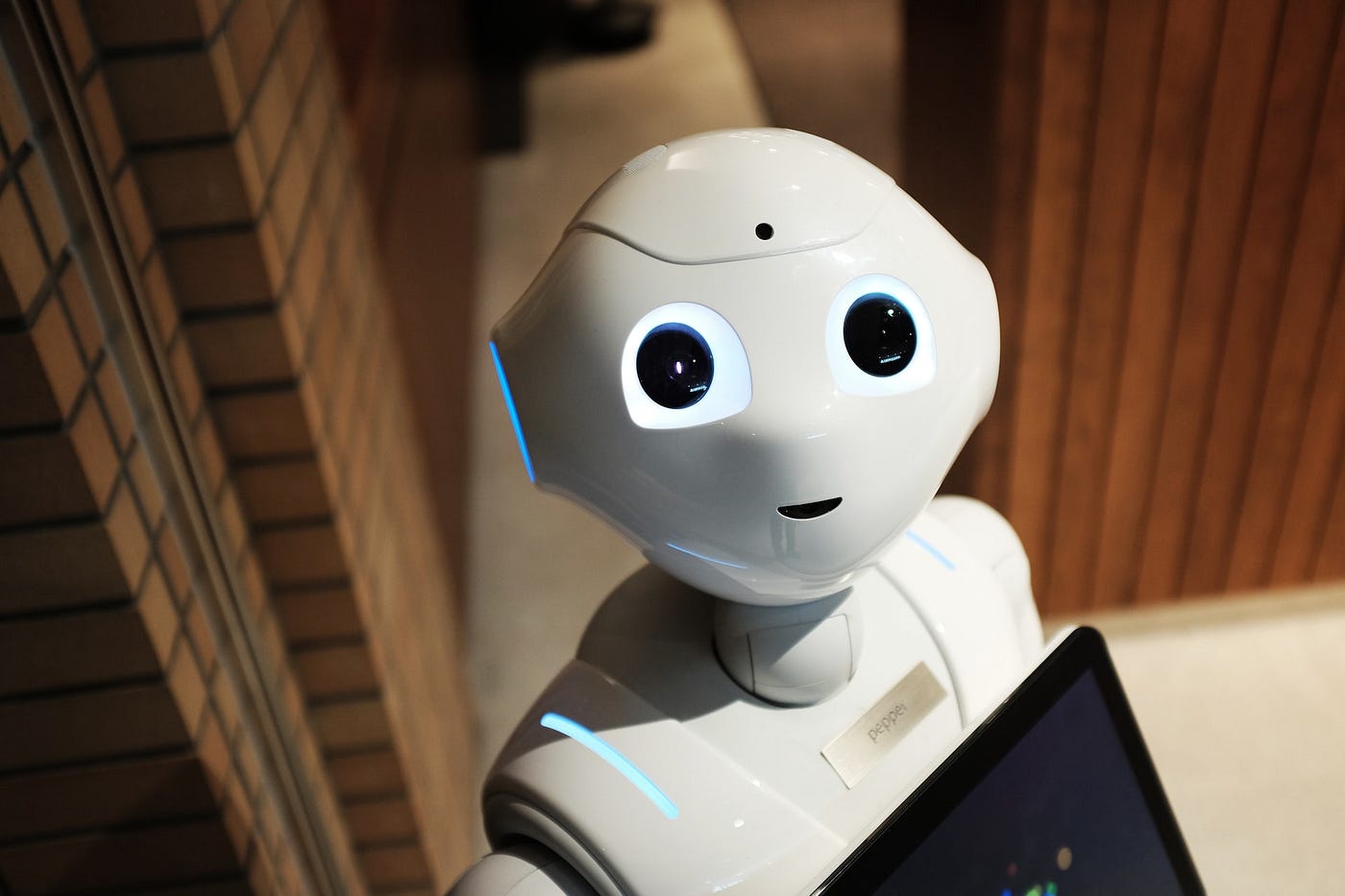
Image by Alex Knight
Artificial Intelligence has come a long way in the last few years, and we are now witnessing some remarkable advancements in the field. In recent years, machine learning has made tremendous progress in various domains, such as natural language processing, image recognition, and robotics. Perhaps a more relatable example, ChatGPT, following OpenAI’s recent open access that allows you to access their GPT-3.5 turbo and Whisper APIs.
Google, one of the pioneers in this field, has recently introduced a new AI model, PaLM-E, that enables robots to follow natural language commands, making human-robot interaction much easier and more efficient.
What is Palm-E?
[embed]
PaLM-E is an innovative AI model that has been designed to enable robots to understand natural language commands. It stands for “Pretrained Auto-regressive Language Model with Embodied Knowledge.” The model has been developed by Google Research, and it combines two of their most advanced models — PaLM and ViT-22B.
The PaLM model is a large-scale language model that can process large amounts of text data, while ViT-22B is a vision model that can analyze images and extract useful information. PaLM-E combines the strengths of these two models to create a single model that can handle both visual and textual input.
PaLM-E is considered a strong model in the visual-language domain, performing on par with top-performing models that focus solely on vision language, such as Flamingo and PaLI.
Well, GPT-4 is coming and I hear it would be a multimodal model as well.
How Does PaLM-E Work?

Image by Pat Krupa- Unsplash
PaLM-E works by injecting observations into a pre-trained language model. It uses a process that is similar to how natural language is processed by a language model. The model first splits the input into tokens that represent words or subwords. Each token is associated with a high-dimensional vector of numbers, called a token embedding.
The language model then applies mathematical operations on these vectors to predict the next most likely word token. By feeding the predicted word back to the input, the language model can iteratively generate longer and longer text.
PaLM-E takes this process one step further by incorporating visual input, such as images, into the language model. The model first transforms the visual input into a representation that can be processed by the language model.
The resulting model can perform a wide range of tasks, including visual tasks such as image description, object detection, and scene classification, as well as language tasks such as quoting poetry, solving math equations, and generating code.
Why is this a big step for robotics?
PaLM-E has significant implications for robotics. By enabling robots to understand natural language commands, it makes human-robot interaction much easier and more intuitive. With PaLM-E, robots can understand spoken or written commands and respond accordingly. This makes it much easier to program robots for specific tasks, such as manufacturing or logistics, without requiring specialized programming knowledge.
According to the researchers, PaLM-E demonstrates “positive transfer,” which indicates that it can leverage the knowledge and abilities obtained from past tasks and employ them in new tasks, resulting in improved performance compared to single-task robotic models.
Additionally, they discovered that PaLM-E is capable of analyzing a sequence of inputs containing both visual and language data, as well as performing “multi-image inference,” which involves using multiple images to make predictions.
PaLM-E can also help robots learn from their environment. By incorporating sensor data from the robot, PaLM-E can learn from its experiences and adapt to new situations. This can help robots become more autonomous and make decisions based on their surroundings.
Are We Moving too fast?
While the development of PaLM-E is undoubtedly a significant breakthrough in the field of robotics and AI, it’s essential to address the potential concerns that come with the integration of such technology into our daily lives. Robots able to follow natural language commands raises questions about their impact on the job market and the overall implications on society.
However, it’s important to remember that this technology is still in its early stages and can have significant benefits in fields such as healthcare and manufacturing. The key is to embrace these advancements while also considering the potential consequences and finding ways to mitigate them. It’s an exciting time in the world of AI, and as we move forward, it’s crucial to balance progress with ethical considerations.
Conclusion
PaLM-E is a revolutionary new AI model that has significant implications for robotics, natural language processing, and computer vision. By combining advanced language and vision models, PaLM-E can perform a wide range of tasks in both visual and textual domains.
메타데이터
- post_id
- 4fae7c5aaa87
- slug
- welcome-to-the-future-googles-new-ai-model-enables-robots-to-follow-natural-language-commands-4fae7c5aaa87
- url
- https://medium.com/@charlesotienoduya/welcome-to-the-future-googles-new-ai-model-enables-robots-to-follow-natural-language-commands-4fae7c5aaa87
- canonical_url
- https://medium.com/@charlesotienoduya/welcome-to-the-future-googles-new-ai-model-enables-robots-to-follow-natural-language-commands-4fae7c5aaa87
- author_url
- https://medium.com/@charlesotienoduya
- status
- ok
- fetched_at
- 2026-07-26 00:50:03




