A Pope Put a Corpse on Trial: The Cadaver Synod of 897
A corpse was dragged into a church, dressed in papal robes, and made to stand trial. The story is even stranger than it sounds.
A Pope Put a Corpse on Trial: The Cadaver Synod of 897
A corpse was sitting on a throne in a church.
Not a statue. Not a wax figure.
A real body.
It was January 897 in Rome. Inside the Church of St. John Lateran, Pope Formosus had been dressed in full papal robes and placed in a courtroom.
There was one small problem. He had been dead for about nine months.
His successor, Pope Stephen VII, decided that wasn’t an obstacle.
So he ordered the body dug up, brought in, and put on trial.
This event is known as the Cadaver Synod, a trial where a long-dead pope was exhumed and placed in court.
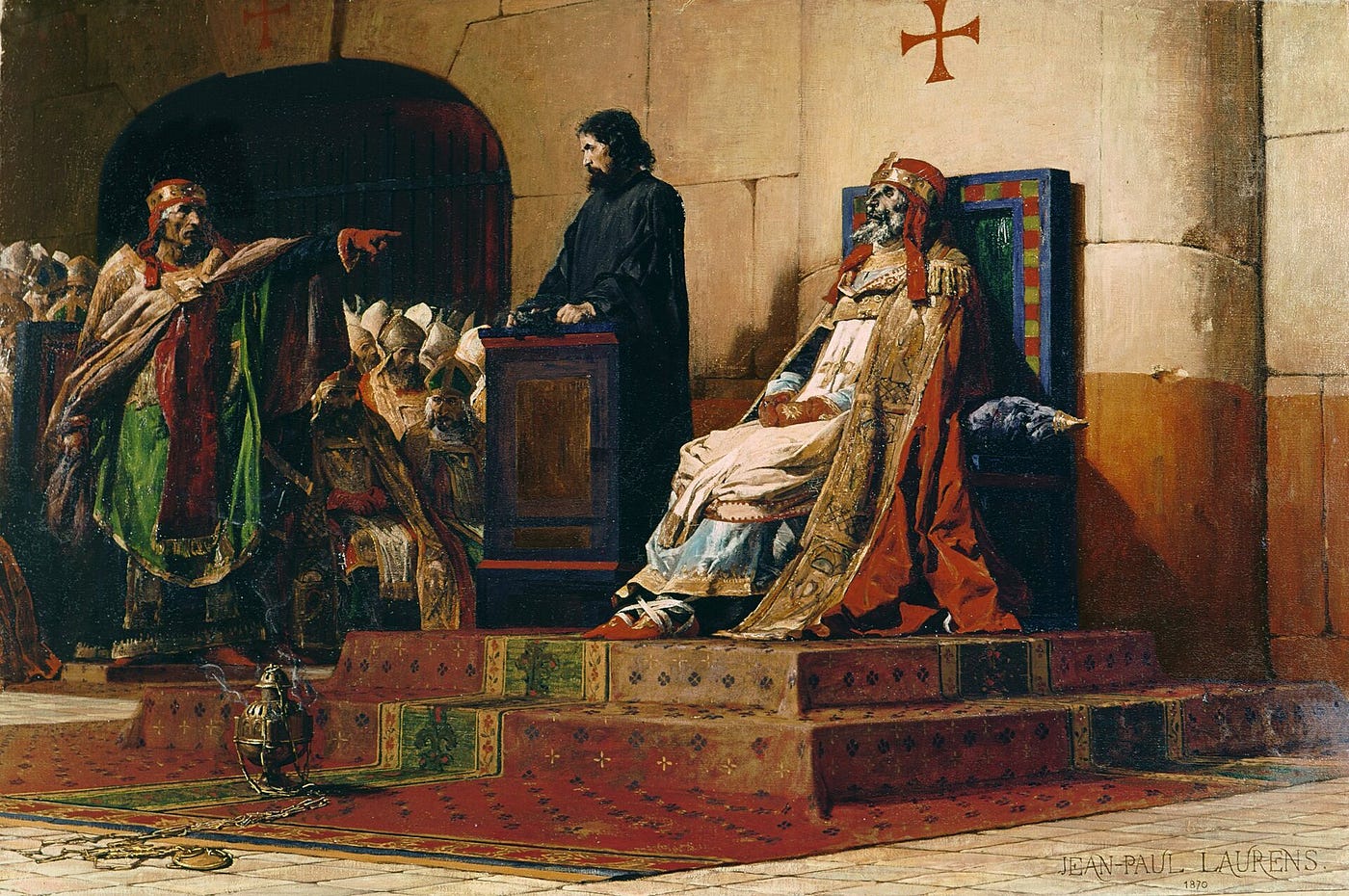
Jean-Paul Laurens, Le Pape Formose et Étienne VII (1870), Wikimedia Commons.
Most political conflicts end when one side dies. This one didn’t.
When Formosus died, the people who opposed him saw an opening. They also saw unfinished business.
What followed became one of the strangest legal proceedings in history.
A papacy under pressure
Rome in the late ninth century was not stable.
Between 896 and 904, the papacy changed hands nine times. That’s not a typo.
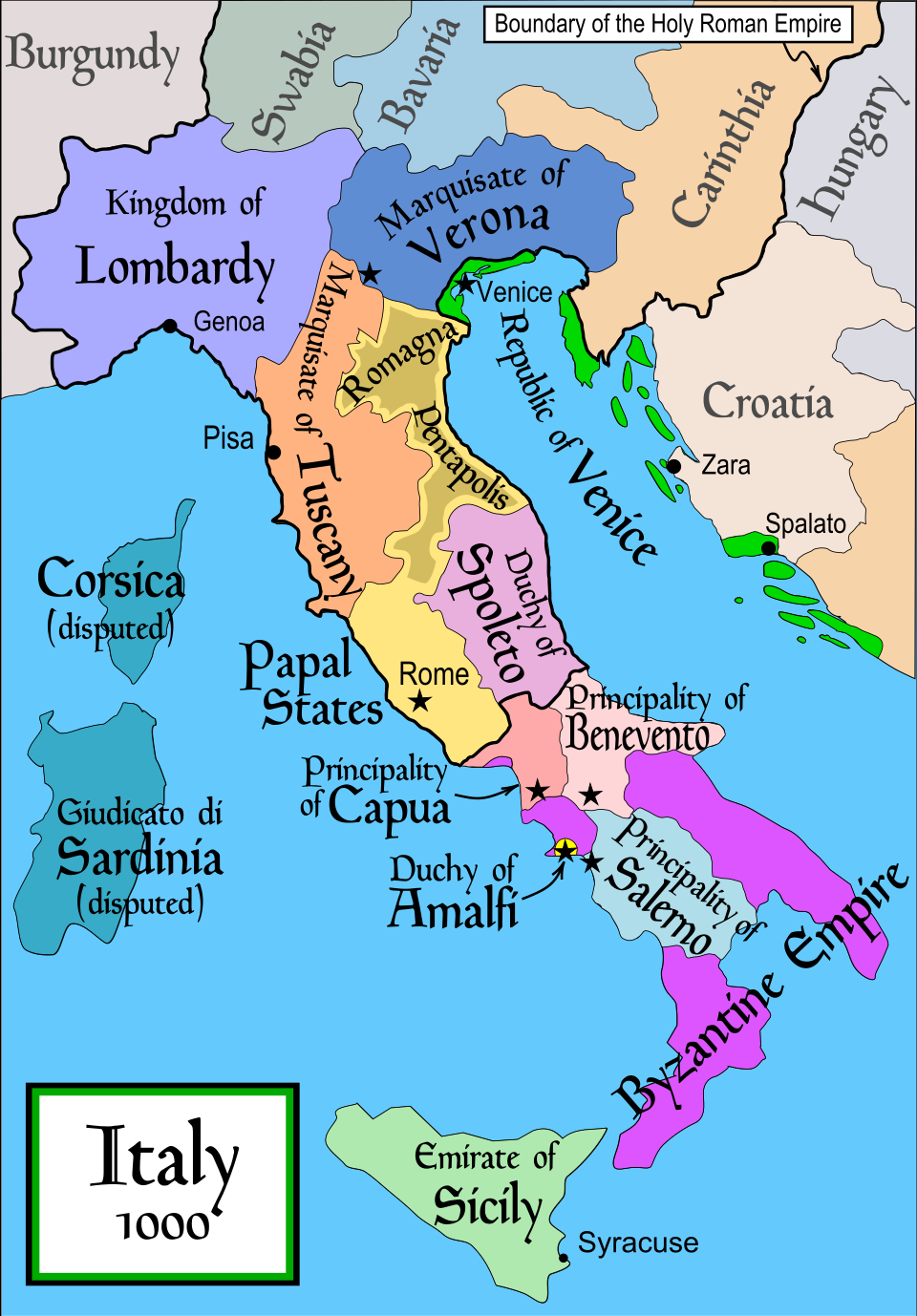
Map of medieval Italy and surrounding powers (public domain, Wikimedia Commons).
Popes rose and fell quickly. Some were exiled. Some were killed. Others simply didn’t last long enough for anyone to build a routine around them.
Power in the city sat with rival noble families. They controlled armed followers and treated the papal office as part of their political system. The result was constant turnover at the top and very little stability underneath it.
Who was Formosus?
Formosus had a long career before becoming pope. He served as bishop of Porto and spent years moving through church and diplomatic roles. By most contemporary accounts, he was capable and well regarded.
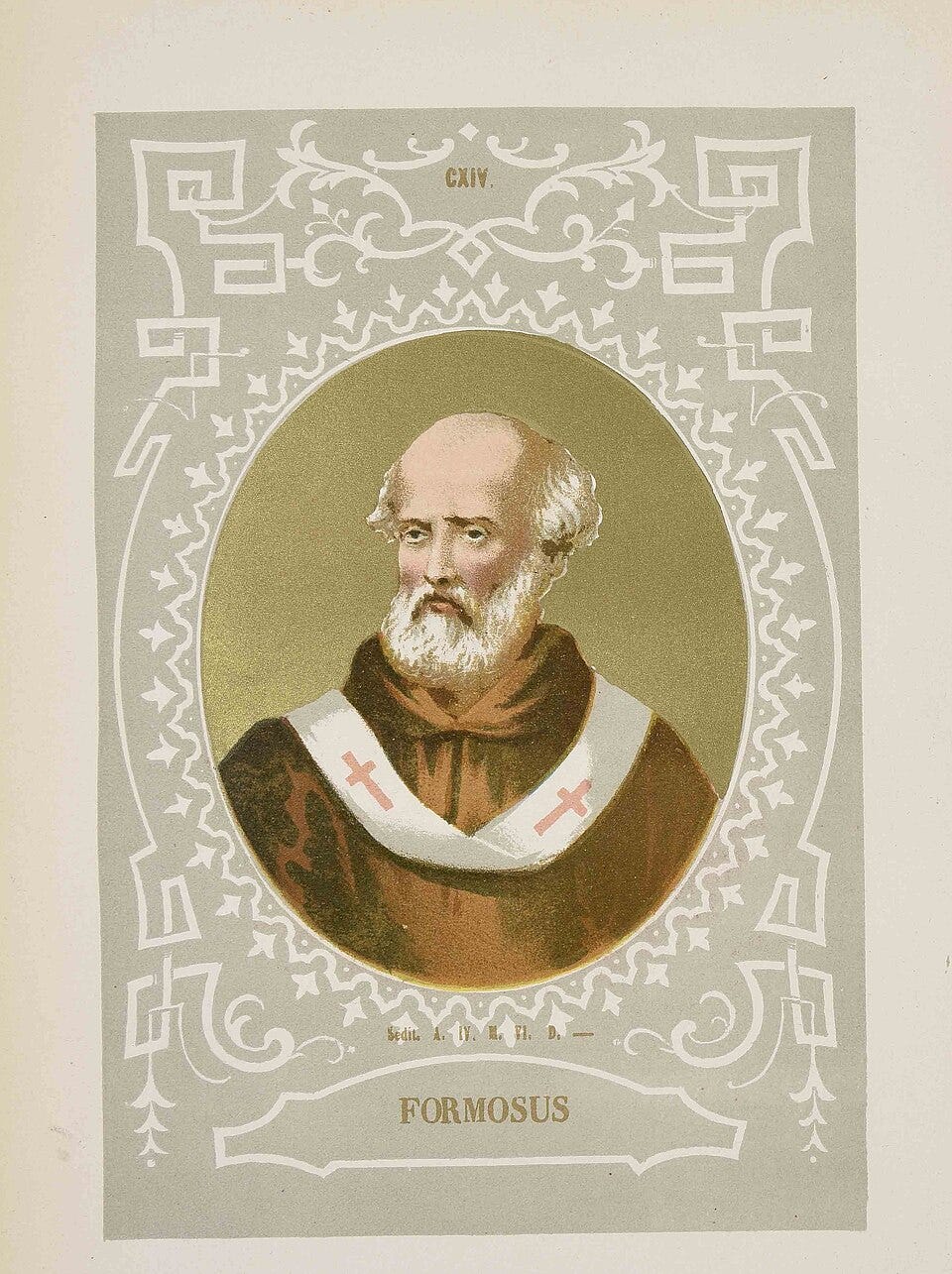
Portrait of Pope Formosus, engraving (public domain, Wikimedia Commons).
His problem was not competence. It was politics.
He became involved in the struggle over imperial authority in Italy. One faction supported the powerful Spoletan family. Another backed rulers from beyond the Alps, including Arnulf of Carinthia.
Formosus found himself pulled between those groups. At different points, he supported different candidates for power. Each decision created new enemies.
When he died in 896, those enemies were still very much active.
The trial
The trial that followed was unlike anything most people would recognize as a legal proceeding.
Formosus was placed on the throne in full papal regalia.
A young deacon stood behind him, speaking for the dead man.
Pope Stephen VII shouted accusations at the corpse.
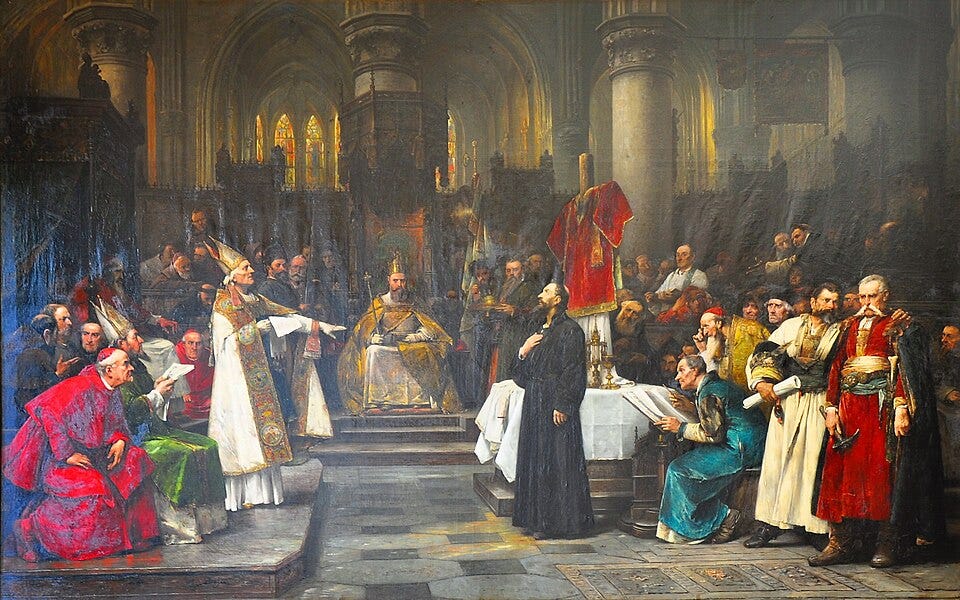
Jan Hus at the Council of Constance (1415), Wikimedia Commons.
The room did not settle. It escalated.
The charges focused on church law. Formosus was accused of illegally holding multiple bishoprics and of improperly claiming the papacy after moving from one ecclesiastical position to another.
After the proceedings, a verdict was delivered. He was found guilty on all counts.
Then came the punishment.
His papal vestments were stripped away. The fingers used for blessing were cut from his right hand. He was redressed in ordinary clothing and buried in a common grave.
That still was not the end of it. His body was later recovered and thrown into the Tiber River.
What made this possible
Medieval Rome did not separate politics and religion the way later periods would.
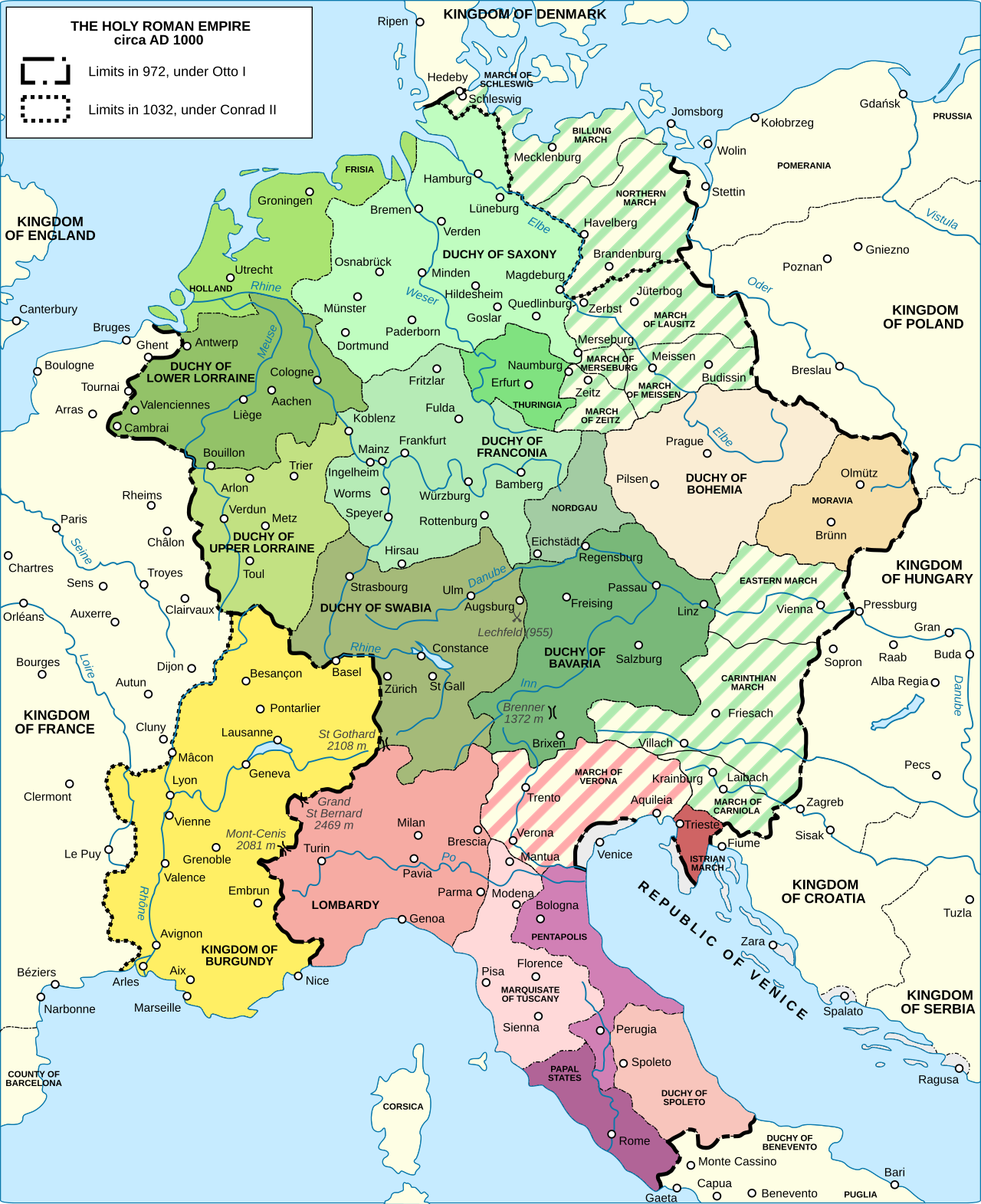
Political map of the Holy Roman Empire and surrounding regions (public domain, Wikimedia Commons).
Modern historians describe this era as a time of intense factional conflict. Noble families backed different candidates for the papacy and used the office to strengthen their own position.
Laurent Jégou describes the Cadaver Synod as part of a struggle over memory and legitimacy. If Formosus could be discredited after death, then the decisions he made while pope could also be called into question.
That mattered because those decisions included appointments across the church hierarchy. Bishops and clergy connected to Formosus suddenly found their positions under threat.
William S. Monroe notes that revenge was clearly part of the story. The political consequences went further than personal vendetta. Control over Formosus’s legacy meant control over parts of the church itself.
The aftermath
Rome did not settle the matter. It escalated.
Soon after the trial, Pope Stephen VII was removed from power. Accounts describe him being imprisoned and killed during a political backlash.
Then the reversals began.
A later pope ordered Formosus’s body recovered from the river and given a proper burial. Another declared the trial invalid and restored his standing. Another later reversed that decision again.
Same city. Same corpse. Different verdict depending on who held power.
Eventually, the church rejected the Cadaver Synod and restored Formosus to the list of recognized popes.
A strange kind of legacy
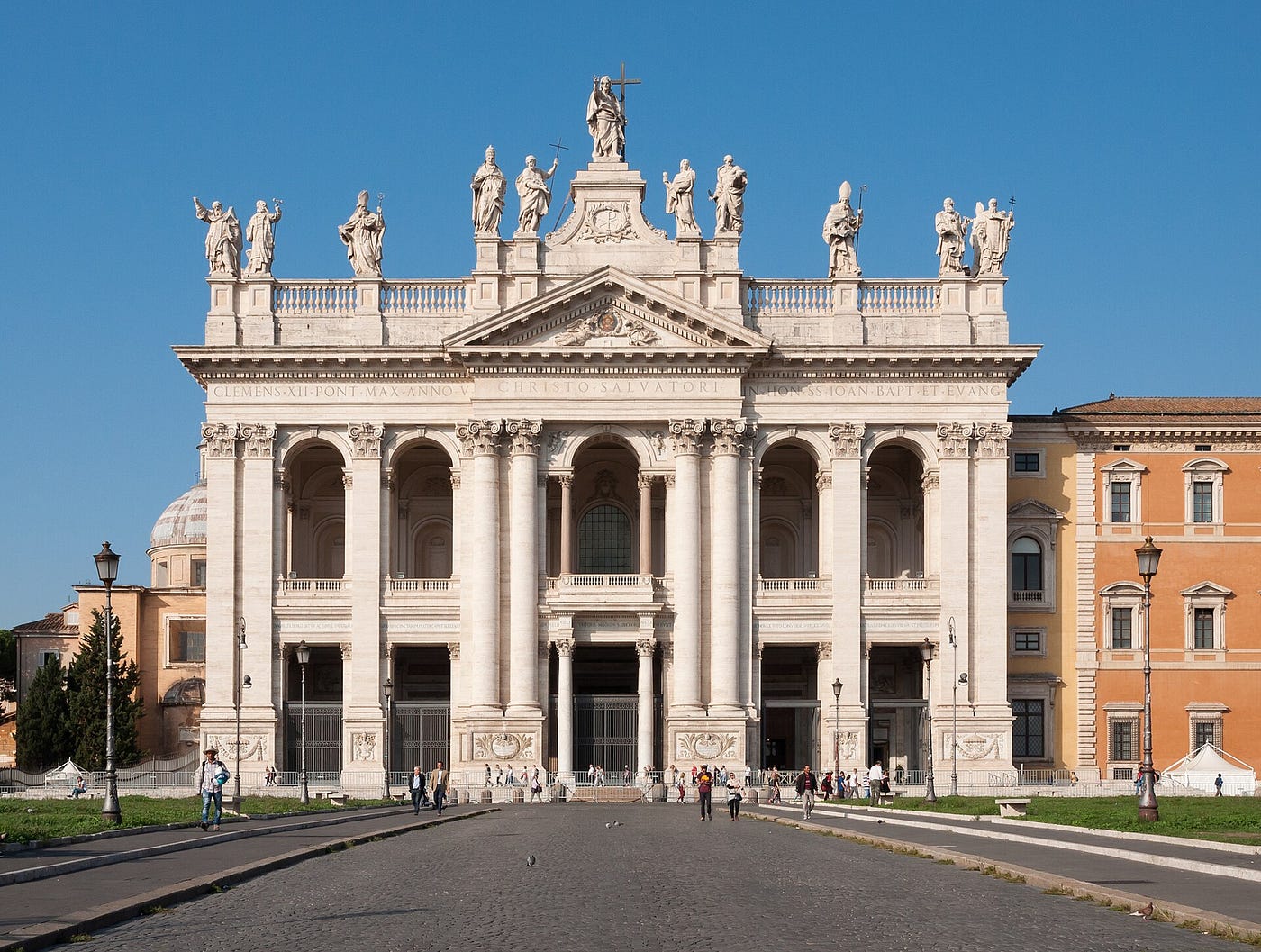
Basilica of St. John Lateran, Rome (Wikimedia Commons, public domain photograph).
The Cadaver Synod is remembered because it feels impossible.
But it happened in a period when political authority was fragile and constantly contested. Reputation mattered. Control of memory mattered even more.
Laurent Jégou’s work highlights how disputes over legitimacy shaped the way events were recorded and interpreted. William Monroe’s research places the trial within a broader pattern of factional struggle in medieval Italy.
Even centuries later, the story continued to circulate. It eventually reached writers like Robert Browning, who drew on accounts of turbulent papal history in The Ring and the Book.
Sources and Further Reading
Wilkes, Donald E. Jr. The Cadaver Synod: Strangest Trial in History. A narrative overview of the trial and its historical setting in late ninth-century Rome.
Jégou, Laurent. Competition over a corpse. The trial of Pope Formosus and its stakes (896–904). A detailed study of how memory and political legitimacy shaped interpretations of the event.
Monroe, William S. The Trials of Pope Formosus. A modern academic analysis of the political conflict surrounding Formosus and his legacy.
Funk & Wagnalls New World Encyclopedia. “Formosus.” A concise summary of Formosus’s life and the broader imperial disputes of the period.
메타데이터
- post_id
- 4fbbdb32f3f3
- slug
- a-pope-put-a-corpse-on-trial-4fbbdb32f3f3
- url
- https://medium.com/@jennaneel/a-pope-put-a-corpse-on-trial-4fbbdb32f3f3
- canonical_url
- https://medium.com/@jennaneel/a-pope-put-a-corpse-on-trial-4fbbdb32f3f3
- author_url
- https://medium.com/@jennaneel
- status
- ok
- fetched_at
- 2026-06-20 20:29:01